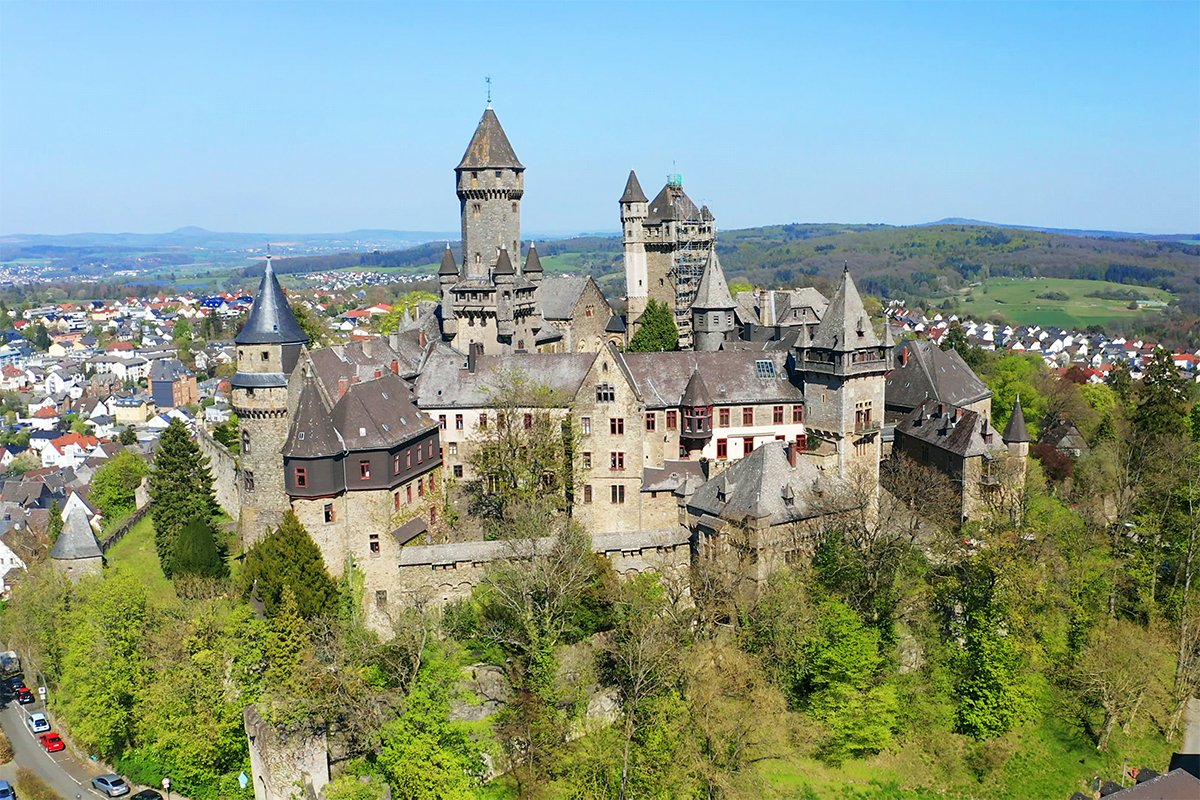
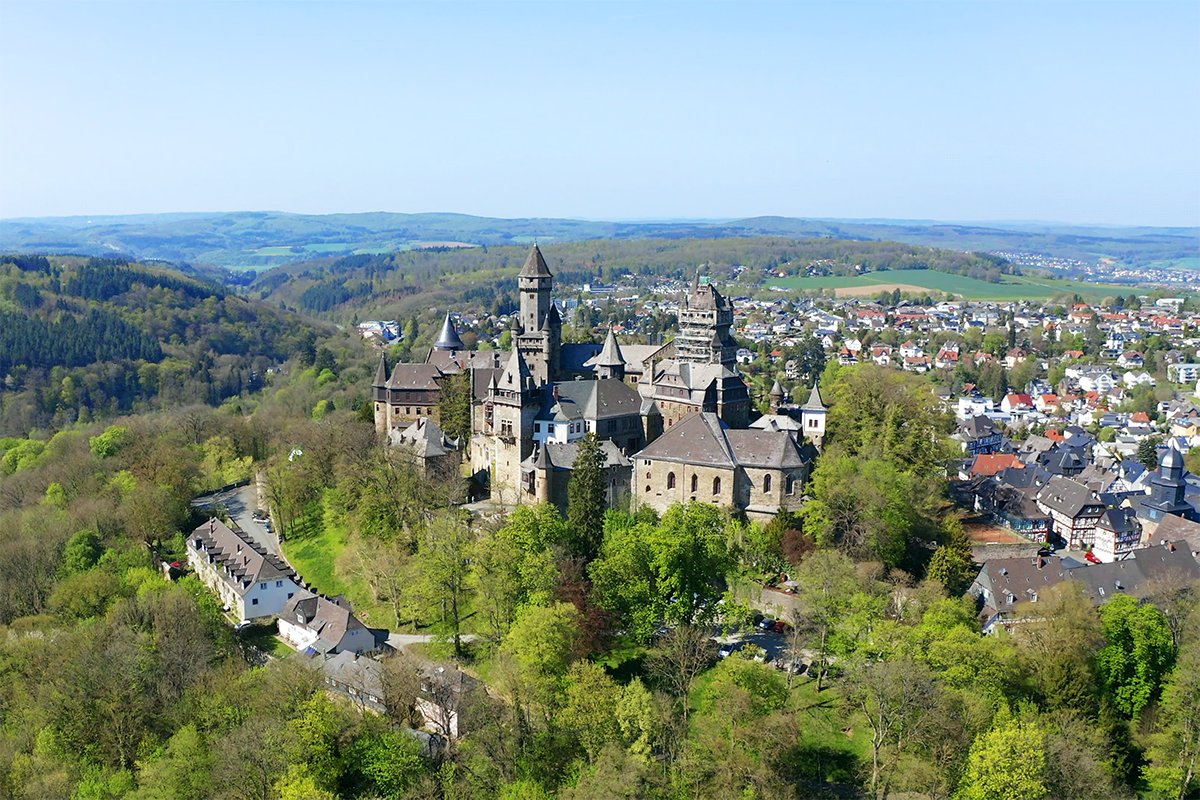
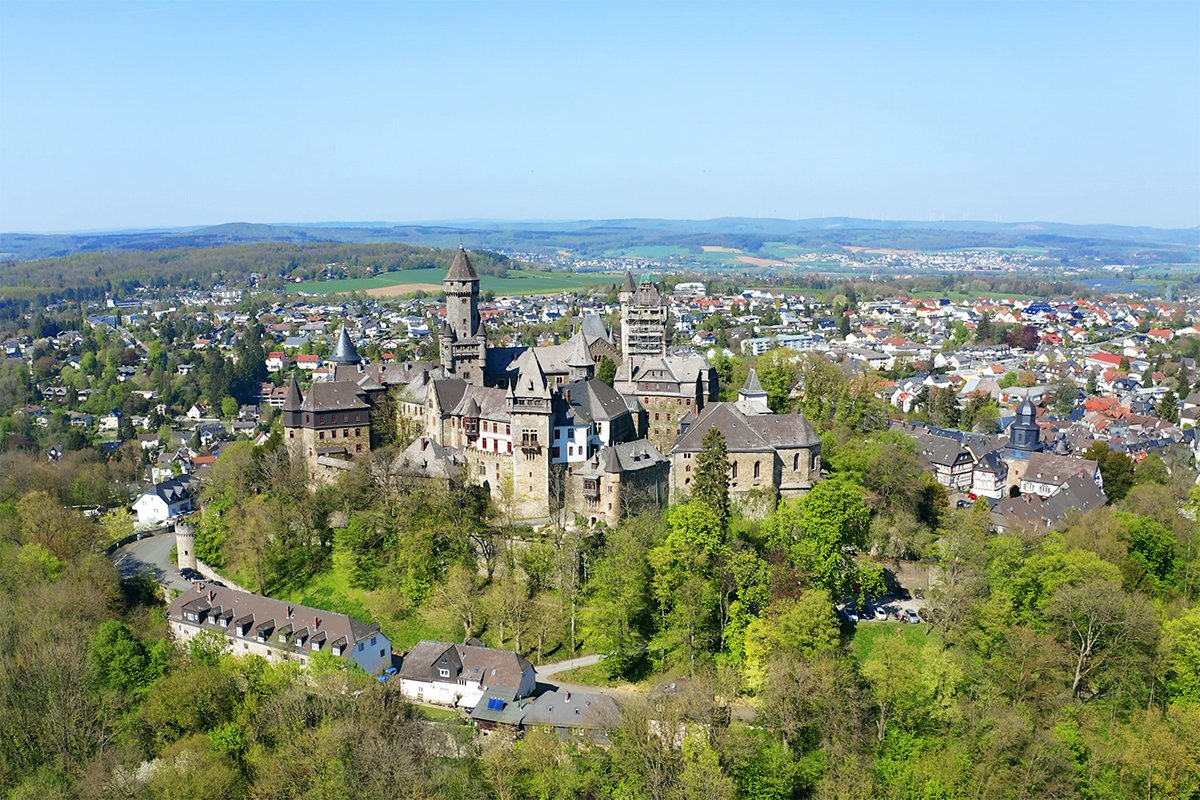
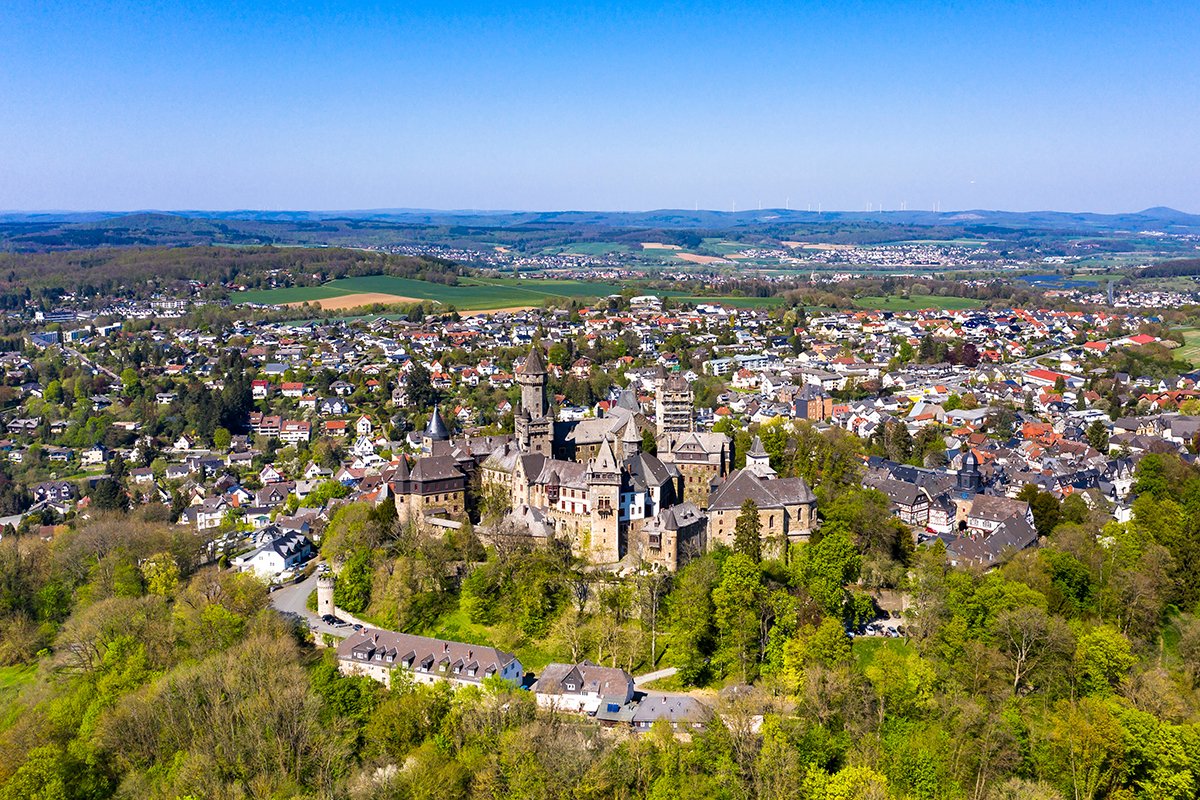
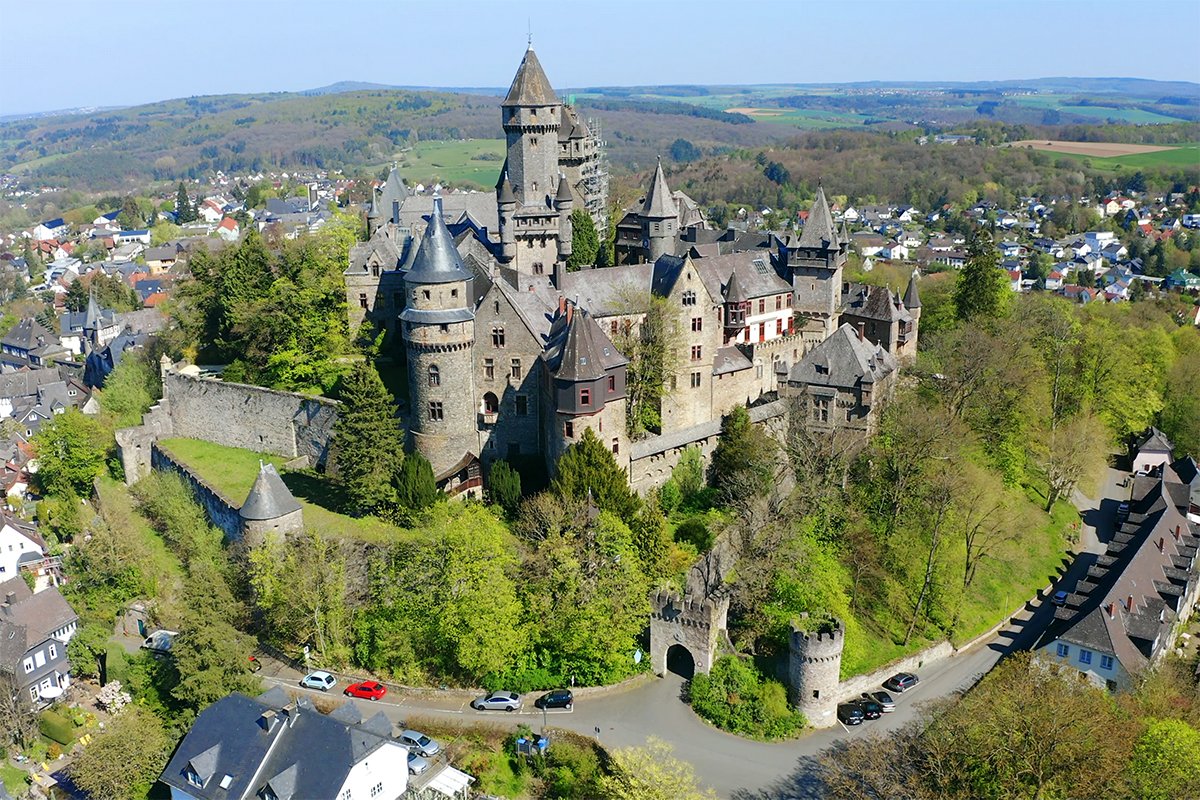
Perched high above the Lahn valley on a dark basalt crest, Braunfels Castle (Schloss Braunfels) feels like a storybook silhouette brought to life—towers, oriels, and crenellations rising over red roofs and woodland. Yet behind the romantic skyline is a very real noble seat: fortified in the Middle Ages, reshaped after a catastrophic fire, and reimagined in the 19th century’s Gothic Revival. It’s still tied to the Solms‑Braunfels family today.
Quick Facts
📍 Location: Braunfels, Hesse, Germany
🏗️ Construction Period: 13th century–19th century (first mentioned 1246; major rebuilds after 1679 and from 1845–late 1800s)
🏰 Architectural Style: Medieval Romanesque/Gothic core with Baroque rebuilding and 19th‑century Neo‑Gothic (Gothic Revival/Historicism)
🎭 Famous For: Continuous association with the Princes of Solms‑Braunfels, repeated Thirty Years’ War captures, and its Romantic Gothic Revival “fairytale” skyline
👑 Notable Figures: Counts/Princes of Solms‑Braunfels; Count Heinrich Trajektin; Count Wilhelm Moritz; Ferdinand “the Hunting Prince”; Prince Georg; architects Edwin Oppler, Hugo von Ritgen, Rudolf Wiegmann
🏆 UNESCO Status: No
🌐 Official Website: https://schloss-braunfels.de/en
Map
Historical Context
First recorded in 1246 as “castellum brunenvelsz,” Braunfels Castle began as a hard-edged defensive castle set on a basalt outcrop, guarding routes through the Lahn valley. From the 13th century onward it served as the seat of the Counts of Solms—an unusually continuous lineage for a major German castle. Its strategic value shows up most dramatically during the Thirty Years’ War, when it was seized again and again as armies pushed through central Germany. Disaster struck in 1679 when fire ravaged the complex, prompting Baroque rebuilding under Count Heinrich Trajektin and later refinements by Count Wilhelm Moritz. In the 19th century, Ferdinand—nicknamed “the Hunting Prince”—and later Prince Georg transformed Braunfels into a Romantic Gothic Revival showpiece, giving it the tower-rich profile visitors admire today.
Visual Tour
Visiting Information
🗓️ Best Time to Visit: April, May, late September, and October
🗺️ Location Perks: You get sweeping views over the Lahn valley from the basalt hilltop, plus an easy, old‑town stroll in Braunfels below. The surrounding countryside is ideal for gentle hikes and scenic day trips through central Hesse.
⏳ Estimated Visit Duration: Plan to spend 2–3 hours exploring the castle and its grounds.
💡 Visiting tips: Book a guided tour if you want to see the Knight’s Hall and the principal interiors—many rooms are tour-only. Arrive with cash/coins for smaller admissions (like the Family Museum gate), and plan most photos outdoors since interior photography is often restricted.
Search