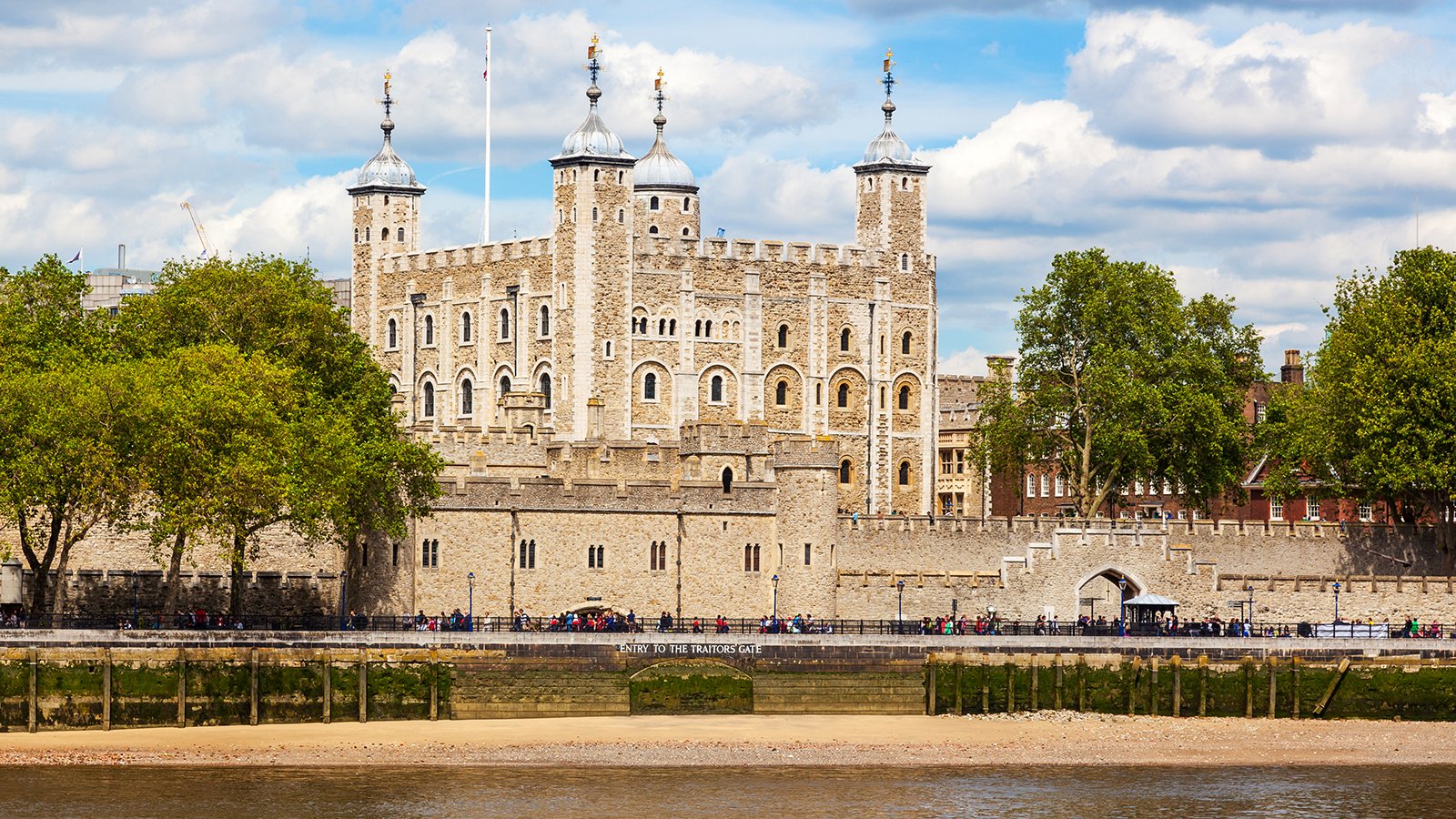
The first thing you notice is the stone.
It rises pale and solid above the Thames, thick Norman walls that have watched almost a thousand years of power, betrayal, fear, and ceremony. Stand in front of the White Tower on a gray London morning, and you can almost hear it — the scrape of armor, the shuffle of prisoners’ feet, the whisper of court intrigue carried on the river wind.
The Tower of London is not just another historic landmark. It’s a fortress built by William the Conqueror to intimidate a restless city. It’s a royal palace where kings slept uneasily. It’s a prison where some queens waited for their fate. And today, it’s home to the glittering Crown Jewels — symbols of monarchy that still shape Britain’s story.
Few places in Europe pack so much history into such a compact space. Within these walls, Anne Boleyn met her end. The mysterious Princes in the Tower vanished. Traitors entered through a water gate—later known as Traitors’ Gate—still feels unsettlingly narrow. And high above it all, ravens patrol the battlements, as legend insists they must.
But here’s the surprise: despite its dark reputation, visiting the Tower of London isn’t a gloomy experience. It’s vivid. Dramatic. Unexpectedly moving. One moment you’re staring at medieval graffiti scratched by desperate prisoners; the next, you’re dazzled by diamonds the size of plums.
Planning a trip to London? If you visit just one castle in the city, make it this one. The Tower doesn’t just tell England’s story — it lets you walk straight into it.

Quick Facts About the Tower of London
📍 Location: Tower Hill, London, England, on the north bank of the River Thames
🏗️ Construction Period: Founded 1066 (White Tower begun ~1078, completed c. 1100).
🏰 Architectural Style: Norman military architecture with later medieval additions
🎭 Famous For: The Crown Jewels, royal executions, imprisonment of Anne Boleyn, the Princes in the Tower
👑 Notable Figures: William the Conqueror, Henry VIII, Anne Boleyn, Lady Jane Grey, Thomas More
🏆 UNESCO Status: Yes—UNESCO World Heritage Site since 1988.
🌐 Official Website: www.hrp.org.uk/tower-of-london

History & Dark Legends of the Tower of London
The Tower of London begins with a warning.
In 1066, William the Conqueror took England by force. London was restless. Suspicious. Not entirely convinced by its new Norman ruler. So William did what conquerors have done for centuries: he built something massive, visible, and impossible to ignore.
The White Tower rose first — thick walls of Kentish ragstone with Caen limestone facing shipped from Normandy, narrow windows, defensive turrets. It wasn’t subtle. It was a message. This fortress wasn’t just protection. It was control.
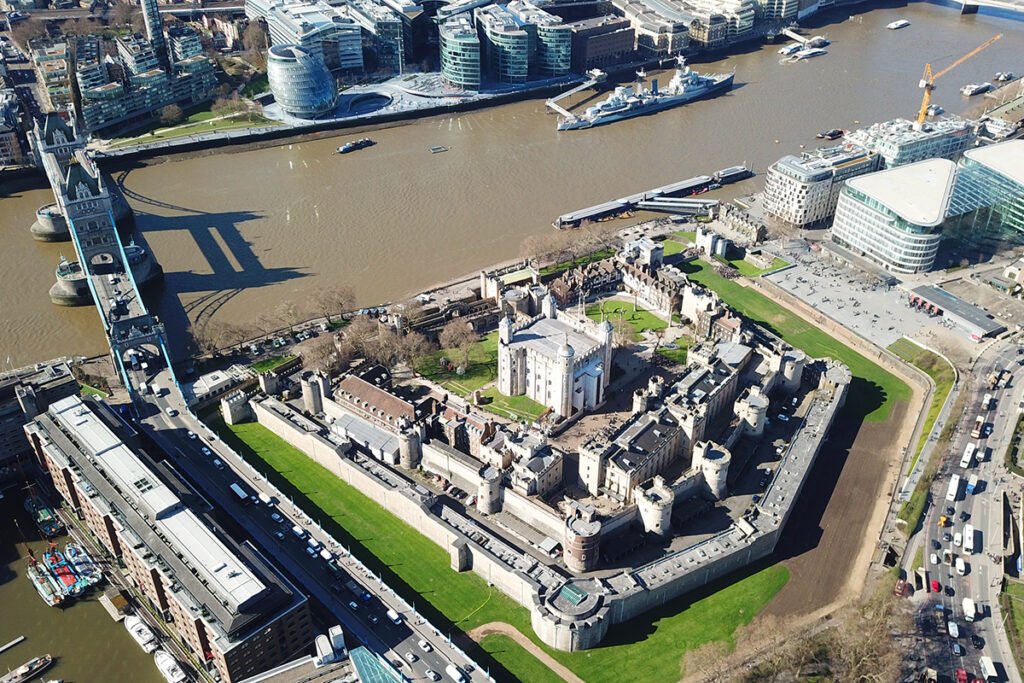
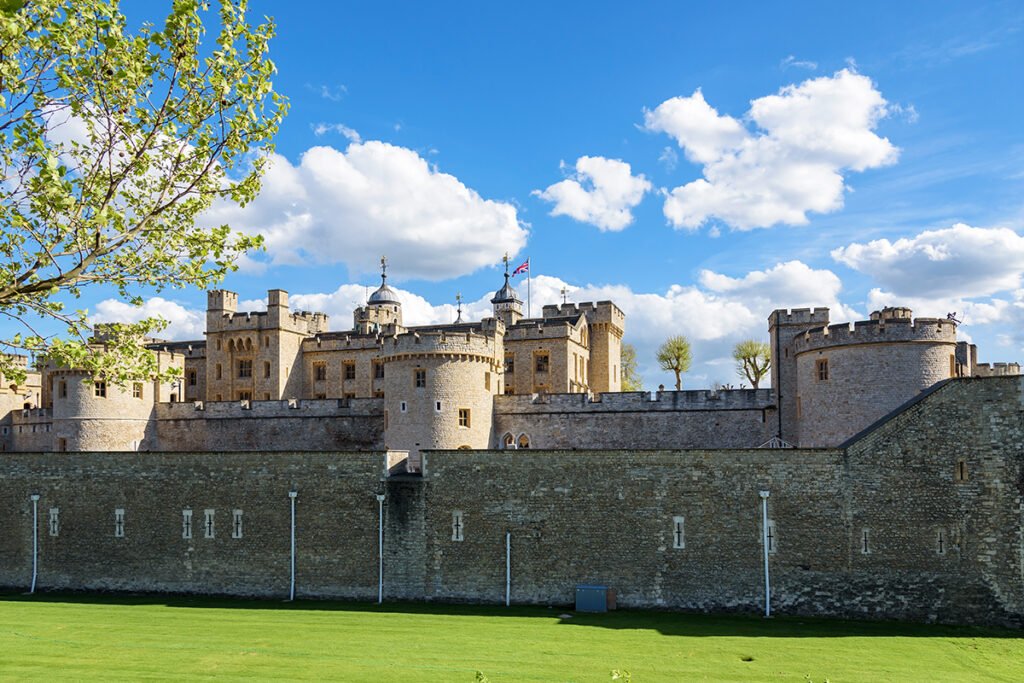
By the late 11th century, the White Tower dominated the skyline, looming over timber houses and the river trade below. Inside, it housed royal apartments, storage rooms, and a chapel. Outside, additional walls and towers slowly expanded the complex into the concentric fortress we see today.
But the Tower didn’t remain just a military stronghold. It evolved into something far more complex.
A Royal Residence With Uneasy Nights
Medieval kings didn’t live here permanently, but they used the Tower as a secure London residence. It was convenient, defensible, and close to the city’s political heart.
Henry III and Edward I strengthened the outer walls and added the moat. The fortress grew in layers — inner ward, outer ward, defensive towers, gates, and battlements. The Tower became not just a symbol of authority, but the physical heart of royal power.
And yet, it gained a darker reputation.
The Tower as Prison
From the 12th century onward, the Tower became England’s most famous prison.
Not everyone sent here was tortured — in fact, torture was relatively rare and required royal approval. But imprisonment inside these walls carried weight. It meant you had fallen far or threatened someone powerful.
Some prisoners were foreign nobles. Others were religious dissenters. A few were queens.
One of the most famous arrivals came in 1536.
According to enduring legend, Anne Boleyn, second wife of Henry VIII, entered through Traitors’ Gate — the water entrance from the Thames. Imagine it: the river lapping against stone, the narrow arch overhead, guards waiting in silence. She had once been crowned with splendor. Now she was accused of adultery and treason.
She spent her final days inside the Tower, walking within sight of the White Tower’s pale walls. She was executed on Tower Green, just steps from where she had been held. A French swordsman carried out the sentence swiftly. She was buried nearby, within the Chapel of St Peter ad Vincula.
She wasn’t alone.
Lady Jane Grey — the “Nine Days’ Queen” — was imprisoned here in 1553 after losing her claim to the throne. She, too, was executed on Tower Green in early 1554. Thomas More, once Henry VIII’s trusted advisor, was held here before his beheading in 1535 for refusing to accept the king as head of the Church of England.
The Tower was not chaotic violence. It was calculated power.
The Princes in the Tower
Perhaps the most haunting mystery connected to the Tower is the fate of the Princes in the Tower.
In 1483, 12-year-old Edward V and his younger brother Richard were placed in the Tower by their uncle, Richard, Duke of Gloucester. Officially, they were there to prepare for Edward’s coronation. Instead, Richard declared their father’s marriage invalid, claimed the throne as Richard III, and the boys vanished.
They were last seen playing in the courtyard.
No official record confirms their deaths. But most historians believe they were murdered to secure Richard’s claim. In 1674, bones of two children were discovered beneath a staircase near the White Tower. They were later interred in Westminster Abbey. Whether they truly belonged to the princes remains debated.
Stand inside the fortress today, and the question lingers in the air: what really happened within these walls?
The Crown Jewels and Royal Authority
Not all of the Tower’s history is shadowed.
From the 13th century onward, the Tower housed the royal treasury. Today, it protects the Crown Jewels — still used in coronations and state ceremonies.
These are not replicas. They are working symbols of the monarchy. The Imperial State Crown alone contains thousands of gemstones, including the Cullinan II diamond and the Black Prince’s Ruby.
There’s a quiet irony here. The same fortress that imprisoned queens now guards crowns of staggering beauty. Power shifts, but the Tower remains at its center.
Torture: Myth and Reality
The Tower’s reputation as a torture chamber is partly legend, partly truth.
Devices such as the rack were used, but only in rare cases and under strict authority. One famous prisoner, Guy Fawkes, was tortured here after the failed Gunpowder Plot of 1605. His signature, written before and after interrogation, shows the visible physical toll.
Yet for most prisoners, the psychological weight of confinement was punishment enough.
Look closely when you visit, and you’ll see graffiti carved into stone by captives — names, religious symbols, pleas for mercy. These markings feel more powerful than any display of iron shackles.
They’re personal. Immediate.
From Fortress to Heritage Site
By the 17th century, the Tower’s role as a royal residence faded. It continued as an arsenal, treasury, and prison, but slowly its function changed.
Executions ceased. The moat was drained. Public tours began in the Victorian era. The Yeoman Warders — often called Beefeaters — became guardians and storytellers.
During both World Wars, the Tower briefly returned to its military role. A handful of spies were executed here in the 20th century. The last execution took place in 1941.
Since then, the Tower of London has stood as a preserved monument — no longer feared, but never stripped of its gravity.
The Ravens and the Legend
And then there are the ravens.
Legend says that if the ravens ever leave the Tower, the kingdom will fall. Whether this superstition dates back to Charles II or emerged later is unclear. What is clear is that several ravens are permanently housed within the fortress, cared for by a Ravenmaster.
Watch them hop along the battlements, and you understand why the story endures. They add something primal to the place. A reminder that myth and monarchy have always been intertwined here.
The Tower of London is many things at once: fortress, palace, prison, treasury, symbol.
But above all, it’s a stage where England’s most dramatic chapters unfolded — in public spectacle and private terror. When you walk these grounds, you aren’t just observing history.
You’re standing where it happened.

Architecture & What You’ll See Inside the Tower of London
The Tower of London isn’t one building.
It’s a layered fortress — walls within walls, towers inside towers — built over centuries like a stone puzzle. From the outside, it can look compact. Step inside, and you quickly realize how much is packed into this historic footprint.
At its heart stands the White Tower.
The White Tower
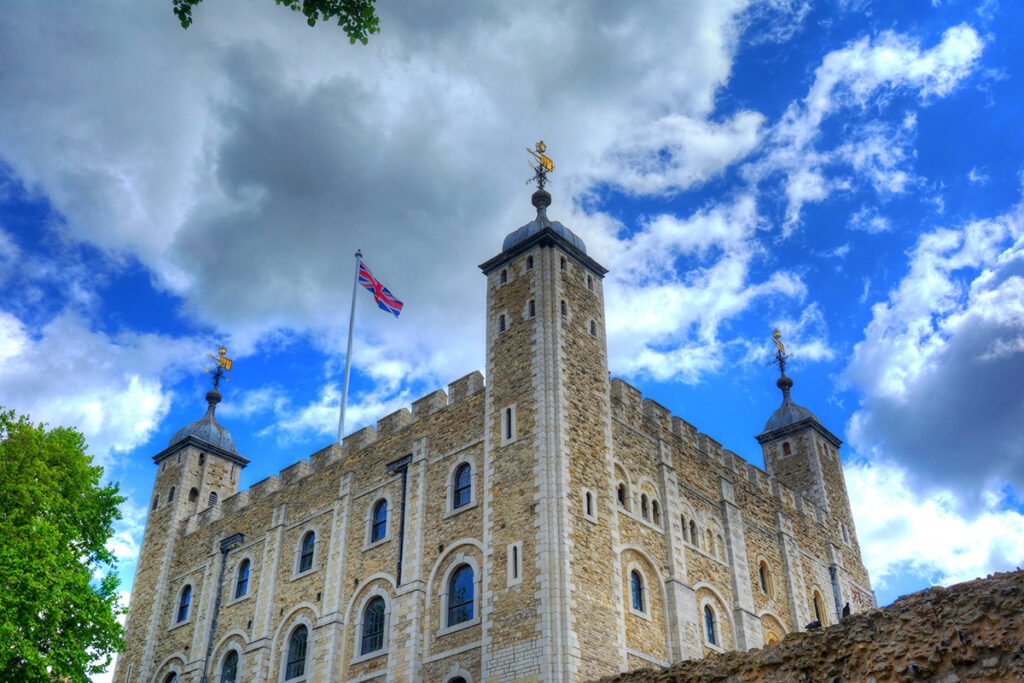
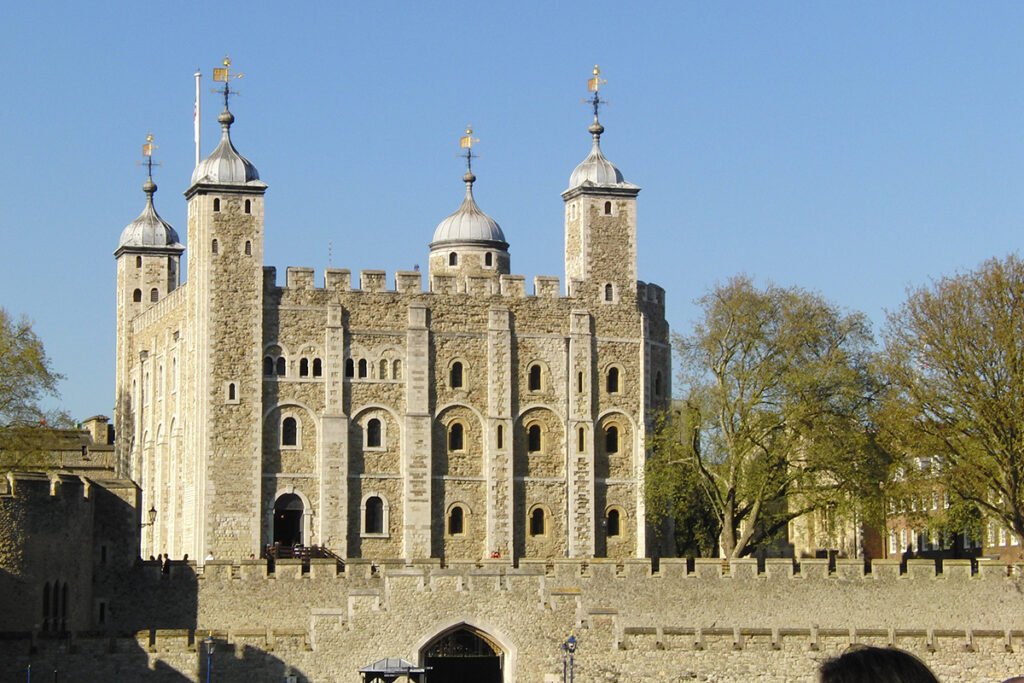
This is the original Norman keep, begun by William the Conqueror in the late 11th century. Its pale Caen stone still stands out against the darker medieval walls around it. The structure is square, solid, unapologetically defensive.
Walk toward it and look up. The corner turrets rise slightly uneven, giving the building a subtly irregular silhouette. The walls are thick — up to 4.6 meters at the base — designed to resist siege engines and rebellion alike.
Inside, the atmosphere shifts from fortress to royal space. You’ll climb worn stone staircases and enter the Chapel of St John the Evangelist, one of the best-preserved Norman chapels in England. It’s stark. Simple. Almost echoing with silence. The rounded arches and massive columns remind you how early this architecture is — practical, powerful, and built to endure.
Elsewhere in the White Tower, you’ll find armor displays, including impressive suits worn by Henry VIII. His armor grows larger over time — a quiet detail that makes history feel surprisingly human.
The Inner Ward & Tower Green
Step back outside, and you’re in the Inner Ward, the core defensive zone. This is where royal lodgings once stood and where some of England’s most famous executions took place.
Tower Green is unexpectedly modest. It’s a small patch of grass enclosed by buildings and stone walls. If you didn’t know what happened here, you might walk past without realizing.
But this is where Anne Boleyn was executed. And Lady Jane Grey. And several others whose names shaped the Tudor era.
A simple memorial now marks the site. It’s quiet. Often less crowded than the Crown Jewels. And for many visitors, it’s one of the most moving places in the entire complex.
Nearby stands the Chapel of St Peter ad Vincula. From the outside, it looks almost ordinary. Inside, beneath the floor, lie the remains of those executed here. The chapel isn’t dramatic. It doesn’t need to be. Its weight comes from who rests within it.
Traitors’ Gate
One of the most atmospheric parts of the Tower is Traitors’ Gate.
Approach it from inside the fortress, and you’ll see the water-level archway that once opened directly onto the Thames. Prisoners accused of treason were often transported by boat, entering beneath this low stone portal.
It’s narrower than you expect. Darker. You can almost picture the torches reflecting off the water as guards waited in silence.
Stand there for a moment and imagine arriving by river, knowing your fate was uncertain at best.
The Medieval Walls & Defensive Towers
The Tower’s outer defenses form two concentric curtain walls, studded with towers. Walking along these battlements is one of the best ways to understand the site.
You’ll pass through towers with names that feel pulled from a storybook: Bloody Tower, Wakefield Tower, Beauchamp Tower.
Inside the Beauchamp Tower, look closely at the walls. Prisoners carved messages and symbols into the stone — coats of arms, religious inscriptions, names of loved ones. These aren’t staged exhibits. They’re original graffiti, scratched by people who didn’t know if they’d ever leave.
The Bloody Tower is linked to the mystery of the Princes in the Tower. Whether they were truly held there remains debated, but the association lingers. It adds a chill to the narrow staircases and dim chambers.
The Crown Jewels
Then there’s the glittering contrast.
The Jewel House houses the Crown Jewels, and it’s one of the most visited parts of the Tower. You’ll move through security, enter dimly lit galleries, and eventually step onto a moving walkway that glides past the crowns.
It’s hard not to pause — even though the walkway encourages you to keep moving.
The Imperial State Crown gleams under focused lights. The Sovereign’s Sceptre with Cross contains the Cullinan I diamond, one of the largest cut diamonds in the world. Gold, velvet, gemstones — centuries of ceremony contained in glass cases.
After walking through prison cells and execution grounds, the brilliance feels almost surreal.
The Ravens & the Yeoman Warders
Look up at the battlements, and you might spot a raven hopping along the stone.
Several ravens live permanently at the Tower, cared for by a Ravenmaster. Their wings are partially clipped to prevent long flights. According to legend, if they ever leave, the monarchy will fall.
Myth or not, they give the Tower character. They’re bold. Curious. Sometimes mischievous.
And then there are the Yeoman Warders — often called Beefeaters. Dressed in their distinctive Tudor-style uniforms, they’re more than ceremonial guards. Many are retired military personnel, and their guided tours are lively, sharp, and often unexpectedly funny.
They tell the Tower’s stories with confidence and detail — executions, escapes, royal drama — blending fact with just enough theatrical timing to keep everyone engaged.
What makes the Tower of London’s architecture so powerful isn’t just age. It’s continuity.
You can touch the Norman stone laid nearly 1,000 years ago. Stand where queens faced execution. Walk battlements that once bristled with archers.
This isn’t a reconstructed castle. It’s the real thing — layered, imperfect, and very much alive.
Visiting the Tower of London: Practical Guide & Insider Tips
The Tower of London looks compact on a map.
It isn’t.
Between the White Tower, battlements, Crown Jewels, towers, chapel, exhibitions, and guided tours, you can easily spend half a day here — and still feel like you rushed parts of it. Planning your visit well makes all the difference.
Here’s what you need to know before you go.
🛣️ How to Get There
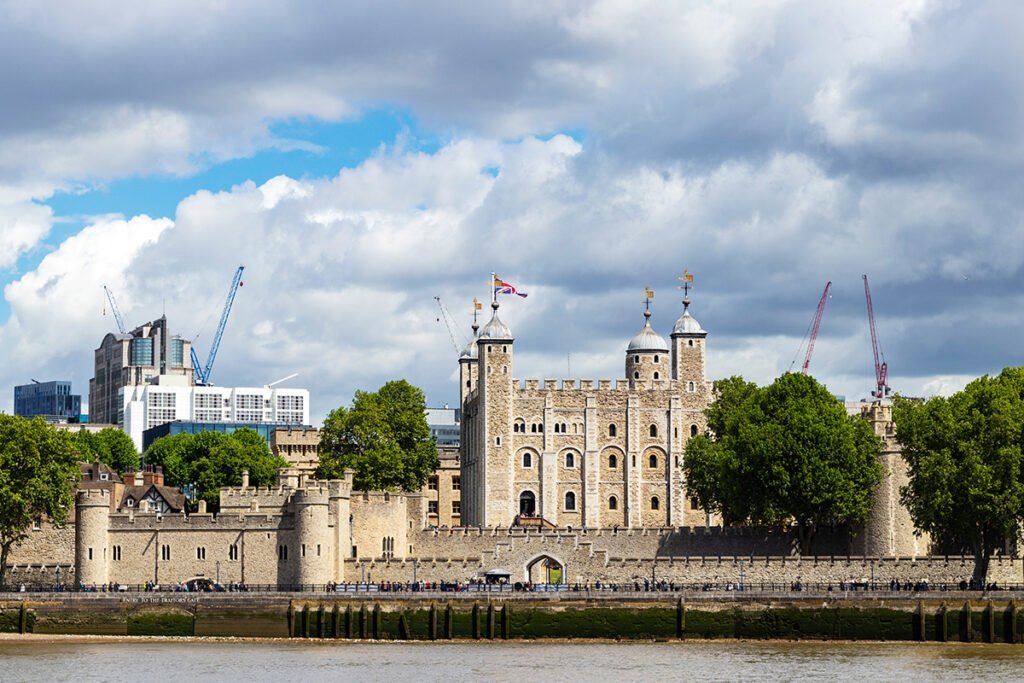
The Tower of London sits on the north bank of the Thames, right beside Tower Bridge. It’s hard to miss.
By Tube (Underground):
- Tower Hill Station (District and Circle lines) is the closest — about a 5-minute walk.
- From the station exit, you’ll already see the outer walls.
By DLR:
- Tower Gateway Station is also very close.
By River Boat:
Arriving by river feels dramatic — and fitting. Thames Clippers stop at Tower Pier, just next to the fortress. If you’re sightseeing along the river anyway, this is a fantastic approach.
On Foot:
If you’re exploring central London, it’s an easy walk from:
- London Bridge (15–20 minutes)
- St Paul’s Cathedral (25 minutes)
- The Monument (10 minutes)
Insider tip: walking across Tower Bridge before or after your visit adds a perfect skyline moment.
🎟️ Tickets & Tours
The Tower of London is one of London’s most popular attractions. Do not assume you can just show up and breeze in during peak season.
Book online in advance.
You’ll save money and time.
Tickets include:
- Access to the Crown Jewels
- Entry to all towers and exhibitions
- A Yeoman Warder guided tour (included, no extra fee)
The Beefeater tours are genuinely worth your time. They run regularly throughout the day and last about an hour. They’re informative, dramatic, and often surprisingly funny. If you’re unsure where to start, join one as soon as you enter.
London Pass:
The Tower of London is included in the London Pass, which can make sense if you’re visiting multiple paid attractions in a short period.
Peak periods to watch for:
- Summer holidays (June–August)
- School breaks
- Weekends
- Coronation or royal event years (interest spikes)
Arrive early if you want to see the Crown Jewels with minimal queuing.
For the most up-to-date information on opening hours, ticket prices, and special closures, check the official Tower of London website before your visit. It’s updated regularly and helps you plan with confidence.
👑 The Crown Jewels Strategy
The Crown Jewels are the most crowded part of the Tower.
If seeing them is a priority, go there first. Head straight to the Jewel House when the gates open, then explore the rest of the site afterward.
You’ll pass through security and a short exhibition about the history of coronations before reaching the main display room.
Expect controlled movement around the main crown display — including a moving walkway in front of the Imperial State Crown. If you want another look, simply circle back around.
Photography is not allowed inside the Jewel House.
⏳ How Much Time Do You Need?
Minimum: 3 hours
Comfortable visit: 4–5 hours
If you:
- Join a Yeoman Warder tour
- Visit the Crown Jewels
- Explore the White Tower thoroughly
- Walk the battlements
- Spend time in the chapel
You’re realistically looking at half a day.
Many visitors underestimate this and rush. Don’t.
Take your time in the Beauchamp Tower to study prisoner carvings. Pause on the walls for river views. Sit for a moment on Tower Green.
This place rewards slower exploration.
📅 Best Time to Visit
Best time of day:
Right at opening (usually 9:00 AM or 10:00 AM, depending on the season).
Arrive 15–20 minutes before opening if possible. Being among the first inside makes a huge difference, especially for the Crown Jewels.
Best days:
Weekdays are calmer than weekends.
Best seasons:
- Spring (April–June): Mild weather, good light, manageable crowds.
- Autumn (September–October): Fewer tour groups, softer light.
- Winter: Quieter, but colder and shorter daylight hours.
Summer is lively but busy. Expect queues.
Rainy days? Still worth it. Many exhibits are indoors, and the mist around the White Tower can actually enhance the atmosphere.
♿ Accessibility & Practical Considerations
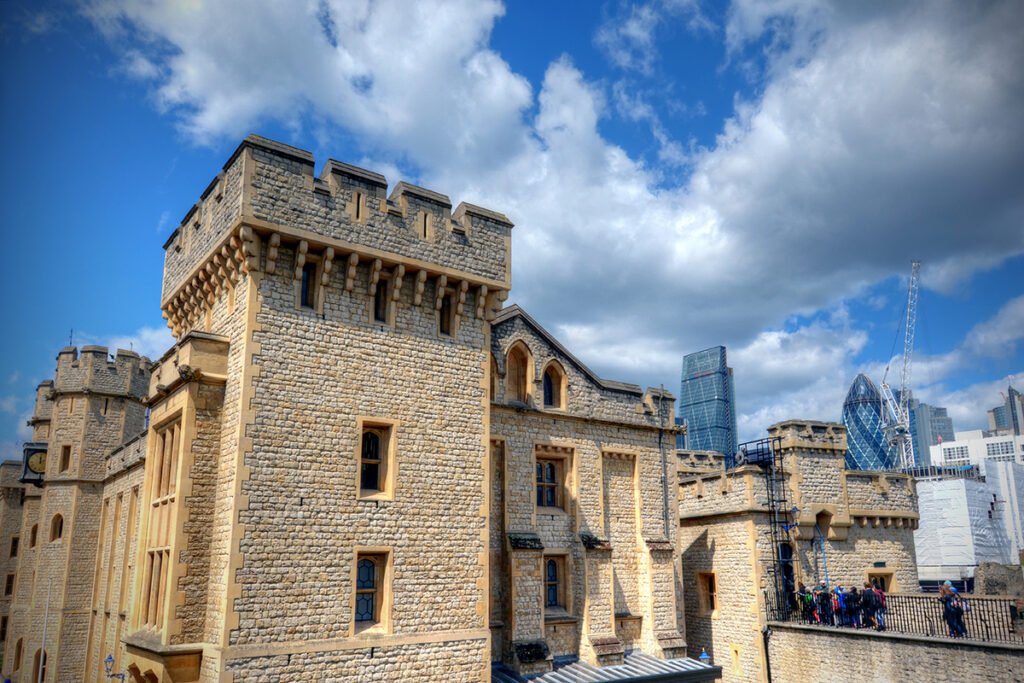
The Tower is medieval. That means:
- Uneven cobblestones
- Steep spiral staircases
- Narrow passageways
- Limited lift access
Some areas are difficult for visitors with mobility challenges, especially the upper floors of towers.
That said, there are accessible routes to key highlights, including the Crown Jewels.
Wear comfortable shoes. This isn’t a place for slippery soles or fashion-first footwear.
Restrooms and small cafés are available inside the complex. There’s also a gift shop — and yes, it’s extensive.
🍽️ Food & Breaks
There are cafés inside the Tower grounds offering sandwiches, hot drinks, and light meals. They’re convenient but not budget-friendly.
If you’d rather eat elsewhere:
- St Katharine Docks (just behind the Tower) has pleasant waterside restaurants.
- Borough Market (across the river) offers excellent street food.
- Leadenhall Market (10–15 minutes away) is atmospheric and great for lunch.
One smart option: visit the Tower in the morning, then cross Tower Bridge and have lunch with a view of the fortress you just explored.
👨👩👧 Is It Good for Kids?
Yes — surprisingly so.
Kids often love:
- The armor displays
- The ravens
- The dramatic stories of kings and queens
- The sense of walking through a “real” castle
The Yeoman Warder tours are family-friendly and engaging. Some darker history is discussed, but it’s usually handled thoughtfully.
Teenagers, in particular, tend to appreciate the intrigue and mystery.
📸 Best Photo Spots
You’ll find plenty of angles, but here are some favorites:
- The White Tower framed by green lawn in the Inner Ward.
- Tower Bridge rising behind the outer walls.
- The view from the battlements overlooking the Thames.
- Traitors’ Gate from inside the fortress.
- The ravens perched along stone parapets.
Golden hour (late afternoon) gives beautiful light across the stone walls — but expect heavier crowds at that time.
🧭 Suggested Visit Order (Smart Flow)
- Enter and join a Yeoman Warder tour.
- Visit the Crown Jewels immediately afterward.
- Explore the White Tower.
- Walk the battlements and outer towers.
- Visit Tower Green and the chapel.
- End at Traitors’ Gate before exiting.
This flow prevents backtracking and helps you avoid the heaviest mid-day crowds.
Final Practical Tip
The Tower of London is not a quick photo stop.
It’s not just walls and towers. It’s stories layered on top of each other — Norman conquest, Tudor drama, royal ceremony, wartime secrets.
Give yourself time.
Arrive curious. Leave unrushed.
And when you step back outside onto Tower Hill, look back once more at the White Tower rising above the Thames.
You’ll understand why it has dominated London’s skyline — and imagination — for nearly a thousand years.
Nearby Attractions Worth Exploring
One of the best things about visiting the Tower of London is its location. You’re standing in one of the most historic corners of the city, with iconic landmarks just steps away. Once you exit the fortress gates, your day doesn’t have to end.
Here are a few nearby spots that pair perfectly with your visit.
🌉 Tower Bridge
You can’t miss it.
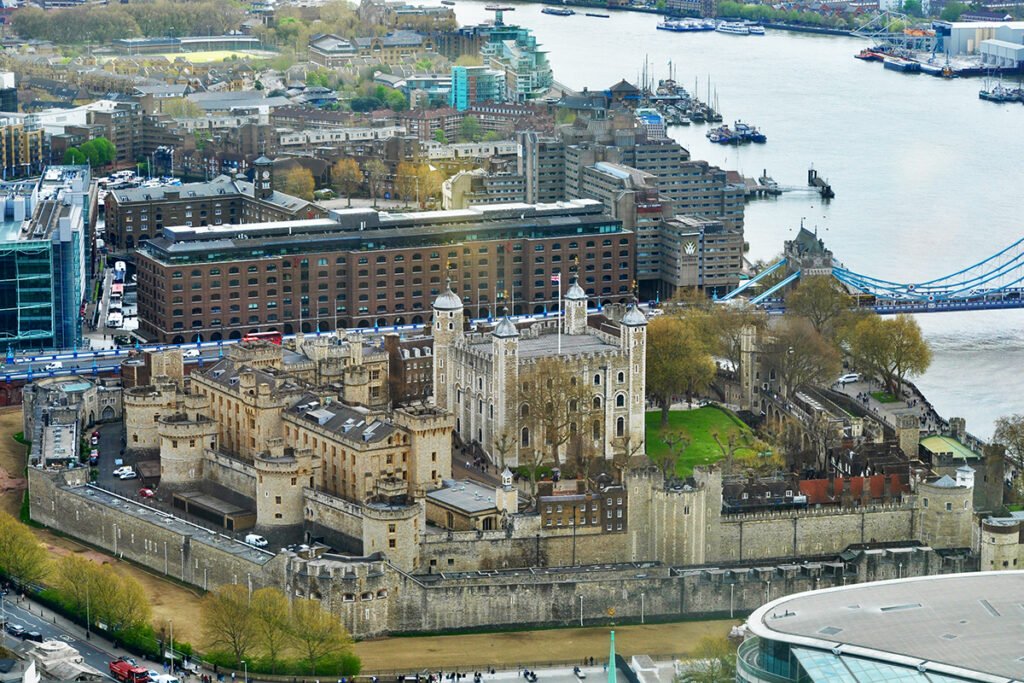
Just beside the Tower rises Tower Bridge, one of London’s most recognizable landmarks. Many visitors confuse it with London Bridge, but this is the dramatic one — twin Gothic-style towers connected by high-level walkways.
Walk across for free and enjoy sweeping views of the Thames. If you have extra time, visit the Tower Bridge Exhibition inside the upper walkways, where you can stand on a glass floor above the traffic below.
From the middle of the bridge, turn back toward the Tower. The photo opportunity is excellent.
⚓ HMS Belfast
Moored just downstream is HMS Belfast, a World War II warship turned museum.
If the Tower showed you medieval military power, HMS Belfast shows you modern naval history. You can explore the engine rooms, crew quarters, and gun decks. It’s interactive and surprisingly immersive.
It’s especially interesting if you’re traveling with older kids or anyone curious about 20th-century history.
🌊 St Katharine Docks
Tucked just behind the Tower, St Katharine Docks feels like a small escape from the crowds.
It’s a peaceful marina lined with cafés, restaurants, and boats bobbing in the water. After hours inside stone walls and towers, it’s refreshing to sit outside with a coffee and watch the harbor scene unfold.
If you want a quieter lunch option, this is a good choice.
🍲 Borough Market
Cross London Bridge and you’ll reach Borough Market, one of the city’s best food markets.
Fresh bread, street food, cheeses, pastries, global flavors — it’s a lively place to refuel. It can be busy, but the quality makes it worth it.
If you visited the Tower in the morning, it makes an ideal lunch stop.
🔥 The Monument to the Great Fire of London
About a 10-minute walk from the Tower stands The Monument, a tall stone column commemorating the Great Fire of London in 1666.
If you’re willing to climb the 311 spiral steps, you’ll be rewarded with panoramic views over the City of London — including a clear look back toward the Tower.
It’s a reminder that London’s history didn’t stop in the medieval era. The city has rebuilt itself many times, and the Tower has witnessed it all.
The beauty of this area is how easily you can shape your day. Medieval fortress in the morning. Iconic bridge by midday. Riverside walk in the afternoon. Market food to finish.
Few parts of London offer so much within such a compact stretch of river.
Tower of London FAQ: 10 Useful Questions Answered
How long does it take to visit the Tower of London?
Plan for at least 3 to 4 hours. If you want to explore thoroughly — including the Crown Jewels, White Tower, battlements, chapel, and a Yeoman Warder tour — allow half a day. Rushing this site is a mistake.
Are the Crown Jewels really worth seeing?
Yes. Even if you’re not particularly interested in royalty, the craftsmanship and scale of the jewels are impressive. The Imperial State Crown and the Sovereign’s Sceptre are unforgettable highlights. Just go early to avoid long queues.
Is the Tower of London suitable for children?
Surprisingly, yes. Kids often enjoy the armor displays, dramatic stories, and ravens. The Beefeater tours are lively and engaging. Some darker history is discussed, but it’s handled in a balanced way.
Is the Tower of London included in the London Pass?
Yes, it’s included in the London Pass. If you’re visiting several paid attractions in a short stay, the pass can offer good value. Always calculate based on your planned itinerary.
Can you see torture devices inside the Tower?
There are displays explaining interrogation methods, including the rack. However, torture was less common than legend suggests. The real impact often comes from prisoner graffiti and personal stories rather than instruments.
What is Traitors’ Gate?
Traitors’ Gate is the riverside entrance where prisoners accused of treason arrived by boat via the Thames. It’s still visible today and one of the most atmospheric parts of the Tower complex.
Are the ravens’ wings really clipped?
Yes. The ravens’ wings are partially clipped to prevent them from flying far. According to legend, if the ravens ever leave, the kingdom will fall. They are carefully cared for by a Ravenmaster.
When is the best time to visit to avoid crowds?
Arrive right at opening time, ideally on a weekday. Head to the Crown Jewels first. Spring and autumn generally offer lighter crowds compared to peak summer.
Can you take photos inside the Tower?
Yes, in most outdoor areas and inside many towers. However, photography is not allowed in the Crown Jewels exhibition.
Is the Tower of London haunted?
The Tower has a long reputation for ghost stories, especially linked to Anne Boleyn and the Princes in the Tower. Whether you believe them or not, the atmosphere — especially in quieter corners — can feel undeniably eerie.
Final Thoughts: Why the Tower of London Still Captivates
Some castles impress with beauty.
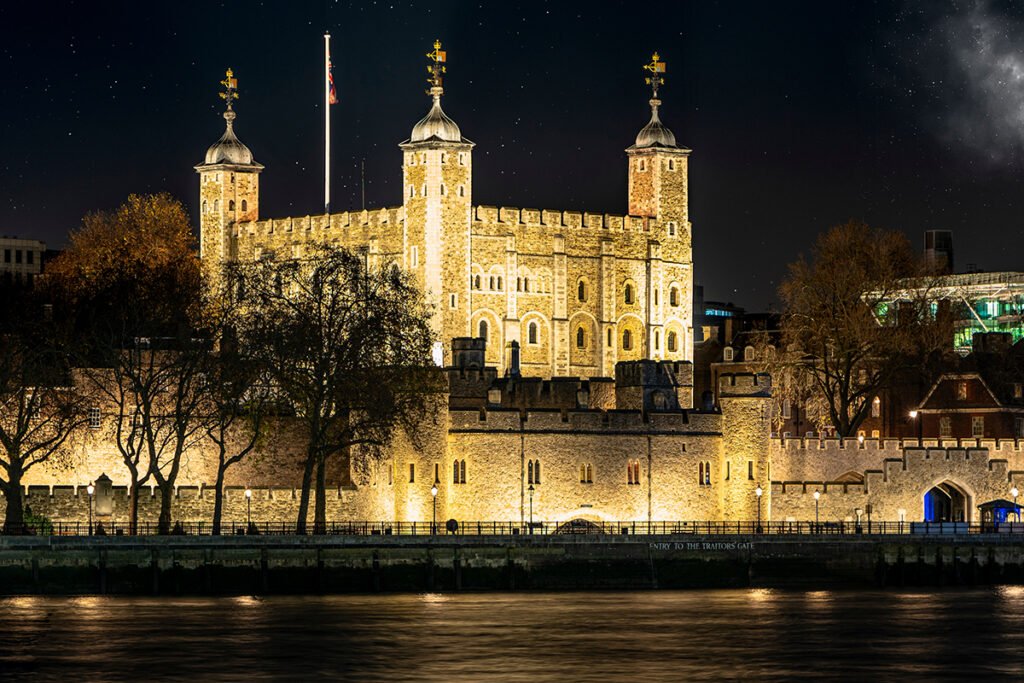
The Tower of London grips you with presence.
It’s not polished or romantic. Its stone walls feel heavy. Its stories are complicated. Power was built here. Power was broken here. And nearly a thousand years later, the fortress still stands at the center of London’s identity.
What makes it unforgettable isn’t just the Crown Jewels or the White Tower’s age. It’s the contrast. One moment, you’re standing where queens were executed. The next, you’re staring at diamonds worn at modern coronations. Few places hold both tragedy and ceremony so tightly together.
If you love medieval history, royal intrigue, architecture, or simply walking through spaces where history genuinely happened, this is essential. Even if you’ve visited grander castles elsewhere in Europe, the Tower feels different. More layered. More intense.
Have you already visited the Tower of London?
💬 What stayed with you most — the ravens on the battlements, the silence of Tower Green, or the brilliance of the Crown Jewels? Share your experience in the comments. Your perspective might help another traveler decide what to focus on.
👉 And if this fortress sparked your curiosity about Britain’s royal history, don’t stop here. Continue your exploration with:
- Inside Buckingham Palace: Secrets, State Rooms & How to Visit the King’s London Residence
- Windsor Castle Uncovered: History, Architecture, Legends & Practical Tips
- Top 10 Best Castles to Visit in England: History & Travel Tips
- 25 Best Castles to Visit in Europe: Iconic & Hidden Gems
The Tower may be London’s most dramatic stronghold — but it’s only the beginning of the story.
🏰✨ Thanks for reading. If this guide helped you plan your visit to The Tower of London, follow along for more in-depth castle histories and practical travel insights. You can also follow us, CastleQuest Chronicles, on Instagram, Facebook, Pinterest, YouTube, TikTok, and X.