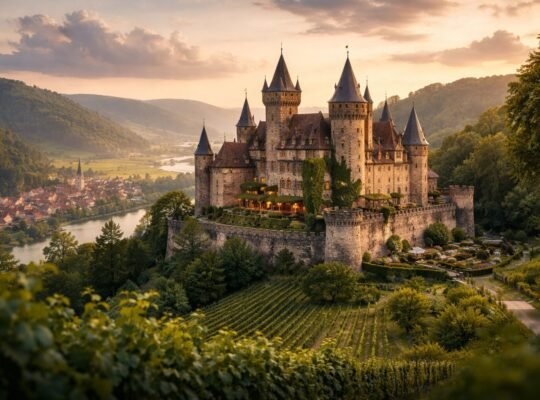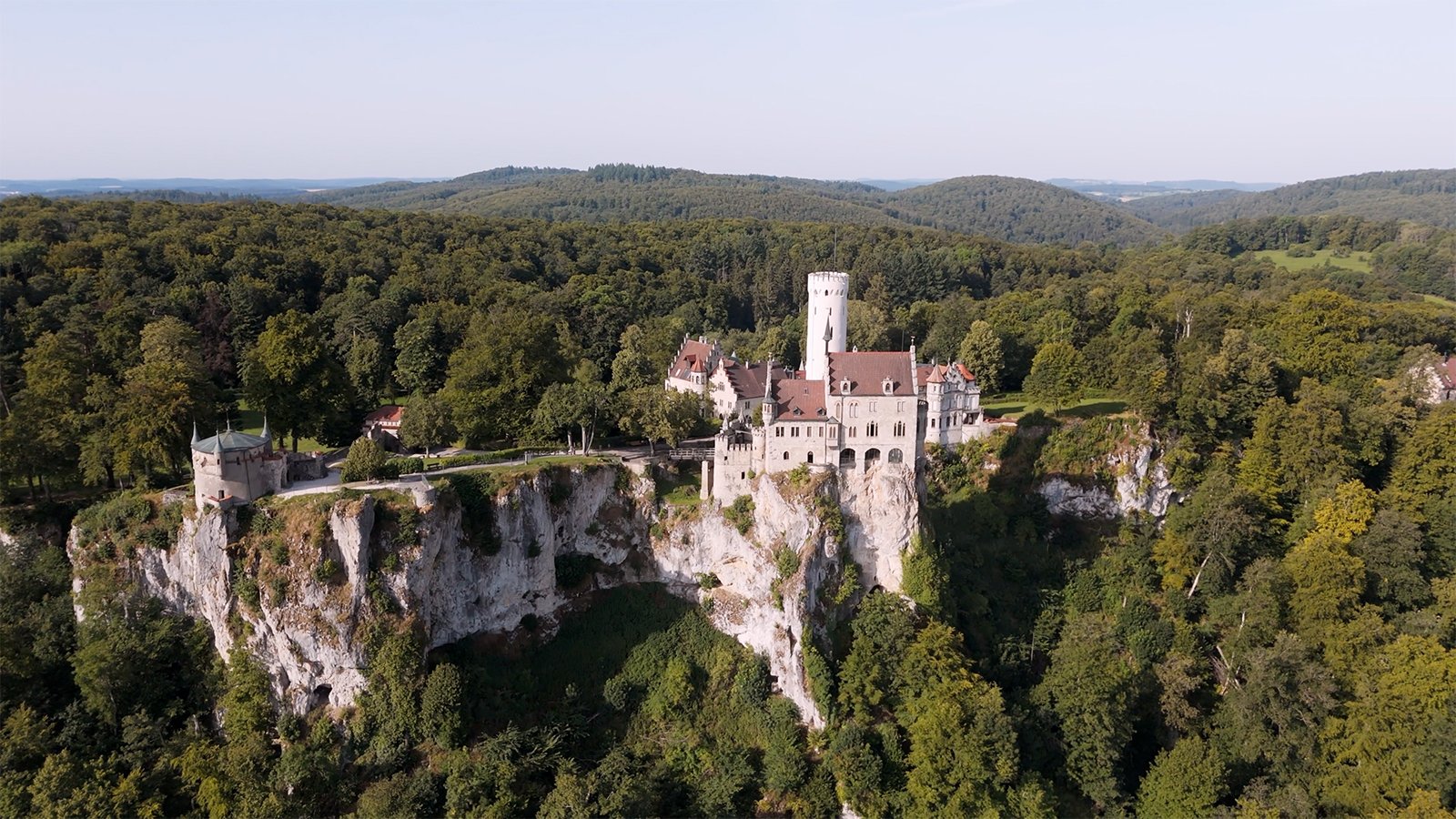
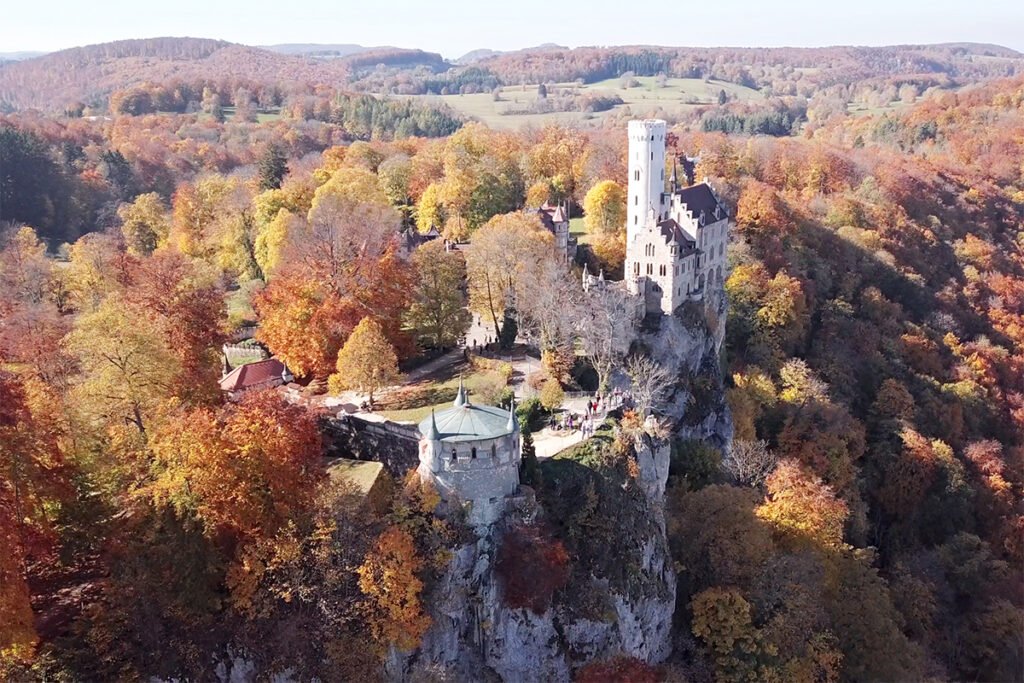
There’s a moment on the forest path above the Echaz Valley when the trees thin out and the rock drops away. Then you see it. Lichtenstein Castle, balanced on a limestone cliff like a stage set suspended in midair. It doesn’t sprawl. It doesn’t dominate the landscape with size. It simply appears—towers, bridge, battlements—precise and theatrical, as if someone placed it there for dramatic effect and walked away.
That feeling is no accident. Lichtenstein Castle isn’t medieval in the usual sense, even though it looks the part. What you’re seeing is a 19th-century vision of the Middle Ages, built at the height of Germany’s Romantic movement. This castle was designed to stir emotion, to tell a story, and to frame a view. And it does all three with surprising confidence.
In a country filled with heavyweight names and vast palace complexes, Lichtenstein feels refreshingly focused. It’s intimate. Personal. You don’t wander for hours through endless wings. Instead, you move room by room, tower by tower, always aware of the cliff beneath your feet and the valley opening below. The experience is less about ticking boxes and more about atmosphere.
What makes Lichtenstein Castle especially compelling is how openly it embraces its role as a fairytale fortress. It doesn’t pretend to be something else. Inspired by a historical novel rather than a medieval siege, it was built to capture an idea of chivalry, romance, and drama that 19th-century visitors longed for. That intention still shapes how the castle feels today.
This guide is here to help you decide if Lichtenstein Castle belongs on your Germany itinerary—and to make sure you get the most out of your visit if it does. We’ll look at the story behind its creation, the architecture that makes it so photogenic, what the visit is really like on the ground, and how to pair it with nearby walks and sights. If you’re drawn to castles with strong character, memorable views, and a sense of place, this one is worth your time.

Lichtenstein Castle: Quick Facts at a Glance
📍 Location: Swabian Alb (Schwäbische Alb), Baden-Württemberg, Germany
🏰 Castle Type: Romantic Revival cliffside castle
🏗️ Construction Period: 1840–1842
👑 Commissioned By: Duke Wilhelm of Urach
📖 Inspired By: Lichtenstein (1826), a historical novel by Wilhelm Hauff
🎭 Famous For: Dramatic cliffside setting, fairytale silhouette, 19th-century Romantic design
🏞️ Landscape: Perched above the Echaz Valley, surrounded by forested limestone hills
🧭 Nearest Towns: Honau, Reutlingen
⏱️ Typical Visit Time: 1 to 1.5 hours (including guided tour)
🌐 Official Website: schloss-lichtenstein.de
Small in scale but big on atmosphere, Lichtenstein Castle is less about grandeur and more about precision, views, and storytelling.

The Story Behind Lichtenstein Castle: A Romantic Dream Carved in Stone
To understand why Lichtenstein Castle looks the way it does, you have to step back into early 19th-century Germany. This was a time when writers, artists, and aristocrats were looking backward with longing. The Middle Ages, once dismissed as dark and crude, were being rediscovered as an age of honor, loyalty, and dramatic storytelling. Castles weren’t just ruins anymore. They were symbols.
At the center of this revival was a young writer named Wilhelm Hauff. In 1826, he published a historical novel titled Lichtenstein. The book told a story of loyalty and resistance during the early 1500s, set in the rugged hills of what is now the Swabian Alb. The novel became wildly popular. Readers didn’t just imagine the story. They wanted to see it.
Hauff’s fictional castle was inspired by the ruins of an older medieval fortress that once stood on this very ridge. That original stronghold, also called Lichtenstein, dated back to the 12th century. It had been destroyed and rebuilt several times before finally falling into ruin. By the early 1800s, little remained beyond fragments of stone and local memory. But the idea of the castle lived on—now fueled by romantic imagination rather than military necessity.
Enter Duke Wilhelm of Urach, a cousin of the King of Württemberg and a man deeply influenced by Romantic ideals. Like many aristocrats of his time, he was captivated by medieval legends, chivalric values, and the emotional pull of history. When he read Hauff’s novel, he didn’t just admire it. He saw an opportunity.
Between 1840 and 1842, the duke commissioned the construction of a new castle on the dramatic cliff above the Echaz Valley. This was not a restoration. It was a reinvention. The goal wasn’t to rebuild the medieval fortress stone by stone. It was to create a castle that felt medieval—one that matched the mood of Hauff’s story and the Romantic spirit of the age.
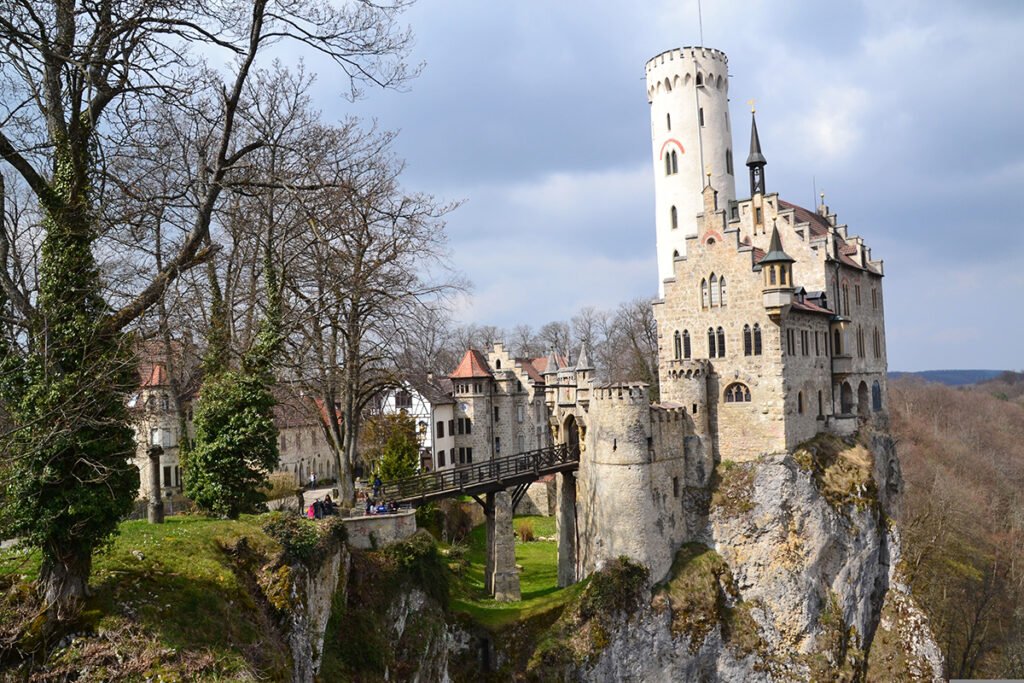
This distinction matters. Lichtenstein Castle was never meant to defend territory or withstand a siege. It was designed as a statement. Every tower, arch, and battlement was chosen for visual impact and symbolism. The narrow bridge leading to the entrance wasn’t a military choke point. It was a theatrical reveal. The cliffside perch wasn’t about dominance. It was about drama.
At the time, this approach was both fashionable and controversial. Some historians criticized Romantic castles as fantasies with no historical discipline. Others embraced them as expressions of cultural identity. Lichtenstein firmly belongs to the latter camp. It doesn’t apologize for its inspiration. It celebrates it.
What makes the story more compelling is how personal the project was. Duke Wilhelm didn’t build Lichtenstein as a grand royal residence. He built it as a private retreat, a place for reflection, collections, and hosting select guests. Inside, the rooms were carefully curated with medieval art, weapons, stained glass, and woodwork—not to deceive visitors into thinking they were original, but to immerse them in an atmosphere.
The castle quickly became known as a physical embodiment of German Romanticism. Writers praised it. Travelers sought it out. And unlike many noble estates, it survived the political upheavals of the late 19th and 20th centuries largely intact. While borders shifted and monarchies fell, Lichtenstein remained quietly perched above the valley, its purpose unchanged.
Today, that origin story shapes the visitor experience in subtle ways. You’re not walking through layers of medieval history compressed over centuries. You’re stepping into a carefully composed vision—one moment in time when imagination, literature, and architecture aligned. That clarity gives the castle a distinct personality.
Lichtenstein Castle doesn’t try to overwhelm you with scale or historical complexity. Instead, it invites you to understand why it exists. It’s a reminder that castles aren’t only products of war and power. Sometimes, they are born from stories—and built to make those stories feel real.

Architecture & Design: A Castle Built for Drama, Not Defense
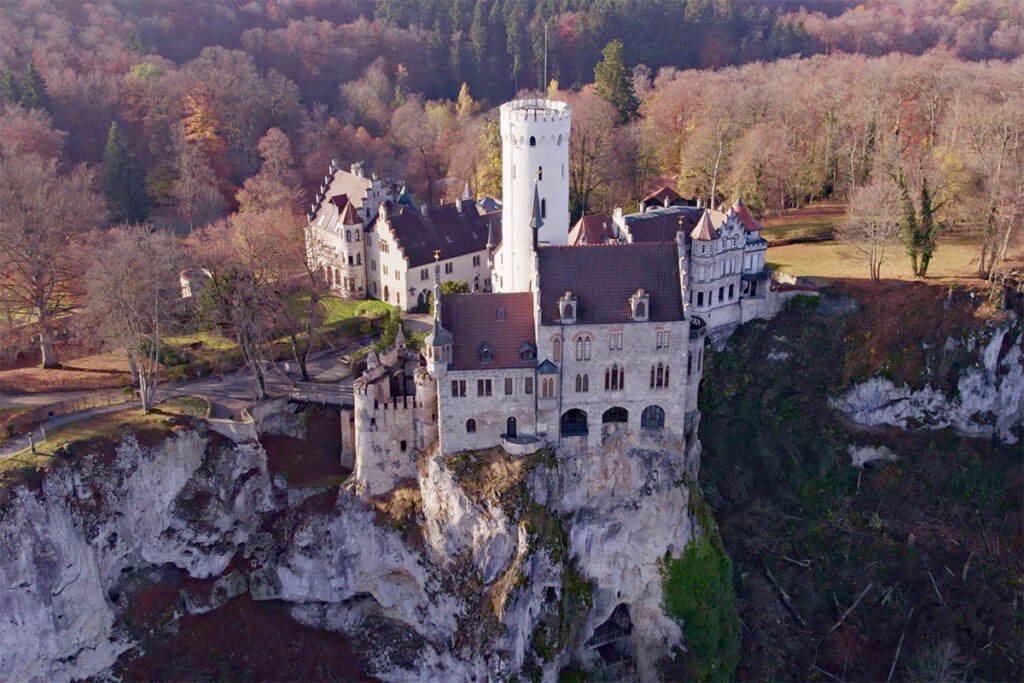
Lichtenstein Castle was never meant to be practical. That’s part of its charm. Every element of its design serves a visual or emotional purpose, and once you realize that, the architecture starts to make sense in a very different way than a medieval fortress would.
The most striking feature is its location. Lichtenstein Castle clings to the edge of a limestone cliff high above the Echaz Valley, with sheer drops on multiple sides. From below, the castle looks almost unreal, as if it were carved directly from the rock. From above, it feels exposed, narrow, and deliberate. This was a conscious choice. The site wasn’t selected for defense or control of trade routes. It was chosen for the view.
Approaching the castle is part of the design experience. The narrow footbridge leading to the entrance stretches across open air, forcing you to slow down and look around. This isn’t a defensive drawbridge meant to repel attackers. It’s a moment of tension and reveal, carefully staged so the castle feels earned when you finally step inside.
Architecturally, Lichtenstein is a textbook example of the Romantic Revival style. The towers are slender rather than massive. The battlements are decorative rather than functional. Windows are placed to frame landscapes, not to fire arrows. The proportions favor elegance over strength. It’s a castle designed to be admired from every angle, especially from below, where its silhouette cuts sharply against the sky.
One of the most noticeable design choices is the castle’s compact layout. Unlike sprawling palace complexes, Lichtenstein is vertically stacked. Rooms rise above one another, connected by tight staircases and narrow corridors. This creates an intimate atmosphere. You’re always aware of where you are in relation to the cliff, the towers, and the surrounding forest.
Inside, the Romantic vision continues. The interiors were carefully assembled to evoke a medieval mood without pretending to be untouched by time. Wood-paneled walls, painted ceilings, and stained glass windows fill the rooms with color and shadow. Armor, weapons, and heraldic symbols line the walls—not as museum pieces behind glass, but as part of the setting.
The Great Hall stands out as the emotional heart of the castle. It’s not vast, but it feels ceremonial. Light filters through stained glass, reflecting off carved wood and painted details. This was a space meant for storytelling, conversation, and reflection rather than feasts or political gatherings. You can sense that it was designed for atmosphere first.
One of the most impressive aspects of the interior design is how well it balances detail with restraint. The rooms are richly decorated, but not cluttered. There’s space to breathe, to notice individual elements, and to absorb the setting. That restraint keeps the castle from tipping into parody, which is always a risk with Romantic architecture.
From the towers, the design payoff becomes clear. Views open across the Swabian Alb, with forests rolling into the distance and villages far below. These viewpoints weren’t afterthoughts. They were central to the castle’s purpose. Standing there, it’s easy to understand why the builders prioritized location over scale. The landscape does half the work.
Lichtenstein Castle’s architecture succeeds because it knows exactly what it is. It doesn’t try to compete with medieval giants built for war. Instead, it offers a distilled version of what people imagine a castle should be: dramatic, elevated, and emotionally charged. Every stone reinforces that idea.
For visitors, this clarity makes the experience feel cohesive. Nothing seems accidental. Nothing feels out of place. Lichtenstein Castle may be a product of the 19th century, but its design achieves something timeless—a setting where architecture, landscape, and imagination meet without apology.
Visiting Lichtenstein Castle: What to Expect, Plan, and Know Before You Go
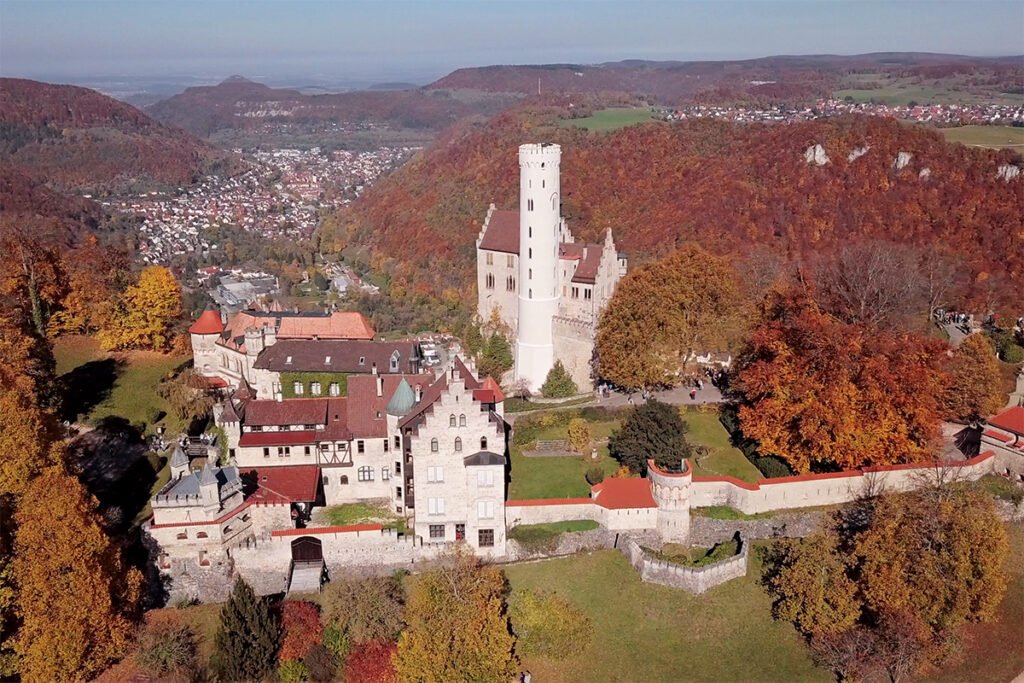
Visiting Lichtenstein Castle is a focused experience. You don’t drift in and out at your own pace, and you don’t wander endlessly through open courtyards. Instead, the visit is structured, intentional, and surprisingly personal. That structure is part of what keeps the castle feeling special rather than overrun.
🛣️ How to Get There
Lichtenstein Castle sits in the Swabian Alb, perched above the small village of Honau. The setting is rural, wooded, and quiet, which is exactly how it should be.
If you’re driving, the approach is straightforward. From Stuttgart, the trip takes about an hour. Parking is available near the trailhead below the castle, but from there, you’ll need to walk uphill through the forest. The walk isn’t long, but it’s noticeable. Comfortable shoes matter here, especially if the ground is damp.
Public transport is possible, though it requires patience. Trains run from Stuttgart to Reutlingen, followed by a bus to Honau. From the bus stop, you’ll still need to walk uphill. It’s doable, but allow extra time and check schedules carefully, especially on weekends.
If you enjoy walking, the approach becomes part of the experience. The forest trail builds anticipation, and the first glimpse of the castle through the trees feels earned rather than staged.
🎟️ Tickets & Guided Tours
One of the most important things to know before arriving is this: Lichtenstein Castle can only be visited on a guided tour. There is no self-guided interior access.
Tours run regularly throughout the day, usually every 20 to 30 minutes, depending on the season. Tickets are purchased on-site at the ticket office directly at the entrance, and while reservations aren’t always required, arriving earlier in the day gives you more flexibility. During weekends and peak summer months, tours can fill up quickly.
The guided tour lasts about 30 minutes and covers the interior rooms, halls, and key architectural features. Photography inside is often restricted, which encourages visitors to stay present rather than distracted. Outside areas and viewpoints are typically open for photos before and after the tour. Drone flights are banned.
The tours are informative without being overwhelming. Guides focus on the castle’s origin story, architectural intent, and notable interior elements. You won’t be buried in dates or dynasties. Instead, the narrative stays aligned with why the castle exists in the first place.
For the most up-to-date information on opening times and current ticket prices, check the official page for the castle. It’s updated regularly and gives you a clear picture of what to expect before you arrive.
📅 Best Time to Visit
Timing matters more here than at larger castles.
Spring brings fresh greenery and soft light, which works beautifully with the pale stone and cliffside setting. Trails are quieter early in the season, though rain can make paths slippery.
Summer is the busiest period. The forest offers shade, and the views are expansive, but midday crowds are common. If you visit in summer, aim for the first or last tours of the day. Late afternoon light adds depth to the landscape and gives the castle a warmer tone.
Autumn is arguably the most atmospheric season. The surrounding forest turns gold and red, and the castle feels tucked into the landscape rather than hovering above it. This is also one of the best times for photography, especially on clear days.
Winter visits are more limited. The castle may have reduced hours, and icy conditions can affect access. When snow settles on the towers and cliffs, the scene is striking, but practicality takes priority.
If you want a quieter experience, weekdays outside school holidays are ideal. Lichtenstein never feels chaotic, but timing can make the difference between calm and crowded.
♿ Accessibility & Practical Considerations
Lichtenstein Castle’s dramatic location comes with limitations.
The paths leading up to the castle are uneven and include inclines. Inside, staircases are narrow and steep, reflecting the vertical layout of the building. Wheelchair access is extremely limited, and visitors with mobility challenges may find the interior tour difficult.
For families, the castle works well with older children who enjoy stories and scenery. Younger kids may struggle with the pace and rules of the guided tour, especially since touching objects is not allowed.
Facilities on-site are minimal. There is a small shop and basic amenities, but this is not a place for extended indoor breaks or dining. Plan meals before or after your visit in nearby towns.
Weather plays a role. Wind is common on the cliff, and temperatures can feel cooler than in the valley below. A light jacket is useful even on mild days.
🧭 What the Visit Feels Like
What surprises many visitors is how contained the experience is. You don’t feel rushed, but you also don’t linger aimlessly. The guided format keeps the story tight and the pace steady.
The real payoff often comes after the tour. Once you’ve seen the interior, stepping back outside and walking toward the viewpoints changes how you see the castle. You start to understand the design choices. The narrow bridge. The placement of the towers. The way the landscape does as much storytelling as the stone.
If you arrive expecting a long checklist of rooms, you may be underwhelmed. But if you come for atmosphere, setting, and intention, Lichtenstein delivers.
🧠 Tips That Make a Difference
- Arrive earlier than you think you need to. It gives you flexibility with tour times.
- Walk the perimeter paths after your tour. The best views are often outside the formal route.
- Don’t rush to leave. The castle reveals itself slowly, especially when the crowds thin.
- Combine your visit with a walk in the surrounding forest to balance structure with freedom.
Lichtenstein Castle isn’t designed to consume an entire day. It’s designed to leave an impression. With the right expectations and a bit of planning, it does exactly that.
Views, Photography & Walks Around Lichtenstein Castle
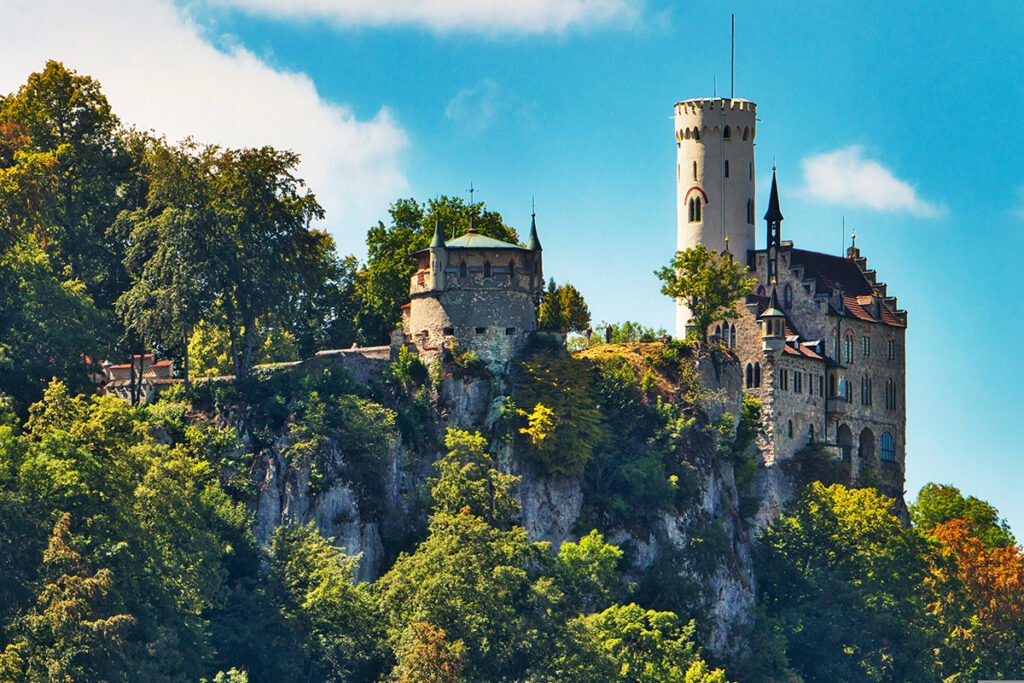
Lichtenstein Castle rewards visitors who linger outdoors. While the interior tells the story, the surroundings provide the emotion. The castle’s cliffside position above the Echaz Valley creates some of the most memorable views in the Swabian Alb, and you don’t need to stray far to find them.
The most obvious viewpoint sits just beyond the main structure, where the land drops sharply away, and the valley opens below. From here, the castle feels suspended rather than anchored. On clear days, the layers of forested hills stretch into the distance, giving a real sense of height and isolation. This is the spot where most first-time visitors pause without realizing it, drawn by the contrast between solid stone and open space.
For photography, timing matters more than equipment. Midday light can flatten the castle’s pale walls, especially in summer. Early morning and late afternoon are better, when shadows define the towers and the cliff face gains texture. In autumn, the surrounding forest does half the work for you, framing the castle with warm color that shifts throughout the day.
One of the best angles is not from the entrance, but from the trails below. Several forest paths wind through the slope beneath the castle, offering partial views through the trees. These glimpses feel more intimate than the classic postcard shot and emphasize how tightly the structure clings to the rock. If you enjoy walking, this is where Lichtenstein really shines.
The trails themselves are manageable and well-marked, though they can be uneven in places. You don’t need hiking gear, but sturdy shoes help. The walk from the parking area to the castle already sets the tone, but extending your route after the visit turns the experience into something slower and more reflective.
One popular option is to follow the forest paths along the ridge, where viewpoints appear without warning. These are often quieter than the main platform near the castle. On weekdays, it’s possible to find yourself completely alone, with only the sound of wind in the trees and the occasional echo from the valley below.
Winter brings a different mood. Without foliage, the cliff feels steeper, and the castle’s silhouette becomes sharper against the sky. Snow adds drama but also demands caution, as paths can become slippery. When conditions allow, the contrast between white stone and dark forest is striking.
What makes walking around Lichtenstein Castle special is the way the setting reinforces the castle’s purpose. This was never meant to be approached casually. The landscape slows you down, directs your attention outward, and frames the castle as part of a larger scene rather than an isolated attraction.
If you have the time, don’t treat Lichtenstein as a quick stop. Step away from the entrance, follow the paths, and let the views do their work. The castle becomes more convincing the farther you move from it—and that’s exactly how it was meant to be experienced.
Nearby Attractions Worth Pairing With Your Visit
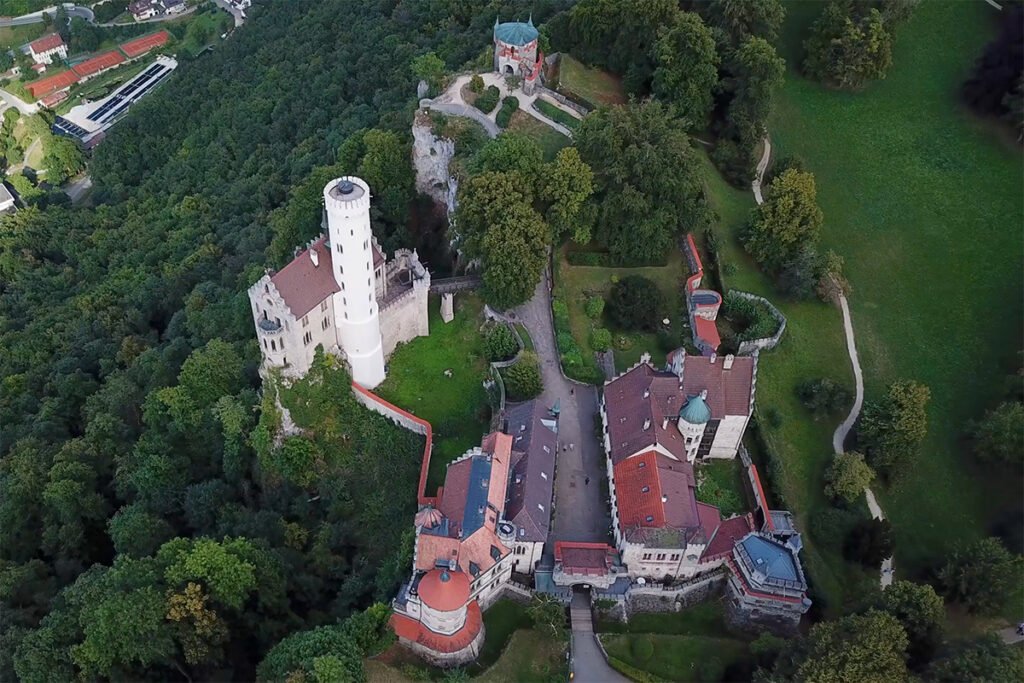
Lichtenstein Castle works best as part of a wider day in the Swabian Alb. The region isn’t packed with headline sights, and that’s its strength. What you’ll find instead are small towns, quiet trails, and natural features that complement the castle’s mood rather than compete with it.
Honau: A Quiet Base Beneath the Cliffs
Just below the castle lies Honau, a small village that feels tied to the landscape rather than built on top of it. This is where many of the walking paths begin, and it’s a good place to slow down after your visit. You won’t find grand attractions here, but you will find quiet streets, traditional houses, and easy access to forest trails. It’s ideal if you want to extend your time outdoors without committing to a long drive.
Reutlingen: A Lively Stop for Food and Wandering
About 15 minutes away, Reutlingen offers a change of pace. The old town is compact and walkable, with half-timbered buildings, cafés, and small shops clustered around the center. It’s a practical place for lunch or an early dinner after your castle visit.
Reutlingen also gives you a sense of everyday life in this part of Germany. It’s not polished for tourism, which makes it feel grounded and useful rather than performative. If you’re traveling by public transport, this is likely where you’ll pass through anyway.
Nebelhöhle: A Natural Detour Underground
If you’re interested in something different, the Nebelhöhle is a worthwhile detour. Located a short drive from Lichtenstein Castle, this limestone cave offers guided tours through chambers filled with stalactites and stalagmites. It’s an easy add-on that contrasts nicely with the castle’s open-air drama.
The cave visit is structured and brief, making it manageable even if you’re not planning a full day of sightseeing. It’s also a good option if the weather turns unpredictable.
Walking and Hiking in the Swabian Alb
The wider Swabian Alb is known for its walking trails, and Lichtenstein Castle sits right in the middle of it. You don’t need to be a serious hiker to enjoy the area. Short routes along the ridge or through the forest offer enough elevation and scenery to feel rewarding without being demanding.
These walks reinforce what makes the region appealing. There’s space, quiet, and a sense that the landscape hasn’t been rearranged for visitors. It’s a natural extension of the castle experience, especially if you want to balance guided structure with personal exploration.
How to Combine It All
A realistic plan is to visit Lichtenstein Castle in the morning, walk the surrounding trails, and then head to Reutlingen for a meal. If you have extra time, add the Nebelhöhle or linger longer in the forest. None of these spots requires rushing, and that’s the point.
The strength of this area lies in how easily everything fits together. Lichtenstein Castle may be the highlight, but it’s the surrounding landscape and towns that give the visit depth.
Lichtenstein Castle FAQ: What Travelers Really Want to Know
Is Lichtenstein Castle worth visiting compared to larger castles in Germany?
Yes, but for different reasons. Lichtenstein Castle isn’t about scale or royal grandeur. It stands out for its setting, atmosphere, and clarity of purpose. If you value dramatic views and character over size, it’s absolutely worth the visit.
How much time should I plan for a visit?
Plan for about 1 to 1.5 hours. The guided tour itself takes around 30 minutes, with additional time for viewpoints and walking around the grounds. If you add nearby trails, allow half a day.
Can you visit Lichtenstein Castle without a guided tour?
No. Interior access is only possible with a guided tour. The exterior viewpoints and surrounding paths can be explored independently, but the rooms inside require a guide.
Is the guided tour available in English?
English tours are available for groups (15+ people) by appointment, Monday–Friday. Regular tours are in German, but you’ll receive a multilingual brochure.
Is Lichtenstein Castle suitable for children?
It works best for older children who enjoy stories and dramatic settings. Younger kids may find the guided format and restricted movement challenging, especially since touching objects isn’t allowed.
Is the castle accessible to visitors with mobility limitations?
Accessibility is limited. The uphill approach, narrow staircases, and uneven floors make the interior tour difficult for visitors with mobility challenges. Wheelchair access is extremely restricted.
What’s the best time of day to visit?
Early morning or late afternoon is ideal. These times are quieter and offer better light for photography. Midday tends to be busier, especially in summer.
Can you take photos inside the castle?
Photography inside is usually restricted. Outside areas and viewpoints are open for photos, and these are where the castle is most visually striking anyway.
Is Lichtenstein Castle crowded?
It can get busy on weekends and during peak summer months, but it rarely feels overwhelming. The guided tour system naturally limits the crowd size inside.
Can Lichtenstein Castle be combined with other attractions in one day?
Yes. It pairs well with walking trails in the Swabian Alb, a visit to Reutlingen, or a short detour to nearby caves. It’s best seen as part of a relaxed day rather than a rushed stop.
Final Thoughts: Who Lichtenstein Castle Is Really For
Lichtenstein Castle won’t appeal to everyone—and that’s exactly why it works so well. This isn’t a place for racing through endless rooms or chasing superlatives. It’s for travelers who notice atmosphere, who enjoy intention, and who appreciate when a place knows exactly what it is.
If you’re drawn to castles for their mood rather than their military history, Lichtenstein delivers. Its cliffside setting does more storytelling than any display panel ever could. The guided visit keeps the focus tight, while the surrounding forest and viewpoints invite you to slow down and look outward. Together, they create a visit that feels complete without feeling exhausting.
This castle is especially rewarding for photographers, Romantic architecture fans, and travelers who’ve already seen Germany’s bigger names and want something more personal. It’s also ideal if you enjoy pairing cultural visits with nature, since the Swabian Alb quietly enhances everything here.
Lichtenstein Castle doesn’t try to impress through scale. It leaves its mark through precision. You remember the bridge, the height, the way the towers rise from the rock. Long after you’ve moved on, the image sticks.
💬 If you’ve visited Lichtenstein Castle, your experience may differ slightly from the next person’s—and that’s part of its charm. Feel free to share what stood out to you most. And if this kind of castle speaks to you, there’s a whole world of similar strongholds waiting across Europe, each with its own story and setting worth exploring.
👉 If you’re planning your first visit, think of this as a beginning, not a finale. Germany’s castle landscape is remarkably diverse. From Alpine silhouettes in Bavaria to Rhine hilltop fortresses, from refined Renaissance palaces to quiet ruins hidden in forests and valleys, each site reflects its region, its rulers, and a specific turning point in history.
🏰✨ Thanks for reading. If this guide helped you, follow along for more in-depth castle stories and practical travel advice. You’ll also find us on Instagram, Facebook, Pinterest, YouTube, TikTok, and X. And when you’re ready to keep exploring, browse our full collection of castle articles. Many more castles, and many more stories, are waiting.