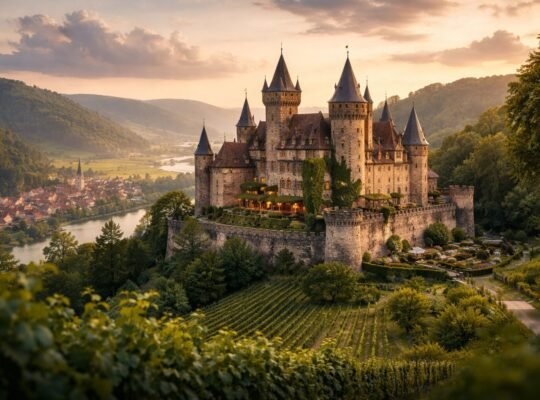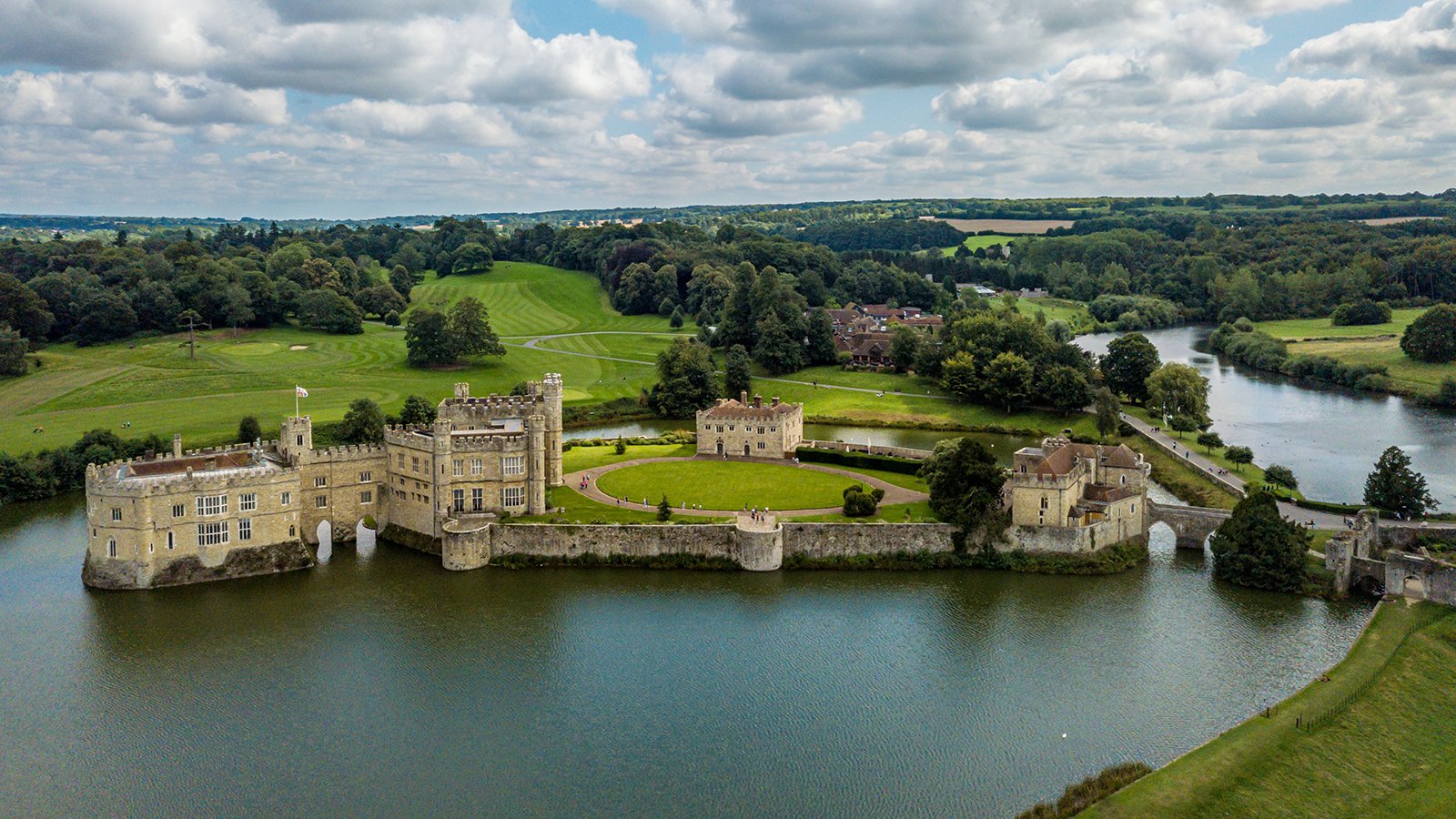
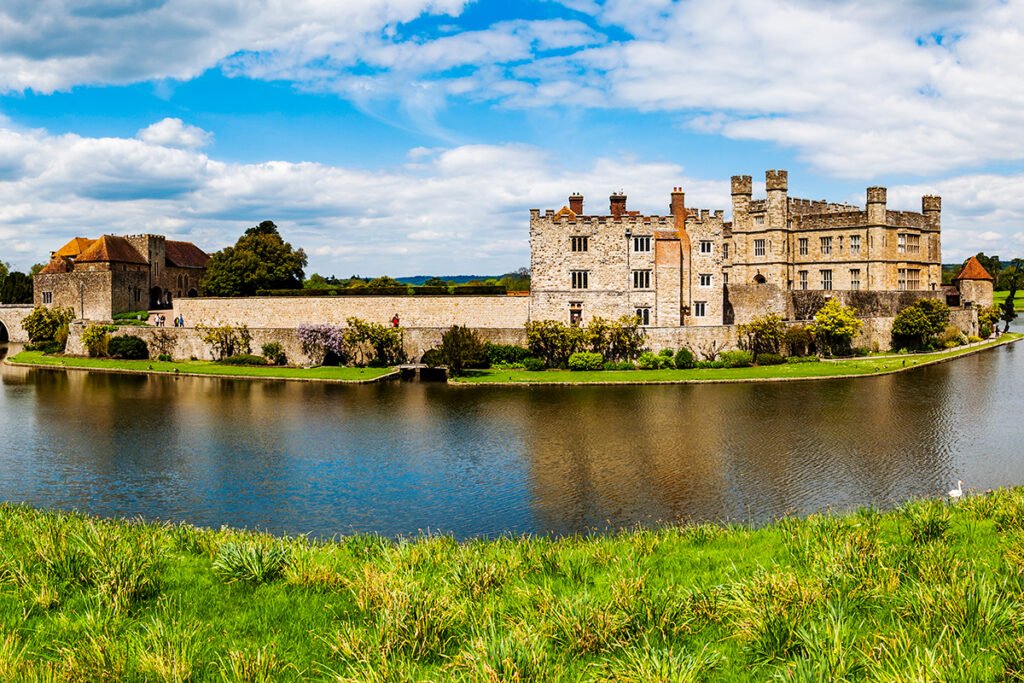
Mist hangs low over the water. Swans cut across the glassy moat. And there it is — rising straight from its own island like something lifted from a storybook.
This is Leeds Castle, and no photo quite prepares you for that first view.
Set deep in the Kent countryside, just over an hour from London, this castle doesn’t sit on a hilltop or cling to a cliff. It floats. Surrounded by 500 acres of parkland and framed by ancient trees, it feels less like a fortress and more like a private world. That’s part of its magic.
But here’s what makes Leeds Castle different from many medieval castles in England: it isn’t just ruins and echoes. It has lived many lives. Built by Norman lords. Claimed by queens. Transformed by Henry VIII. Reinvented in the 20th century as an elegant country retreat. Each era left its mark — in stone, in tapestries, in carefully shaped gardens.
It’s often called “the loveliest castle in the world.” That sounds bold. Maybe even exaggerated. Until you stand on the bridge at golden hour and see the reflection of its towers in the water. Then it makes sense.
And the experience goes far beyond the main building. There’s a maze carved into the hillside. A grotto hidden beneath it. Falconry displays that bring medieval traditions to life. Formal gardens bursting with color in spring. Wide lawns that feel made for slow wandering.
So is Leeds Castle worth the trip?
If you’re searching for one of the best castles in England — one that blends medieval history, royal drama, and real atmosphere — this might be it.
Let’s step inside.

Quick Facts About Leeds Castle
📍 Location: Leeds Village, near Maidstone, Kent, England (Sat Nav: ME17 1PL)
🏗️ Construction Period: Originally built in 1119 (Norman foundations), with major medieval and Tudor expansions
🏰 Architectural Style: Norman origins with Medieval and Tudor elements, later 20th-century country house refinements
🎭 Famous For: “The Loveliest Castle in the World,” its island setting, royal connections, and spectacular gardens
👑 Notable Figures: Henry VIII, Catherine of Aragon, six medieval queens, Lady Baillie
🏆 UNESCO Status: Not a UNESCO World Heritage Site
🌐 Official Website: https://www.leeds-castle.com
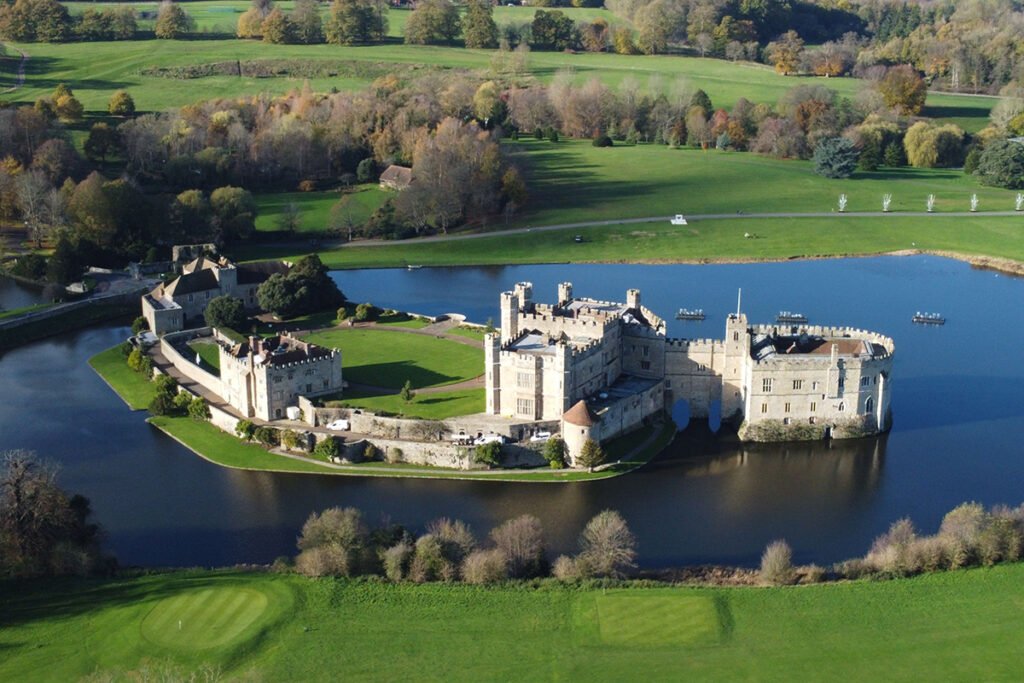
Perched on two small islands in the River Len, Leeds Castle has stood for more than 900 years. Few castles in Kent — or anywhere in England — can claim such a continuous and varied story.
It began as a Norman stronghold. It became a royal palace. It later transformed into an aristocratic country residence. Today, it welcomes visitors from around the world.
And yet, despite its fame, it still feels intimate.
You’re not climbing a windswept ruin. You’re stepping into rooms once walked by queens. You’re crossing a drawbridge that still carries a sense of arrival. You’re wandering gardens designed as carefully as the castle itself.
That combination — fortress, palace, and lived-in home — is what sets Leeds Castle apart from many other medieval castles in England.
Now let’s go back to where it all began.

History & Royal Connections
Long before it became one of the best castles in England to visit, Leeds Castle began as something far more practical: a Norman stronghold guarding a river crossing in Kent.
The first stone castle here was built in 1119 by Robert de Crevecoeur, a Norman baron. Back then, this wasn’t a romantic island retreat. It was a defensive position. Thick walls. Narrow windows. A fortress meant to control movement through the countryside.
But Leeds Castle didn’t stay in private hands for long.
In 1278, King Edward I acquired it. And that changed everything.
The Castle of Queens
If you’ve heard Leeds Castle called “The Castle of Queens,” this is why.
Edward I gave it to his queen, Eleanor of Castile. After her death, it passed to Margaret of France, his second wife. Over the centuries, several royal women would claim Leeds Castle as their residence. It became associated not with kings at war, but with queens in power.
That identity shaped its future.
Rather than remaining purely military, the castle evolved into a refined royal palace. Comfort increased. Interiors softened. Windows widened. The island setting, once strategic, became symbolic — a place set apart from the world.
And then came one of the most famous names connected to Leeds Castle.
Henry VIII and Tudor Transformation
In the early 16th century, King Henry VIII turned Leeds Castle into a palace fit for a king.
Yes, that Henry VIII.
He used it as a residence for his first wife, Catherine of Aragon. The castle was remodeled in the Tudor style, with improved royal apartments and more comfortable interiors. It became less about defense and more about display.
Imagine arriving here in the 1520s. The water shimmering around the walls. Banners flying. Servants moving across courtyards. Musicians echoing through chambers. It must have felt like a royal stage set.
Henry used Leeds Castle strategically, too. It sat conveniently on the route between London and the continent. When he traveled to France for the Field of the Cloth of Gold in 1520 — that extravagant diplomatic summit — Leeds Castle served as one of his stopping points.
But like many Tudor residences, its golden period didn’t last forever.
Civil War and Decline
By the 17th century, England was tearing itself apart during the Civil War. Leeds Castle, still strategically located, became a garrison for Parliamentary forces. It saw military use once again.
After the conflict, the castle passed through private ownership. The medieval and Tudor grandeur faded. Parts were altered. Some were neglected.
For a time, Leeds Castle risked becoming just another aging estate with a glorious past and an uncertain future.
Then, in the 20th century, everything changed.
Lady Baillie’s Vision
In 1926, an American heiress named Olive, Lady Baillie purchased the property. And her impact on Leeds Castle was transformative.
Rather than restoring it as a strict medieval monument, she reinvented it as an elegant country retreat. She hired leading architects and designers, including Armand-Albert Rateau, to redesign interiors in a sophisticated 20th-century style that still respected the castle’s history.
Rooms were refined. Furnishings carefully chosen. Art collected. The castle became a glamorous social hub. Guests included politicians, actors, and aristocrats. Weekends here were known for style and discretion.
Yet Lady Baillie also understood something important: this place mattered beyond private enjoyment.
Before her death in 1974, she established the Leeds Castle Foundation to preserve the castle for public access. Her foresight ensured that Leeds Castle wouldn’t be broken up, sold off, or hidden behind private gates.
Instead, it would become what it is today — a living monument open to visitors.
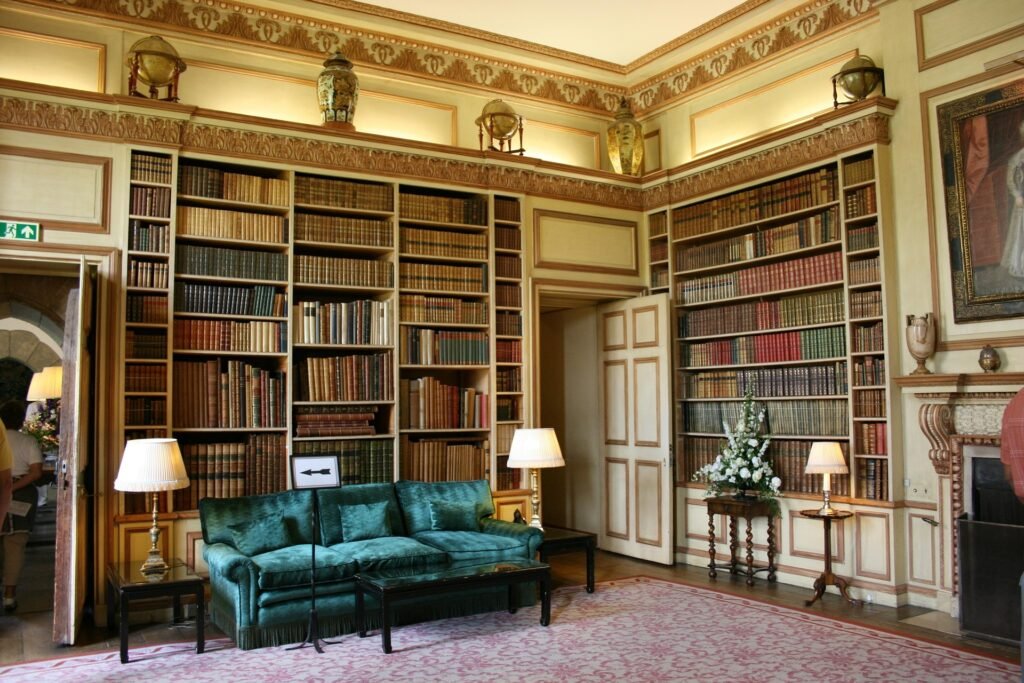
A Castle That Never Became a Ruin
One of the most striking things about visiting Leeds Castle is this: it’s intact.
So many medieval castles in England survive as dramatic ruins — stone shells against the sky. Beautiful, yes. But incomplete.
Leeds Castle feels whole.
Its rooms are furnished. Its floors are polished. Its fireplaces stand ready. Its chapel remains serene. You move through spaces that feel inhabited rather than excavated.
And that continuity is rare.
From Norman fortress to royal palace. From Tudor showpiece to Civil War garrison. From aristocratic estate to public treasure. Few castles have shifted roles so many times without losing their identity.
It’s this layered history — especially the royal connections — that gives Leeds Castle depth. When you cross that stone bridge today, you aren’t just entering a photogenic setting. You’re stepping into nine centuries of adaptation, ambition, survival, and reinvention.
And somehow, despite all that change, the castle still reflects perfectly in the water.
That balance between power and beauty might be why Leeds Castle continues to captivate visitors generation after generation.

Architecture & Design
The first thing you notice about Leeds Castle isn’t a tower or a gatehouse.
It’s the water.
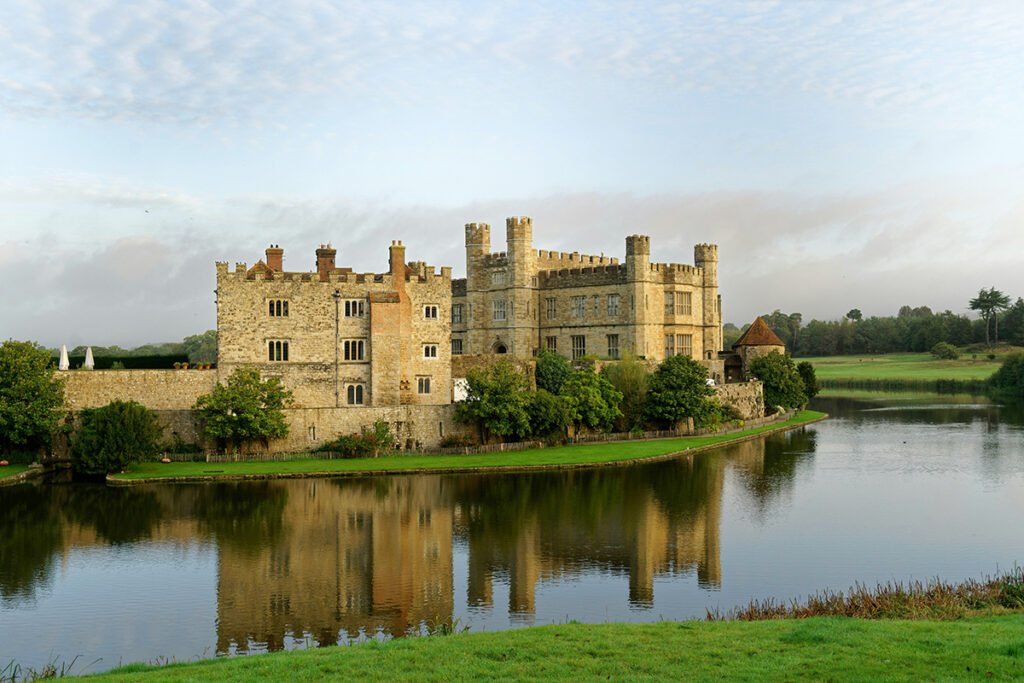
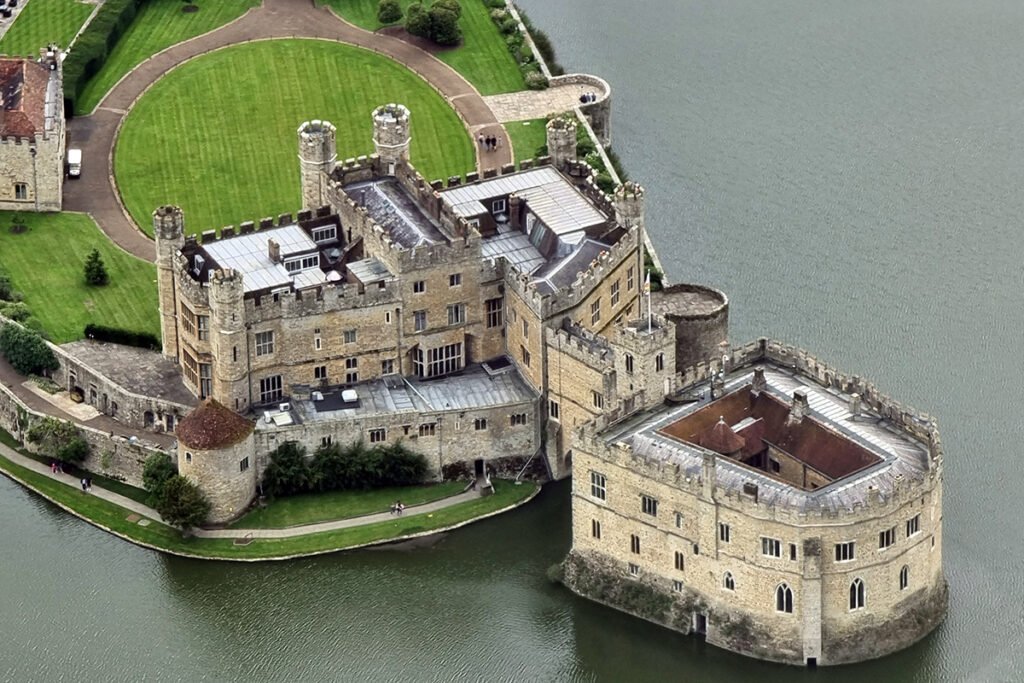
The castle rises from two small islands in a wide, shimmering moat fed by the River Len. On a calm day, the reflection is so clean it feels staged. Towers double. Windows glow. Swans drift past like they’ve been hired for the scene.
This setting isn’t accidental. The water once served as protection. Today, it creates atmosphere. It slows you down before you even cross the bridge.
The Norman Core
At the heart of the complex lies the Gloriette — the oldest surviving section of the castle. This was the medieval stronghold. Thick stone walls. Narrow openings. Compact, defensive design.
From a distance, it looks romantic. Up close, you feel its solidity.
Inside, though, it doesn’t feel harsh. The rooms are intimate rather than cavernous. Fireplaces soften the stone. Windows frame the surrounding parkland. You’re constantly reminded that this was both fortress and residence.
Climb to the upper levels and the view opens wide across the Kent countryside. Rolling lawns. Mature trees. Water stretching in every direction. It’s easy to see why monarchs valued this place.
Tudor Refinement
Henry VIII’s era brought change. Windows grew larger. Interiors became more comfortable. Royal apartments were adapted for display as much as defense.
You won’t find overwhelming Tudor grandeur here like at Hampton Court. Leeds Castle feels more contained. More personal. That’s part of its charm.
The Banqueting Hall is a highlight. Dark wooden beams. Heraldic details. Long tables arranged beneath high ceilings. It’s not hard to picture candlelight flickering against the walls while courtiers whispered at the edges.
Even the staircases tell a story. Some are steep and narrow, pure medieval practicality. Others feel later, smoother, shaped for elegance rather than urgency.
Lady Baillie’s 20th-Century Touch
Then comes the surprise.
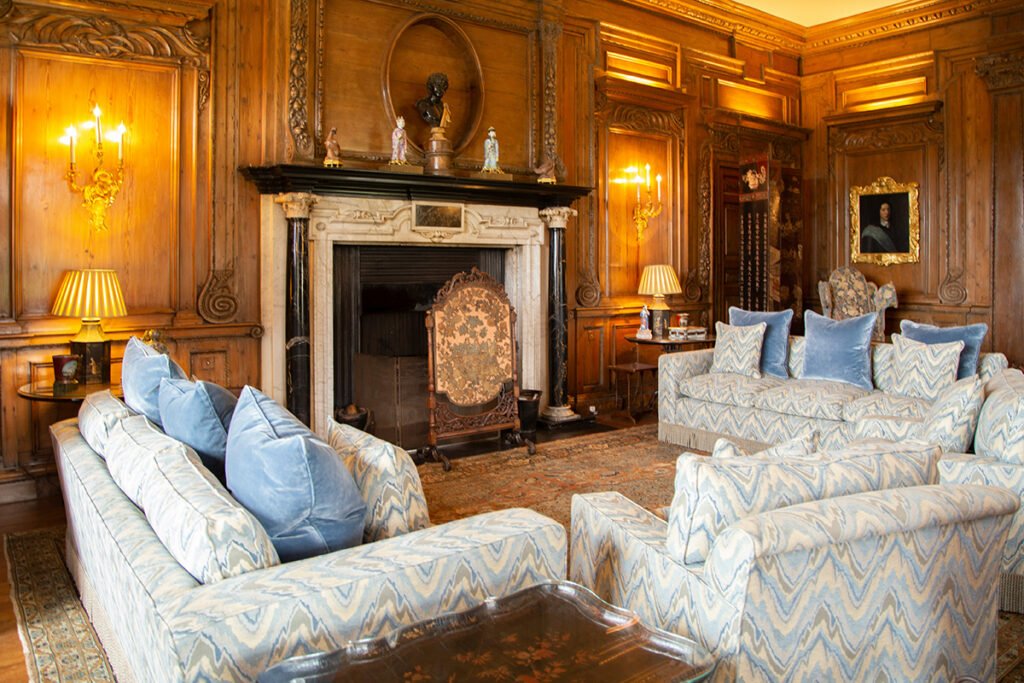
Some rooms feel distinctly 20th century. Refined. Thoughtful. Almost Parisian in places.
That’s Lady Baillie’s influence.
Rather than stripping the castle back to a strict medieval aesthetic, she layered it. Rich textiles. Carefully selected furniture. Art Deco hints. Soft lighting. The result feels curated rather than reconstructed.
It’s this blend — medieval stone meeting modern comfort — that makes Leeds Castle different from many other medieval castles in England. It doesn’t freeze itself in one era. It allows the centuries to coexist.
The Gardens: Designed to Be Explored
Step outside, and the experience expands dramatically.
Leeds Castle isn’t just a building. It’s an estate.
The Culpeper Garden bursts with color in spring and summer. Roses climb walls. Borders spill over with layered blooms. It feels formal without being stiff.
Then there’s the Lady Baillie Mediterranean Garden Terrace. Clean lines. Sculpted shrubs. A more contemporary contrast to the medieval core. On a sunny afternoon, this area feels almost southern European.
But perhaps the most playful feature is the maze.
Carved into a hillside, it draws visitors in with quiet confidence. The path twists and turns, hedges rising above your head. It’s surprisingly easy to lose direction. When you reach the center, you don’t just exit the way you came. You descend into a grotto — a shell-lined, softly lit passage that feels theatrical and unexpected.
It’s whimsical. And slightly surreal.
Falconry and Open Space
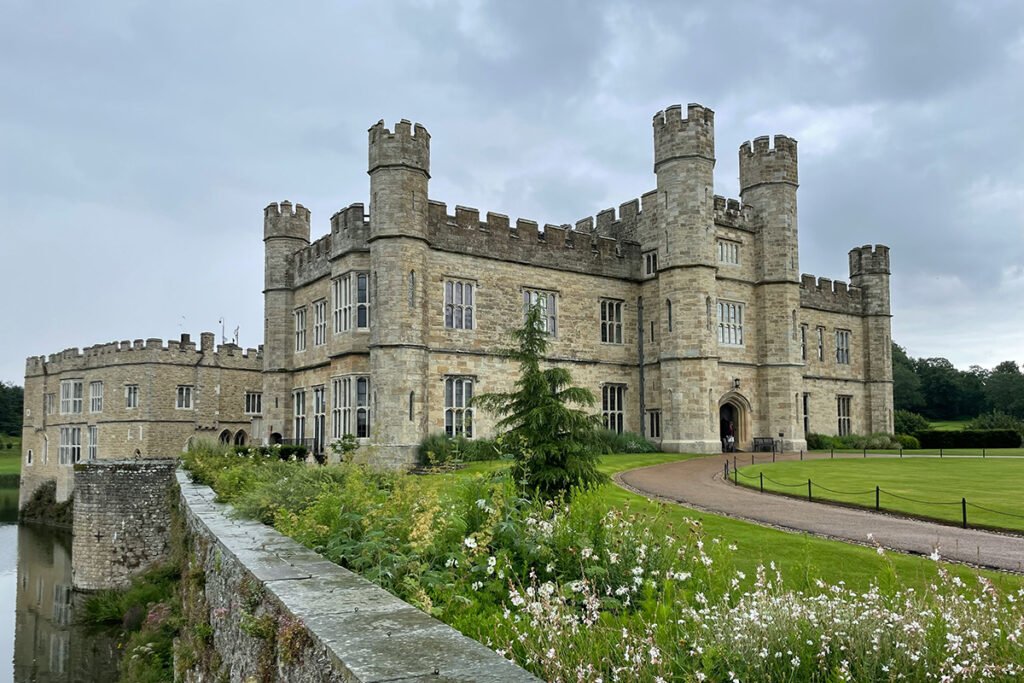
Leeds Castle also embraces medieval tradition through its falconry displays. Watching birds of prey sweep low over the lawns adds movement and sound to the landscape. It reconnects the estate to its past without feeling staged.
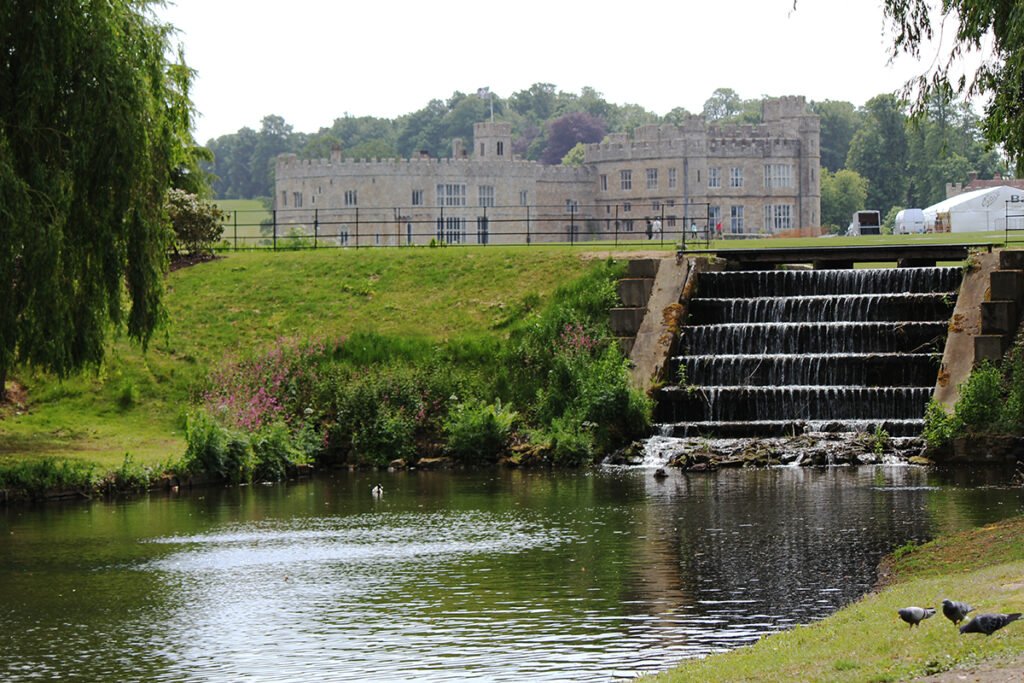
Beyond the formal gardens, wide lawns stretch toward ancient trees. You’ll see families picnicking. Couples walking hand in hand. Children racing toward the water’s edge.
The scale is generous. Yet it never feels overwhelming.
A Castle That Photographs Itself
Architecturally, Leeds Castle may not be the largest or most fortified castle in Kent. But it understands composition.
Every angle seems considered.
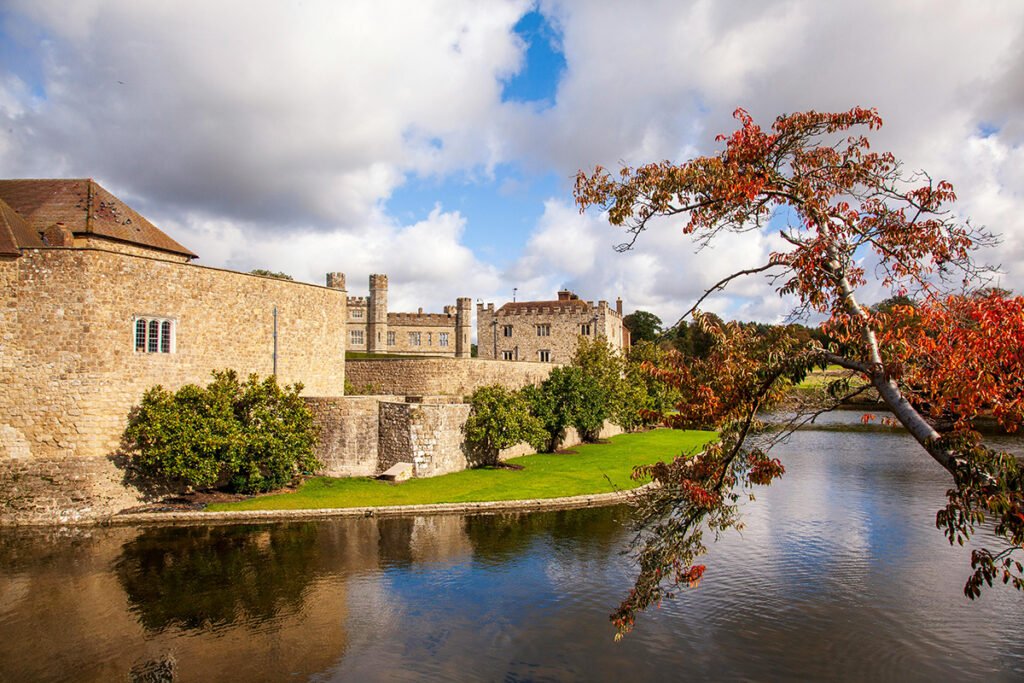
From the stone bridge at the entrance. From the far bank across the moat. From the garden terraces above. Each viewpoint frames the castle differently. Early morning light makes it glow pale gold. Late afternoon gives it warmth and depth.
And at dusk, when the crowds thin and the water darkens, the silhouette becomes almost cinematic.
That’s the quiet strength of Leeds Castle’s design. It doesn’t rely on sheer scale or intimidation. It relies on balance — water and stone, defense and comfort, medieval structure and cultivated beauty.
It was built to protect. It evolved to impress. Today, it simply invites you in.
Visiting Leeds Castle: What You Need to Know Before You Go
Visiting Leeds Castle isn’t just about stepping inside a medieval building. It’s about spending a full day — sometimes longer — in a landscape designed to be explored slowly.
This isn’t a quick “tick-the-box” stop. Plan for time. You’ll want it.
🛣️ How to Get There
One of the best things about Leeds Castle is how easy it is to reach from London.
By Train:
Direct trains run from London Victoria to Bearsted Station in about one hour. From there, it’s a short taxi ride or a seasonal shuttle bus to the castle entrance. If you’re planning a day trip from London, this is one of the simplest castle options in England.
By Car:
Driving takes roughly 1 to 1.5 hours from central London, depending on traffic. The castle is well signposted from the M20 motorway. Parking is included in your admission ticket, which makes driving a convenient option — especially if you want flexibility.
If you’re already exploring Kent, Leeds Castle fits easily into a wider itinerary that might include Canterbury or the White Cliffs of Dover.
🎟️ Entry & Tickets
Here’s something unusual: your entry ticket acts as a 12-month pass.
That means once you purchase admission, you can return as often as you like within a year at no additional charge (excludes special ticketed events). It’s a clever model — and surprisingly generous.
Ticket prices are on the higher end compared to some medieval castles in England, but you’re paying for the estate experience, not just the building.
What’s included:
- Access to the castle interior
- Full access to gardens and grounds
- The maze and grotto
- Falconry displays (at scheduled times)
- Seasonal events
For the most up-to-date information on opening times and current ticket prices, check the official page for the castle. It’s updated regularly and gives you a clear picture of what to expect before you arrive.
If you’re visiting in peak summer, booking online in advance is wise. Weekends and school holidays can be busy.
And here’s an honest tip: arrive early. The first hour after opening is calm, and the light across the moat is beautiful.
📅 Best Time to Visit
Leeds Castle changes character with the seasons.
Spring brings color to the Culpeper Garden. Tulips and early blooms brighten the grounds, and the parkland feels fresh and open.
Summer is the liveliest period. Events, outdoor performances, and families fill the lawns. The long daylight hours allow you to linger well into the evening. It’s also when the estate feels most vibrant.
Autumn might be the most underrated season. The surrounding trees turn golden and rust-red. Reflections deepen in the water. The atmosphere becomes quieter, almost contemplative.
Winter strips the landscape back. The moat feels moodier. The stone looks colder. Some garden areas may be less colorful, but the castle itself stands out sharply against bare trees.
If you prefer fewer crowds, aim for a weekday in late spring or early autumn.
🕰️ How Much Time Do You Need?
At minimum, plan for three to four hours.
If you want to:
- Explore the castle interior thoroughly
- Wander multiple garden areas
- Complete the maze
- Watch a falconry demonstration
- Stop for lunch
You’ll easily spend half a day.
Many visitors stay longer without realizing it. The estate encourages wandering.
🍽️ Food & Facilities
There are several dining options on-site, ranging from casual cafés to more formal restaurant settings.
You’ll find:
- Light lunches and sandwiches
- Afternoon tea options
- Coffee and pastries
- Ice cream kiosks in warmer months
Prices are typical for a major English attraction. If you prefer, you can bring a picnic and use the wide lawns. On a sunny day, this feels like the perfect way to experience the estate.
Restrooms are modern and well-maintained, and facilities are clearly signposted.
♿ Accessibility & Walking Tips
Leeds Castle sits within 500 acres of parkland. That means walking.
The paths are generally well-maintained, but distances can be longer than expected. Comfortable shoes are essential.
Accessibility has improved significantly in recent years, though certain historic sections of the castle may have limitations due to stairs and narrow passages. The estate provides mobility-friendly routes across much of the grounds.
If you’re traveling with children, this is one of the most family-friendly castles in Kent. The maze alone can occupy them for a good while. There are also playground areas and seasonal family activities.
📸 Best Photo Spots
Leeds Castle might be one of the most photogenic castles in England.
Top viewpoints include:
- The main stone bridge at the entrance
- The far bank across the moat
- Elevated views from the garden terraces
- Reflections during golden hour
Morning light is soft and flattering. Late afternoon adds warmth. On still days, the water doubles the impact.
If you enjoy photography, build time into your visit just for walking the perimeter.
🏰 Can You Stay Overnight?
Yes — and this changes the experience completely.
Leeds Castle offers accommodation within the estate, including rooms inside historic buildings and lodges on the grounds. Staying overnight allows you to explore after day visitors leave. The atmosphere becomes quiet. The moat darkens. The castle feels private again.
It’s not the cheapest overnight stay in England. But it’s memorable.
If you’ve ever wanted to wake up on a castle estate without crowds, this is one of the few places in Kent where that’s possible.
🎭 Events & Seasonal Experiences
Throughout the year, Leeds Castle hosts events such as:
- Outdoor concerts
- Firework spectaculars
- Christmas markets
- Historical reenactments
- Garden festivals
These can significantly change the atmosphere. If you’re planning a visit specifically for a major event, check the calendar ahead of time.
Is It Worth the Trip?
Let’s answer the big question directly.
If you’re looking for a dramatic ruined fortress, there are other medieval castles in England that feel more raw and rugged.
But if you want:
- A complete castle
- Royal history
- Beautiful gardens
- A full-day estate experience
- Easy access from London
Then Leeds Castle delivers.
It balances history and leisure unusually well. You can move from a 12th-century tower to a 20th-century drawing room. From a falconry display to a quiet garden terrace. From medieval stone to Mediterranean-inspired landscaping — all within a few hours.
That versatility is rare.
And when you walk back across the bridge at the end of your visit, you may find yourself turning around one more time.
Just to see it reflected in the water again.
Nearby Attractions: What to See Around Leeds Castle
One of the best things about visiting Leeds Castle is that it sits right in the heart of Kent — often called the “Garden of England.” If you’re turning this into a full weekend or building a wider castle itinerary, you’ve got excellent options nearby.
⛪ Canterbury Cathedral
About 30–40 minutes away, Canterbury Cathedral is one of the most important religious sites in the country. Towering Gothic architecture. Stained glass glowing in filtered light. The site of Thomas Becket’s assassination in 1170.
Pairing Leeds Castle with Canterbury gives you both royal and ecclesiastical power in one trip — palace and cathedral, side by side in history.
🌊 White Cliffs of Dover
If you’re craving dramatic coastal scenery, the White Cliffs of Dover are under an hour away. The chalk cliffs rise sharply above the English Channel, and on a clear day, you can glimpse France in the distance.
It’s a striking contrast to the calm moat of Leeds Castle. Wide skies. Sea air. Wind instead of still water.
🏰 Hever Castle
Another excellent castle option is Hever Castle, childhood home of Anne Boleyn. Smaller and more intimate than Leeds Castle, it leans heavily into Tudor history. If Henry VIII’s story fascinates you, combining both castles creates a strong historical thread.
🌿 Sissinghurst Castle Garden
Garden lovers shouldn’t miss Sissinghurst Castle Garden. Created in the 20th century by writer Vita Sackville-West, it’s one of England’s most celebrated formal gardens. It’s less about fortress drama and more about horticultural design — but the atmosphere is quietly spectacular.
🏙️ Maidstone
If you need a practical stop — shopping, restaurants, or a relaxed riverside walk — the town of Maidstone is just minutes away. It’s not a major sightseeing hub, but it’s convenient and pleasant.
Leeds Castle works beautifully as a stand-alone day trip from London. But if you have extra time, Kent rewards you. Castles, cathedrals, coastline, and countryside — all within easy reach.
Frequently Asked Questions About Leeds Castle
Is Leeds Castle worth visiting?
Yes — especially if you’re looking for one of the most complete and visually striking castles in England. Leeds Castle combines medieval history, royal connections, elegant interiors, and extensive gardens in one location. It’s less about dramatic ruins and more about experiencing a castle that feels whole and lived-in.
How long should you spend at Leeds Castle?
Plan for at least 3–4 hours. If you want to explore the gardens, complete the maze, watch a falconry display, and enjoy lunch onsite, half a day is ideal. Many visitors easily spend five hours without rushing.
Can you visit Leeds Castle as a day trip from London?
Absolutely. Direct trains from London Victoria to Bearsted take about one hour, followed by a short taxi or shuttle ride. It’s one of the easiest castle day trips from London.
When is the best time to visit Leeds Castle?
Late spring and early autumn are ideal for fewer crowds and beautiful scenery. Summer offers lively events and full garden color, while autumn brings rich foliage reflections across the moat. Weekday mornings are generally the quietest.
Is Leeds Castle really medieval?
Yes, its origins date back to 1119. However, the castle evolved over centuries. You’ll see Norman foundations, Tudor renovations from Henry VIII’s era, and refined 20th-century interiors added by Lady Baillie. It’s a layered historical experience rather than a single-period monument.
Is Leeds Castle suitable for children?
Very much so. The maze, open parkland, playground areas, and falconry demonstrations make it one of the most family-friendly castles in Kent. There’s enough space for kids to explore without feeling confined.
Can you stay overnight at Leeds Castle?
Yes. Accommodation is available within the estate, including rooms inside historic buildings and lodges on the grounds. Staying overnight allows you to enjoy the property after day visitors leave, which completely changes the atmosphere.
Are tickets expensive?
Leeds Castle is priced higher than many English castle attractions. However, your ticket includes a 12-month pass, allowing unlimited return visits within a year. That adds strong value if you plan to return.
Is the castle accessible to visitors with mobility needs?
Much of the estate and gardens are accessible, though certain historic sections of the castle include stairs and narrow passages. The grounds are spacious, so comfortable footwear is important for all visitors.
What makes Leeds Castle different from other castles in England?
Its island setting sets it apart visually. But more than that, it offers a blend of fortress, royal palace, country estate, and landscaped garden in one experience. It doesn’t feel like a ruin frozen in time — it feels like a castle that kept adapting and never stopped evolving.
Final Thoughts: Why Leeds Castle Stays With You
Some castles impress you with scale. Others overwhelm you with drama.
Leeds Castle does something quieter.
It lingers.
Maybe it’s the reflection in the moat. Maybe it’s the way medieval stone meets soft gardens. Maybe it’s knowing that queens once stood where you’re standing now. Whatever the reason, Leeds Castle feels balanced — powerful without being harsh, elegant without feeling staged.
It isn’t the largest castle in England. It isn’t the most fortified. But it may be one of the most complete experiences. History, landscape, architecture, and atmosphere all woven together on a small island in Kent.
If you’re building a castle itinerary through southern England, this one deserves a place near the top.
And when you leave, don’t rush.
Pause on the bridge. Turn back once more. The view is usually best on the way out.
💬 If you’ve visited Leeds Castle, your experience may not match the next visitor’s — and that’s part of its appeal. Some people remember the royal history. Others can’t forget the reflection in the moat at sunset. Maybe it was the maze. Maybe it was the quiet moment inside the Gloriette. Whatever stayed with you, we’d love to hear it.
👉 If this castle speaks to you, don’t stop here. England’s castle landscape is far more varied than most travelers expect. From dramatic cliffside fortresses to Tudor palaces and windswept ruins, each one tells a different story. Start with our guide to Top 10 Best Castles to Visit in England: History & Travel Tips and see which stronghold belongs on your list next.
And if you’re ready to cross the border, Scotland offers a completely different mood — rugged coastlines, Highland silhouettes, and castles that feel carved from the landscape itself. Explore our 10 Best Castles to Visit in Scotland: A Complete Travel Guide for your next adventure north.
🏰✨ Thanks for reading. If this guide helped you plan your visit to Leeds Castle, follow along for more in-depth castle stories, practical travel advice, and hidden gems across Britain and beyond. Many more castles — and many more stories — are waiting. You can also follow us, CastleQuest Chronicles, on Instagram, Facebook, Pinterest, YouTube, TikTok, and X.