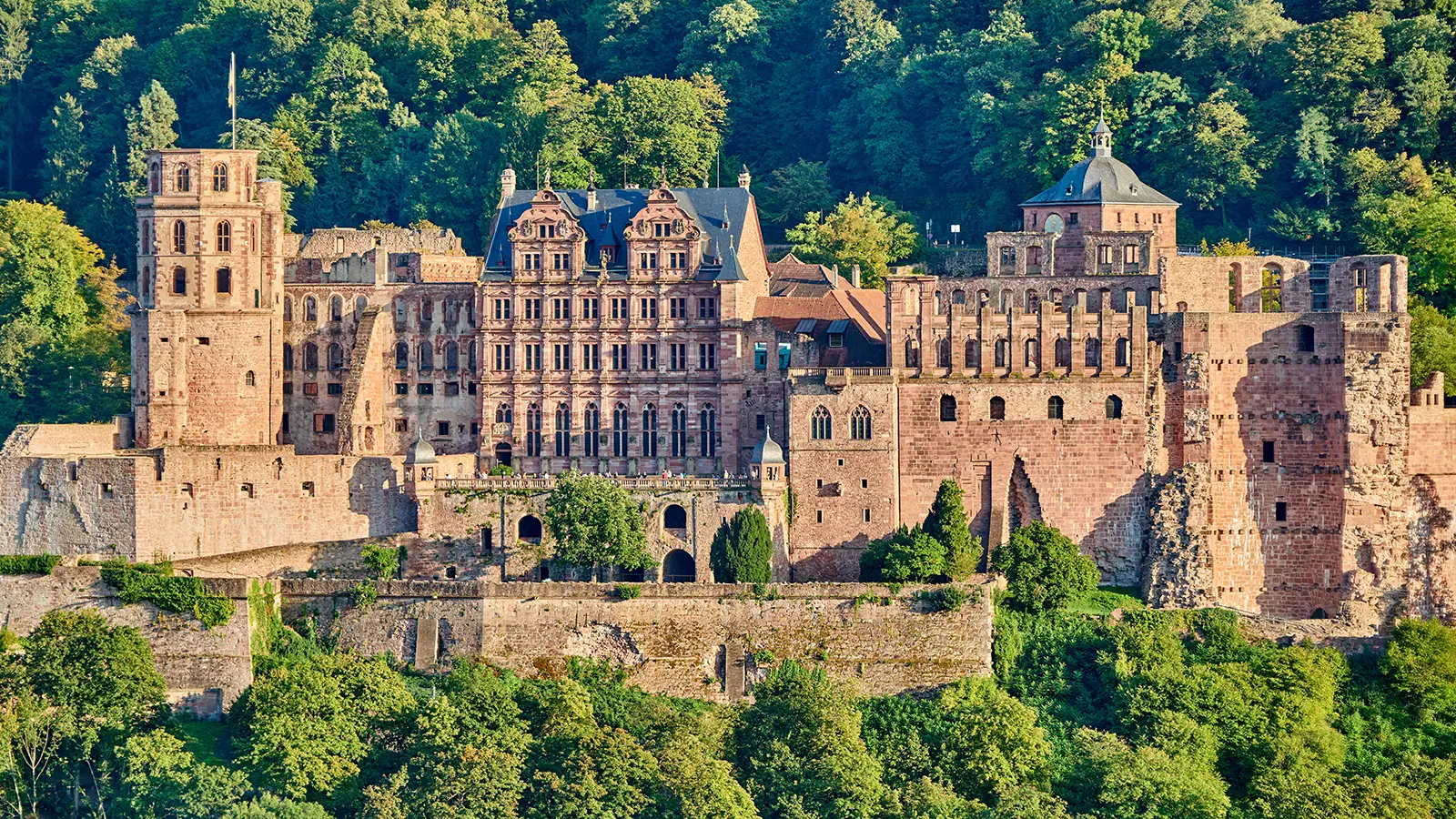
Perched above the Neckar River, Heidelberg Castle doesn’t greet you with polished halls or perfectly restored towers. Instead, it pulls you in with broken walls, open skies, and the quiet drama of a place that has lived many lives. The first thing most visitors notice is the color. Warm red sandstone that seems to glow at sunrise and soften at dusk. From the terraces, Heidelberg’s old town spreads out below like a painting that never quite dries.
This is not a castle you rush through. It asks you to slow down. To pause by a crumbling arch and imagine banquets, fires, wars, and long years of abandonment. Once the proud seat of the Prince-Electors of the Palatinate, Heidelberg Castle was shaken by lightning, shattered by cannon fire, and left to decay on a wooded hillside. What could have been a forgotten ruin became something far more powerful. A symbol of romance, loss, and beauty shaped by time rather than erased by it.
Writers and painters understood this early. In the 19th century, Heidelberg Castle became a pilgrimage site for artists who believed ruins spoke more honestly than perfection. That spirit still lingers. You feel it in the half-open courtyards, the ivy climbing ancient walls, and the echo of footsteps where roofs once stood. Even on busy days, there are corners where the noise fades, and the past feels close.
Today, Heidelberg Castle is one of Germany’s most visited landmarks, yet it remains deeply atmospheric. Part museum, part ruin, part viewpoint, it offers something rare. A place where history is visible, not hidden behind glass. Whether you come for the views, the stories, or the quiet moments between them, this castle has a way of staying with you long after you leave the hill.

Heidelberg Castle at a Glance (Quick Facts)
📍 Location: Heidelberg, Baden-Württemberg, Germany
🏗️ Construction Period: 13th century to early 17th century
🏰 Architectural Styles: Medieval, Renaissance
🎭 Famous For: Romantic ruins, red sandstone façade, Great Barrel, panoramic views over the Neckar River
👑 Notable Figures: Prince-Electors of the Palatinate, Frederick V (“The Winter King”)
🏆 UNESCO Status: No (but part of the Heidelberg cultural landscape)
🌐 Official Website: schloss-heidelberg.de
⏱️ Recommended Visit Time: 2 to 3 hours
📸 Best For: History lovers, photographers, Romantic-era architecture fans, first-time visitors to Heidelberg
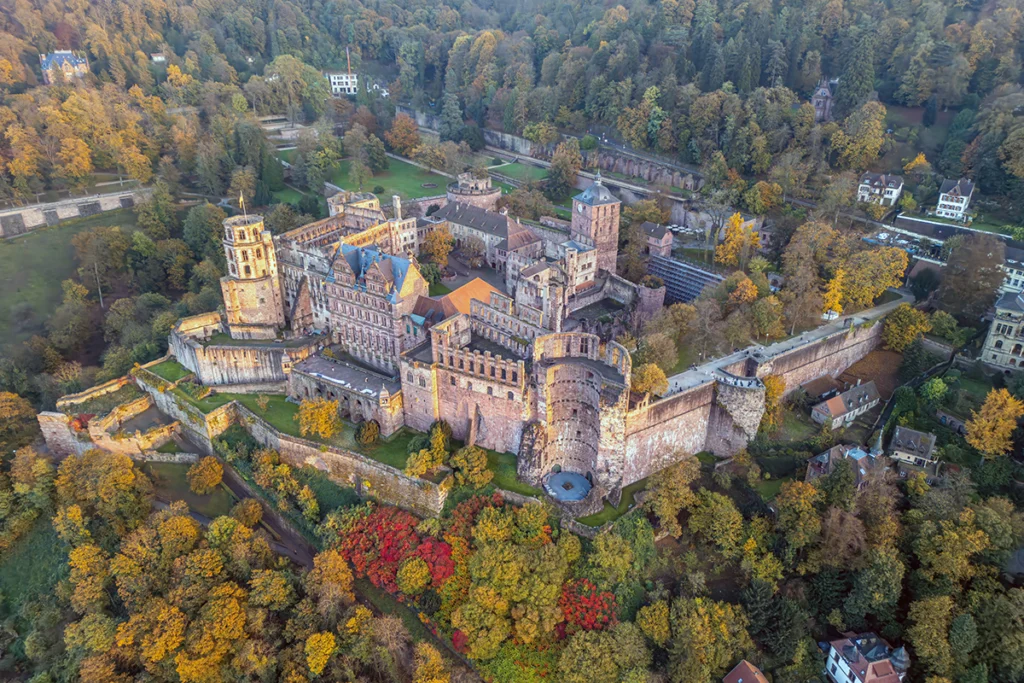
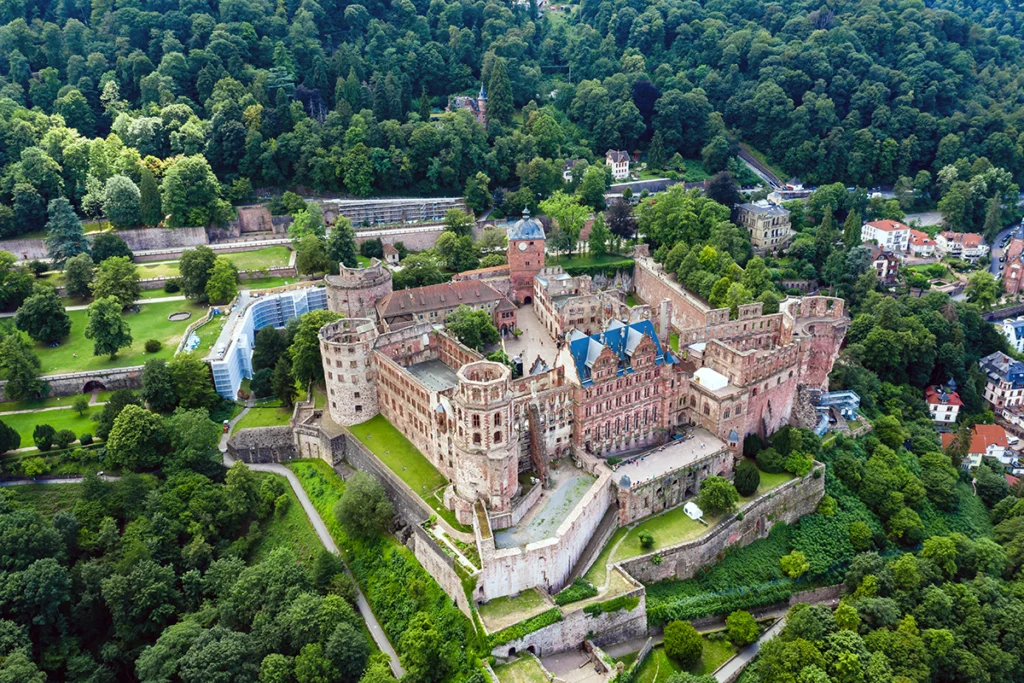
Sitting high above the Old Town, Heidelberg Castle dominates the skyline and shapes the identity of the city below. It is not a single building but a complex of courtyards, towers, palaces, and ruins built over several centuries. Each section reflects a different era, ambition, and ruler, which is part of what makes the site so compelling to explore.
Unlike many castles in Germany, Heidelberg was never fully rebuilt after its destruction. That decision turned it into one of Europe’s most famous romantic ruins, admired as much for what is missing as for what remains. Today, the castle combines open-air exploration with museum spaces, making it easy to experience both atmosphere and context in one visit.
From sweeping viewpoints to intimate architectural details, Heidelberg Castle rewards visitors who take their time. This snapshot gives you the essentials. The story behind the stones is where it truly comes alive.

The History of Heidelberg Castle: Power, Fire, and a Beautiful Ruin
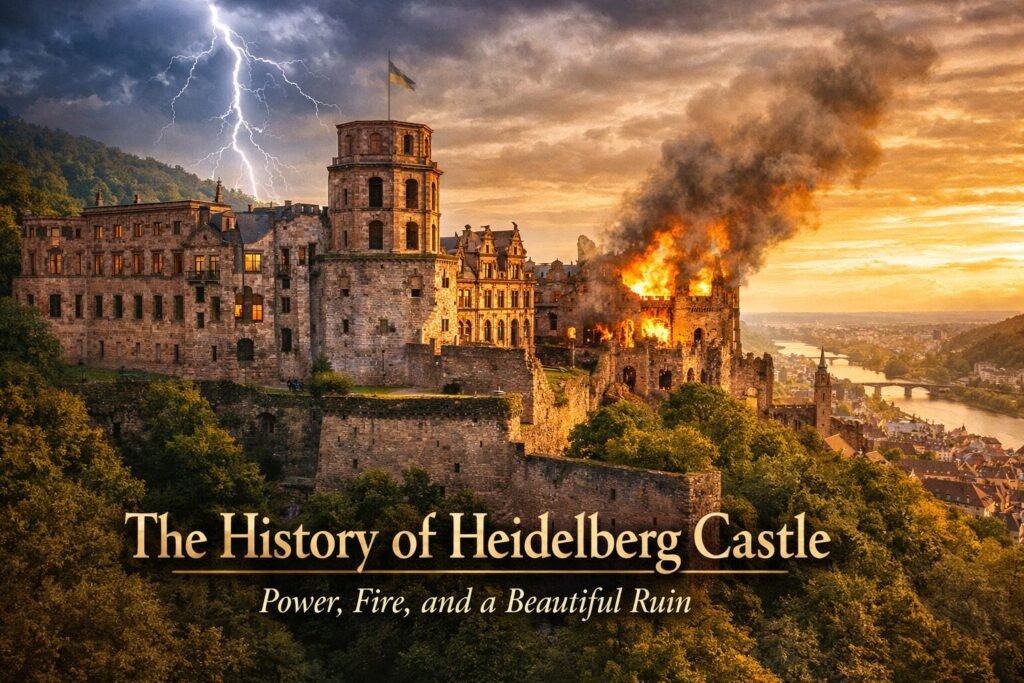
The story of Heidelberg Castle is not one of steady rise and careful preservation. It is a story shaped by ambition, religion, war, and weather, with long pauses where nature quietly took control. That layered past is exactly what gives the site its emotional weight today.
The earliest fortifications on this hill date back to the early 13th century. At the time, the castle served as a defensive stronghold guarding the Neckar Valley and the important trade routes passing through it. Its strategic position made it valuable, but it also made it vulnerable. Whoever controlled the castle controlled the region, and many wanted that power.
By the late Middle Ages, Heidelberg had become the residence of the Prince-Electors of the Palatinate, among the most influential rulers in the Holy Roman Empire. These princes were not minor nobles. They helped elect emperors, shaped religious policy, and competed with Europe’s most powerful courts. The castle above Heidelberg reflected that status. What began as a fortress slowly transformed into a palace meant to impress visitors and intimidate rivals.
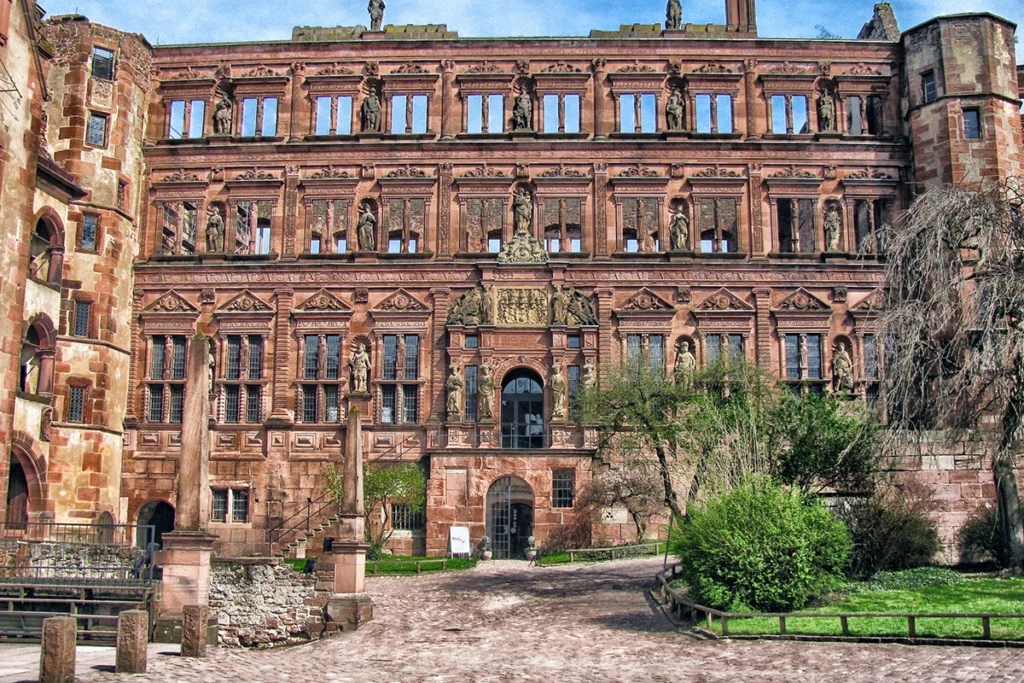
The real architectural turning point came in the 16th century. As Renaissance ideas spread north from Italy, the castle was expanded and redesigned to reflect new tastes. The Ottheinrichsbau, with its ornate façade and sculpted figures, became one of the most important Renaissance buildings north of the Alps. It was bold, expensive, and unmistakably political. This was a statement of cultural confidence as much as a residence.
But prosperity rarely lasts long in contested regions. The 17th century brought catastrophe. During the Thirty Years’ War, the castle changed hands several times. It was occupied, damaged, and reclaimed, each time losing pieces of itself. The real devastation, however, came later during the Nine Years’ War. French troops systematically destroyed fortresses along the Rhine to weaken their enemies. Heidelberg Castle was heavily damaged, its defenses blown apart, and its buildings left exposed.
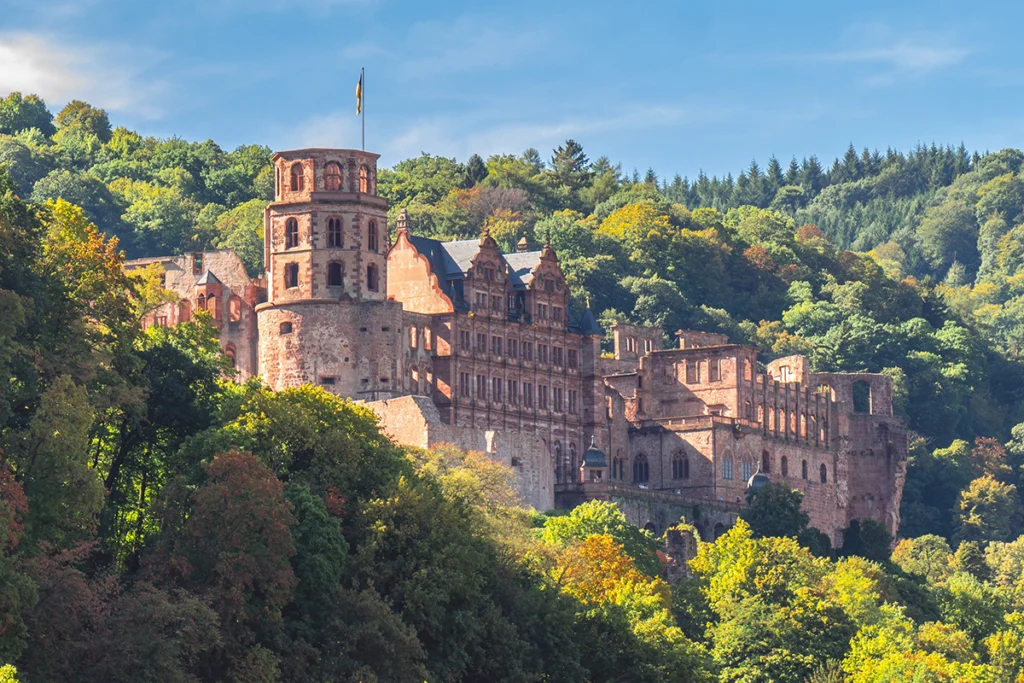
As if war were not enough, nature added its own blows. In the late 17th century, lightning strikes caused massive fires that tore through the already weakened structures. Roofs collapsed. Towers split. Entire sections became unsafe and were abandoned. By the early 18th century, the castle was no longer a royal residence. The court moved to Mannheim, leaving Heidelberg Castle behind.
For decades, the ruins were treated as a convenient quarry. Stones were taken for new buildings in the city below. Ivy crept into walls once decorated with banners. Trees rooted themselves in collapsed halls. What had been a symbol of power became a quiet, decaying presence above the town.
Then something unexpected happened. Instead of disappearing, the castle gained a second life.
In the late 18th and early 19th centuries, the Romantic movement swept across Europe. Artists, poets, and thinkers rejected strict order and perfection. They sought emotion, memory, and the beauty of decay. Heidelberg Castle fits this vision perfectly. Its broken towers and open courtyards spoke of time, loss, and resilience. Painters set up easels on the hillsides. Writers described moonlit ruins and mist rising from the river.
One of the most important moments in the castle’s survival came when a debate erupted. Should it be rebuilt or left as a ruin? Many argued for full restoration. Others believed reconstruction would erase its soul. In the end, a compromise prevailed. Some sections were stabilized and restored, while others were deliberately left in ruins. That decision defines the castle you see today.
This balance is rare. You walk through intact halls and step moments later into roofless chambers open to the sky. You see Renaissance decoration beside shattered medieval walls. Instead of presenting a single era, the castle reveals its entire life at once.
By the 19th century, Heidelberg Castle had become one of Germany’s most famous landmarks. Tourists arrived by carriage and later by train. Guidebooks praised its views and atmosphere. The ruin became an identity marker for the city itself, shaping how Heidelberg was seen both at home and abroad.
Today, the castle stands not as a monument to victory, but as a record of survival. Wars failed to erase it. Abandonment did not finish the job. Instead, the damage became part of its meaning. When you explore the grounds, you are not just seeing what once was. You are seeing how history leaves traces, how power fades, and how beauty can grow out of broken stone.
That is why Heidelberg Castle feels so alive. It is unfinished, honest, and open to interpretation. And that is exactly what makes it unforgettable.

Legends, Myths & the Birth of a Romantic Icon

Every great ruin gathers stories, and Heidelberg Castle has collected them for centuries. Some are rooted in history. Others drift closer to myth. Together, they form an atmosphere that feels almost inseparable from the stone itself.
One of the most persistent legends surrounds the castle’s repeated destruction. Locals long believed the site was cursed. Lightning struck the castle not once, but multiple times, each strike igniting fires that tore through already damaged buildings. To people watching from the Old Town below, it felt personal, as if fate itself had turned against the hilltop palace. Even today, guides often pause when retelling these moments, letting the silence do part of the work.
Ghost stories followed naturally. Tales speak of restless figures wandering the ruins at night. Fallen soldiers. Abandoned courtiers. Guards who never left their posts. No single ghost has become as famous as those tied to some other European castles, but that almost makes the stories stronger. They feel local, passed quietly rather than staged. On foggy evenings, when the walls seem to dissolve into mist, it is easy to understand why these stories endured.
Yet the most powerful myth surrounding Heidelberg Castle is not about spirits. It is about romance.
In the early 19th century, the castle became a symbol of longing and beauty shaped by loss. Poets described it as a place where nature and memory met. Painters framed it against dramatic skies, exaggerating broken towers and softened edges. The ruin came to represent something deeply human. The idea that perfection is fleeting, and that what remains can still move us.
This shift changed how people viewed ruins across Europe, but Heidelberg stood at the center of that movement in Germany. Travelers came not to admire strength or wealth, but mood. They wanted atmosphere. Silence. Emotion. The castle offered all of that without effort.
One figure often mentioned in this context is Frederick V, the so-called Winter King. His brief reign as King of Bohemia ended in disaster, exile, and war. In popular imagination, his story merged with the castle’s fate. Ambition followed by downfall. Grandeur followed by ruin. The castle became a backdrop for this narrative, whether historically accurate or not.
There is also a quieter legend tied to the Great Barrel. Stories claim the massive wine cask was never truly full, or that it leaked constantly, as if refusing excess. Others say it symbolized pride pushed too far. Whether truth or metaphor, it adds another layer to how visitors interpret the site.
What makes these legends compelling is not their factual accuracy, but how well they fit the place. Heidelberg Castle invites interpretation. Roofless halls let in moonlight. Open courtyards echo footsteps. Nothing is sealed off completely. Your imagination fills the gaps.
Even today, many visitors describe a strange attachment after their visit. They remember the feeling more than specific facts. A view at dusk. A sudden quiet corner. The sense that history here is unfinished.
That is the true myth of Heidelberg Castle. Not that it is haunted, but that it continues to speak. Not loudly. Not clearly. But enough to make you listen.
Architecture & What to Look For Inside Heidelberg Castle
Heidelberg Castle is not a single architectural statement. It is a conversation between centuries. As you move through the grounds, styles shift, walls change tone, and priorities become visible in stone. This is a castle built, rebuilt, expanded, and then abruptly stopped. That unfinished quality is what makes exploring it so rewarding.
The most striking feature is the red sandstone. Quarried locally, it gives the castle its warm color and sets it apart from the gray limestone fortresses found elsewhere in Germany. In soft light, the stone almost glows. In rain or fog, it darkens and absorbs the landscape around it. Photographers love it for a reason.
One of the architectural highlights is the Ottheinrichsbau. Built in the mid-16th century, this Renaissance palace wing is impossible to miss. Its façade is richly decorated with statues of classical figures, biblical kings, and Roman emperors. This was not subtle architecture. It was designed to broadcast power, education, and cultural ambition. At the time, it was one of the most progressive buildings north of the Alps.
Stand back and take in the symmetry. Then move closer. You’ll notice weathered details, softened edges, and missing pieces. The decoration feels less like an ornament and more like a memory. It is Renaissance confidence, filtered through centuries of exposure.
Nearby, the Friedrichsbau presents a different mood. Built later, it reflects a more restrained style, though still clearly Renaissance. Statues of Palatinate rulers line the façade, arranged almost like a stone family portrait. This wing helps anchor the castle chronologically, reminding you that different rulers left different marks, each responding to the politics and aesthetics of their time.
Inside the castle complex, the Great Barrel is impossible to ignore. Housed in its own building, this enormous wine cask once held more than 200,000 liters. It was as much a symbol as a practical object. Wine represented wealth, hospitality, and prestige. Today, the barrel feels slightly absurd in scale, but that excess is part of its charm. It tells you a lot about how rulers wanted to be seen.
As you wander deeper into the ruins, the atmosphere shifts. Roofless halls open to the sky. Staircases lead nowhere. Window frames still outline views of the Neckar Valley, but glass and wood are long gone. These spaces invite imagination more than explanation.
Look for contrasts. Medieval defensive walls sit beside refined Renaissance façades. Thick, narrow towers built for protection stand near wide courtyards meant for ceremony. You can almost trace the castle’s evolution from fortress to palace just by walking its perimeter.
The courtyards deserve time. They are not merely passages between buildings. They are outdoor rooms shaped by architecture and absence. Grass grows where stone floors once lay. Trees frame walls that were never meant to be permanent features. This blending of ruin and landscape is intentional now, even if it began by accident.
One of the most rewarding things to do is simply pause. Sit on a low wall. Lean against a warm stone. Let your eyes move from carved details to the open sky. Heidelberg Castle is not about ticking off rooms or following a strict route. It is about noticing how architecture adapts when its original purpose fades.
What remains is not chaos. It is balance. And that balance is exactly what gives Heidelberg Castle its lasting power.
Visiting Heidelberg Castle Today: Practical Tips, Routes & Real Advice
Visiting Heidelberg Castle is refreshingly flexible. You can treat it as a quick highlight or linger for half a day, moving slowly through courtyards, viewpoints, and museum rooms. Either way, a little planning makes a big difference, especially during peak season.
🛣️ How to Get There
Most visitors start in Heidelberg’s Old Town. From there, you have three main options.
The funicular is the easiest and most popular choice. It departs from Kornmarkt Square and climbs directly to the castle entrance. Tickets are simple to buy, and the ride itself is short but scenic. If mobility is a concern, this is the best option.
Walking up is more rewarding if you enjoy a steady climb. Several paths wind uphill through the forest and past viewpoints. The walk takes about 15 to 25 minutes, depending on your pace and route. It’s not difficult, but it is uphill the entire way. Wear decent shoes.
Driving is possible, but parking near the castle is limited and often full. For most travelers, the funicular or walking is far less stressful.
🎟️ Tickets & What’s Included
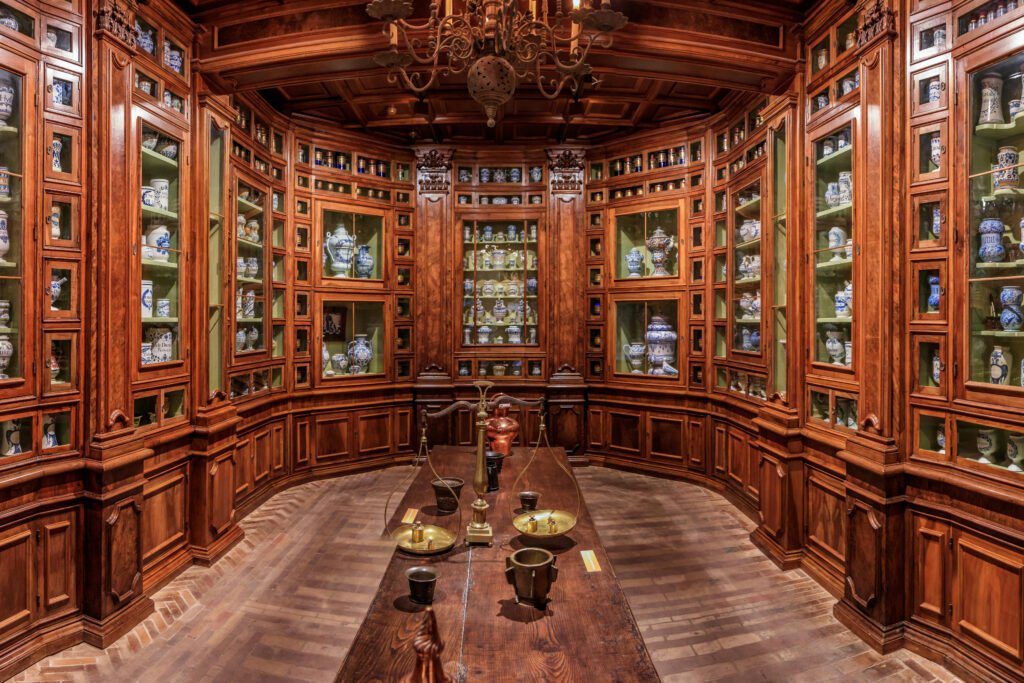
A standard castle ticket includes access to the courtyards, main ruins, the Great Barrel, and the German Pharmacy Museum. It also includes the funicular ride up and down, which is a nice bonus.
Guided tours of the interior palace rooms run regularly and are included in the ticket price. These tours are short, focused, and helpful for context. If you enjoy history, they’re worth your time. If you prefer wandering freely, you can skip them without missing the atmosphere.
Tickets are sold at the funicular station and at the castle entrance. During summer and weekends, lines can form mid-morning, so arriving earlier helps.
For the most up-to-date information on opening times, seasonal hours, and current ticket prices, check the official page for the castle. It’s updated regularly and gives you a clear picture of what to expect before you arrive.
⏱️ How Long to Plan for Your Visit
Plan two to three hours for a comfortable visit. That allows time for the courtyards, a guided tour, a museum visit, and unhurried views from the terraces.
If you are short on time, one and a half hours is enough to see the highlights. If you enjoy photography or quiet exploration, you could easily spend longer.
📅 Best Time to Visit
Timing matters here.
Early morning is ideal. The light is softer, the courtyards are quieter, and the views over the Neckar Valley feel more intimate. Late afternoon can also be beautiful, especially near sunset, but it is often busier.
Spring and early autumn are the best seasons overall. Summer brings crowds and heat, while winter offers atmosphere but limited access to some areas.
If you can, avoid weekends between late May and September unless you arrive early. Tour groups peak between 10:30 a.m. and 3:00 p.m.
📸 Best Photo Spots
Heidelberg Castle is generous with viewpoints, but a few stand out.
The Great Terrace offers the classic postcard view over Heidelberg’s Old Town and the Old Bridge. This is where most visitors linger, and for good reason.
Inside the courtyards, look for framed views through ruined windows. These often produce more interesting photos than wide panoramas.
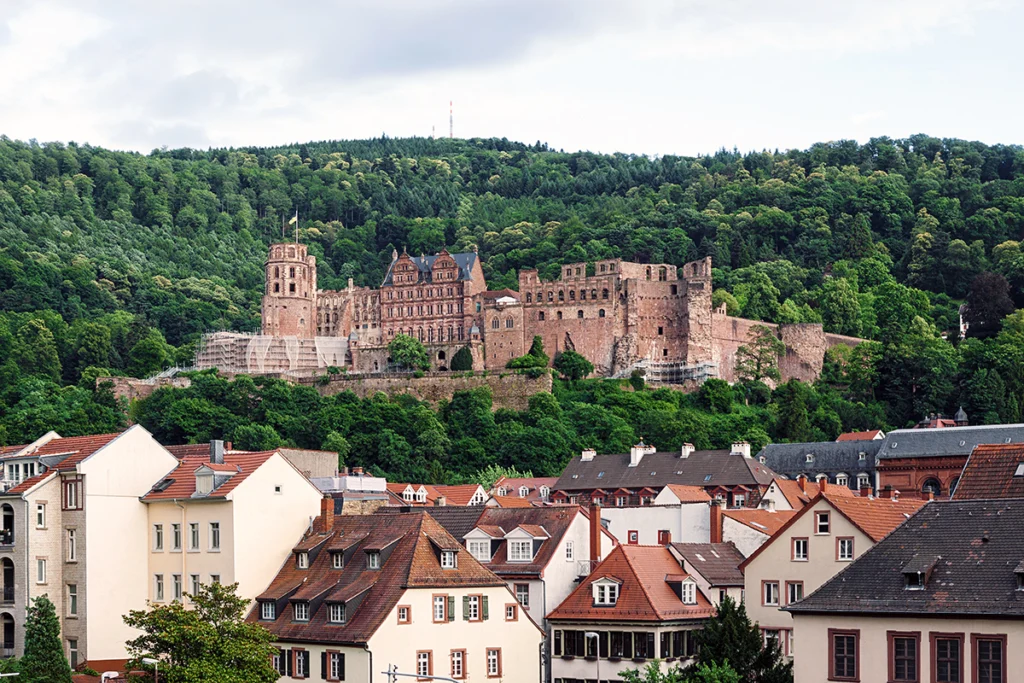
For an external perspective, the Philosophenweg across the river gives you a sweeping view of the castle on the hillside, especially at sunset.
♿ Accessibility & Getting Around
Parts of the castle complex are accessible, but not all. The main courtyards and museums are reachable via paved paths and ramps. However, many interior areas involve stairs, uneven stone, and steep inclines.
If mobility is limited, focus on the terraces, courtyards, and museum areas. Staff are generally helpful and can point out the most accessible routes.
☕ Cafés, Rest Stops & Practical Comfort
There is a café near the main terrace offering drinks and light snacks. Prices are higher than in town, but the view makes up for it. Benches are scattered throughout the grounds, often placed where you naturally want to pause.
Bring water in warmer months. Much of the site is exposed, and shade can be limited depending on where you are.
👨👩👧 Visiting with Kids
Heidelberg Castle works well for families, especially with older children. The ruins feel like an adventure rather than a museum chore. The Great Barrel often becomes an unexpected highlight.
Strollers are manageable in some areas but awkward in others. A carrier works better if children are small.
🧠 A Few Honest Tips
Don’t rush to see everything. The castle rewards slowing down.
Take the guided tour if you want structure. Skip it if you want mood.
Stay a little longer than planned. Many visitors say their favorite moments happened after the checklist was done.
Heidelberg Castle is not about perfection or restoration. It’s about space, light, and history left visible. Visit it that way, and it will give you more than you expect.
Heidelberg Old Town & Nearby Attractions Worth Your Time
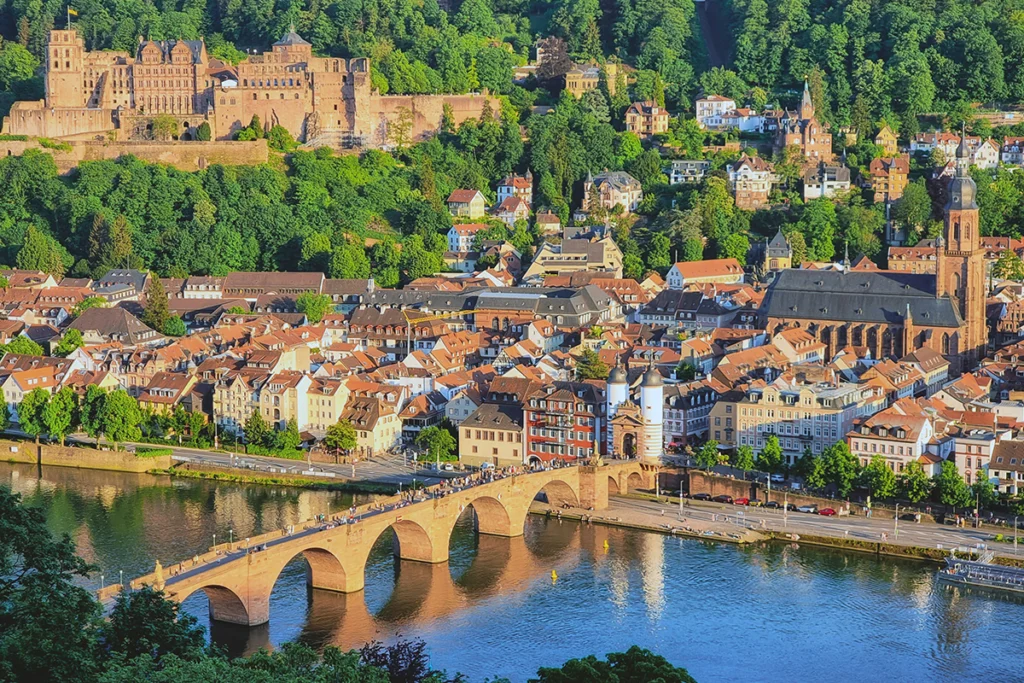
Heidelberg Castle may sit above the city, but its story continues below the hill. One of the great pleasures of visiting is how naturally the castle visit blends into the rest of Heidelberg. You don’t need long transfers or complex planning. Everything feels connected, walkable, and lived in.
Start with Heidelberg Old Town, known locally as the Altstadt. This is where most visitors arrive and linger, often longer than expected. The main street runs straight and lively, lined with cafés, bookshops, bakeries, and historic façades. Step off it, though, and the mood changes quickly. Narrow lanes climb gently toward the hillside, revealing quiet corners and unexpected views back up to the castle.
The Old Bridge is a short walk from the heart of the Old Town and one of the most recognizable landmarks in the city. Crossing it feels ceremonial. On one side, the castle rises above rooftops. On the other hand, the river curves gently through wooded hills. Early morning and sunset are the best times here, when the stone warms in color and the crowds thin.
Across the river, the Philosophenweg offers one of the finest views in the region. This hillside path was once favored by thinkers and professors looking for quiet reflection. Today, it remains a peaceful counterpoint to the busier Old Town. The walk is uphill in places, but the payoff is worth it. From here, the castle feels almost suspended above the city, especially in late afternoon light.
Back in town, Heidelberg University adds another layer to the city’s character. Founded in 1386, it is Germany’s oldest university and still shapes daily life. Historic buildings are scattered throughout the Old Town rather than confined to a single campus. This keeps the area feeling youthful and lived in, even among centuries-old stone.
If you want a quieter break after the castle, the riverbanks along the Neckar offer a gentle reset. Locals picnic, read, or simply watch boats drift past. It’s an easy way to slow the pace without leaving the city.
For those with extra time, Heidelberg also works well as a base for short side trips. The surrounding region is dotted with small towns, vineyards, and forested hills. But even without leaving the city limits, you can fill a full day without ever feeling rushed.
The real charm of Heidelberg is how naturally everything flows together. Castle above. River below. Old Town is in between. You don’t feel pulled in different directions. Instead, the city invites you to wander, pause, and connect the dots yourself.
Heidelberg Castle FAQ: What Visitors Really Want to Know
Is Heidelberg Castle worth visiting?
Yes, absolutely. Heidelberg Castle offers something many castles do not. Atmosphere. The combination of ruins, views, history, and setting above the Old Town makes it one of Germany’s most memorable sites, even for travelers who have seen many castles before.
Can you go inside Heidelberg Castle?
Yes. While much of the castle is in ruins, several interior spaces are open to visitors. Guided tours allow access to preserved palace rooms, and your ticket also includes entry to the Great Barrel and the German Pharmacy Museum.
Do you need a guided tour to enjoy the castle?
No, but it helps. Guided tours provide historical context and access to areas you cannot enter alone. That said, the courtyards and terraces are just as enjoyable without a guide, especially if you prefer to explore at your own pace.
How long does a visit to Heidelberg Castle take?
Plan for two to three hours for a relaxed visit. If you are short on time, ninety minutes is enough to see the highlights. Photography lovers and slow explorers often stay longer.
Is the walk up to Heidelberg Castle difficult?
The walk is uphill but manageable for most people. It takes about 15 to 25 minutes from the Old Town. If you prefer an easier option, the funicular provides a quick and comfortable ride directly to the entrance.
What is the best time of day to visit Heidelberg Castle?
Early morning is best for fewer crowds and softer light. Late afternoon and early evening are also beautiful, especially for views over the Old Town, but tend to be busier.
Is Heidelberg Castle suitable for children?
Yes, especially for older children. The ruins feel adventurous and engaging rather than formal. Younger children may find stairs and uneven ground challenging, but the open courtyards and Great Barrel are usually a hit.
Is Heidelberg Castle accessible to visitors with limited mobility?
Partially. The main courtyards, terraces, and museums are accessible, but many interior areas involve stairs and uneven stone. The funicular helps reduce steep walking.
Do you need to book tickets in advance?
Advance booking is not required for most visits. Tickets are easy to buy on site. During peak summer months or busy weekends, arriving early helps avoid lines.
Can you visit Heidelberg Castle in bad weather?
Yes, but with some trade-offs. Light rain or fog can add atmosphere and reduce crowds. Heavy rain makes stone paths slippery, so good footwear is important. Views may be limited, but the castle still feels dramatic.
Final Thoughts: Why Heidelberg Castle Stays With You
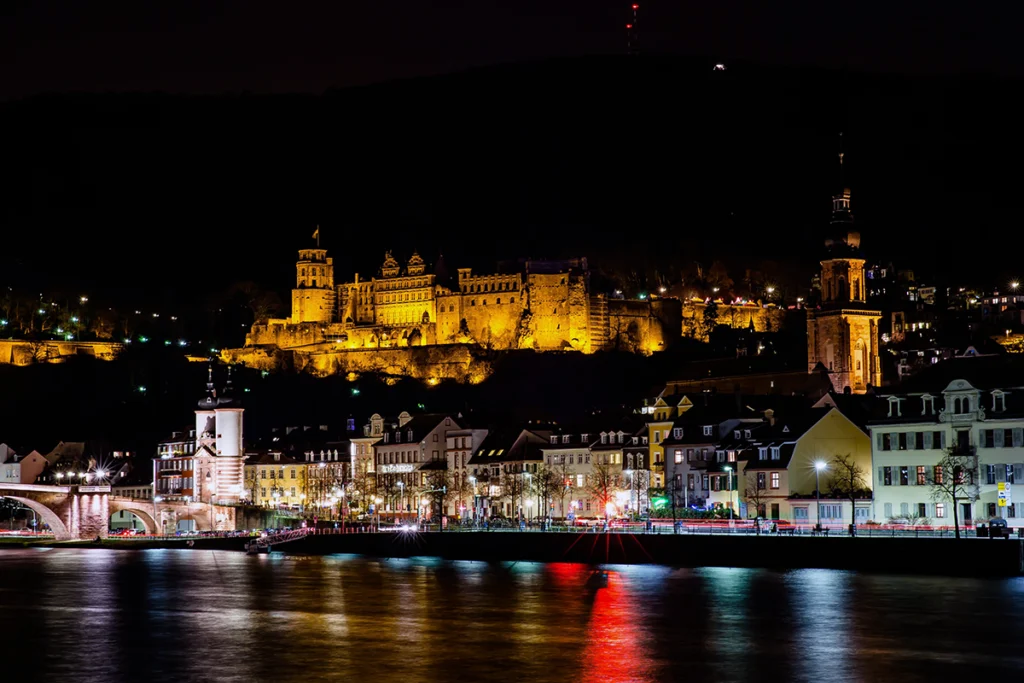
Heidelberg Castle is not the kind of place you “do” and move on from. It lingers. Long after the visit, what stays with you is not a single room or object, but a feeling. The quiet weight of stone warmed by the sun. The way the Old Town stretches below the terraces. The sense that history here was not polished away, but left visible.
What makes this castle special is its honesty. It does not pretend to be whole. Broken walls remain broken. Open courtyards stay open to the sky. Instead of closing the gaps, Heidelberg Castle invites you to look through them. That openness creates space for imagination, reflection, and calm.
Many castles impress through scale or decoration. Heidelberg works differently. It connects emotionally. You feel the ambition that built it, the conflict that damaged it, and the choice that saved it as a ruin. Few places manage to show all of that at once.
If you take your time, the castle gives back. A quiet corner. A sudden view. A moment where the noise fades, and the city feels far away, even though it is right below you.
Whether you come for history, photography, or simple curiosity, Heidelberg Castle offers something rare. A reminder that beauty does not always come from restoration. Sometimes, it comes from what time leaves behind.
💬 If you’ve visited Heidelberg Castle, feel free to share your experience—everyone notices something different as they wander the courtyards or pause along the terraces. Was it the view over the Old Town and the Neckar River, the feeling of openness in the ruins, or the quiet contrast between power and decay?
👉 And if you’re planning your first visit, consider this a starting point rather than a finale. Germany is filled with castles that tell very different stories. Bavarian Castles with their dramatic Alpine backdrops, hilltop fortresses along the Rhine, refined Renaissance palaces, and deeply atmospheric ruins tucked into forests and valleys. Each reflects its region, its rulers, and the moment history turned.
🏰✨ Thanks for reading. If you enjoyed this article, follow along for more in-depth castle stories and practical travel guides. You’ll also find us on Instagram, Facebook, Pinterest, YouTube, TikTok, and X. And if you’re ready to keep exploring, you can browse all our castle articles here—many more castles, and many more stories, are waiting.