
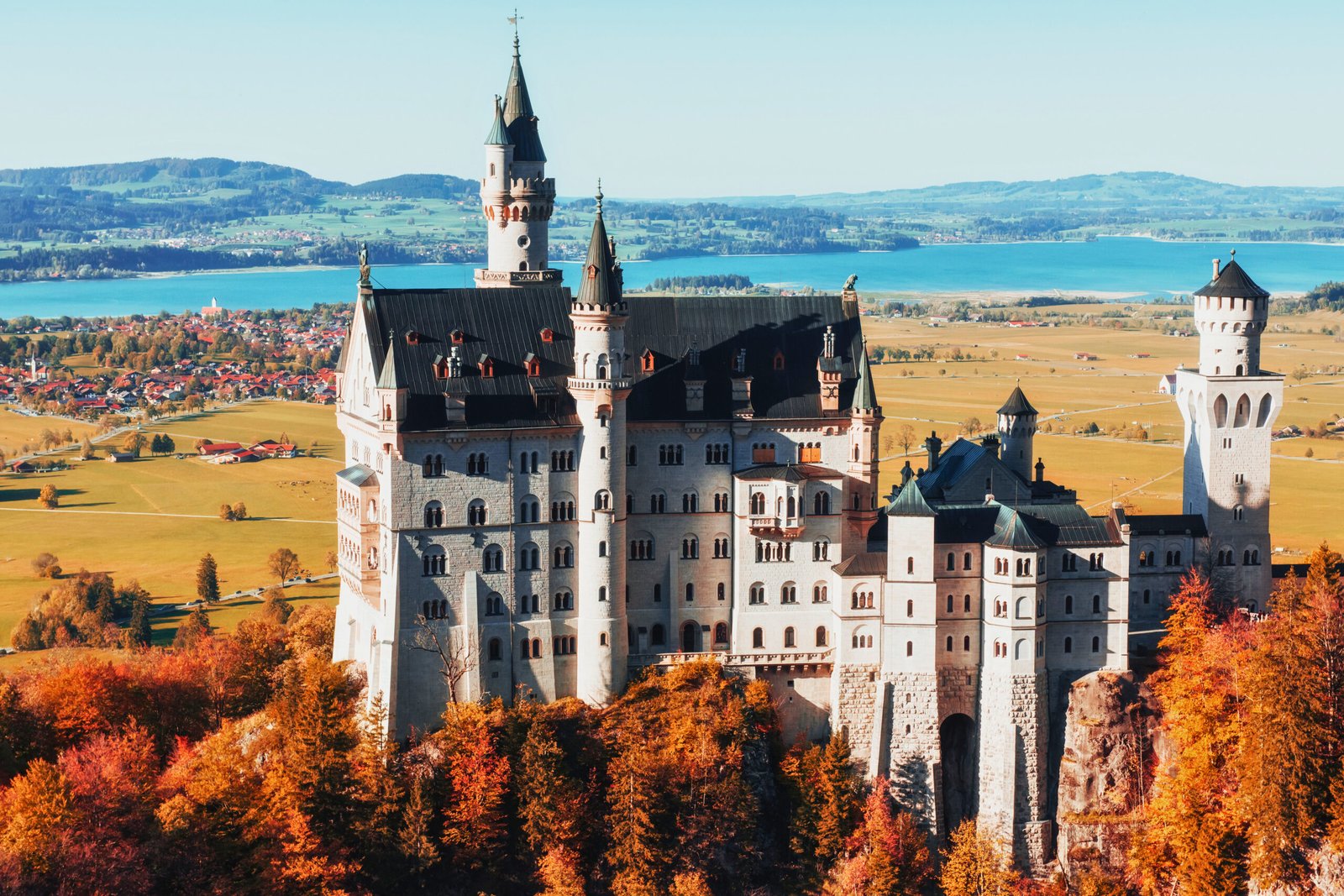
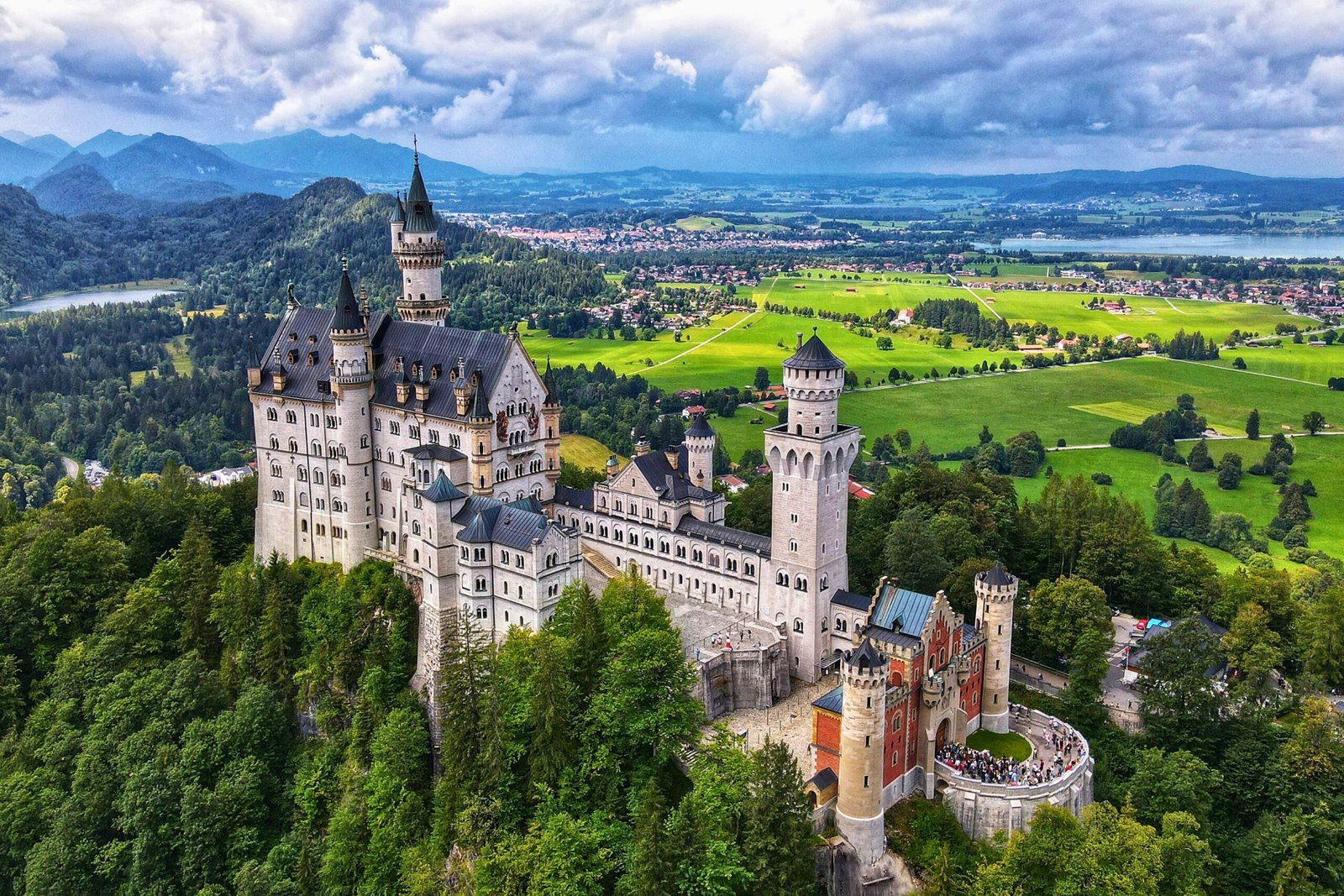
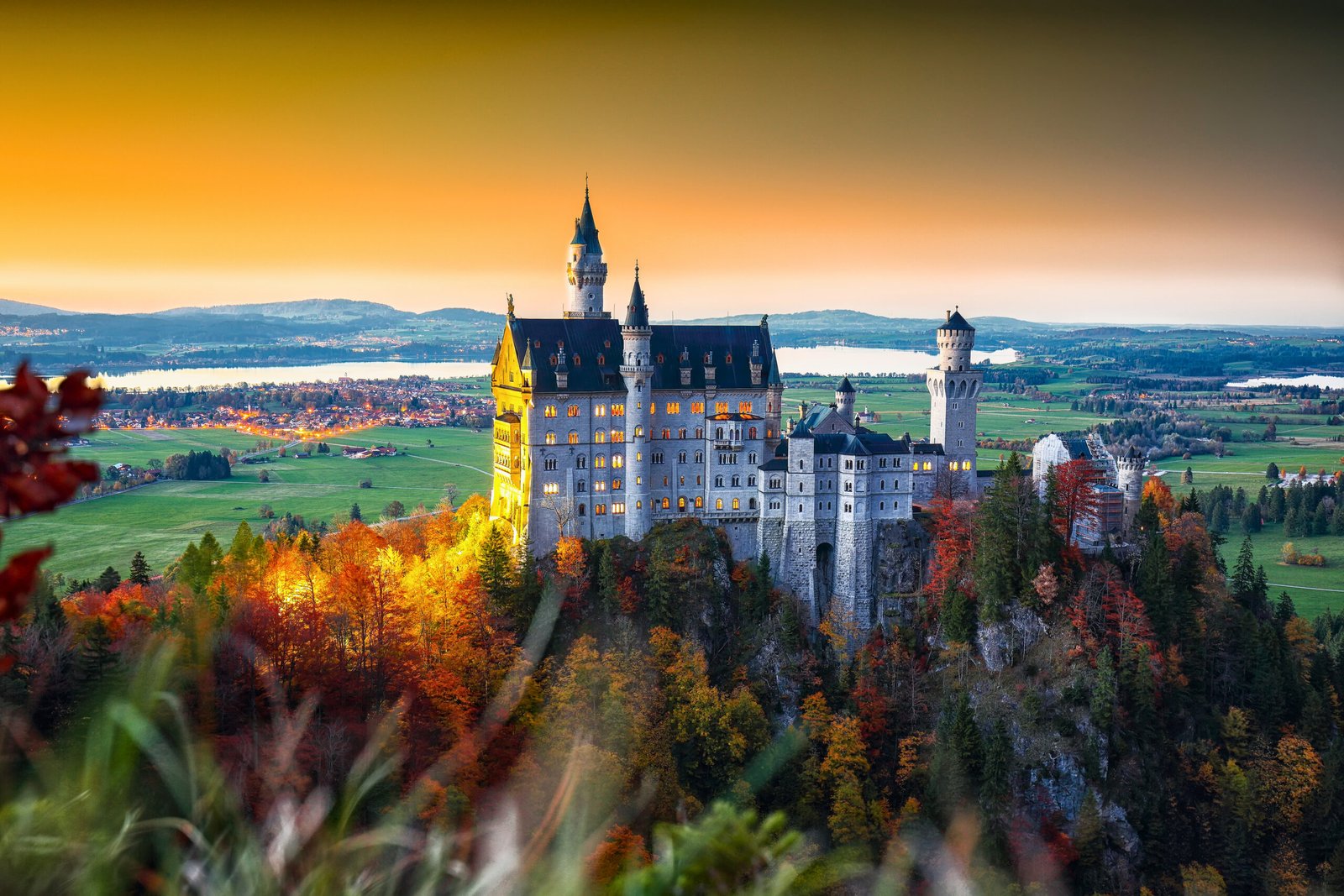
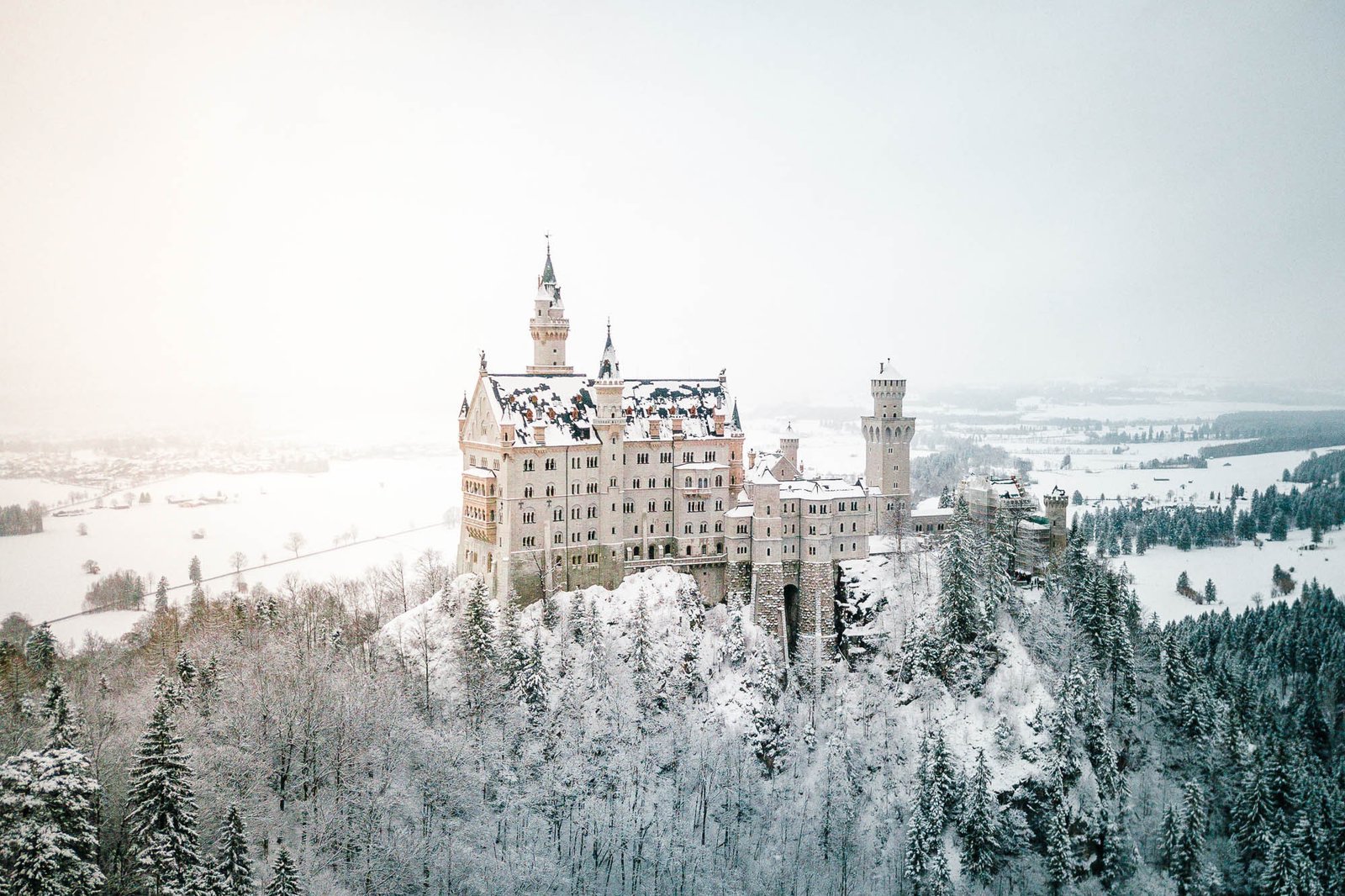
✨ Encaramado en lo alto del paisaje bávaro, el Castillo de Neuschwanstein es la definición misma de un cuento de hadas hecho realidad. Con sus torres de ensueño, su espectacular telón de fondo montañoso y su historia fascinante, ha inspirado innumerables leyendas —e incluso el Castillo de Cenicienta de Disney. Construido como refugio romántico para el rey Luis II, sigue siendo uno de los castillos más queridos e icónicos del mundo, cautivando a millones de visitantes cada año.
Datos Rápidos
📍 Ubicación: Baviera, Alemania (cerca de Füssen)
🏗️ Período de Construcción: Comenzó en 1869 – Aún inacabado (abierto al público en 1886)
🏰 Estilo Arquitectónico: Renacimiento románico con elementos góticos y bizantinos
🎭 Famoso Por: Inspirar el Castillo de Cenicienta de Disney y ser el refugio de fantasía del rey Luis II
👑 Figuras Notables: El rey Luis II de Baviera (también conocido como el “Rey de los Cuentos de Hadas”)
🏆 Estado UNESCO: Sí, uno de los Palacios del rey Luis II de Baviera que fueron designados en 2025.
🌐 Sitio Web Oficial: https://www.neuschwanstein.de/englisch/tourist/index.htm
Mapa
Contexto Histórico
El Castillo de Neuschwanstein fue encargado en 1869 por el rey Luis II de Baviera, conocido como el “Rey de los cuentos de hadas”. Soñando con una fortaleza medieval romántica, Luis diseñó Neuschwanstein como su refugio personal, inspirado en leyendas alemanas, las óperas de Richard Wagner y los ideales caballerescos. El estilo neorrománico del castillo mezcla elementos góticos y bizantinos, creando esa apariencia de cuento tan reconocible. Construido en lo alto de una colina rocosa en Schwangau, nunca llegó a terminarse: Luis murió misteriosamente en 1886, dejando partes inacabadas. Semanas después de su muerte, el castillo abrió al público y rápidamente se convirtió en un símbolo del patrimonio bávaro. Hoy, Neuschwanstein es mucho más que el fruto de la imaginación de Luis II: es uno de los castillos más visitados y fotografiados del mundo, y encarna toda la magia y el misterio de una época pasada.
Recorrido Visual
Información para Visitantes
🗓️ Mejor Época para Visitar: Mayo, junio, septiembre y principios de octubre
🗺️ Ventajas de la Ubicación: Fácilmente accesible en tren y autobús desde Múnich, con impresionantes vistas a los Alpes en todo el recorrido.
⏳ Duración Estimada de la Visita: Planea dedicar de 2 a 3 horas para explorar el castillo y sus alrededores.
💡 Consejos de Visita: Ve al puente Marienbrücke para disfrutar de la vista más icónica del castillo con las montañas de fondo.
Artículos Relacionados
- Castillo de Neuschwanstein: Guía para Visitar la Icónica Fortaleza de Cuento de Baviera,
- Top 10 Castles in Germany You Must Visit,
- Bavaria Castle Road Trip: The Ultimate 7-Day Itinerary Through Germany’s Fairytale Heart,
- The 25 Most Famous Castles in the World: Iconic Fortresses You Must See,
- 25 Best Castles to Visit in Europe: Iconic & Hidden Gems,
- The Ultimate Winter Castle Guide: Magical Castles to Visit This Holiday Season & in the New Year
Buscar


- 14 de abril de 2025
Castillo de Malbork: La Poderosa Fortaleza Teutónica de Polonia


- 11 de abril de 2025


