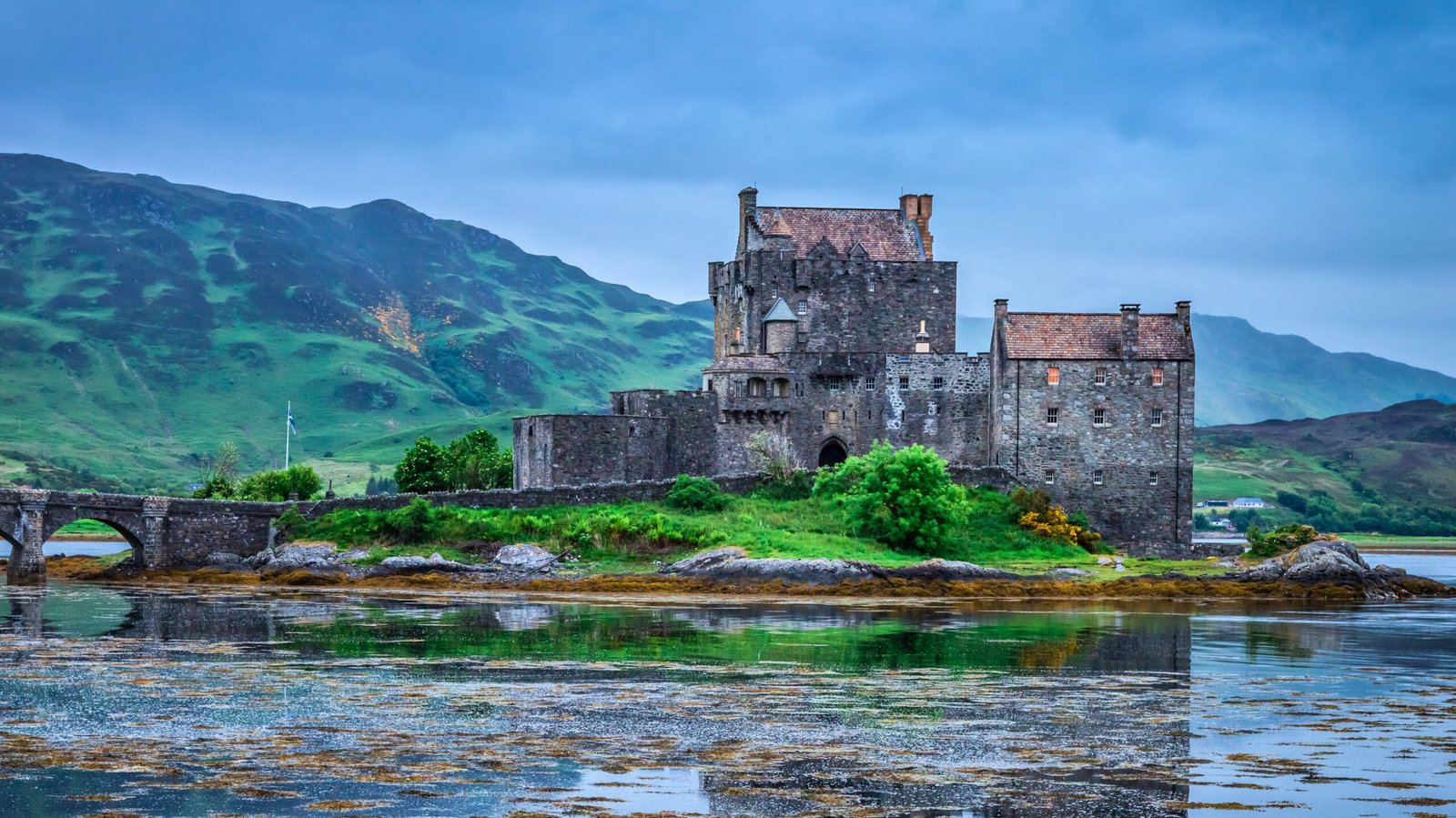
There’s a moment, just before you reach the stone bridge, when Eilean Donan Castle stops looking like a photograph and starts feeling real.
You’ve seen it before. On postcards. On whisky labels. In films. That lone fortress rising from a tiny island, framed by brooding Highland mountains and dark water. But standing there, with wind rolling off Loch Duich and clouds sliding low over the peaks, it hits differently.
This is not a polished royal palace. It’s not enormous. It doesn’t overwhelm you with gold or grandeur. What it offers is something far more powerful: atmosphere.
Eilean Donan Castle sits at the meeting point of three sea lochs in the western Highlands of Scotland. The setting alone would be enough to make it unforgettable. Add in centuries of clan warfare, Jacobite rebellion, destruction by cannon fire, and a romantic 20th-century reconstruction, and you have one of the most compelling castles in Scotland.
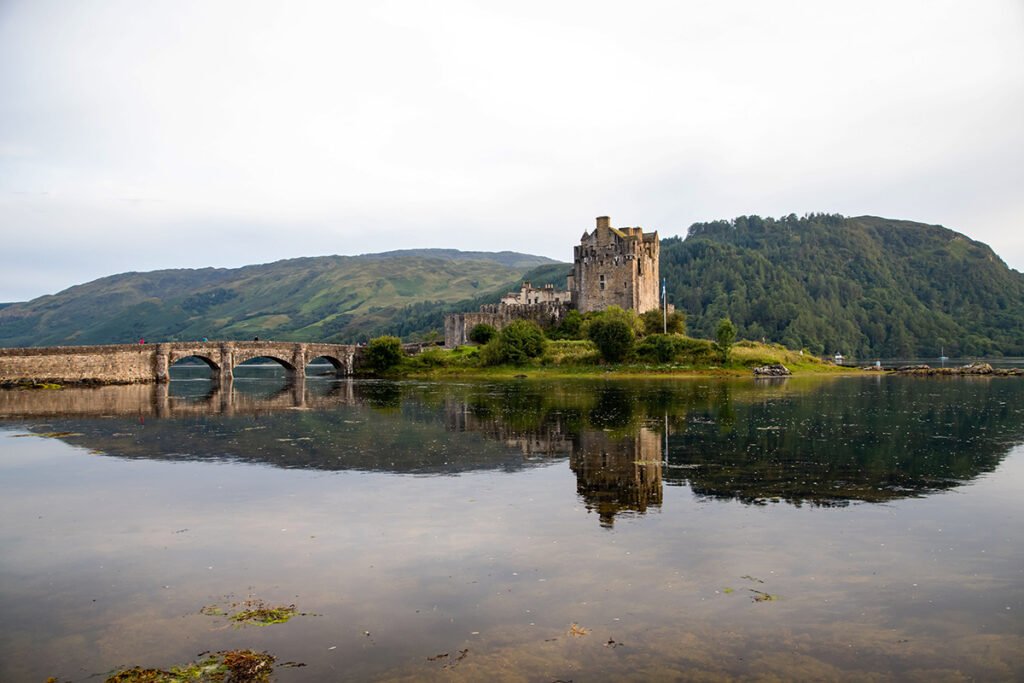
It’s often called the most photographed castle in the country. After spending time here, you understand why. The symmetry. The reflection in still water. The way mist wraps around its towers is like something out of a Highland legend.
But is it worth the visit beyond the postcard view?
Can you go inside?
And how do you experience it without fighting tour bus crowds?
In this complete guide to Eilean Donan Castle, we’ll explore its dramatic history, its connection to the Scottish clans, its architectural features, and everything you need to know before visiting. Whether you’re planning a road trip through the Highlands or heading toward the Isle of Skye, this castle deserves more than a quick photo stop.
Let’s step onto that bridge.

Quick Facts About Eilean Donan Castle
📍 Location: Dornie, Kyle of Lochalsh, Scottish Highlands, Scotland
🏗️ Original Construction: Early 13th century (around 1220)
🏰 Architectural Style: Medieval Scottish castle with 20th-century reconstruction
🎭 Famous For: Iconic Highland setting, clan history, film appearances
👑 Notable Figures: Clan Mackenzie, Clan Macrae, Lt. Col. John Macrae-Gilstrap
🏆 UNESCO Status: Not a UNESCO World Heritage Site
🌐 Official Website: www.eileandonancastle.com
Small island. Massive legacy.
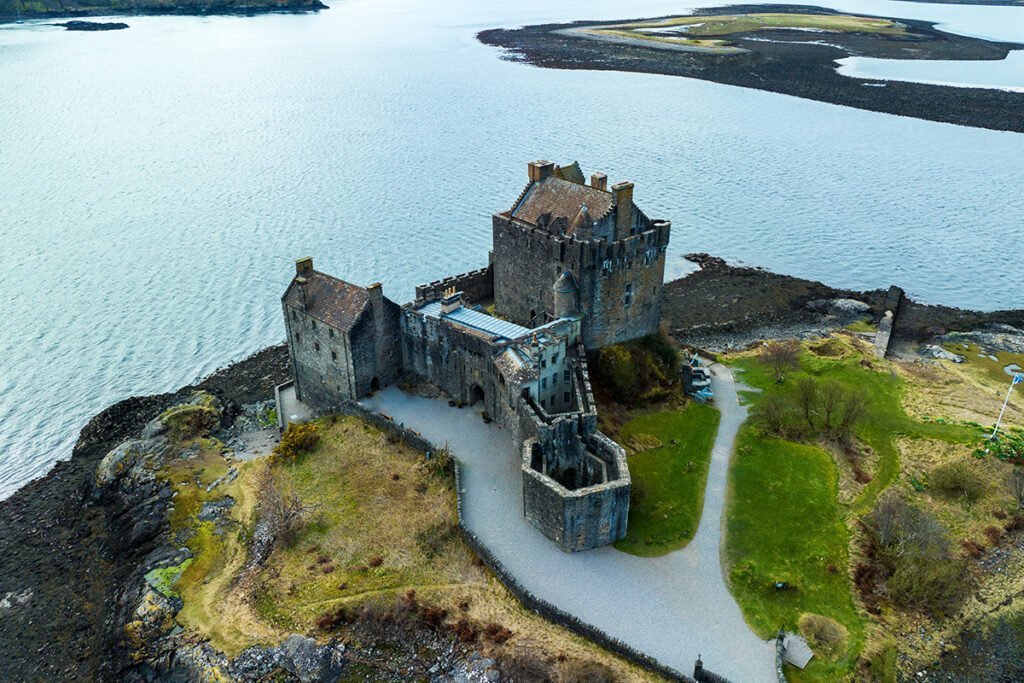
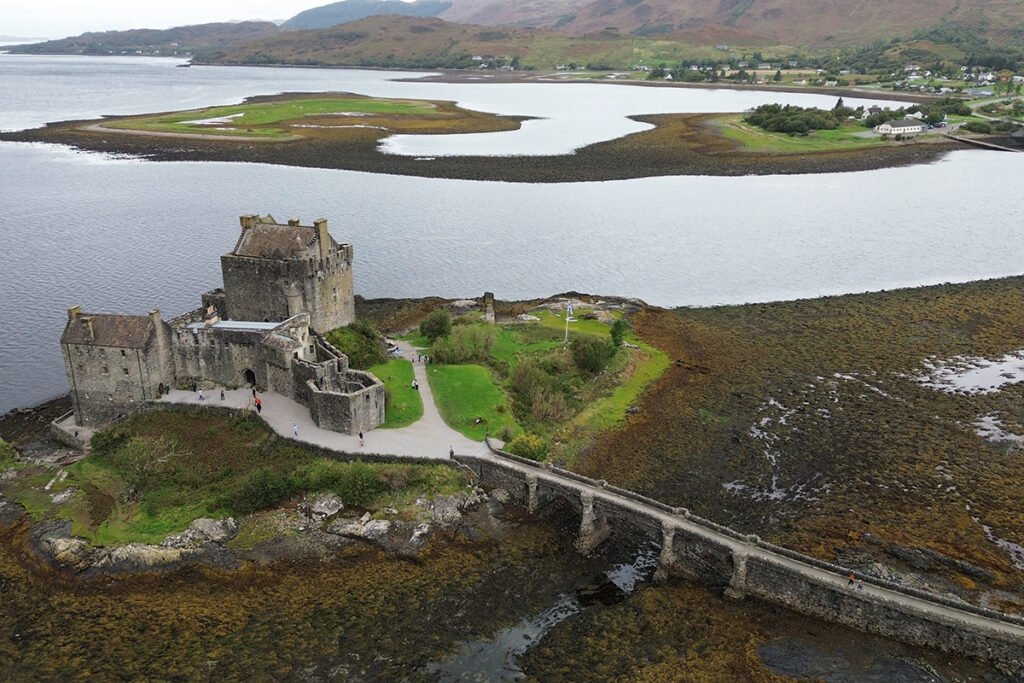
Eilean Donan Castle sits on a tidal island where three sea lochs meet: Loch Duich, Loch Long, and Loch Alsh. Its position was no accident. In the 1200s, this was a strategic stronghold guarding the western approaches of the Highlands. If you controlled this crossing point, you controlled movement between sea and land.
The castle you see today is not entirely medieval. The original fortress was partially destroyed in 1719 during the Jacobite rising, when government ships bombarded it with cannon fire. For nearly 200 years, it stood in ruins. Windswept. Broken. Empty.
Then, in the early 20th century, Lieutenant Colonel John Macrae-Gilstrap funded a painstaking restoration, bringing the castle back to life between 1919 and 1932. What stands today is a careful blend of historical foundation and romantic revival.
It may not be the largest castle in Scotland. But when it comes to atmosphere, location, and sheer visual drama, few Highland castles can compete.
Next, let’s step back into its story.

History & Legends of Eilean Donan Castle
If you strip away the postcard beauty for a moment, what you’re left with is a story shaped by invasion, loyalty, rebellion, and ruin.
Eilean Donan Castle was founded in the early 13th century, most likely around 1220, during the reign of Alexander II. At the time, the western seaways of Scotland were vulnerable to Norse incursions. The Vikings still held influence across the Hebrides, and the Scottish crown needed strong coastal defenses. So a fortress rose on this tiny island, guarding the narrows where three sea lochs converge.
Its name comes from Saint Donnán of Eigg, a Celtic saint martyred in the 7th century. Whether a religious cell once stood here before the castle remains uncertain, but the spiritual connection lingers in the name itself.
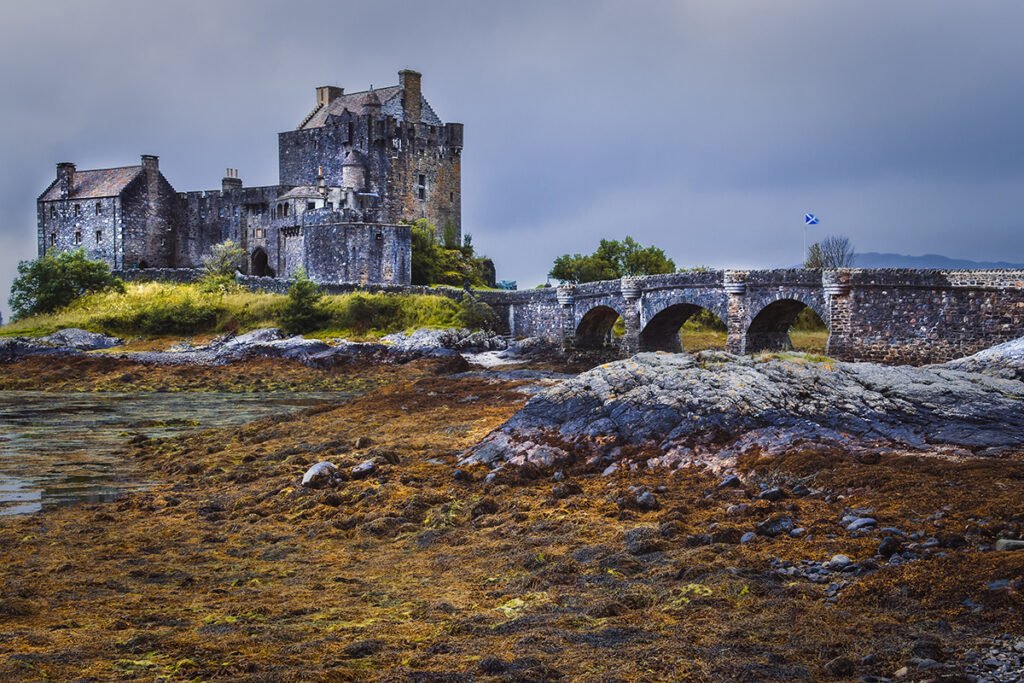
In its earliest form, the castle was far larger than what you see today. Archaeological evidence suggests that defensive walls once enclosed much of the island, creating a substantial medieval stronghold. This was not just a scenic tower house. It was a serious military base.
By the 14th century, control of the castle shifted to the powerful Clan Mackenzie. Later, it became closely associated with Clan Macrae, fierce Highland warriors who served as constables and protectors of the fortress. The Macraes earned a reputation as loyal defenders, often described as the Mackenzies’ “shirt of mail.”
And they proved it.
During the turbulent centuries that followed, Eilean Donan saw its share of violence. Feuds between clans were common in the Highlands. Power shifted. Alliances formed and fractured. Yet the castle endured, adapting and shrinking over time. By the 16th century, it had been reduced to a more compact stronghold centered around a tower house, easier to defend and maintain.
Then came the Jacobite era.
The late 17th and early 18th centuries were explosive in Scottish history. The Jacobite risings aimed to restore the exiled Stuart monarchy to the British throne. Highland clans were deeply divided in their loyalties. Some backed the Jacobite cause. Others sided with the government in London.
In 1719, Eilean Donan Castle became entangled in an international plot. Spanish troops landed in the Highlands to support a Jacobite uprising. Yes, Spanish soldiers in the Scottish Highlands. History is rarely tidy.
A small garrison of Spanish troops occupied the castle while Jacobite forces gathered nearby. But the rebellion faltered quickly. Government naval ships sailed into Loch Duich and began bombarding Eilean Donan with heavy cannon fire.
Imagine it.
Stone walls shaking. Cannon smoke drifting across the water. The sound echoing between the mountains.
After several days of shelling, the castle was reduced to rubble. Government troops landed, captured the remaining defenders, and reportedly blew up parts of the structure with gunpowder before leaving. What remained was a broken shell of stone.
For nearly two centuries, Eilean Donan stood abandoned.
Wind swept through roofless chambers. Waves lapped against crumbling walls. Sheep wandered across the ruins. Travelers sketched it as a romantic relic of a lost Highland age.
Then, in the early 20th century, something remarkable happened.
Lieutenant Colonel John Macrae-Gilstrap purchased the island in 1911. A descendant of the Clan Macrae, he had both the means and the motivation to restore it. Between 1919 and 1932, he funded an ambitious reconstruction project.
The architect, George Mackie Watson, worked from surviving foundations and historical interpretations to rebuild the castle in a style that honored its medieval roots. It was not an exact archaeological replica. It was something slightly different. A romantic revival. A tribute to clan heritage and Highland identity.
Some historians debate how closely the rebuilt structure matches the original. That debate continues. But standing on the bridge today, most visitors are not thinking about architectural purism. They’re feeling something older. Pride. Resilience. Continuity.
The restoration coincided with a broader cultural revival of Scottish identity in the early 20th century. Tartans, clan history, Highland imagery. Eilean Donan became a powerful symbol of that renewed heritage. Not just a ruin, but a reborn icon.
And then came cinema.
In the late 20th century, filmmakers discovered what photographers already knew. The castle was visually perfect. It appeared in movies like Highlander and later in The World Is Not Enough. On screen, it became shorthand for “Scotland.” A visual cue that instantly signals mystery, history, and Highland drama.
But beyond film crews and tourist buses, there are quieter legends tied to this place.
One story claims that a Spanish soldier killed during the 1719 bombardment still haunts the castle. Staff have occasionally shared tales of unexplained footsteps or sudden cold drafts in otherwise calm rooms. Whether you believe in ghosts or not, the thick stone walls and dim corridors make it easy for the imagination to wander.
There’s also the enduring legend of clan loyalty. The Macraes’ fierce protection of the castle became part of Highland folklore. Even today, clan gatherings are held here. It’s not just a museum. It’s a living symbol of lineage.
So when you walk through the courtyard or stand on the battlements, you’re not just looking at old stone. You’re standing in layers of history.
Viking threats. Clan warfare. International intrigue. Explosions. Ruin. Restoration.
Eilean Donan has been destroyed and rebuilt. Forgotten and rediscovered. Romanticized and scrutinized.
And somehow, through all of it, it still feels exactly where it belongs.
Perched between water and mountain. Watching the tides come and go.
Architecture & Setting: Where Stone Meets Sea
Before you even step inside, the setting does most of the talking.
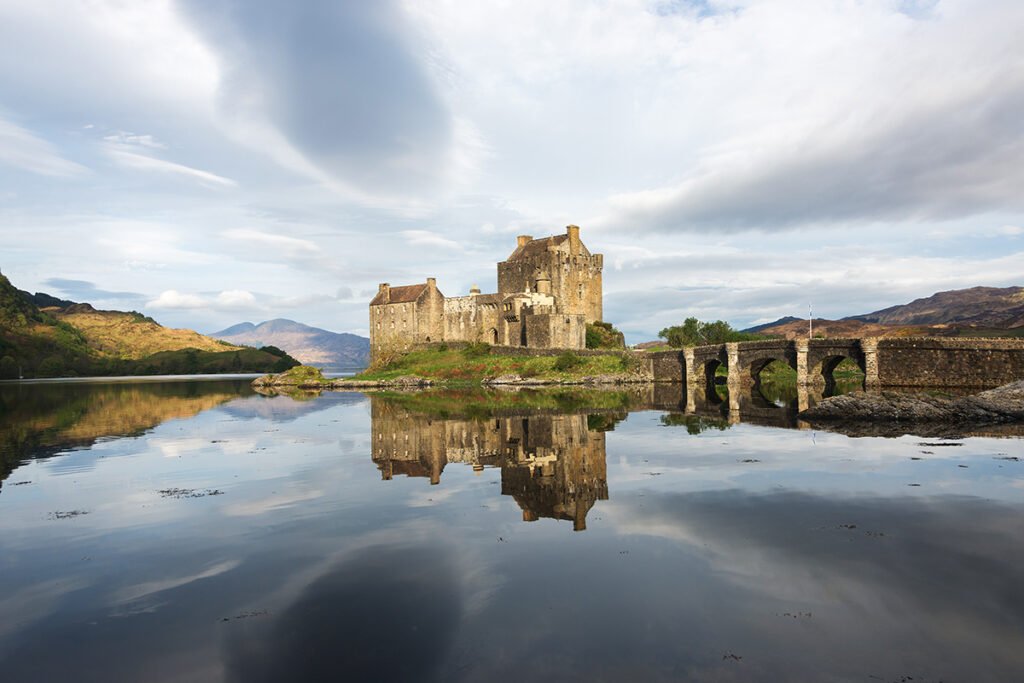
Eilean Donan Castle sits on a small tidal island at the meeting point of Loch Duich, Loch Long, and Loch Alsh. Mountains rise in every direction. On calm days, the castle reflects perfectly in the water. On stormy ones, waves slap against the rocks and clouds press low over the peaks. Either way, it feels cinematic.
The approach matters here.
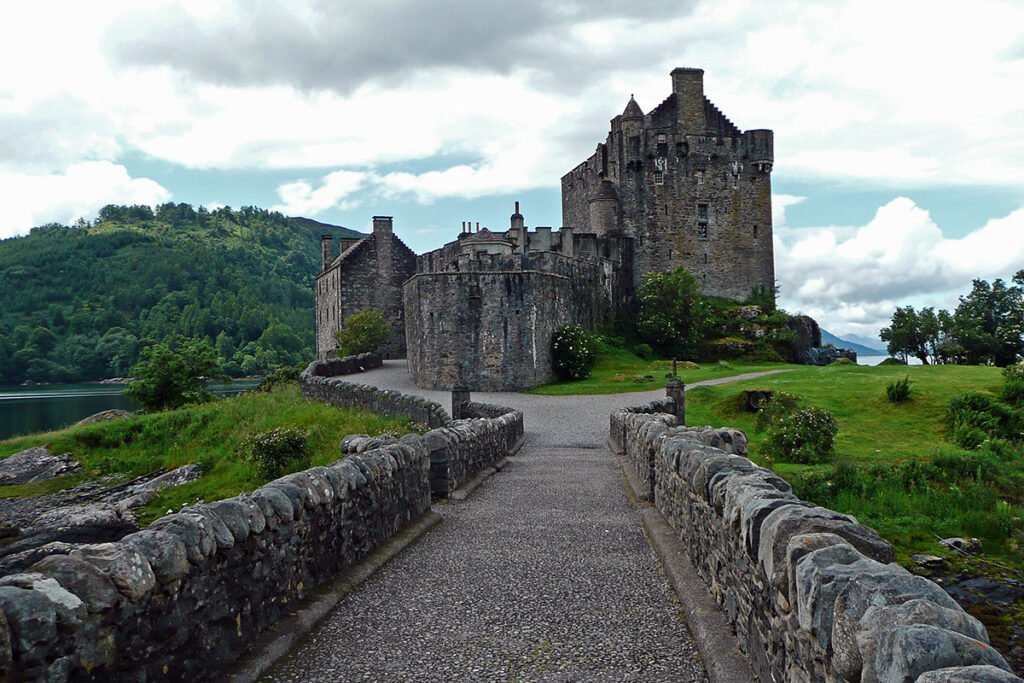
You cross a stone footbridge built in the early 20th century during the restoration. That slow walk toward the arched entrance is part of the experience. With each step, the castle grows taller. The walls feel thicker. The modern world drops away behind you.
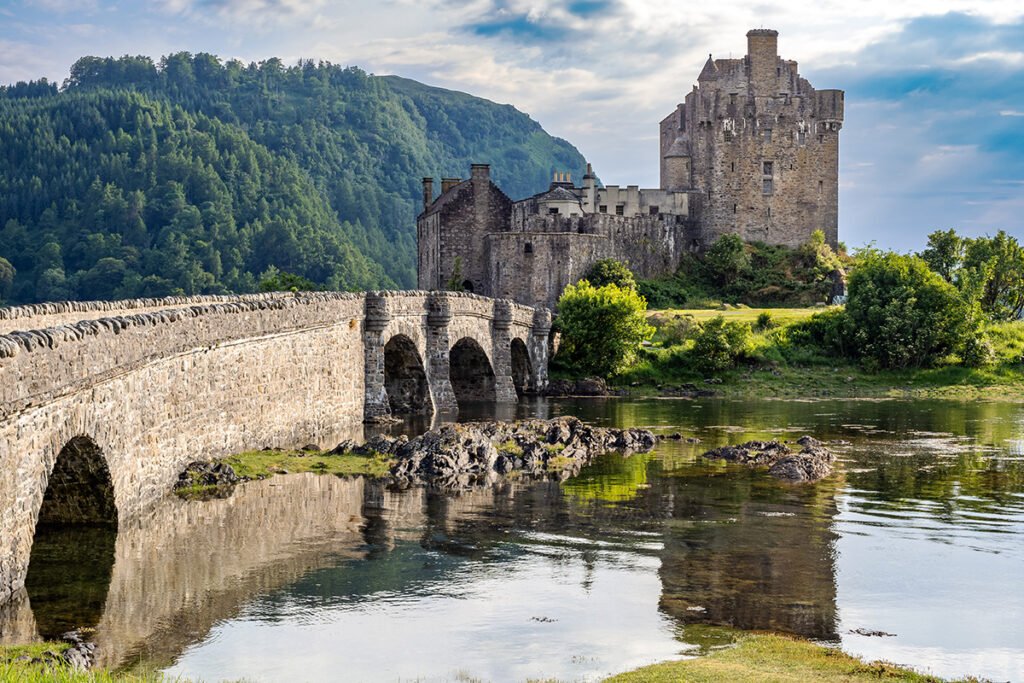
Architecturally, what you see today is a blend of medieval foundation and romantic reconstruction. The castle is compact compared to sprawling European fortresses. It was designed for defense, not luxury.
The outer walls rise directly from the rock. Narrow windows pierce the stone. Battlements crown the roofline. Everything feels solid and purposeful.
Once inside, you enter a small courtyard enclosed by thick defensive walls. In the Middle Ages, this space would have been alive with movement. Soldiers. Supplies. Livestock. Now, it feels surprisingly intimate.
The heart of the castle is the tower house. This multi-level structure contains the great hall, bedrooms, and private chambers. Staircases are narrow and steep. Stone steps are worn smooth from years of visitors.
Inside the great hall, dark wooden beams stretch overhead. Clan crests decorate the walls. Swords, muskets, and pistols are displayed carefully. It feels less like a sterile museum and more like a preserved Highland home from another era.
Look closely, and you’ll see portraits of Clan Macrae chiefs. Family history is everywhere. This is not just architecture. It’s identity in stone.
Upstairs, smaller chambers offer views across the lochs. Windows frame the landscape like paintings. You can imagine sentries standing here centuries ago, watching for approaching ships.
Defensively, the castle was clever.
Its island location made a direct assault difficult. Attackers would have to approach by boat or cross exposed shallows at low tide. The narrow entrance could be defended easily. High walls and elevated firing positions gave defenders a clear advantage.
The reconstruction in the 20th century added some interpretive elements, but the overall layout reflects traditional Scottish tower house design. Thick masonry walls helped retain heat. Small window openings minimized vulnerability. Every feature served a purpose.
Then there are the battlements.
Climb up and step outside. The wind is stronger here. The view stretches wide across the Highlands. You see the curve of the loch. The folds of the mountains. Sometimes, sheep are grazing on distant slopes.
This is the moment most visitors pause.
The scale feels balanced. The castle does not dominate the landscape. It belongs to it.
Unlike grand royal palaces, Eilean Donan’s power comes from proportion. It fits the island almost perfectly. No wasted space. No unnecessary flourish.
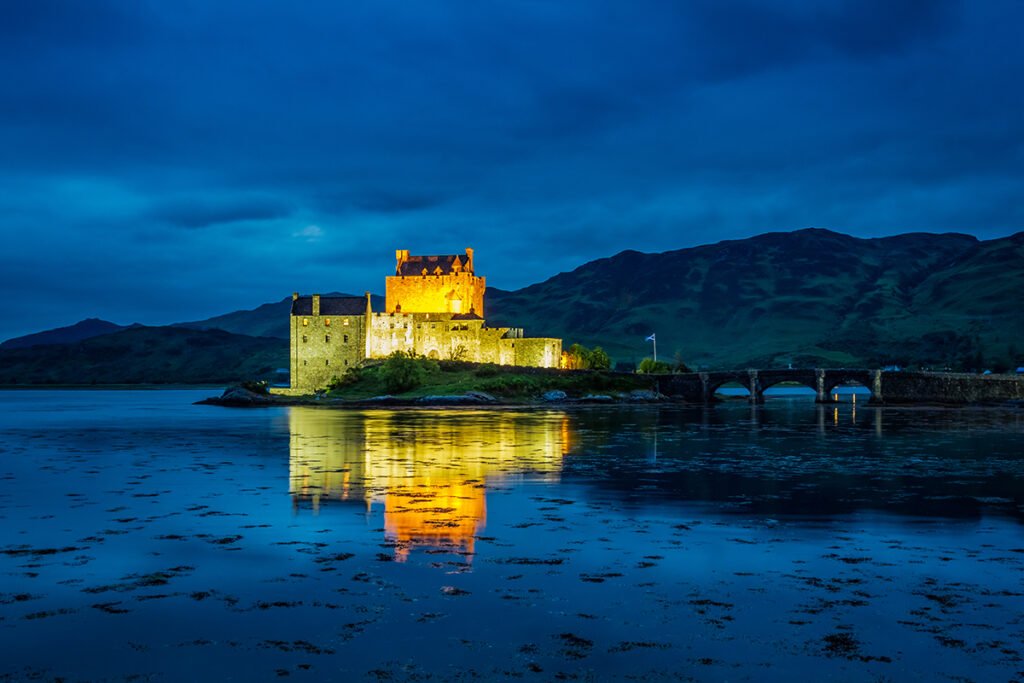
At sunrise, the stone glows warm gold. At sunset, it turns deep gray against pink skies. In winter, frost clings to the battlements. In summer, the water shimmers bright blue beneath long northern light.
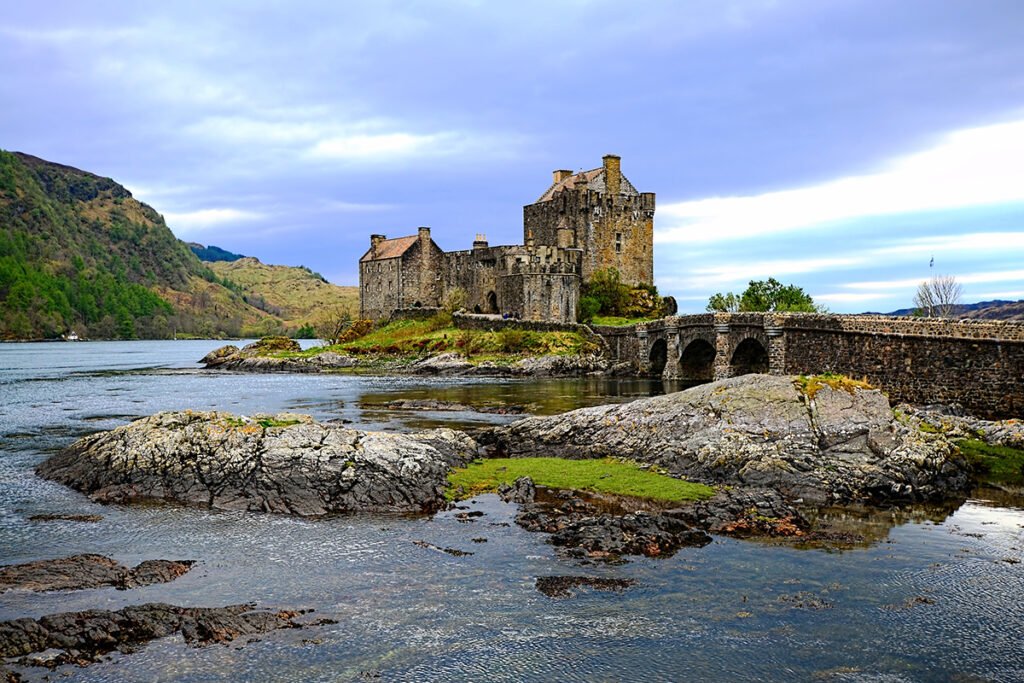
Photographers love the symmetry from the mainland shore, especially from the small viewpoint near the car park. But some of the best perspectives are from inside, looking outward. Framing the Highlands through medieval windows changes the way you see the landscape.
One more detail worth noticing: the subtle irregularities in the stonework. This is not machine-perfect masonry. Blocks vary slightly in tone and shape. That texture gives the castle depth and character.
It feels lived in.
And perhaps that’s the real architectural achievement here. Despite destruction, abandonment, and reconstruction, Eilean Donan does not feel artificial. It feels anchored. Rooted.
Stone rising from rock. Water is circling the walls. Mountains standing guard behind it.
You don’t just visit this castle. You step into a conversation between land, sea, and history.
Visiting Eilean Donan Castle: What You Need to Know Before You Go
You’ve seen the photos. You know the history. Now comes the practical question.
How do you actually visit Eilean Donan Castle and make it worth the stop?
Here’s everything you need to know.
🛣️ How to Get There
Eilean Donan Castle sits near the tiny village of Dornie in the western Highlands of Scotland, along the A87. It’s almost impossible to miss if you’re driving toward the Isle of Skye.
From Inverness
The drive takes about 1 hour and 45 minutes. It’s one of the most scenic routes in Scotland. Expect winding roads, mountain passes, and long stretches of open Highland landscape.
From the Isle of Skye
Only about 15–20 minutes from Kyle of Lochalsh and the Skye Bridge. Many visitors stop here either on the way to Skye or on the way back.
By public transport
It’s possible, but less convenient. Buses run between Inverness and Skye and stop near Dornie. However, service is limited, and you’ll need to check schedules carefully. If you want flexibility and time for photography, renting a car is strongly recommended.
The castle has a large paid car park directly across from the bridge. From there, it’s a short walk to the entrance.
Pro tip: Even if you don’t plan to go inside, you can park and walk to the shoreline viewpoint for classic photos.
🎟️ Entry & Tours
Yes, you can go inside. Eilean Donan Castle is open to visitors for most of the year, though hours vary seasonally.
Typical opening season: February to December, closed in January (check official website for exact dates)
Ticket prices 2026 (approximate): Adults: around £12–£13, Children: discounted rates, Family tickets available
Tickets include access to the interior rooms and exhibitions. Visits are self-guided, but there are informational displays throughout the castle explaining clan history, architecture, and artifacts.
Inside, you’ll see:
- The great hall with weapons and clan crests
- Bedrooms furnished in Highland style
- Historic firearms and Jacobite-era artifacts
- Personal items connected to Clan Macrae
Allow about 60 to 90 minutes for a full visit inside. If you’re a history enthusiast, you might linger longer. If you’re mainly there for photos, 45 minutes may be enough.
There is also:
- A small visitor center
- A gift shop with clan merchandise and Highland souvenirs
- Toilets and a café area near the car park
For the most up-to-date information on opening times and current ticket prices, check the official page for the castle. It’s updated regularly and gives you a clear picture of what to expect before you arrive.
📅 Best Time to Visit
Timing can completely change your experience.
Summer (June to August):
- Long daylight hours
- Lush green landscapes
- Higher visitor numbers
- Tour buses arrive mid-morning through mid-afternoon
If visiting in summer, aim for early morning or late evening. Before 9:30 AM is ideal for quieter views.
Spring and Autumn:
- Fewer crowds
- Moody skies and shifting light
- Cooler temperatures
This is arguably the best time for photography. Autumn especially adds rich tones to the surrounding hills.
Winter:
- Short daylight hours
- Dramatic skies
- Possible snow on the mountains
The castle looks stunning with snow in the background. Just be prepared for the cold wind. It can be intense.
Photography tip:
For the classic reflection shot, calm mornings are best. Wind can disturb the water quickly. Sunset also offers beautiful light behind the mountains.
♿ Accessibility & Practical Tips
The bridge leading to the castle is flat and accessible. However, once inside, the medieval layout becomes more challenging.
Expect:
- Narrow staircases
- Uneven stone steps
- Multiple levels
Visitors with limited mobility may find interior access difficult. The exterior and bridge, however, are accessible and still provide excellent views.
Now for the honest advice.
Arrive early if you want solitude.
By 11 AM in peak season, multiple tour buses can be parked outside. The castle interior is not huge, so it fills quickly.
Plan for wind.
Even on a sunny day, the breeze coming off the lochs can be strong and cold. Bring a jacket.
Don’t skip the mainland viewpoints.
Some of the best photographs are taken from across the water, not inside the castle.
Combine it with a scenic drive.
Many travelers treat Eilean Donan as a quick stop. It deserves at least an hour or two. Pair it with nearby Highland scenery to make the journey worthwhile.
Is it worth going inside?
Yes, if you’re interested in clan history and Highland life.
If you only want the iconic photo, the exterior may satisfy you.
How Long Should You Spend Here?
For most travelers:
- 30–45 minutes for photos only
- 1.5 to 2 hours, including an interior visit
It works perfectly as a scenic stop between destinations.
Many visitors include Eilean Donan Castle as part of a Highlands road trip itinerary, especially when heading toward Skye. It breaks up the drive beautifully.
Is Eilean Donan Castle Worth Visiting?
If you’re exploring the Scottish Highlands, absolutely.
It may not be the largest castle in Scotland. It may not have vast gardens or royal apartments. But what it offers is something unique.
Location.
Atmosphere.
Identity.
Standing on that bridge with mountains rising around you feels distinctly Scottish.
And sometimes, that’s exactly what you’re looking for.
Next, let’s look at how this small island fortress became a global film icon.
Eilean Donan Castle in Film & Pop Culture
Even if you think you’ve never seen Eilean Donan Castle before, chances are you have.
Filmmakers love this place. And it’s easy to see why.
The castle’s compact silhouette, the arched stone bridge, and the mountains rising behind it. It’s visually perfect. It looks exactly how people imagine a Highland fortress should look.
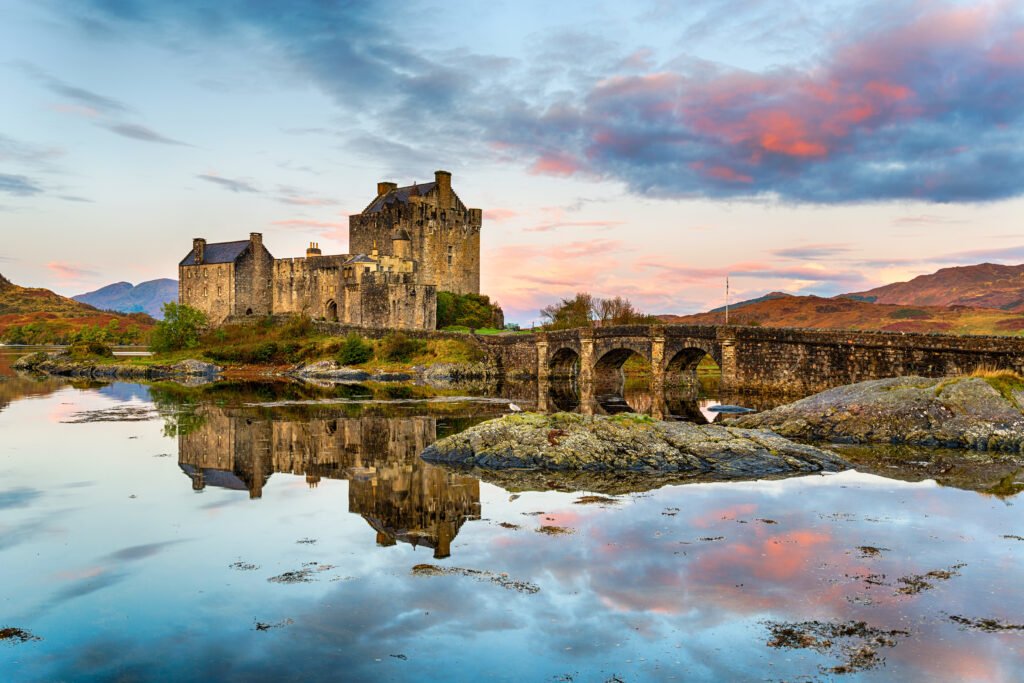
One of its most famous appearances was in Highlander. In the film, the castle serves as the ancestral home of Connor MacLeod. Mist swirling across the loch. Brooding skies. Dramatic sword fights. The setting feels timeless. For many viewers, this was their first glimpse of Eilean Donan.
It later appeared in The World Is Not Enough, adding a James Bond layer to its cinematic résumé. While the interior scenes were filmed elsewhere, the exterior shots reinforced the castle’s global image.
You’ll also spot it in romantic comedies like Made of Honor, as well as documentaries, travel shows, and countless advertisements.
But its influence goes beyond film credits.
Eilean Donan has become a visual shorthand for “Scotland.” It appears on travel brochures, calendars, whisky packaging, and postcards worldwide. If you search for “Scottish castles,” this one almost always leads the results.
And yet, standing there in person feels different from seeing it on screen.
Movies capture its drama.
Photographs capture its symmetry.
But only being there lets you feel the wind, hear the water, and sense the stillness between mountain and sea.
That’s the part no film can fully replicate.
Nearby Attractions: What to See Around Eilean Donan
Eilean Donan Castle may be the headline act, but the surrounding Highlands deserve just as much attention. If you’re already here, don’t rush off too quickly. This part of Scotland rewards slow travel.
Isle of Skye
Just 15–20 minutes west across the Skye Bridge lies the legendary Isle of Skye. Think jagged cliffs, otherworldly rock formations, and sweeping coastal roads. Highlights include the Quiraing, the Old Man of Storr, and the Fairy Pools.
Many travelers pair Eilean Donan with a Skye road trip. It’s a natural combination.
Five Sisters of Kintail
Drive east from the castle along the A87, and you’ll soon see the dramatic ridge known as the Five Sisters of Kintail. These steep Highland peaks dominate the skyline and are especially striking in late afternoon light.
Even if you’re not hiking, simply pulling over at a viewpoint and taking in the scale of the mountains is worth it.
Glen Shiel
Continuing east, Glen Shiel offers one of the most scenic drives in Scotland. Wide valleys. River crossings. Rolling hills that shift color with the weather.
This is a classic Highland landscape. Quiet. Vast. Almost cinematic in its openness.
Dornie Village
Just across the water from the castle sits the tiny village of Dornie. It’s peaceful and low-key, with a handful of cottages and local charm. If you want a calmer perspective of the castle, walk along the shoreline here and watch the light change.
It’s especially beautiful at sunset.
Eilean Donan may be the most photographed castle in Scotland, but its surroundings are just as memorable. Plan a few extra hours. Let the Highlands unfold around you.
Frequently Asked Questions About Eilean Donan Castle
Is Eilean Donan Castle worth visiting?
Yes, especially if you’re exploring the Scottish Highlands or heading to the Isle of Skye. While it’s not the largest castle in Scotland, its dramatic island setting and clan history make it one of the most iconic and atmospheric Highland castles.
Can you go inside Eilean Donan Castle?
Yes. The castle is open to visitors for most of the year, and your ticket includes access to the interior rooms, exhibitions, and battlements. Expect narrow staircases and multiple levels inside.
How long do you need at Eilean Donan Castle?
Plan for 30–45 minutes if you’re stopping for photos only, or 1.5 to 2 hours if you’re visiting the interior. It’s an ideal scenic stop on a Highlands road trip.
What is the best time to visit Eilean Donan Castle?
Early morning or late afternoon is best, especially in summer. Midday tends to be busier with tour buses. Spring and autumn offer fewer crowds and dramatic lighting for photography.
Is Eilean Donan Castle part of the Isle of Skye?
No. The castle is located on the mainland near the village of Dornie. However, it sits just minutes from the Skye Bridge and is commonly visited en route to the Isle of Skye.
Is Eilean Donan Castle open year-round?
It is typically open from February through December and closed in January. Opening hours vary by season, so always check the official website before visiting.
How much does it cost to visit Eilean Donan Castle?
Adult tickets in 2026 are generally around £12–£14, with discounted child and family tickets available. Prices can change seasonally, so verify before arrival.
Is Eilean Donan Castle accessible to visitors with mobility issues?
The bridge to the castle is flat and accessible. However, the interior includes steep staircases and uneven stone steps, which may limit access to some areas.
Was Eilean Donan Castle really destroyed?
Yes. In 1719, government ships bombarded the castle during a failed Jacobite uprising involving Spanish troops. It remained in ruins for nearly 200 years before being reconstructed in the early 20th century.
What makes Eilean Donan Castle so famous?
Its unique island setting, connection to Highland clans, and appearances in films like Highlander and James Bond have made it one of the most recognizable and photographed castles in Scotland.
Final Thoughts: Why Eilean Donan Still Matters
Some castles impress you with scale. Others with luxury.
Eilean Donan Castle wins you over with feeling.
It’s not enormous. It’s not filled with royal extravagance. What makes it powerful is its balance. Stone and sea. Mountain and sky. Ruin and rebirth.
Standing on that bridge, with wind pushing across the loch and the Highlands rising behind you, it feels distinctly Scottish. Not staged. Not exaggerated. Just rooted.
Yes, it’s one of the most photographed castles in Scotland. Yes, it appears on postcards and film screens around the world. But in person, it feels quieter. More grounded.
It represents resilience. Destroyed in conflict. Left in ruins. Rebuilt with pride.
If you’re traveling through the Highlands, don’t rush it. Arrive early. Walk slowly. Step inside. Then pause on the battlements and look outward.
Let the landscape do the rest.
And if Eilean Donan captures your imagination, there are many more Highland castles waiting beyond the next bend in the road.
💬 If you’ve visited Eilean Donan Castle, your experience may not look exactly like someone else’s—and that’s part of the magic. The light shifts. The loch changes mood. The mountains wear a different expression every hour. If you’ve stood on that bridge at sunrise or watched mist roll in at dusk, feel free to share what stayed with you most.
👉 If this kind of Highland fortress speaks to you, don’t stop here. Scotland’s castle landscape is incredibly diverse. From dramatic cliffside ruins to grand royal residences, from isolated island strongholds to fortified towers tucked into glens, each castle tells a different chapter of Scottish history. When you’re ready to go further, explore our guide to 10 Best Castles to Visit in Scotland: A Complete Travel Guide and start planning your next stop.
🏰✨ Thanks for reading. If this guide helped you, continue exploring with CastleQuest Chronicles for more in-depth castle stories, practical travel advice, and carefully crafted itineraries. You can follow CastleQuest Chronicles on Instagram, Facebook, Pinterest, YouTube, TikTok, and X. Scotland has many more castles waiting. And each one carries its own wind, water, and story.