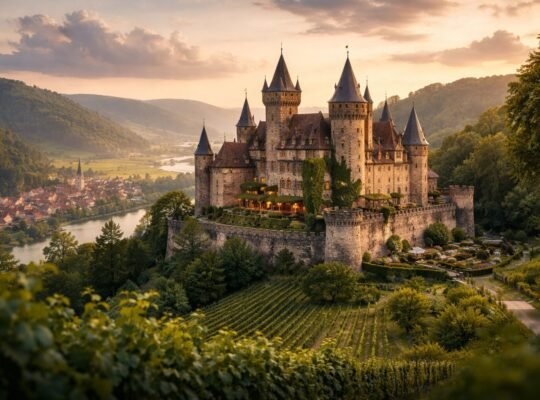
Perched above the Rhine, wrapped in vineyards and legend, Drachenburg Castle doesn’t behave like a castle should. It has towers and terraces, sure. Stained glass, grand halls, sweeping views. But scratch the surface, and you realize this place wasn’t built for war, defense, or medieval survival. It was built for show. And that’s exactly what makes it fascinating.
Completed in the late 19th century in a burst of ambition and money, Drachenburg is part castle, part palace, part theatrical backdrop. It looks ancient, yet it isn’t. It feels medieval, yet it never faced a siege. Instead, it tells a very modern story about wealth, status, and the urge to leave a mark on the landscape—preferably one that could be admired from riverboats gliding past below.
The setting does a lot of the heavy lifting. From its terraces, the Rhine snakes through the valley, dotted with vineyards, church spires, and distant hilltop ruins. This stretch of river has inspired painters, poets, and composers for centuries, and Drachenburg leans fully into that romantic mood. On misty mornings, the castle seems to float above the valley. On clear days, it feels like a front-row seat to one of Germany’s most famous views.
What surprises many visitors is how layered the experience is. Beyond the postcard exterior, there are richly decorated interiors filled with symbolism, murals, and historical references that reveal how the 19th century imagined the Middle Ages. Nearby, dragon legends tied to the Drachenfels add a touch of myth, while the castle’s later history—neglect, near-loss, and careful restoration—shows how close this fantasy came to disappearing.
This guide takes you inside Drachenburg Castle in depth. You’ll learn why it was built, what makes its architecture so unusual, how to visit it today without rushing, and what else to see in Königswinter and along the Rhine. Whether you love romantic castles, unusual histories, or simply great views with a story behind them, Drachenburg earns its place on any German castle list.

Quick Facts: Drachenburg Castle at a Glance
📍 Location: Königswinter, North Rhine-Westphalia, Germany
🏗️ Construction Period: 1882–1884
🏰 Architectural Style: Historicist with strong Gothic Revival influences
👤 Founder: Baron Stephan von Sarter
🎯 Original Purpose: Private residence and symbol of wealth and status
🌄 Setting: Hills above the Rhine Valley, near the Drachenfels
🎭 Best Known For: Romantic design, panoramic Rhine views, and fairytale appearance
🏛️ Current Status: Restored historic monument open to the public
🏆 UNESCO Status: Not individually listed, but located within the Upper Middle Rhine Valley UNESCO cultural landscape
🌐 Official Website: https://www.schloss-drachenburg.de/en/
🚠 Access: On foot, by Drachenfelsbahn cogwheel railway, or short hike from Königswinter
Despite its medieval look, Drachenburg Castle is very much a product of the 19th century—a castle born from imagination rather than necessity. This tension between appearance and reality defines everything about the place, from its decorative towers to its richly symbolic interiors, and sets the stage for the story behind its creation.

The Story Behind Drachenburg Castle: Ambition, Wealth, and a Castle Without a Past
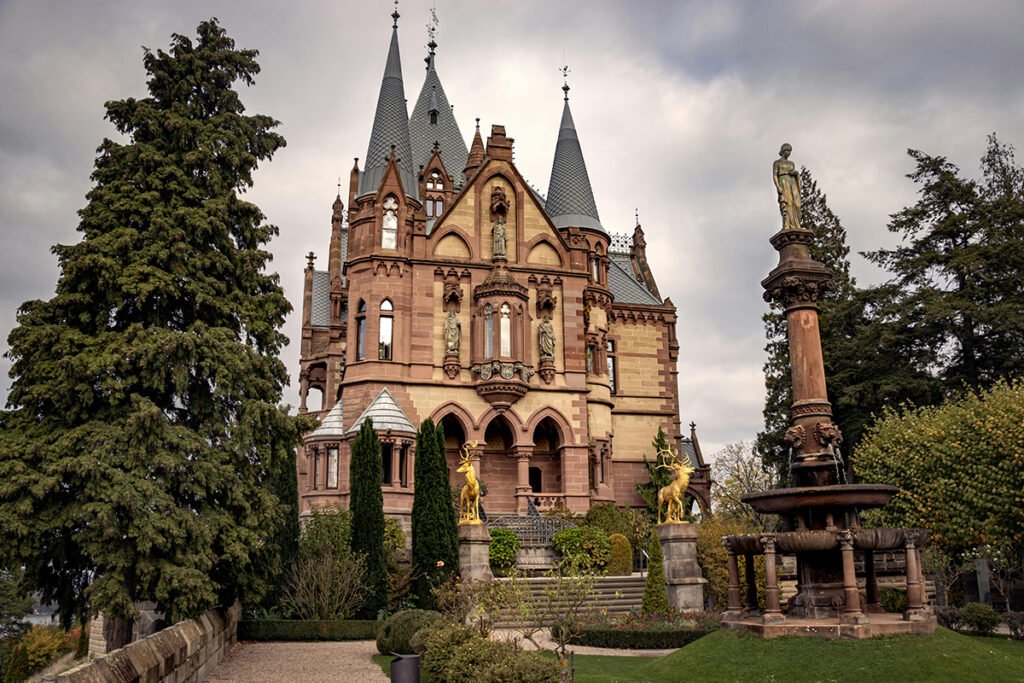
At first glance, Drachenburg Castle looks like it has stood above the Rhine for centuries. Towers rise confidently. Stone terraces suggest generations of noble life. The setting feels timeless. And yet, this castle has no medieval past at all. Its story begins not with knights or feudal lords, but with money—new money—and a man determined to turn it into something that looked permanent.
The driving force behind Drachenburg was Baron Stephan von Sarter, a Bonn-born financier who made his fortune far from the Rhine. Through international railway investments, particularly in France, von Sarter accumulated enormous wealth at a pace unheard of in earlier centuries. In 1881, that success was formally recognized when Kaiser Wilhelm I granted him a hereditary baronial title. The elevation came quickly. Perhaps too quickly. Titles can be awarded, but history cannot be bought—or so it seemed.
Von Sarter’s response was architectural. If lineage could not stretch back centuries, stone could at least pretend to. In 1882, he commissioned the construction of a castle on the slopes of the Drachenfels, one of the most romanticized hills in Germany. The location was deliberate. The Rhine Valley was already steeped in legend, poetry, and nationalist symbolism. By placing his castle here, von Sarter plugged himself into a landscape already heavy with meaning.
What followed was astonishing in its speed. Drachenburg Castle was completed in roughly two years—a blink of an eye for a structure of its scale and detail. There was no gradual evolution, no generations adding wings or towers. Everything was conceived at once. The result feels cohesive, almost theatrical, like a stage set built to suggest a long and noble past that never actually existed.
And here’s the twist. Von Sarter never lived in the castle.
Despite commissioning it as a private residence, he spent little time there and died in 1902 without ever making Drachenburg his home. The building stood finished, furnished, and symbolically loaded—yet strangely empty. This absence hangs over the castle’s story. Drachenburg was not shaped by daily life, family routines, or inherited traditions. It was shaped by intention alone.
After von Sarter’s death, the castle entered a restless phase. Ownership changed hands. At various points, it served as a boarding school, a Catholic training center, and later fell under state control. Each new function left traces, but none truly defined the place. Unlike older castles that slowly adapt to new eras, Drachenburg seemed to be constantly searching for a role that matched its appearance.
The 20th century was not kind to romantic architecture. Wars reshaped Germany, priorities shifted, and ornate historicist buildings were often dismissed as relics of excess. Drachenburg narrowly escaped destruction during World War II, but neglect proved just as dangerous. By the postwar years, parts of the castle were deteriorating. Decorative interiors were damaged. Maintenance lagged. For a time, it seemed possible that this flamboyant experiment in stone would quietly fade away.
Its survival is largely due to a growing recognition, late in the century, that Drachenburg represented something rare. Not a medieval stronghold, but a physical record of how the 19th century imagined the Middle Ages. Restoration efforts began in earnest, focusing not on reinventing the castle, but on preserving its original vision—murals, stained glass, carved details, and symbolic programs included.
Today, that effort shows. Visitors walk through rooms designed to impress rather than defend. They move along terraces intended for views, not archers. Everything about the castle speaks of aspiration: the desire to belong to history, to stand alongside the legendary ruins dotting the Rhine, even if that belonging had to be created from scratch.
In that sense, Drachenburg is honest in its own way. It does not pretend to be what it isn’t. Instead, it reveals how powerful the idea of the past can be—and how architecture can turn imagination into something solid, visitable, and surprisingly enduring.

Architecture & Design: Inside a 19th-Century Castle Dream
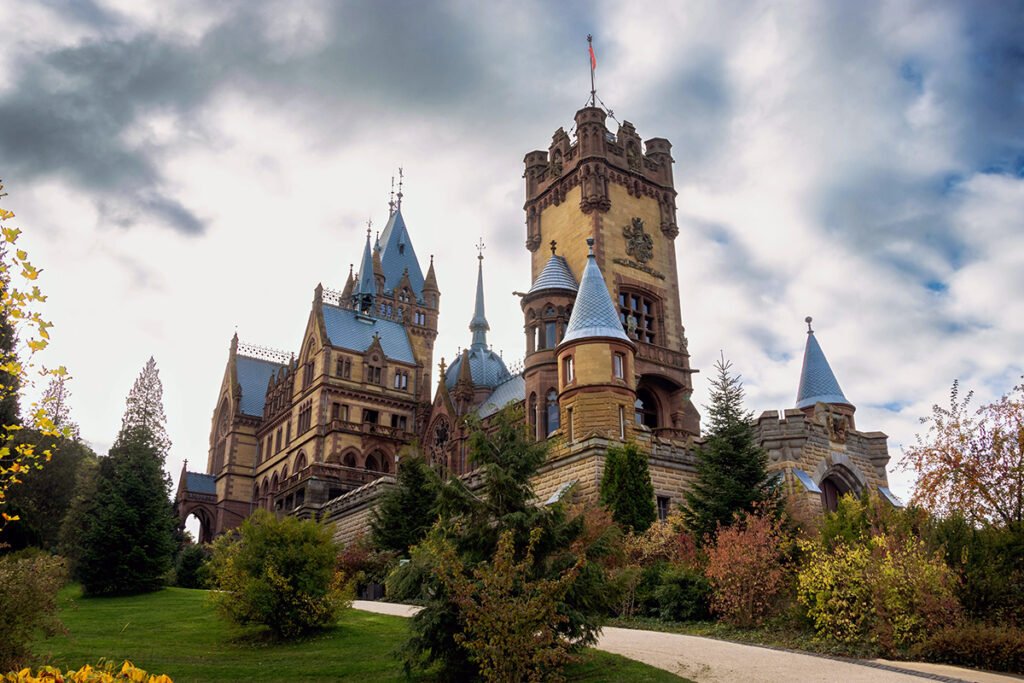
Walking into Drachenburg Castle feels less like entering a fortress and more like stepping into a carefully staged idea of the Middle Ages. This is architecture as storytelling. Every tower, mural, and window was designed to impress, evoke, and suggest history—even if that history had to be invented.
From the outside, Drachenburg borrows freely from Gothic Revival and romantic historicism. Pointed arches, slender turrets, and ornate stonework rise dramatically above the Rhine Valley. It looks defensive at a glance, but a closer look reveals its true nature. The walls are not thick enough for war. Arrow slits are decorative. Battlements exist for silhouette, not strategy. This is a castle meant to be seen, not tested.
The layout reinforces that impression. Instead of a compact, defensive core, Drachenburg unfolds as a series of terraces, wings, and viewpoints. The castle turns outward toward the Rhine, framing the landscape as part of the experience. In clear weather, the views stretch for kilometers. Riverboats below look almost staged, as if they were meant to complete the scene.
Inside, the theatrical intent becomes impossible to miss.
The grand staircases are among the first surprises. Wide, light-filled, and richly decorated, they are closer to palace design than medieval necessity. Stained glass windows line the ascent, bathing the stone in color and symbolism. Many depict German emperors, legendary figures, and allegorical scenes tied to nationalism and history. They don’t document the past as it was. They present the past as the 19th century wanted to remember it.
The main halls continue that narrative. Ceilings are high, walls are covered in murals, and decorative elements draw from medieval motifs filtered through romantic imagination. Knights, coats of arms, and historical scenes appear throughout, but always in idealized form. This is not a record of daily medieval life. It is a tribute to values—honor, loyalty, power—that the era admired from a safe distance.
One of the most striking aspects of the interior is how cohesive it feels. Because the castle was built so quickly, the design follows a single vision. There are no mismatched wings from different centuries, no awkward renovations forced by siege or inheritance. Everything belongs to the same moment, the same mindset. That unity gives Drachenburg a polished, almost curated quality.
Yet it never feels cold.
Much of that warmth comes from the materials. Wood paneling, carved details, painted ceilings, and richly patterned floors soften the stone framework. Light plays a major role too. Windows are positioned to frame views rather than block them, constantly reminding visitors of the castle’s relationship with the Rhine below. Even inside, the landscape remains present.
The terraces deserve special attention. They blur the line between architecture and scenery. Stepping outside, you realize how deliberately the castle was oriented. Each level offers a slightly different perspective: vineyards rising below, the river winding through the valley, distant hills layered into the horizon. These spaces were made for strolling, pausing, and being seen. They turn the visitor into part of the composition.
It’s also worth noting what Drachenburg lacks. There are no dungeons meant for long-term imprisonment. No great keep was designed as a last stand. No scars of battle repaired and rebuilt. In older castles, these absences would feel strange. Here, they make perfect sense. Drachenburg was never meant to endure conflict. It was meant to endure admiration.
That intent becomes even clearer when you consider how the castle fits into the broader Rhine landscape. Nearby ruins like the Drachenfels feel raw and ancient, shaped by time and erosion. Drachenburg, by contrast, feels deliberate and intact. It doesn’t compete with those ruins. It complements them, offering a polished counterpoint to their weathered silhouettes.
In the end, Drachenburg’s architecture succeeds because it knows exactly what it is. It doesn’t pretend to be a medieval survivor. It embraces its role as a 19th-century fantasy, executed with confidence, resources, and an eye for drama. For visitors today, that clarity is refreshing. You’re not here to decode layers of warfare and adaptation. You’re here to experience how an era dreamed about castles—and built one to match that dream.
Legends, Myths & the Dragon of the Rhine

No castle in this part of Germany exists in isolation from myth, and Drachenburg Castle is inseparable from the legends swirling around the nearby Drachenfels. Long before towers and terraces appeared on these slopes, the hill was already famous as the supposed lair of a dragon—Drache in German—giving the entire area its name.
The most enduring tale is tied to the medieval epic Nibelungenlied. According to legend, the hero Siegfried slew a fearsome dragon near the Rhine, bathing in its blood to gain invulnerability. Some versions place this moment directly on the Drachenfels, transforming the hill into a symbolic site of courage, sacrifice, and destiny. Whether the story was ever meant to be geographically precise hardly matters. By the 19th century, the association was firmly embedded in popular imagination.
This mattered deeply to the era that produced Drachenburg Castle.
Romanticism had a powerful grip on German culture at the time. Poets, painters, and composers looked to myth and legend as sources of national identity. The Rhine Valley, in particular, became a stage where history and folklore blended freely. Ruins were celebrated not despite their decay, but because of it. They suggested depth, endurance, and mystery. A dragon legend was not something to question—it was something to cultivate.
Drachenburg fits neatly into this mindset. While the castle itself makes no claim to being ancient, its placement near the Drachenfels allows it to borrow mythic weight. Visitors standing on its terraces are only a short distance from the supposed dragon’s lair. The view lines up landscape, legend, and architecture in a way that feels intentional, even if it was largely symbolic.
Over time, these stories became part of the visitor experience. Early tourists arriving by steamboat would hear guides recount dragon tales as they gazed up at the hill. Later, postcards and travel posters reinforced the connection, pairing images of the castle with references to Siegfried and the dragon. The line between folklore and tourism blurred quickly.
What’s important to understand is that these myths were never meant to be proven. They functioned as atmosphere. They turned geography into narrative. Drachenburg, with its romantic towers and dramatic setting, amplifies that effect rather than inventing it. The castle doesn’t depict the dragon directly, but it doesn’t need to. The legend lives in the name, the hill, and the expectations visitors bring with them.
Even today, the dragon story shapes how people experience the area. Mist rolling through the valley, shadows on the rocks, and the sudden appearance of ruins through trees all seem to invite imagination. You don’t have to believe the legend to feel its pull. That’s the quiet power of places like this.
In the end, Drachenburg’s myths are less about dragons and more about longing—for a past filled with meaning, heroism, and grandeur. The castle stands as a reminder that stories, once rooted in a landscape, can be just as enduring as stone.
Visiting Drachenburg Castle Today: Practical Tips, Views, and What to Expect
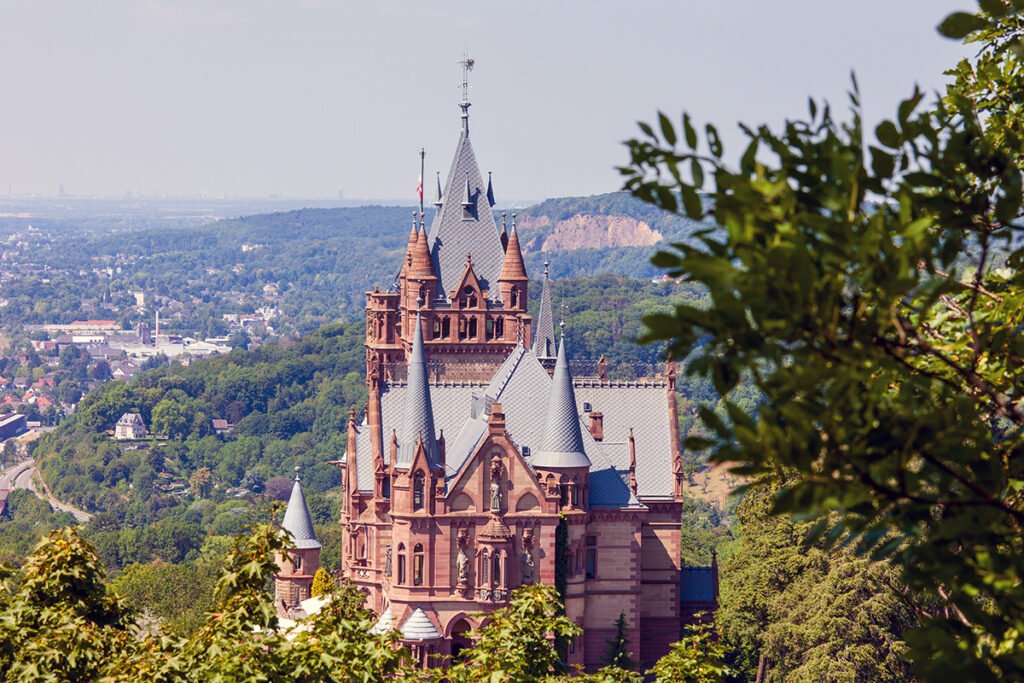
Visiting Drachenburg Castle is refreshingly straightforward, yet the experience feels anything but ordinary. Unlike remote hilltop fortresses that demand hours of hiking or careful planning, Drachenburg is easy to reach and generous with its rewards. That accessibility is part of its charm—but knowing how to approach your visit makes all the difference.
Getting There: Easy Access from the Rhine
Most visitors start in Königswinter, a small town hugging the eastern bank of the Rhine. From Cologne or Bonn, trains run frequently and stop within walking distance of the riverfront. Königswinter itself is compact, with cafes, small hotels, and a pleasant promenade that sets the mood before you even start uphill.
From the town, you have three main options to reach the castle. The most popular is the Drachenfelsbahn, Germany’s oldest operating cogwheel railway. It climbs steadily up the slope, passing vineyards and viewpoints along the way. The ride is short but scenic, and it drops you close to the castle entrance. If you enjoy classic transport with a sense of history, this is the easiest and most atmospheric choice.
Walking is the second option. Well-marked paths wind up the hillside through forest and vineyard edges. The hike isn’t long, but it is uphill, and sturdy shoes help—especially after rain. The payoff is a gradual reveal of the Rhine Valley below, with each bend offering a slightly different angle.
The third option is a mix of both: take the railway up and walk down. This approach lets you save energy while still enjoying the landscape at a relaxed pace.
Tickets, Entry, and How the Visit Works
Drachenburg Castle operates as a museum and historic site, with tickets purchased on-site. Entry includes access to the main interior rooms and exterior terraces. Guided tours may be offered at certain times, but the castle is well-suited to self-guided exploration. Information panels are clear, and the layout encourages wandering without feeling rushed.
Plan on spending at least 90 minutes inside the castle itself. That doesn’t include time for terraces, photos, or nearby stops. Many visitors underestimate this and end up hurrying through rooms that deserve a slower look.
Photography is allowed in many areas, but flash and tripods are typically restricted indoors. Outdoors, the terraces are a dream for photographers, especially on clear days when the Rhine reflects light back up into the valley.
For the most up-to-date information on opening times and current ticket prices, check the official page for the castle. It’s updated regularly and gives you a clear picture of what to expect before you arrive.
Best Time to Visit: Timing Matters More Than You Think
Drachenburg changes dramatically with the seasons. Spring brings fresh greens and vineyard growth, with fewer crowds than midsummer. Summer offers long days and bright views, but it’s also the busiest period, especially on weekends. Expect tour groups and river cruise passengers arriving in waves.
Autumn may be the sweet spot. Vineyards turn gold, forests deepen in color, and the air feels clearer. The light is softer, making both interiors and terraces especially photogenic. Winter visits are quieter, though weather can limit access to some outdoor areas. On foggy days, the castle feels almost suspended above the clouds—a very different, more introspective experience.
If possible, arrive early in the day or later in the afternoon. Midday tends to be the most crowded, particularly when cruise schedules align.
What You’ll Experience Inside
The interior route follows a logical flow through the castle’s main spaces. You’ll move from grand halls to more intimate rooms, each layered with symbolism and decorative detail. Murals, stained glass, and carved elements reward close attention. This isn’t a place to rush. Small details—figures in painted scenes, motifs repeated from room to room—tell you how carefully the castle was planned.
Because Drachenburg was never adapted for modern residential use, the rooms feel remarkably intact. There’s no sense of improvisation or patchwork renovation. Instead, you’re seeing a 19th-century vision preserved with care. That makes the visit feel coherent, almost cinematic.
The Terraces: Don’t Skip Them
If the interior tells the story, the terraces deliver the emotion. Step outside and the Rhine Valley opens up in full. River traffic slides quietly below. Vineyard lines trace the hillsides. On clear days, the sense of scale is striking.
Take your time here. Walk the length of each terrace. Sit if seating is available. These spaces were designed for lingering, and they’re the reason many visitors remember Drachenburg long after other castles blur together.
Accessibility and Practical Considerations
The castle’s hillside location and historic structure mean accessibility is limited in places. Some staircases are unavoidable, and uneven surfaces appear outdoors. Visitors with mobility concerns should check current accessibility details before planning their visit.
Comfortable shoes are essential. Even if you take the railway, you’ll walk on stone floors, stairs, and outdoor paths. Weather can change quickly above the river, so a light jacket is often useful—even in summer.
Restrooms are available near the entrance area, but options are limited once you’re inside the main route. Plan accordingly.
Combining Drachenburg with Nearby Stops
One of the strengths of a Drachenburg visit is how easily it fits into a broader Rhine Valley day. Many visitors pair it with the ruins of the Drachenfels just uphill, reachable by a short walk or the same railway. Others head back down to Königswinter for a late lunch or coffee by the river.
If you’re traveling by river cruise, Drachenburg is one of the most convenient castle stops in the region, requiring minimal transfers and offering a full experience in a manageable time frame.
A Final Tip for Enjoying the Visit
Drachenburg rewards curiosity. Don’t treat it as a quick photo stop. Read the panels. Look up at ceilings. Step outside more than once. Let the contrast between fantasy and reality sink in.
This castle doesn’t ask you to imagine sieges or medieval hardship. It asks you to imagine ambition, identity, and the power of storytelling through architecture. If you give it time, it delivers far more than its fairytale exterior suggests.
Nearby Attractions Worth Adding to Your Visit
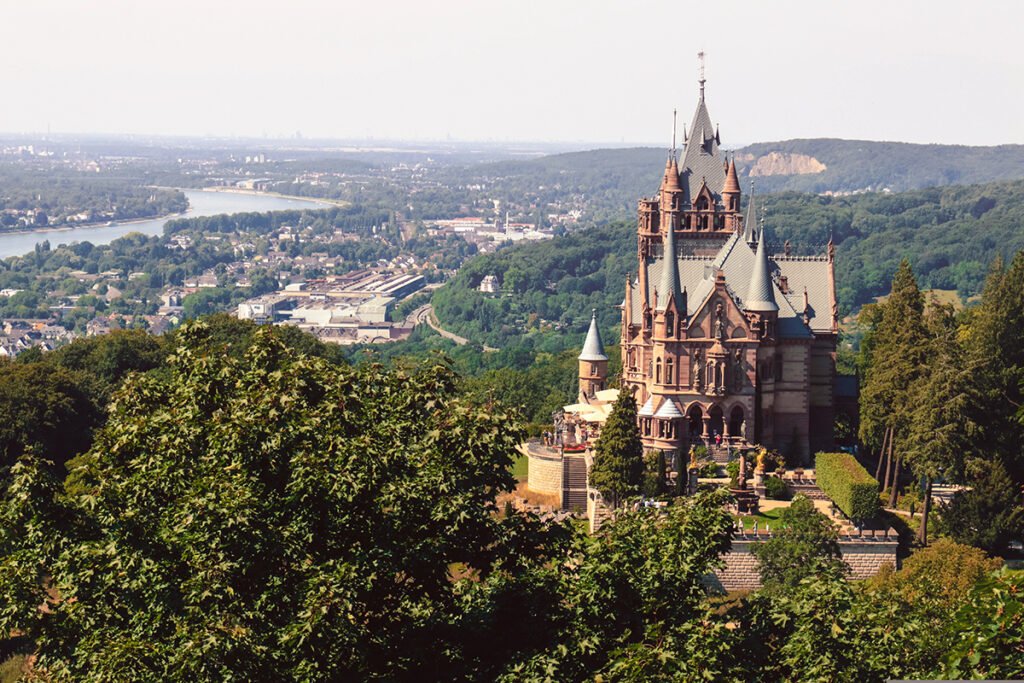
One of the pleasures of visiting Drachenburg Castle is how naturally it fits into a wider Rhine Valley outing. You don’t need to rush back to the train once you’ve explored the castle. Several excellent stops sit within easy reach, each offering a different angle on the landscape, history, and atmosphere of the region.
Drachenfels Ruins: The Original Legend Above the Castle
Just uphill from Drachenburg lie the dramatic remains of Drachenfels, one of the most famous ruins on the Rhine. Older, rougher, and far more exposed than Drachenburg, the Drachenfels feels raw and elemental. Stone walls cling to the rock, and the views from the top are among the widest in the region.
This is where the dragon legends truly come alive. Wind, cloud, and shifting light give the place a moody edge, especially on overcast days. It’s a short walk from Drachenburg, and many visitors find that seeing both highlights the contrast between romantic ruin and 19th-century fantasy.
Königswinter Old Town: A Gentle Return to the River
At the base of the hill, Königswinter offers a relaxed, almost nostalgic atmosphere. The town developed alongside early Rhine tourism, and that heritage still shows. Small hotels, traditional restaurants, and riverside cafés make it a pleasant place to slow down after a castle visit.
The promenade along the Rhine is ideal for a short walk. Watching boats pass while the hills rise behind you helps put the entire visit into context. This is also a good spot for lunch or coffee before heading onward.
Rhine River Cruises: Castles from the Water
Seeing the Rhine from above is impressive. Seeing it from the water adds another layer. Short river cruises operate from Königswinter and nearby towns, offering views back toward Drachenburg, the Drachenfels, and the wider valley.
From the river, the castles feel theatrical, almost like a continuous backdrop. Even a brief cruise helps you understand why this stretch of river captured so many imaginations in the 19th century. If you have extra time, this is an easy and rewarding addition.
Siebengebirge Hills: Nature Between the Landmarks
For visitors who enjoy walking, the Siebengebirge hills surrounding Königswinter provide quieter trails away from the main sights. These paths wind through forest and open viewpoints, often with far fewer people than the castle areas.
It’s a good option if you want to balance architecture with nature. Even a short walk here offers a calmer counterpoint to the more polished experience of Drachenburg.
Taken together, these nearby stops turn a castle visit into a full day of varied impressions. Drachenburg may be the centerpiece, but the surrounding landscape ensures the experience feels complete rather than isolated.
Frequently Asked Questions About Drachenburg Castle
Is Drachenburg Castle a real medieval castle?
No. Although it looks medieval, Drachenburg Castle was built between 1882 and 1884. It’s a 19th-century historicist castle designed to evoke the Middle Ages rather than a true medieval fortress.
How long should I plan for a visit?
Plan for at least 2 to 3 hours if you want to explore the interior, enjoy the terraces, take photos, and move at a relaxed pace. If you also visit the Drachenfels ruins, allow half a day.
Is Drachenburg Castle worth visiting if I’ve already seen other Rhine castles?
Yes. Drachenburg stands out because it’s not a ruin and not medieval. Its romantic design, preserved interiors, and panoramic views offer a very different experience from older Rhine Valley castles.
Can I visit Drachenburg Castle without hiking uphill?
Yes. The Drachenfelsbahn cogwheel railway takes visitors from Königswinter up the hill, stopping close to the castle. You can ride up and walk down if you prefer.
Are guided tours necessary to enjoy the castle?
Not at all. The castle works well as a self-guided visit. Information panels explain the history and rooms clearly, and the layout is easy to follow at your own pace.
Is Drachenburg Castle suitable for children?
Yes, especially for children who enjoy castles and legends. The dragon stories, towers, and views tend to keep younger visitors engaged, though some staircases require supervision.
When is the best time of year to visit?
Late spring and early autumn are ideal. Summer offers great weather but more crowds. Autumn brings colorful vineyards and softer light. Winter is quieter, but the weather can limit outdoor access.
Is photography allowed inside the castle?
Photography is generally allowed, but flash and tripods are restricted indoors. The outdoor terraces are excellent for photography at any time of day.
Is Drachenburg Castle accessible to visitors with limited mobility?
Accessibility is limited due to stairs, uneven surfaces, and the historic structure. Some areas may be difficult to reach. It’s best to check current accessibility details before visiting.
Can Drachenburg Castle be combined with a Rhine river cruise?
Yes. Königswinter is a common stop for Rhine cruises, and many visitors combine a short cruise with a castle visit, making it an easy and rewarding day trip.
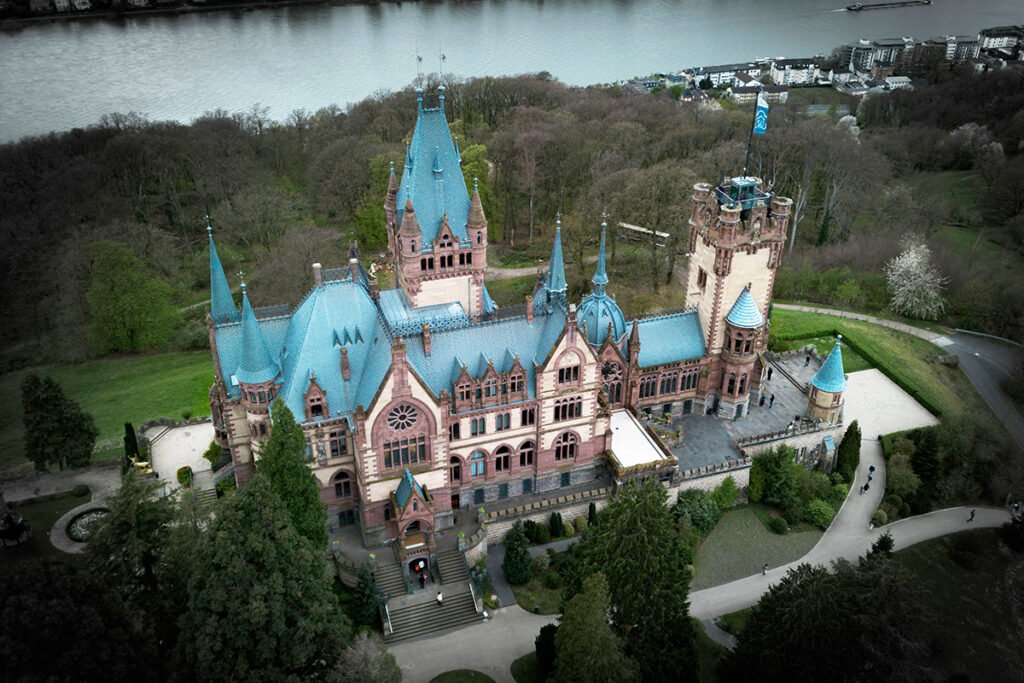
Final Thoughts: Why Drachenburg Castle Leaves a Lasting Impression
What makes Drachenburg Castle memorable isn’t age or military history. It’s clarity. This castle knows exactly what it is—a 19th-century dream built in stone—and it never pretends otherwise. In a region crowded with ruins, fortresses, and centuries-old strongholds, that honesty sets it apart.
Drachenburg works because it leans fully into the atmosphere. The setting above the Rhine is dramatic without feeling remote. The interiors feel intentional rather than improvised. The terraces invite you to stop, look out, and actually absorb the landscape instead of rushing to the next stop. It’s a castle designed to be experienced slowly.
This is also a place that rewards curiosity. Visitors who take the time to notice stained glass details, symbolic murals, and carefully framed views walk away with a deeper appreciation of how the 19th century imagined history. Drachenburg isn’t about knights and sieges. It’s about identity, ambition, and the power of storytelling through architecture.
If you love fairytale castles, romantic landscapes, or unusual histories, Drachenburg belongs on your list. It’s especially rewarding for travelers who have already seen traditional medieval castles and want something different—something that feels polished, theatrical, and surprisingly thoughtful.
And perhaps that’s the castle’s quiet success. More than a century after it was built, Drachenburg still does what it was meant to do: command attention, spark imagination, and give the Rhine Valley yet another unforgettable silhouette.
If this visit leaves you wanting more, consider it an invitation. Germany is filled with castles that tell very different stories—and Drachenburg is a perfect place to start exploring them.
🏰✨ Thanks for reading. If this guide helped you, follow along for more in-depth castle stories and practical travel advice. You’ll also find us on Instagram, Facebook, Pinterest, YouTube, TikTok, and X. And when you’re ready to keep exploring, browse our full collection of castle articles. Many more castles, and many more stories, are waiting.