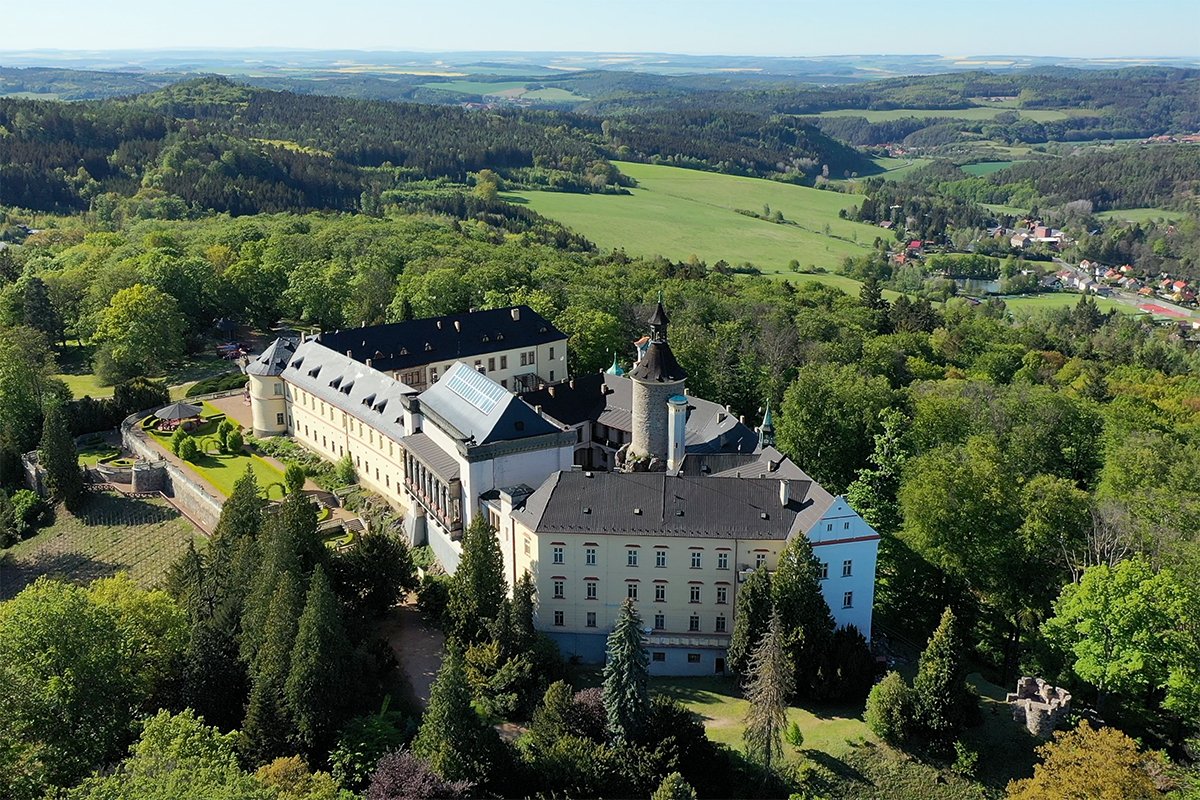
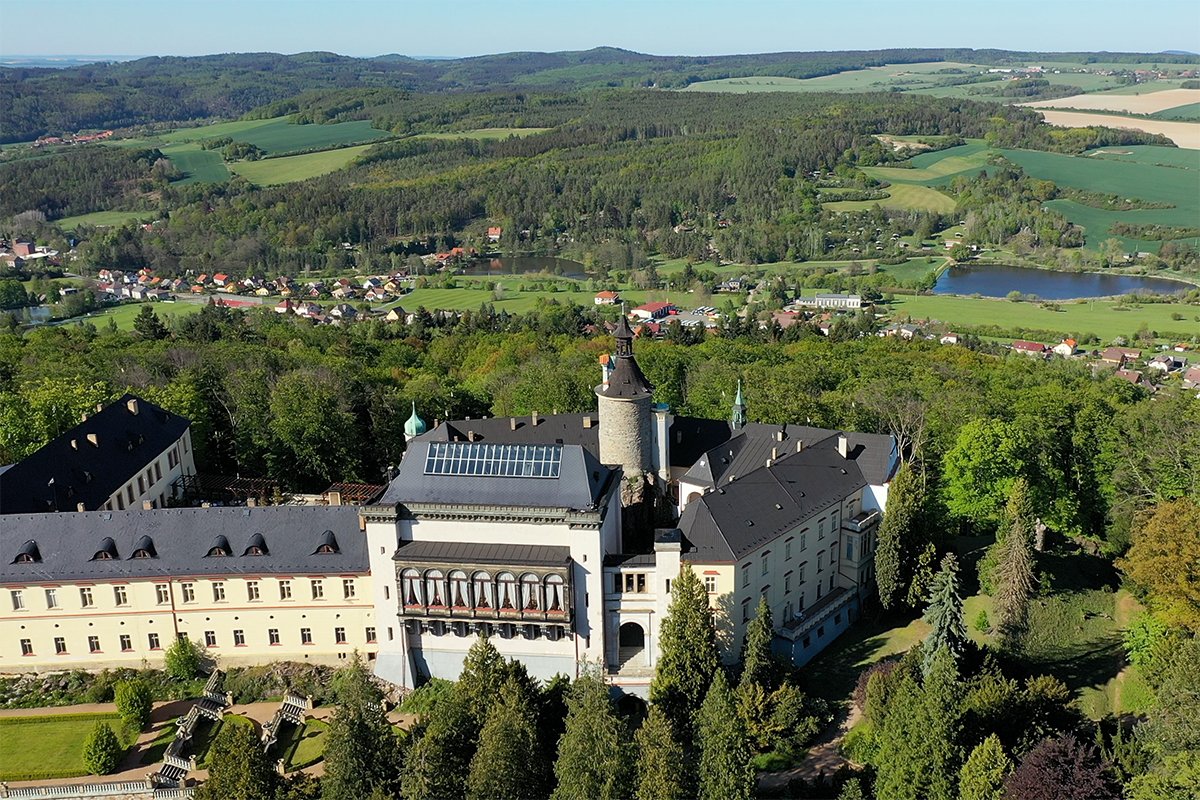
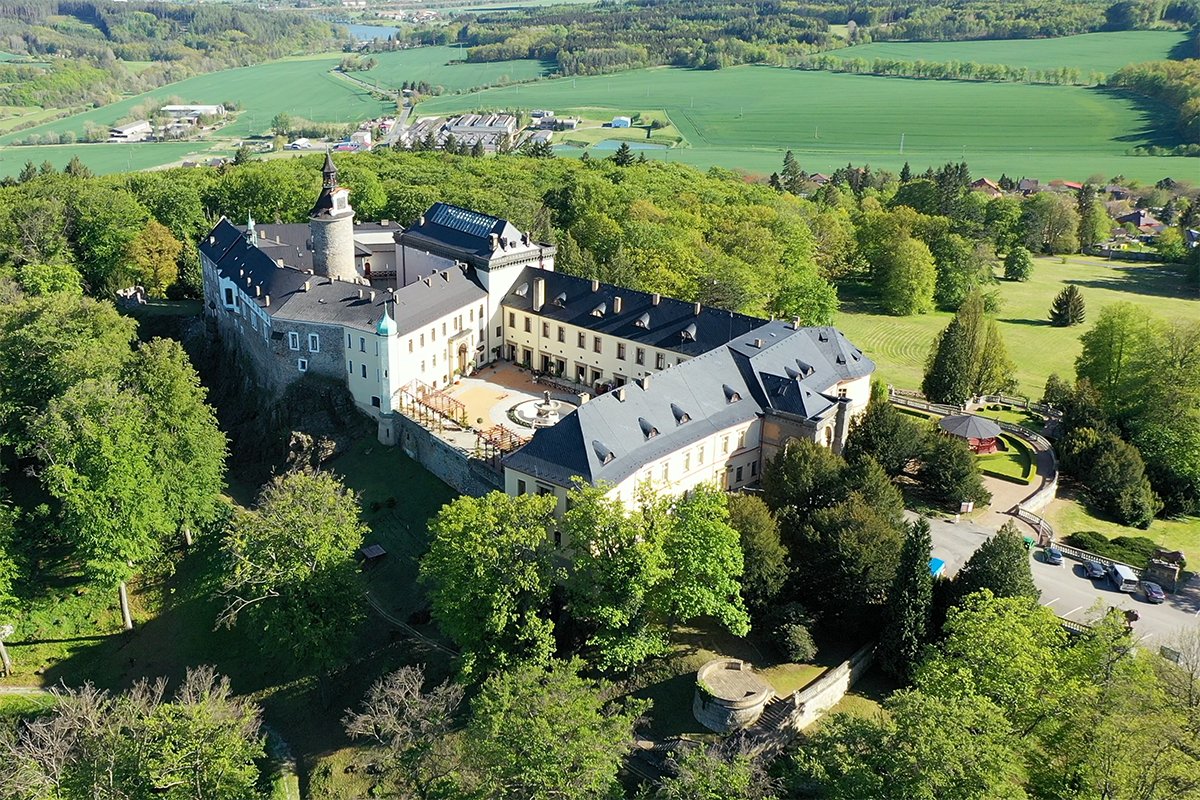
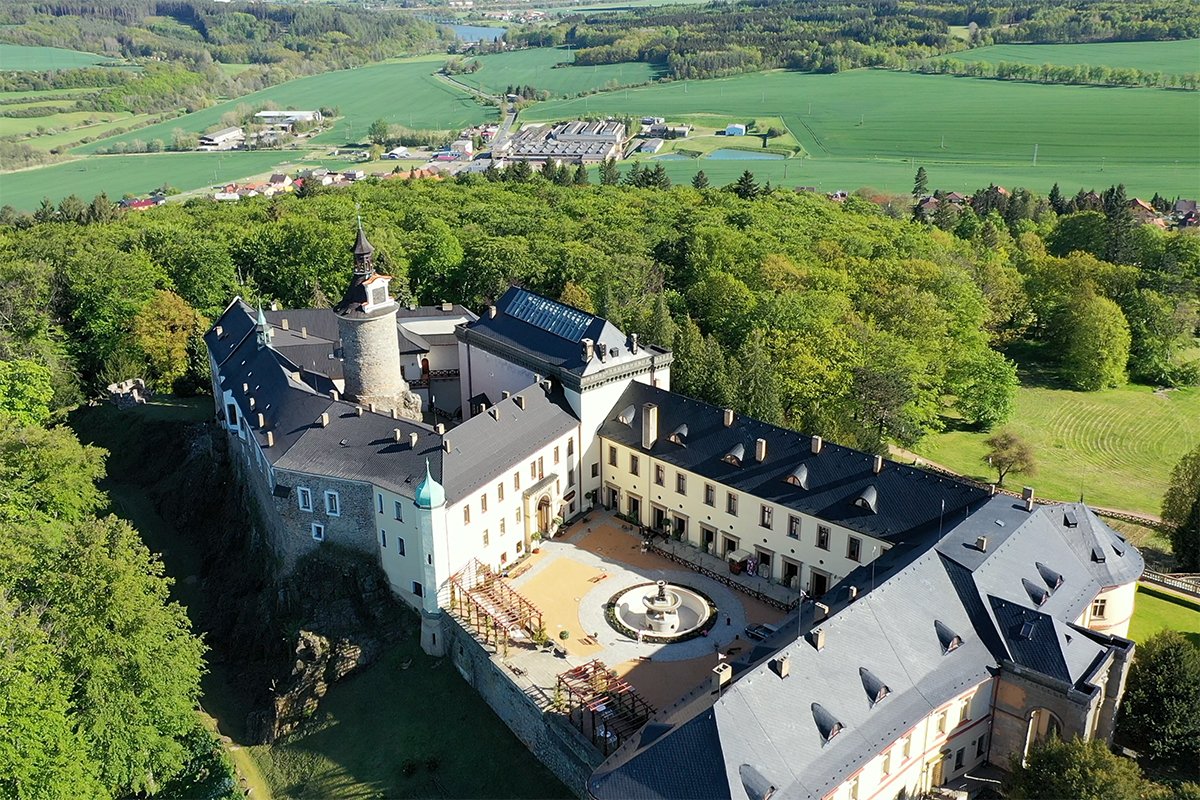
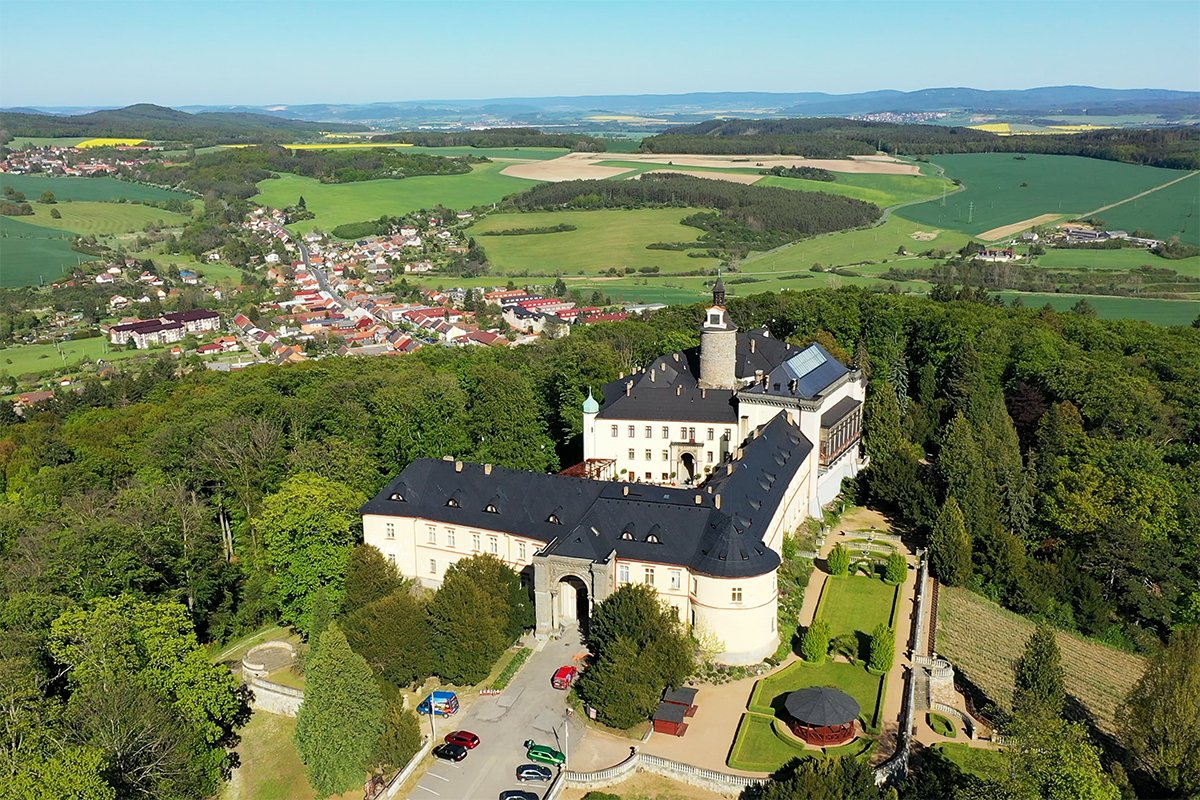
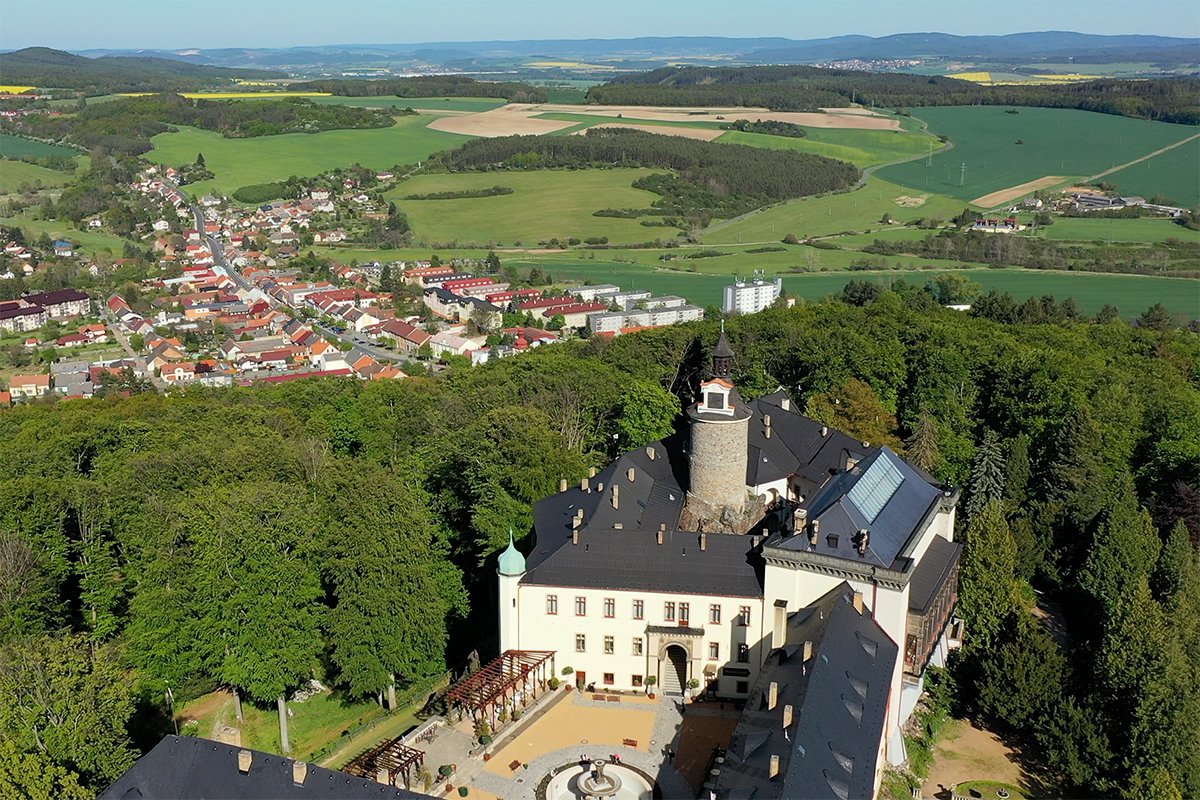
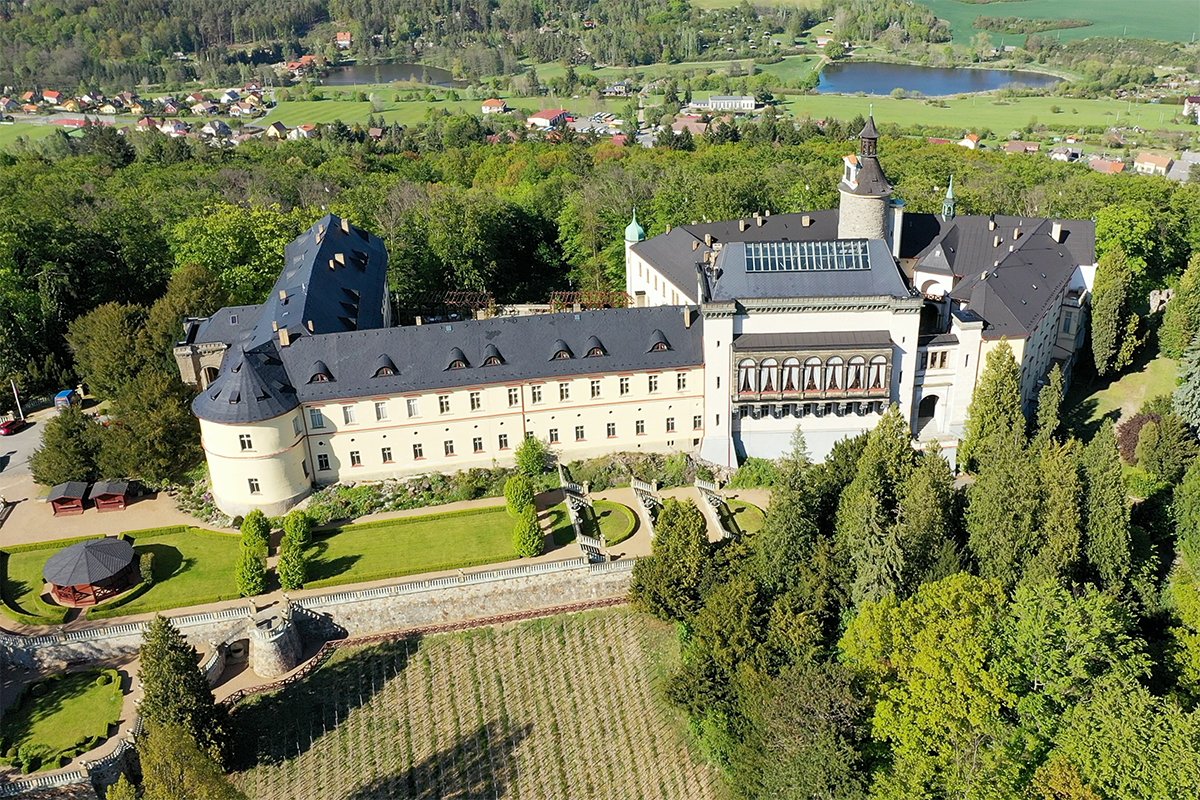
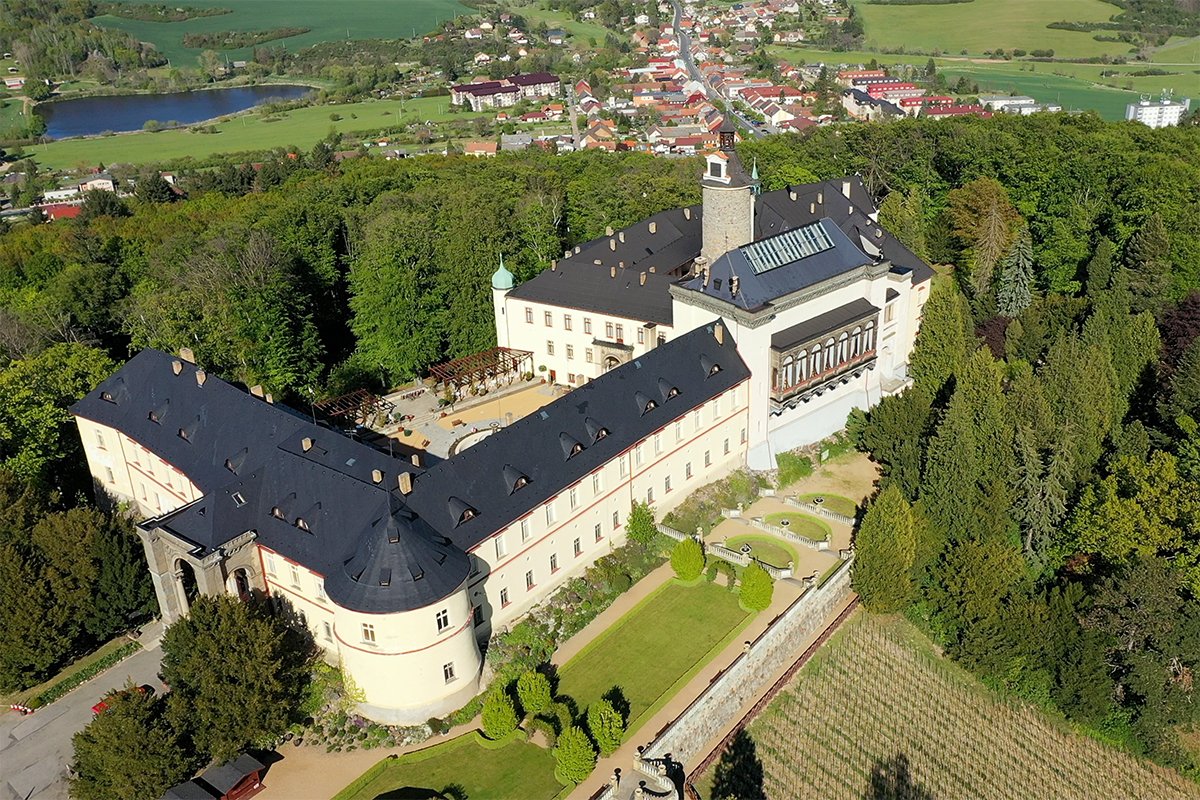
Zbiroh Castle rises from a rocky, jasper-tinged ridge like a storybook fortress that never learned to stay in one century. Born Romanesque-Gothic, refined into a Renaissance chateau, and polished again in Neo-Renaissance style, it’s long been a power place—part imperial refuge, part mystery magnet. Come for the ‘Castle of Three Emperors,’ stay for the legendary well, secret passages, and surprising modern life as a hotel and museum.
Quick Facts
📍 Location: Zbiroh, Plzeň Region, Czech Republic
🏗️ Construction Period: Late 12th century-13th century (later major rebuilds in the 16th and 19th centuries)
🏰 Architectural Style: Romanesque, Gothic, Renaissance, Neo-Renaissance (with later interior layers including Baroque and Art Nouveau elements)
🎭 Famous For: Castle of Three Emperors, Europe’s famously deep castle well, Templar and proto-Masonic lore, Rudolf II’s alchemical experiments, Mucha’s Slav Epic studio years, WWII SS occupation, and Cold War Warsaw Pact radar/intelligence use
👑 Notable Figures: Břetislav of Zbiroh; Ottokar II of Bohemia; Emperor Charles IV; Emperor Sigismund (Luxembourg); Emperor Rudolf II; Baron von Strousberg; Alfons (Alphonse) Mucha
🏆 UNESCO Status: No (not a UNESCO World Heritage Site)
🌐 Official Website: https://www.zbiroh.com/en
Map
Historical Context
Zbiroh castle began in the late 1100s as an unusually formidable noble stronghold—more fortress than manor—then grew into a prized strategic residence on key routes across Bohemia. It earned its 'Castle of Three Emperors' title through links to Charles IV, Sigismund of Luxembourg, and Rudolf II; Charles is even credited with expanding it and using it to safeguard important imperial valuables. Over the centuries it collected darker chapters too: wartime damage, a feared dungeon reputation after the Battle of White Mountain, and long stretches of decline. Rudolf II reshaped it into a Renaissance chateau and indulged his fascination with alchemy. A sweeping 19th-century Neo-Renaissance rebuild defined much of today's look. In the 20th century, Alfons Mucha worked here on The Slav Epic, before the castle was seized in WWII and later repurposed during the communist era as an ultra-secret military site—only to reemerge as a hotel, museum, and event venue.
Visual Tour
Visiting Information
🗓️ Best Time to Visit: April, May, late September, and October
🗺️ Location Perks: Zbiroh castle sits between big-hitting Czech cities and quiet woodland landscapes, making it an easy detour with a rewarding, unhurried feel. If you can, pair the visit with a walk in the surrounding forests and parkland that once hosted imperial hunts.
⏳ Estimated Visit Duration: Plan to spend 2-3 hours exploring the castle and its grounds.
💡 Visiting tips: Book a guided tour in advance if you’re visiting on a weekend, then ask specifically about the chapel frescoes and the castle’s hidden corridors. Wear sturdy shoes—the rocky setting and older stairways are part of the charm, but they’re not built for slick soles.
Related Articles
Search