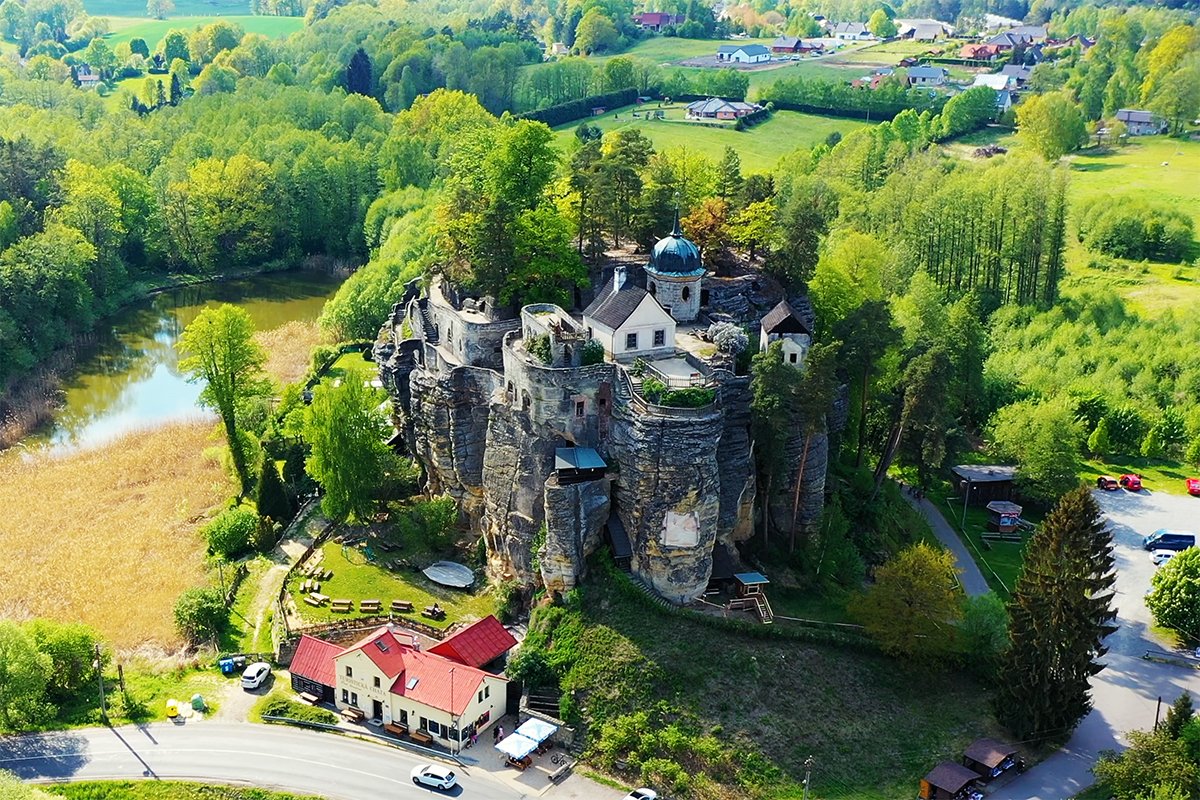
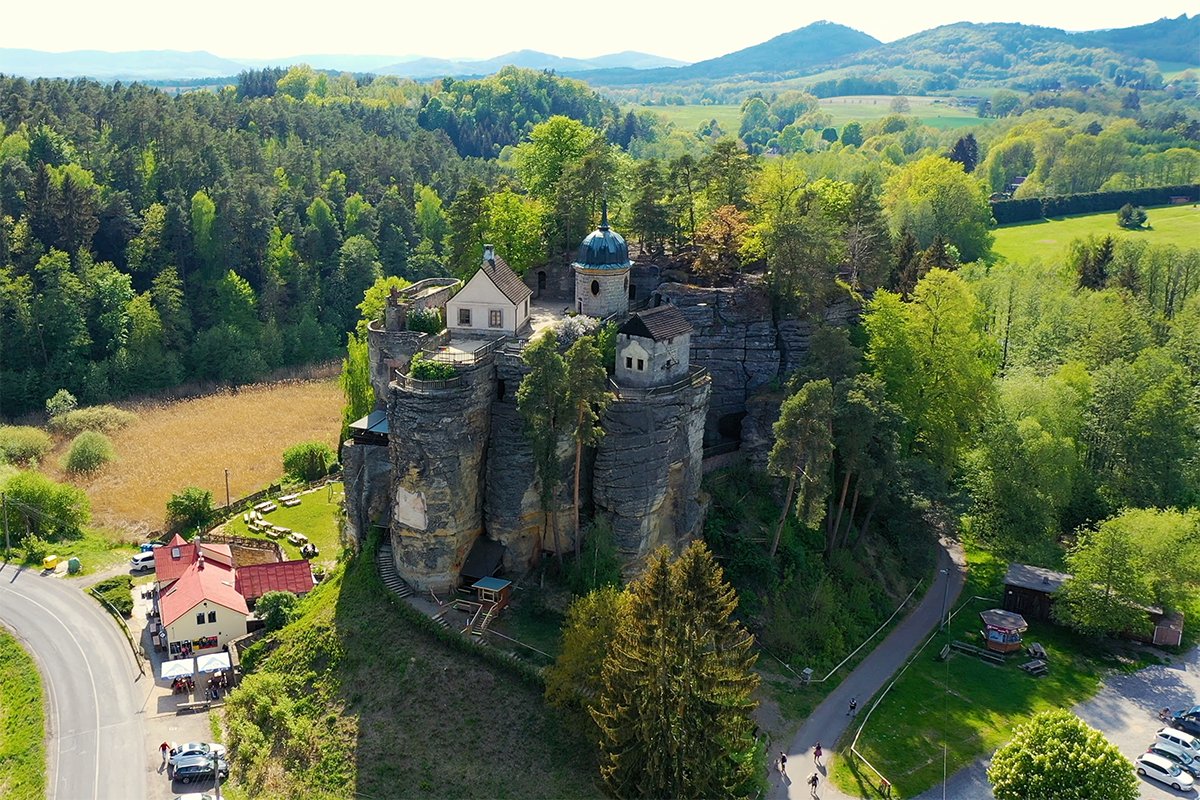
Sloup Castle doesn’t so much sit on a hill as disappear into it. Carved into a freestanding sandstone “column,” this 14th-century rock fortress once watched over a vital salt road—and later sheltered hermits who hollowed out cells, chapels, and stairways in the stone itself. Today, it’s a wonderfully unusual stop: part medieval stronghold, part cliffside sanctuary, crowned by a terrace with sweeping views.
Quick Facts
📍 Location: Sloup v Čechách, Liberec Region, Czech Republic
🏗️ Construction Period: 14th century (first mentioned 1324)
🏰 Architectural Style: Medieval rock castle architecture; later Baroque hermitage elements (rock chapel, 1693)
🎭 Famous For: A castle carved into a freestanding sandstone pillar; the Knights’ Stairway; 1445–1447 siege and burning; hermitage rooms and 1693 rock chapel; panoramic lookout over the Lusatian Mountains
👑 Notable Figures: Čeněk of Ojvína; the Ronovec family (builders/early owners); Knight Mikeš Pancíř of Smojno; hermits Konstantin, Václav Rincholin, and Samuel; House of Kinský
🏆 UNESCO Status: No
🌐 Official Website: http://www.hradsloup.cz/en/home/
Map
Historical Context
First recorded in 1324, Sloup Castle was created by the Ronovec family to guard the Meissen–Česká Lípa salt route, using a sheer sandstone pillar as ready-made defense. In the mid-15th century it became the base of Knight Mikeš Pancíř of Smojno, whose raids and shifting alliances provoked a Lusatian siege (1445–1447) that ended with surrender and fire. Although repaired, the castle slipped out of fashion as a residence in the 16th century, then was burned again by Swedish troops in 1639 during the Thirty Years’ War. Its most atmospheric reinvention came in 1670–1785, when hermits expanded rooms, added a rock chapel in 1693, and carved devotional features like Stations of the Cross—turning a fortress into a cliffside retreat before later tourism took over.
Visual Tour

Visiting Information
🗓️ Best Time to Visit: April, May, late September, and October
🗺️ Location Perks: You’re on the edge of North Bohemia’s sandstone landscapes, with forests and the Lusatian Mountains close enough to turn a castle visit into a full day of viewpoints and easy hikes. Don’t miss the scenery from the top terrace—on a clear day it’s pure postcard material.
⏳ Estimated Visit Duration: Plan to spend 1–2 hours exploring the castle and its rock-cut interiors.
💡 Visiting tips: Wear grippy shoes—smooth sandstone steps can be slick after rain, and there are plenty of them. Arrive earlier in the day for quieter passages, and check seasonal opening times on the official site before you go.
Related Articles
Search