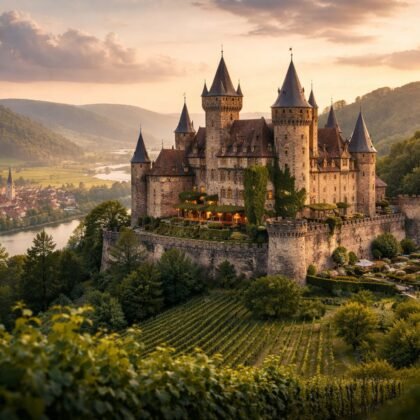
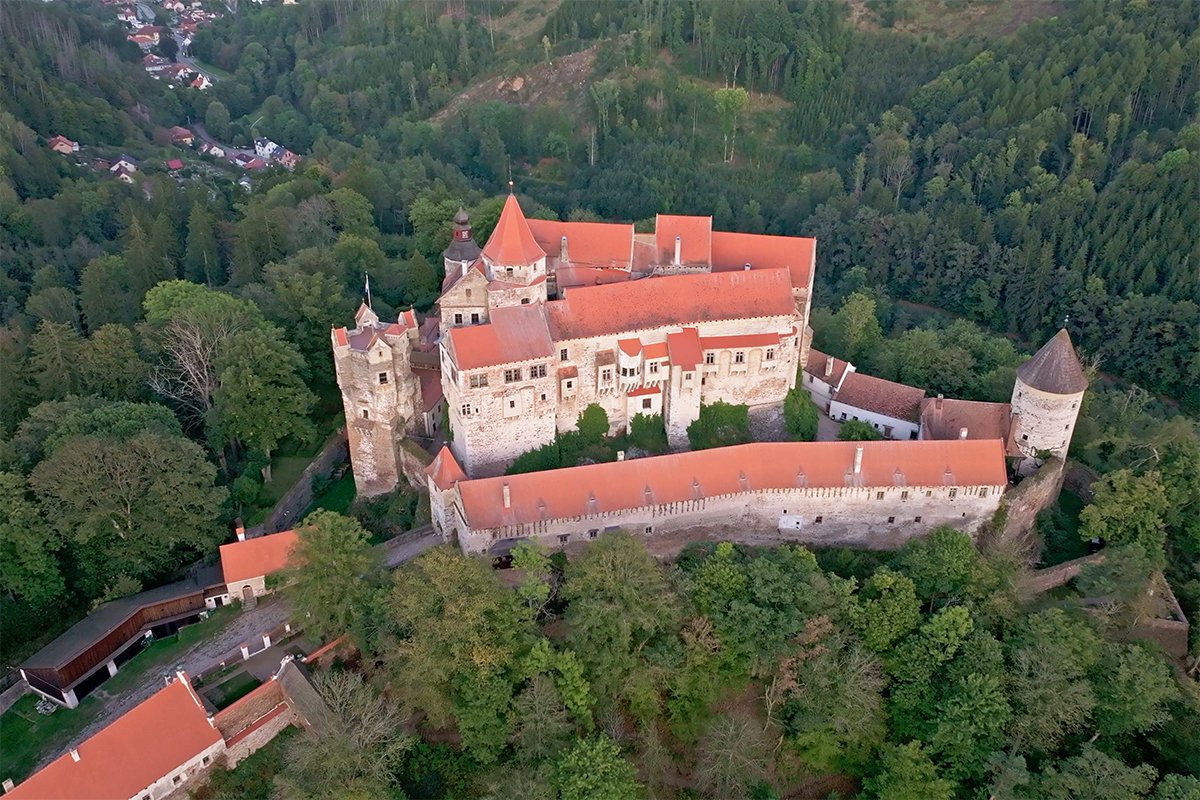
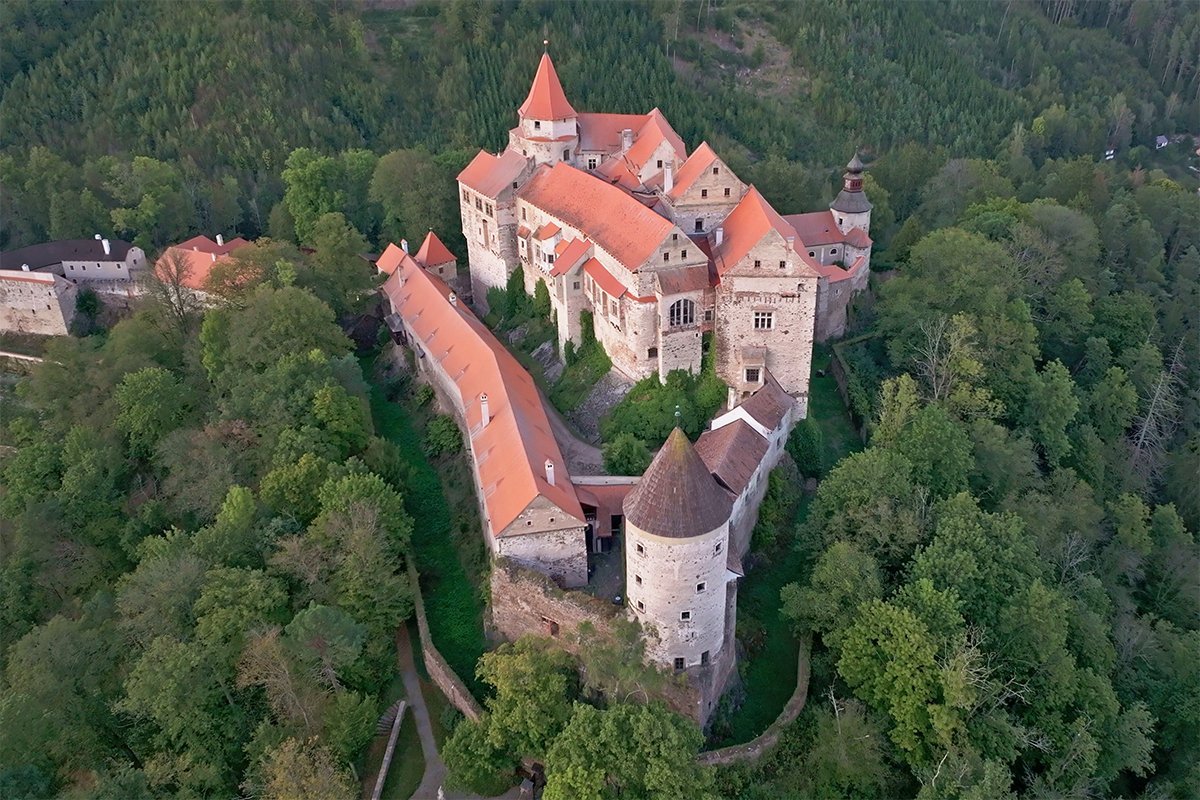
Perched high on a rocky ridge above forests and valleys, Pernštejn Castle feels less like a museum and more like a fortress that simply never relaxed. Its pale stone earned it the nickname “the marble castle,” and the approach—ditches, gates, and tight passages—still plays defense on your imagination. Inside, Gothic vaults meet Renaissance comforts, with later Baroque and Romantic touches softening the edges.
Quick Facts
📍 Location: Nedvědice, South Moravia, Czech Republic
🏗️ Construction Period: 1270–1285 (foundation); major Late Gothic–Renaissance rebuilding in the 15th–16th centuries
🏰 Architectural Style: Gothic, Late Gothic, Renaissance (with Baroque and 19th-century Romantic interior layers)
🎭 Famous For: Never being captured; a maze-like defensive approach with multiple gates and ramparts; the “White Lady” legend; signature towers like Barborka; surviving 16th-century soldiers’ graffiti
👑 Notable Figures: Lords of Medlov (later the Pernštejn family); John I of Pernštejn; Counts of Lichtenstein-Kastelkorn
🏆 UNESCO Status: No (not a UNESCO World Heritage Site)
🌐 Official Website: https://www.hrad-pernstejn.cz/en
Map
Historical Context
Founded between 1270 and 1285 by the Lords of Medlov—soon known as the Pernštejns—Pernštejn grew into the proud main seat of one of the Czech lands’ most influential noble families. Over the centuries it evolved from a straightforward medieval stronghold into a formidable Late Gothic fortress, then into a Renaissance residence that never surrendered its defenses. Fires reshaped it, too: after an early-15th-century blaze, timber ceilings gave way to stone vaulting, including striking diamond patterns. In the 15th century, major rebuilding expanded ramparts, gates, and halls, turning the approach into a deliberate tangle of narrow corridors. The castle’s reputation for being unconquerable was sealed when even Swedish forces failed to take it in 1645. Sold by the Pernštejns in 1596, it later gained Baroque and Romantic interior layers while keeping its stern profile.
Visual Tour



Visiting Information
🗓️ Best Time to Visit: April, May, late September, and October
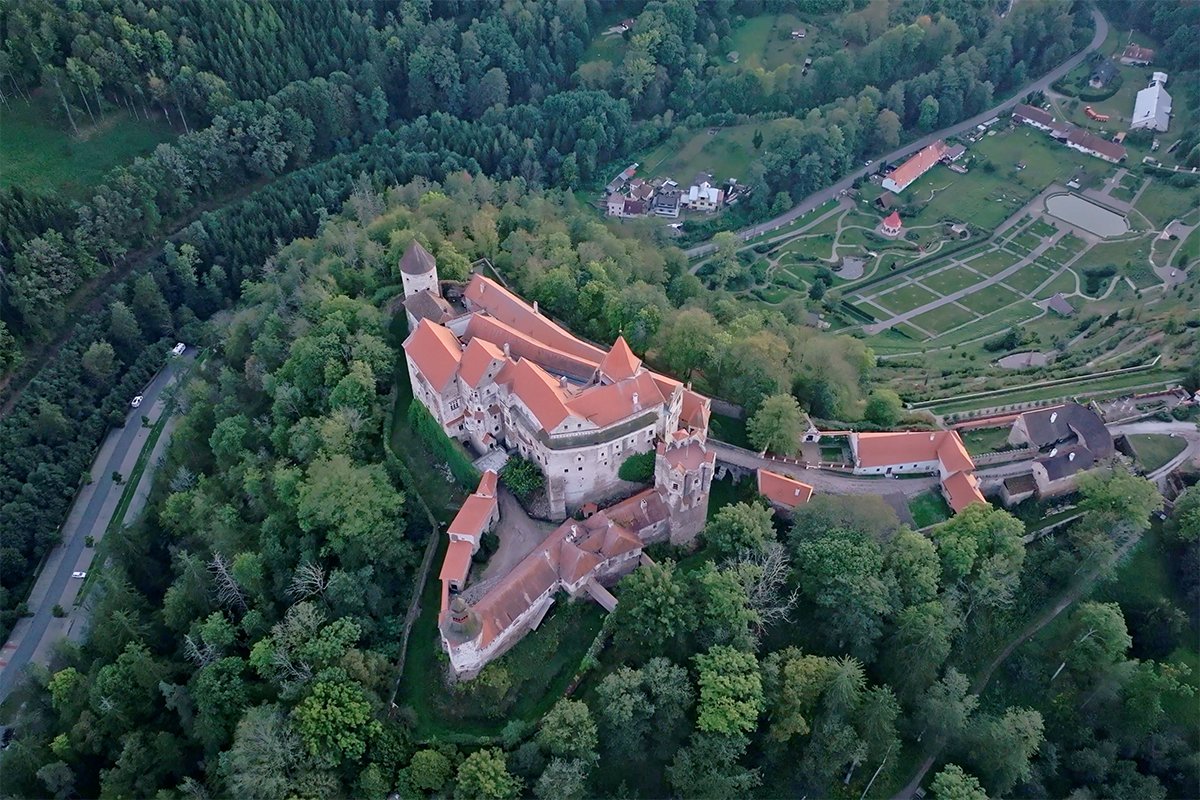
🗺️ Location Perks: You’re in the Bohemian-Moravian Highlands, where castle views come with fresh woodland air and easy walks. Don’t skip the Highland/chateau garden—its Romantic-era landscaping adds a quieter, storybook counterpoint to the fortifications.
⏳ Estimated Visit Duration: Plan to spend 2–4 hours exploring the castle and its grounds.
💡 Visiting tips: Wear grippy shoes for steep paths, cobblestones, and lots of stairs—this castle rewards steady footing. Book a timed guided tour in peak season, and ask about language options or night tours if you want the legends (especially the White Lady) brought to life.
Related Articles
Search