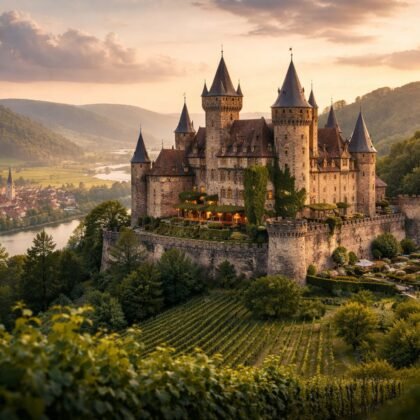
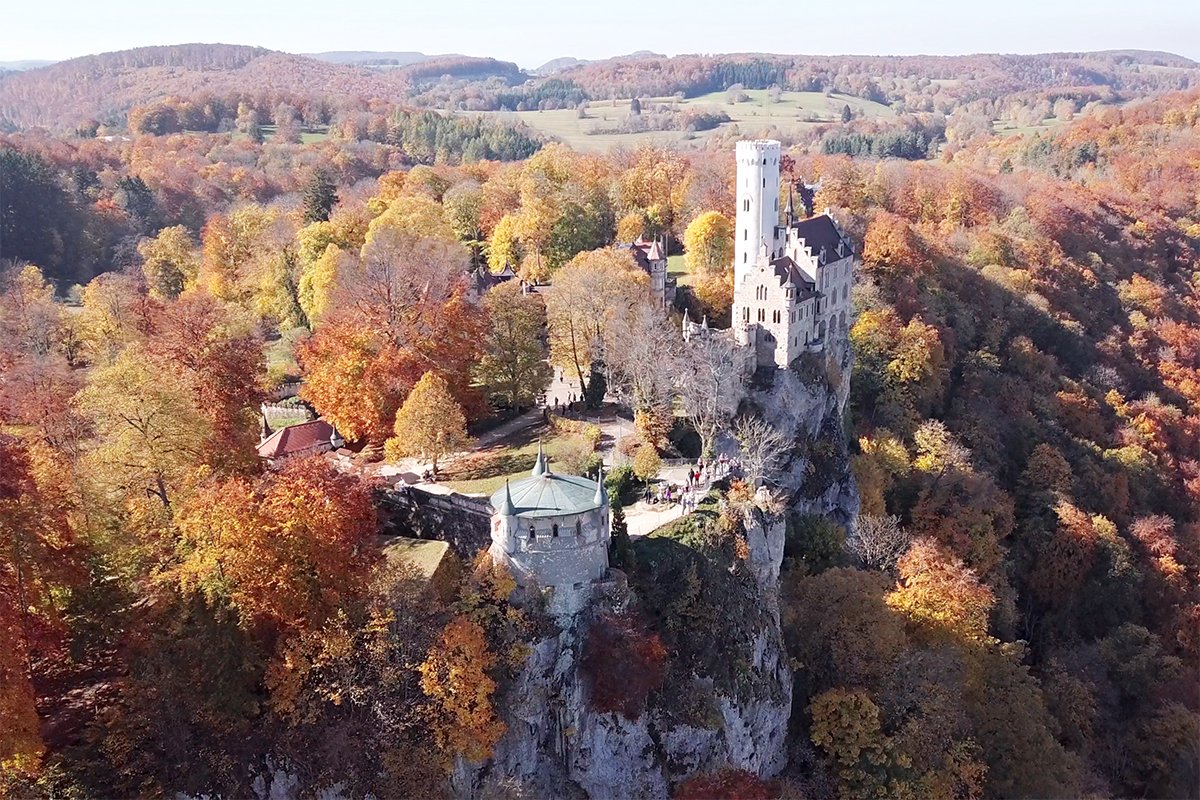
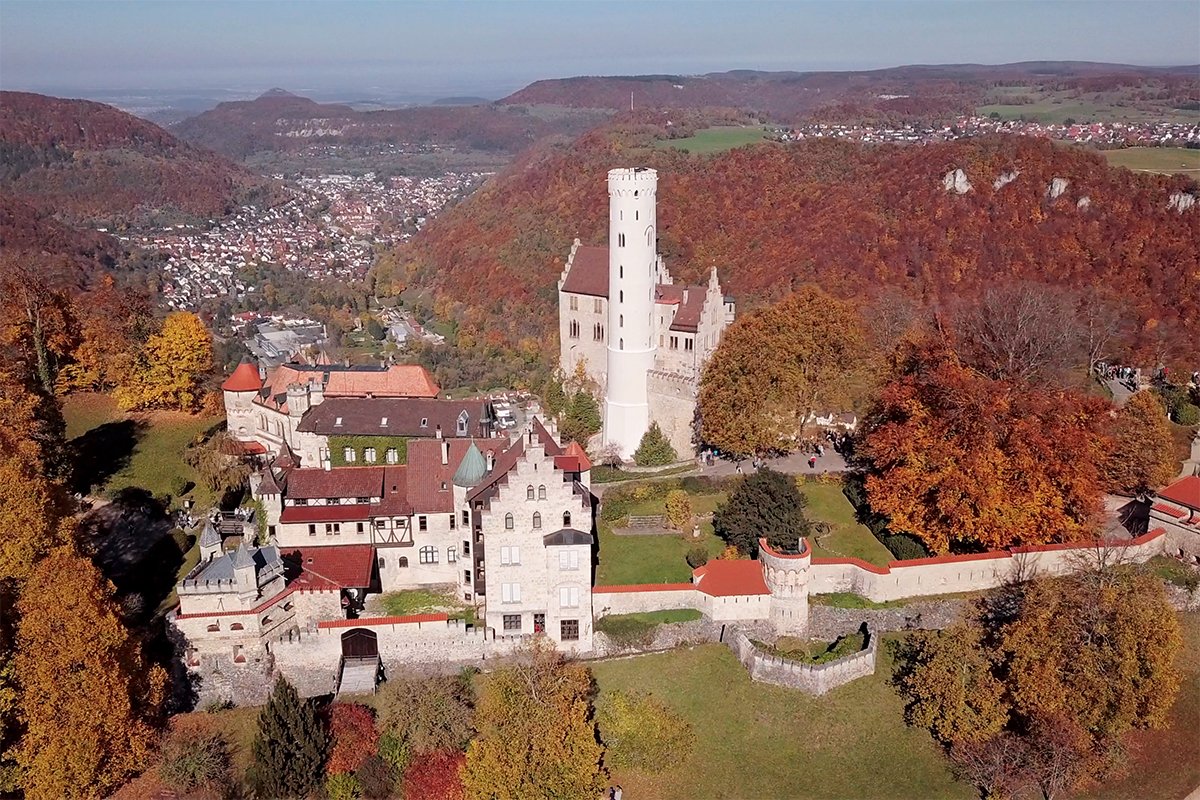
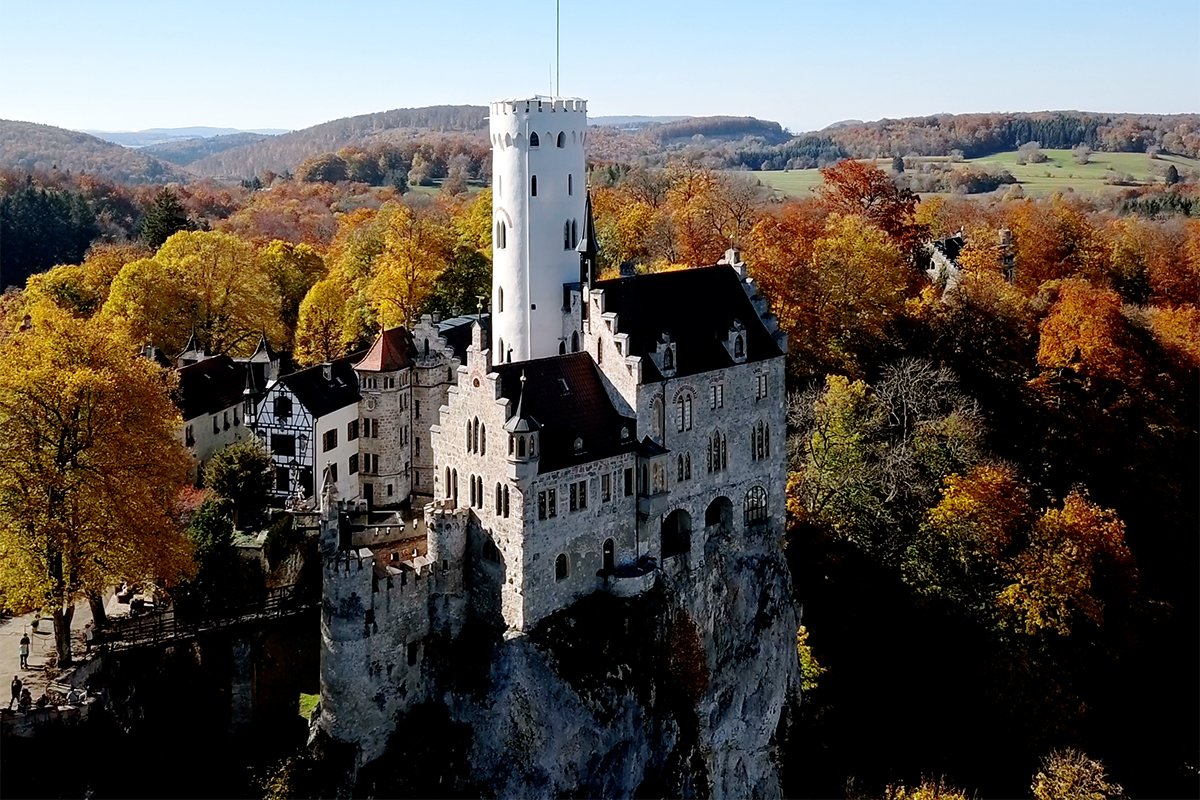
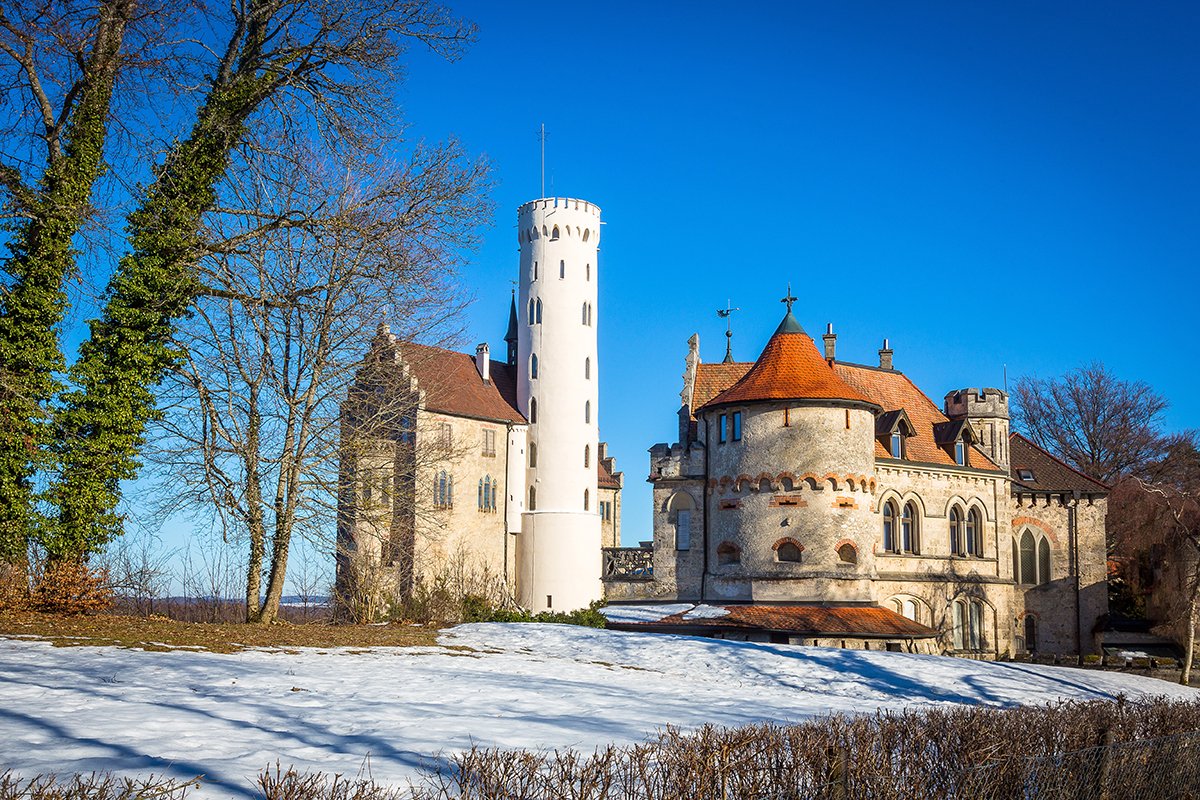
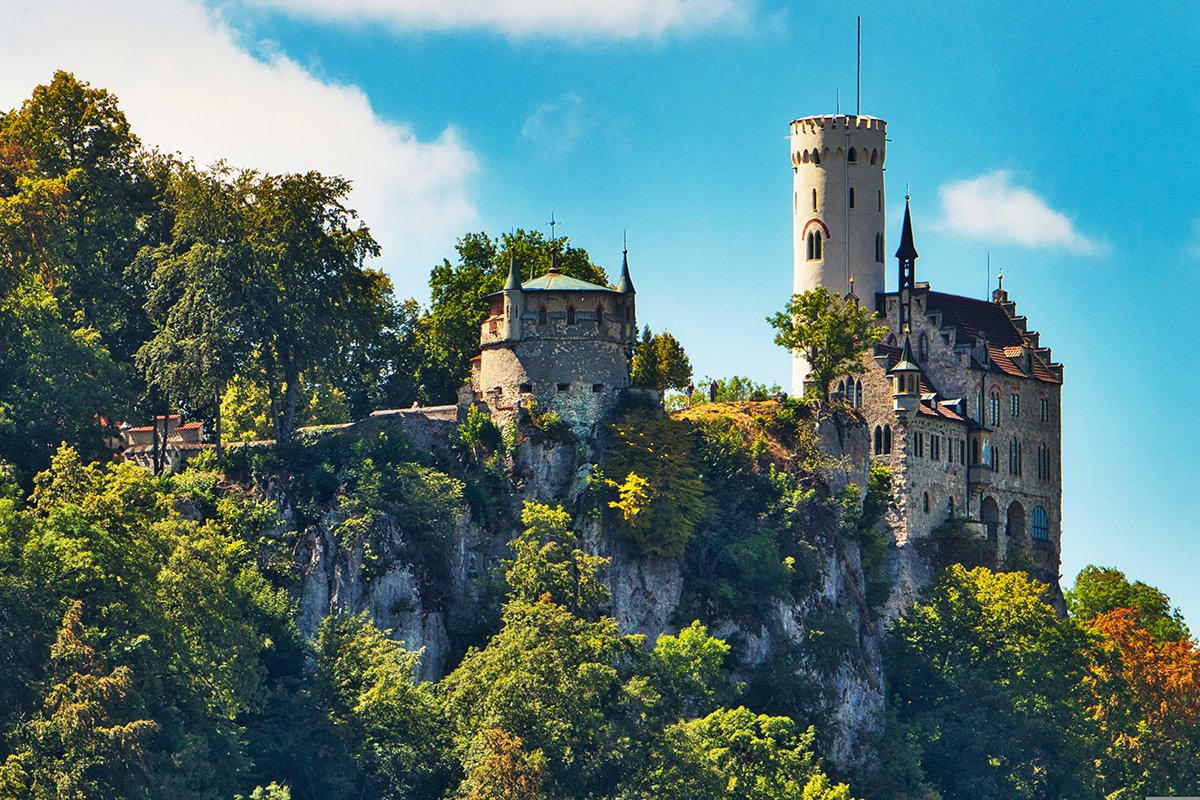
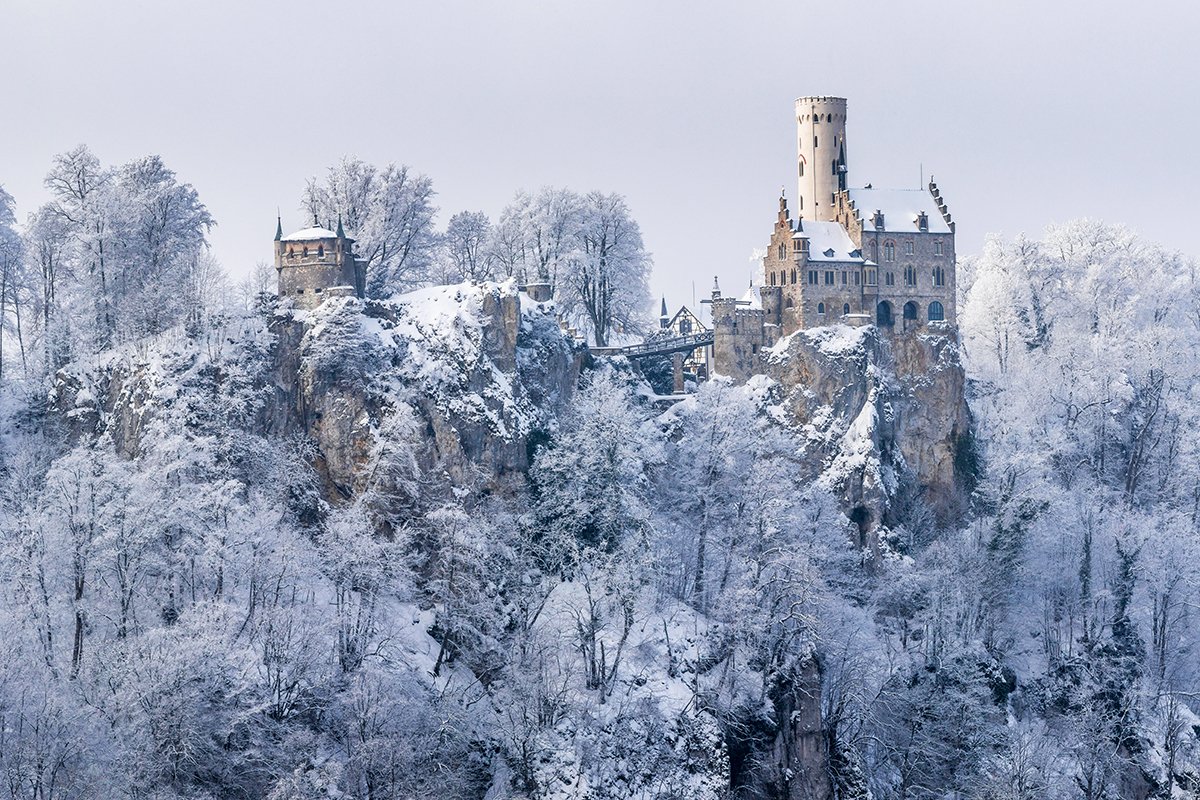
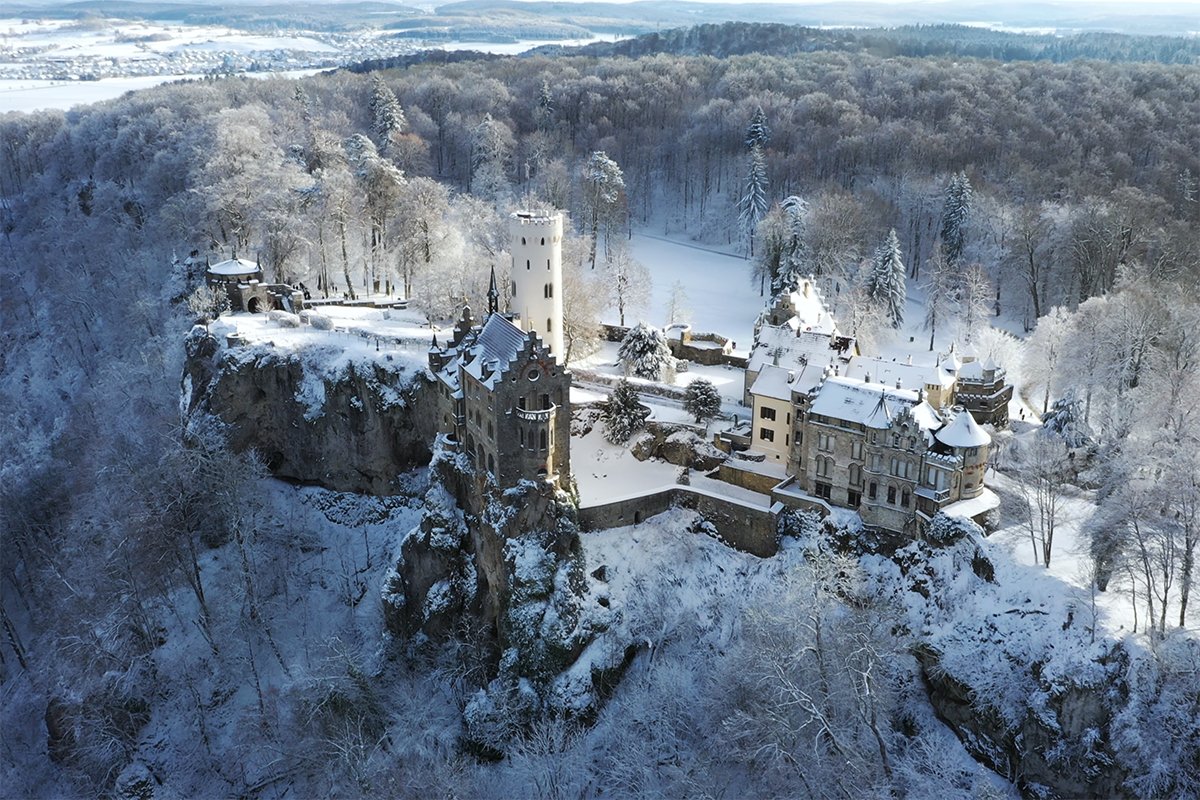
Lichtenstein Castle rises like a storybook vision on the rim of the Swabian Alps, its spires and battlements seemingly anchored to the sheer cliff itself. Though the present neo-Gothic jewel dates to the 1840s, it rests on centuries of conflict and legend, marrying authentic medieval foundations with Romantic imagination. Come for the drama, stay for the views and the rich Württemberg history within its halls.
Quick Facts
📍 Location: Honau (Lichtenstein), Baden-Württemberg, Germany
🏗️ Construction Period: 1840–1842 (on 12th-century foundations)
🏰 Architectural Style: Neo-Gothic (Gothic Revival)
🎭 Famous For: Fairy-tale silhouette; cliff-top perch above the Echaz valley; inspiration from Wilhelm Hauff’s 1826 novel; medieval-style bastions and barbican; visible WWII shell scar
👑 Notable Figures: Count Wilhelm of Württemberg (Duke of Urach); architect Carl Alexander Heideloff; Wilhelm Hauff; Lords of Lichtenstein; King Wilhelm I of Württemberg
🏆 UNESCO Status: No
🌐 Official Website: https://www.schloss-lichtenstein.de/
Map
Historical Context
Perched above the Echaz valley, Lichtenstein’s roots reach the early 12th century, when the Lords of Lichtenstein held a sturdy castle that was twice destroyed amid clashes with nearby Reutlingen (1311, 1377). A new fortress rose in 1390, bristling with the latest defenses and reputedly near-impregnable until it lost ducal purpose in 1567. By 1802 the medieval complex was dismantled for a royal hunting lodge. The castle’s Romantic rebirth followed Wilhelm Hauff’s 1826 novel Lichtenstein: inspired, Count Wilhelm of Württemberg (later Duke of Urach) hired architect Carl Alexander Heideloff to rebuild 1840–1842 in Gothic Revival style, later adding a barbican and bastions (1857). War left a scar—an American shell strike in World War II—now preserved as a reminder. Since 1980, foundations and local groups have supported careful restoration and public access.
Visual Tour



Visiting Information
🗓️ Best Time to Visit: April, May, late September, and October
🗺️ Location Perks: Panoramic views sweep across the Swabian Alps, with hiking trails threading the Alb escarpment and forests below. It’s a superb base for scenic drives and short alpine strolls.
⏳ Estimated Visit Duration: Plan to spend 2–3 hours exploring the castle and its grounds.
💡 Visiting tips: Guided tours are the only way to see the interiors—check the website for restoration updates and special access to upper floors. Wear sturdy shoes for steep paths and arrive early on weekends for parking and quieter views.
Related Articles
Search