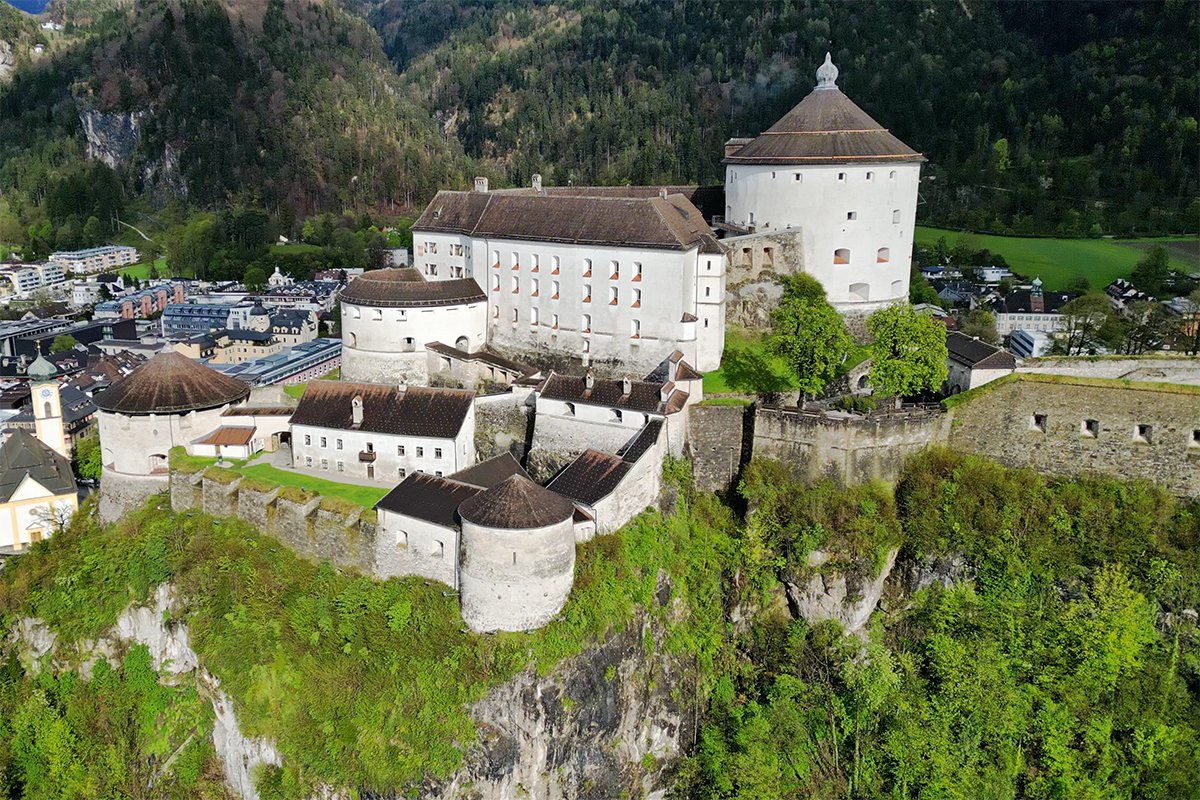
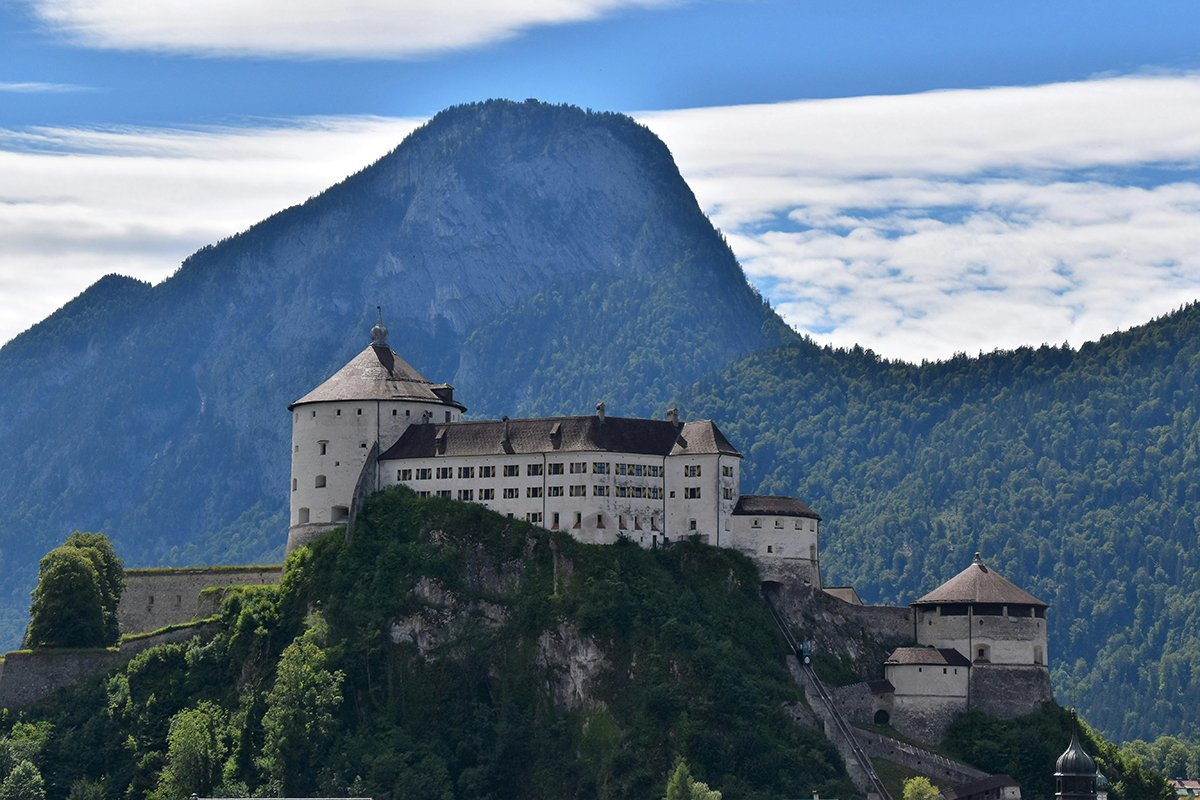
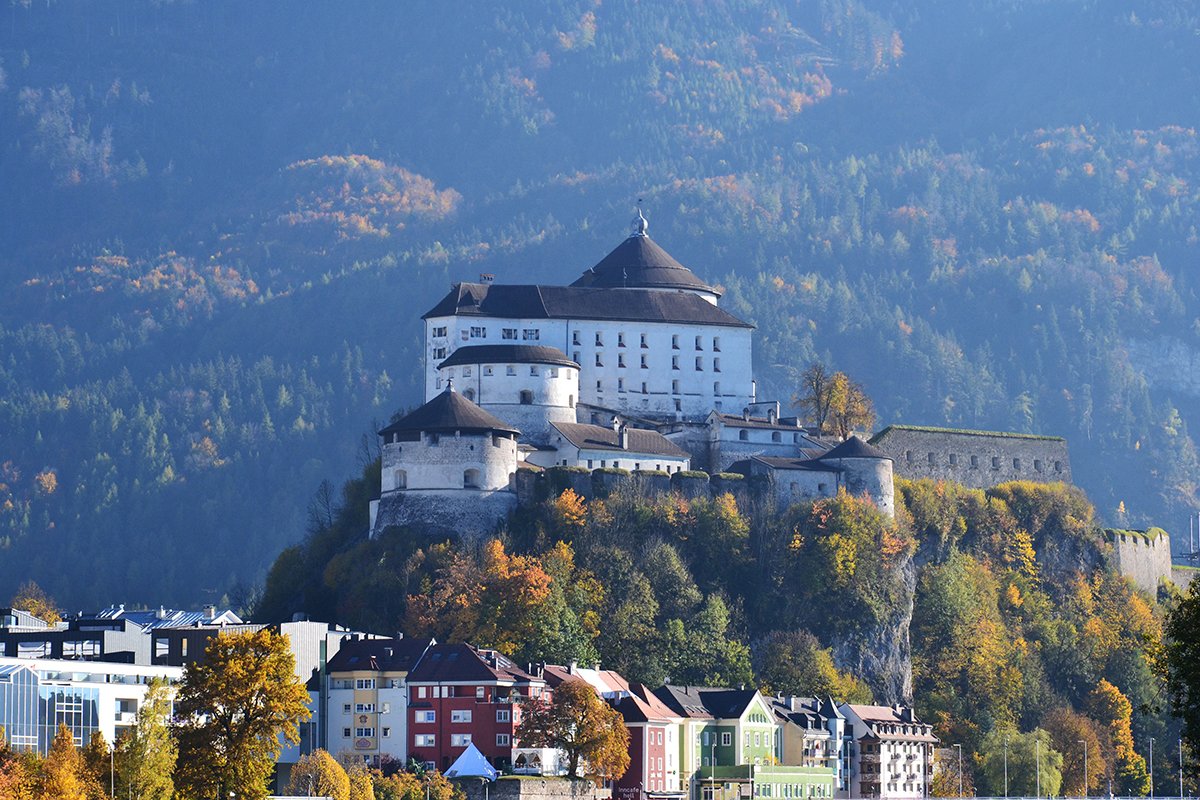
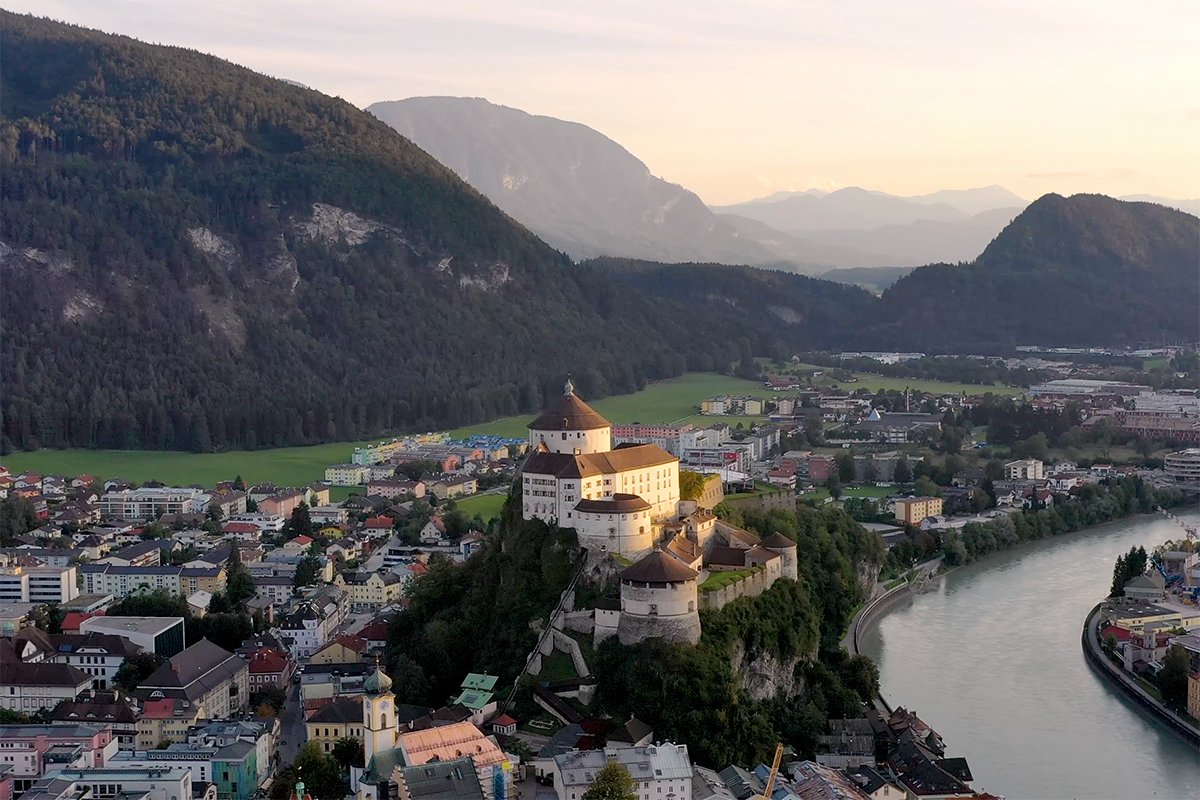
Perched above the Inn River with the Kaiser Mountains behind, Kufstein Fortress marries medieval grit with modern flair. A funicular whisks you to ramparts once shaken by Maximilian’s cannons; today they echo with concerts and the daily midday chime of the Heroes’ Organ. Stone passages, a mighty round tower, and panoramic terraces reveal Tyrol’s long tug‑of‑war between Bavaria and Austria.
Quick Facts
📍 Location: Kufstein, Tyrol, Austria
🏗️ Construction Period: 1205–1522
🏰 Architectural Style: Medieval and Renaissance fortification
🎭 Famous For: Strategic Alpine stronghold, 1504 Maximilian I siege, massive round tower, Heroes’ Organ, open-air arena with retractable roof
👑 Notable Figures: Emperor Maximilian I; Duchess Margarete “Maultasch”; Duke Ludwig of Bavaria; Bishop of Regensburg
🏆 UNESCO Status: No
🌐 Official Website: https://www.festung.kufstein.at/en/
Map
Historical Context
First recorded in 1205 as Castrum Caofstein, this hilltop stronghold guarded the river gateway between Bavaria and Tyrol. In 1336 its defenders stalled Margrave Charles of Moravia, and in 1342 it passed to Tyrol as a wedding gift to Duchess Margarete “Maultasch.” The fortress was repeatedly contested until 1504, when Emperor Maximilian I battered it with iron cannon, then cemented control by adding the great round tower between 1518 and 1522. Kufstein’s allegiance swung between Bavaria and Austria over the following centuries; by 1814 it was firmly Austrian. Under the Habsburgs it served as a state prison, its walls holding political detainees. Since 1924 the town has owned the complex, restoring bastions and converting casemates into museums—today a place where organ music and open‑air performances replace the thunder of guns.
Visual Tour


Visiting Information
🗓️ Best Time to Visit: May, June, late September, and October
🗺️ Location Perks: The Inn riverside old town and Kaisergebirge trails sit at the fortress’s feet. Nearby lakes like Thiersee and Walchsee and easy rail links to Innsbruck and Munich make great day trips.
⏳ Estimated Visit Duration: Plan to spend 2–3 hours exploring the castle and its grounds.
💡 Visiting tips: Ride the Festungsbahn up, then walk down through the old town; arrive before noon to hear the Heroes’ Organ; check the event calendar—concert nights can sell out and may limit access to some areas.
Related Articles
Search