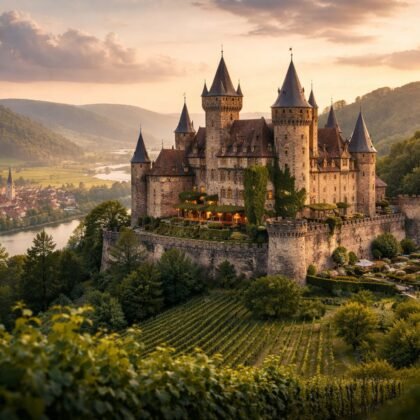
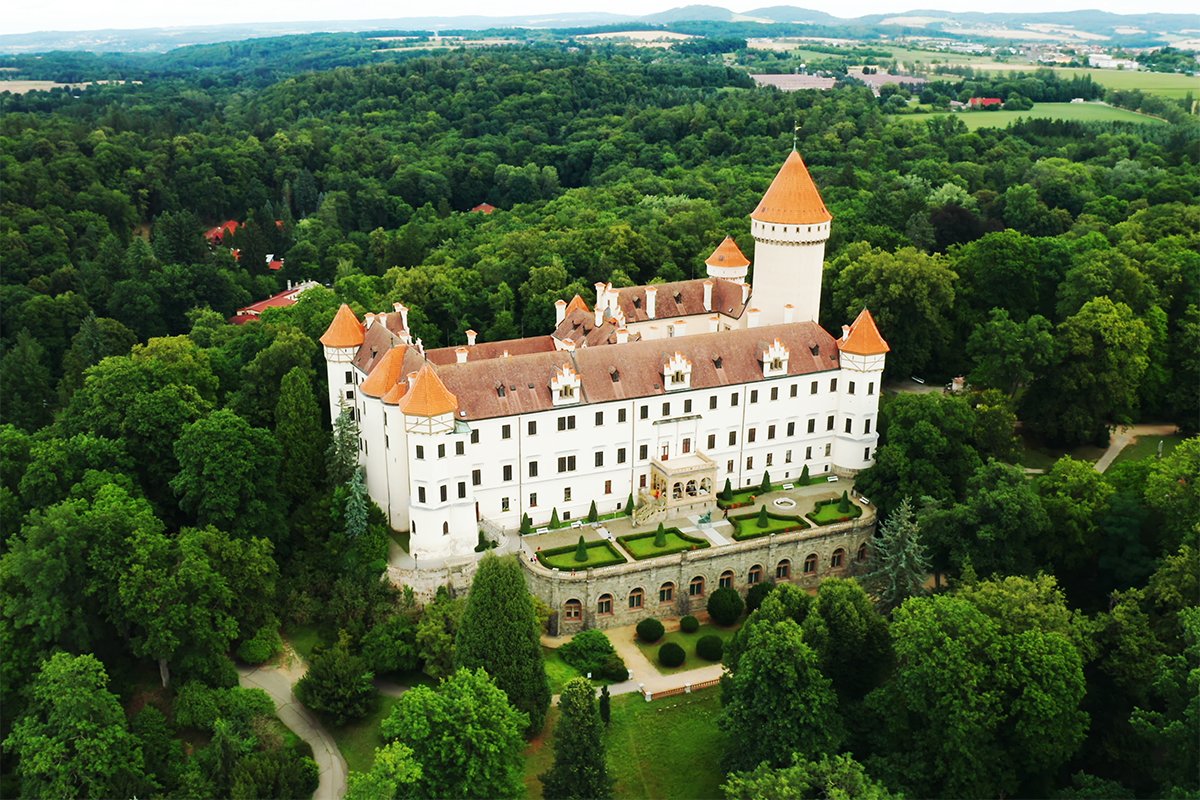
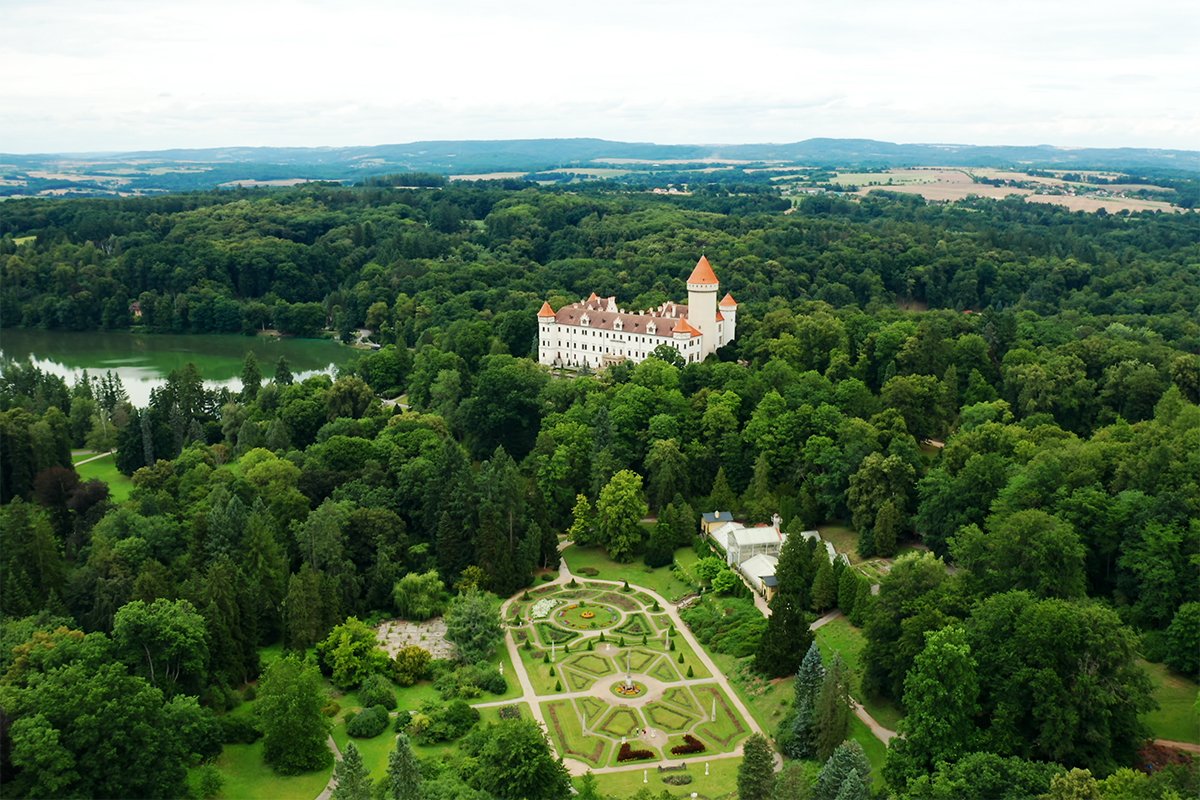
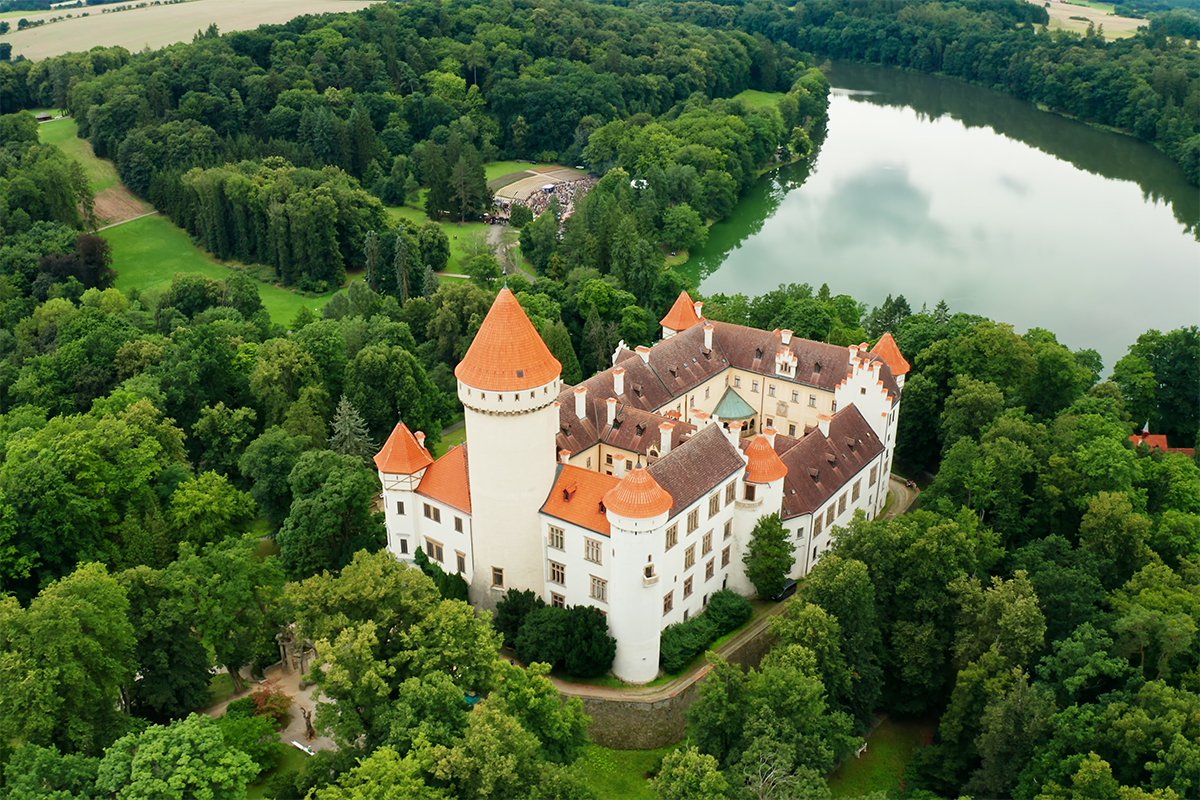
Tucked into wooded parkland outside Benešov, Konopiště Castle feels like a living scrapbook of Europe’s past—part medieval fortress, part aristocratic retreat. Walk its courtyards and you’ll spot the bones of a 13th-century stronghold, then drift into grander salons shaped by later centuries. Most visitors come for Archduke Franz Ferdinand’s world: armor, art, hunting trophies—and the shadow of 1914.
Quick Facts
📍 Location: Benešov (near), Central Bohemian Region, Czech Republic
🏗️ Construction Period: c. 1294–14th century (major remodels in the 18th century and 1887–1914)
🏰 Architectural Style: Gothic, Renaissance, Baroque (with 19th-century historicist/neo-Gothic renovations)
🎭 Famous For: Residence of Archduke Franz Ferdinand; link to the events that sparked World War I; fortified watchtower silhouette; one of Europe’s largest medieval armor and weapons collections; hunting trophies and landscaped park
👑 Notable Figures: Bishop Tobias of Benešov (founder); Archduke Franz Ferdinand of Austria (owner and renovator); Sophie, Duchess of Hohenberg; Albrecht von Wallenstein; George of Poděbrady (siege forces); the Vrtba family (Baroque transformation)
🏆 UNESCO Status: No (not a UNESCO World Heritage Site)
🌐 Official Website: https://www.zamek-konopiste.cz/en
Map
Historical Context
Konopiště began around 1294 as a Gothic fortress, built on French-inspired defensive principles with towers, gates, and a formidable watchtower. It changed hands through generations of Bohemian nobility, endured war and siege—including a hard-fought conquest in 1468—and suffered plundering during the Thirty Years’ War when Swedish troops occupied it in 1648. In the 18th century, the Vrtba family reshaped the stern stronghold into a Baroque residence, adding a new entrance and replacing the drawbridge with a stone bridge. The castle’s most famous chapter arrived in 1887, when Archduke Franz Ferdinand bought Konopiště and refashioned it with historicist flair and modern comforts. His assassination in Sarajevo in 1914 tied the château forever to the outbreak of World War I.
Visual Tour
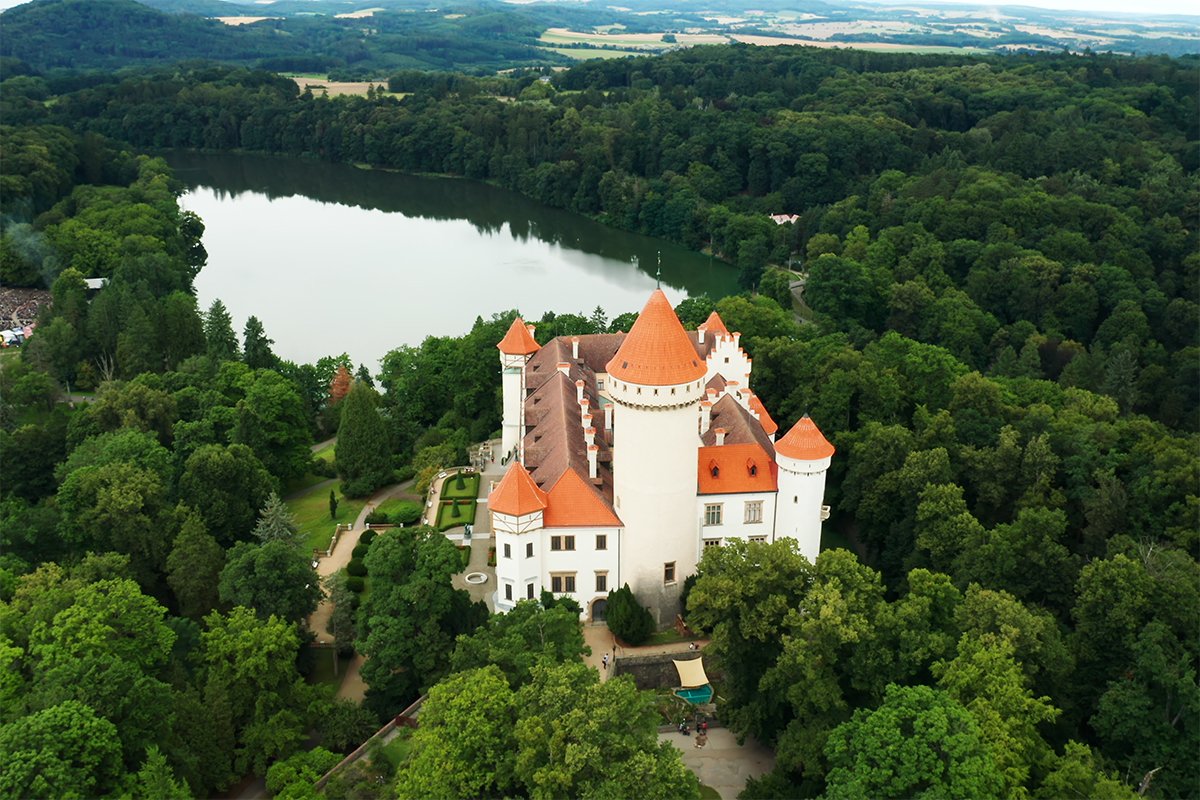
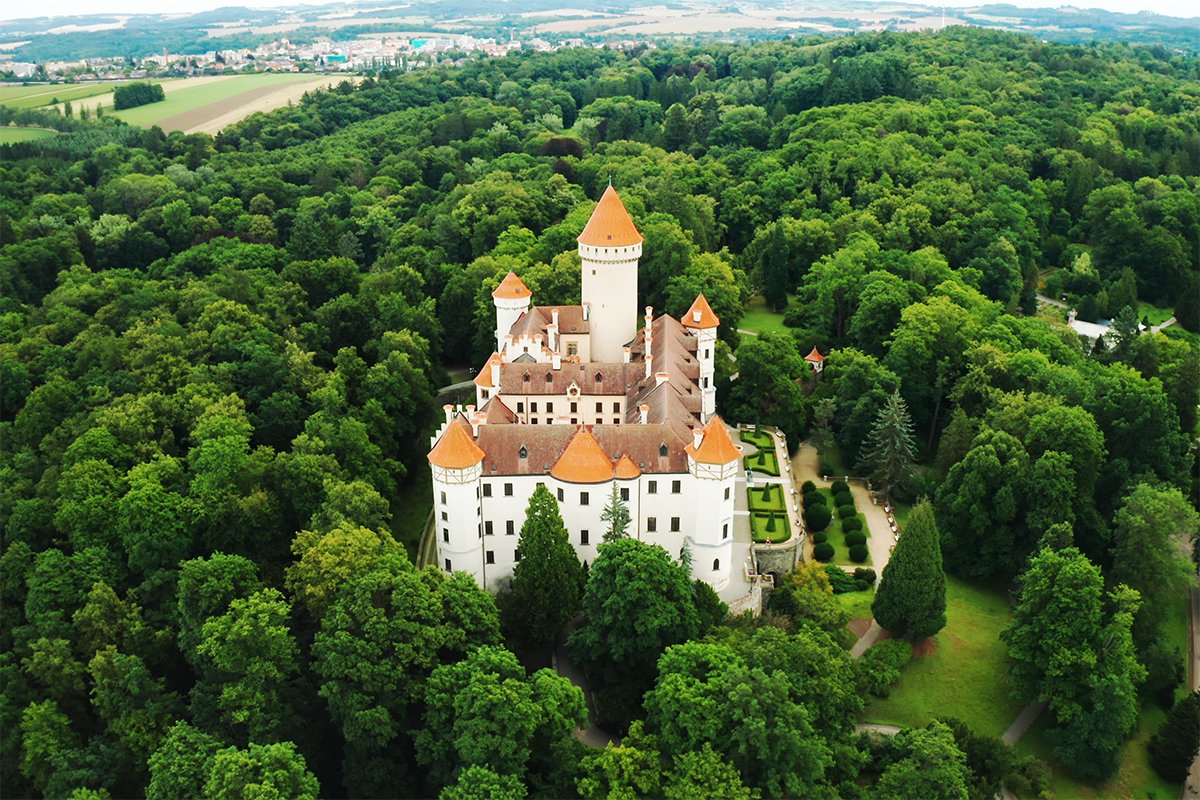
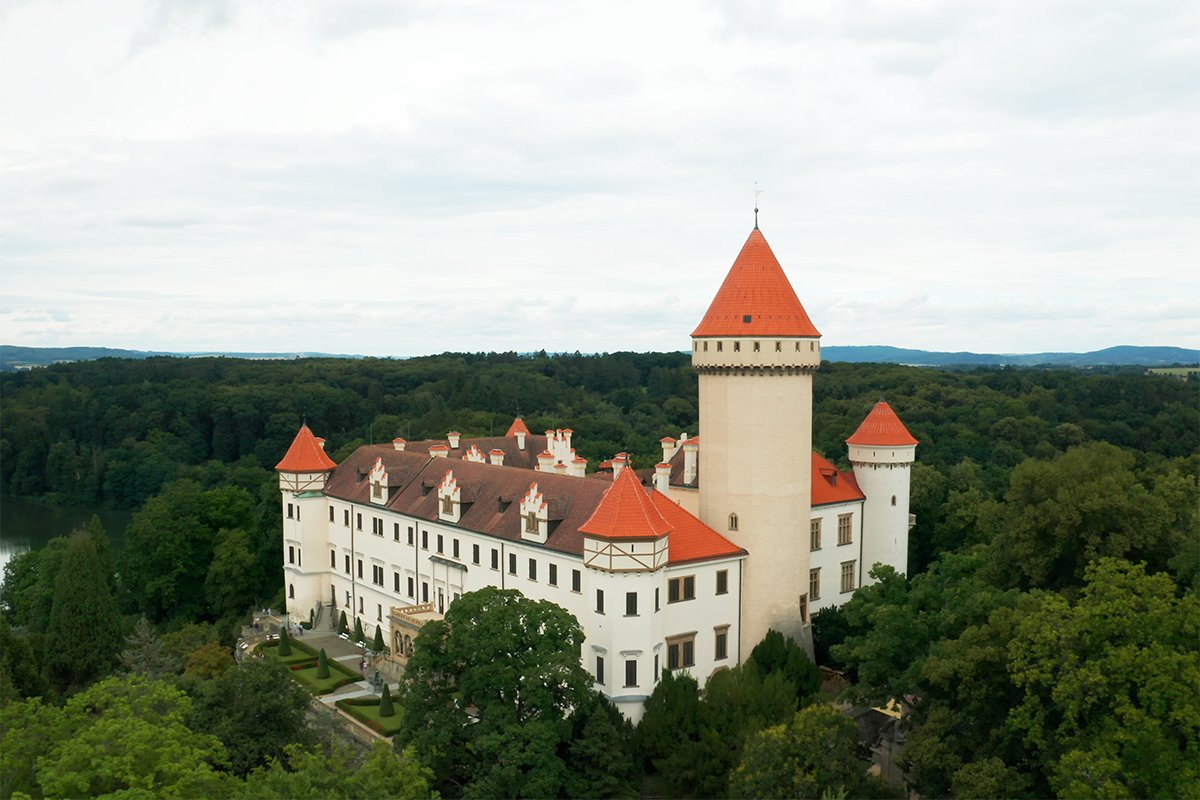
Visiting Information
🗓️ Best Time to Visit: April, May, late September, and October
🗺️ Location Perks: You’re close enough to Prague for an easy day trip, yet the setting feels refreshingly rural—forest paths, a broad château park, and a Rose Garden that invites a slow wander between tours.
⏳ Estimated Visit Duration: Plan to spend 2–4 hours exploring the castle and its grounds.
💡 Visiting tips: Book a guided circuit that matches your interests (salons vs. private apartments) and arrive early to snag your preferred time. Wear comfortable shoes—between the park trails and castle interiors, you’ll be on your feet more than you expect.
Related Articles
Search