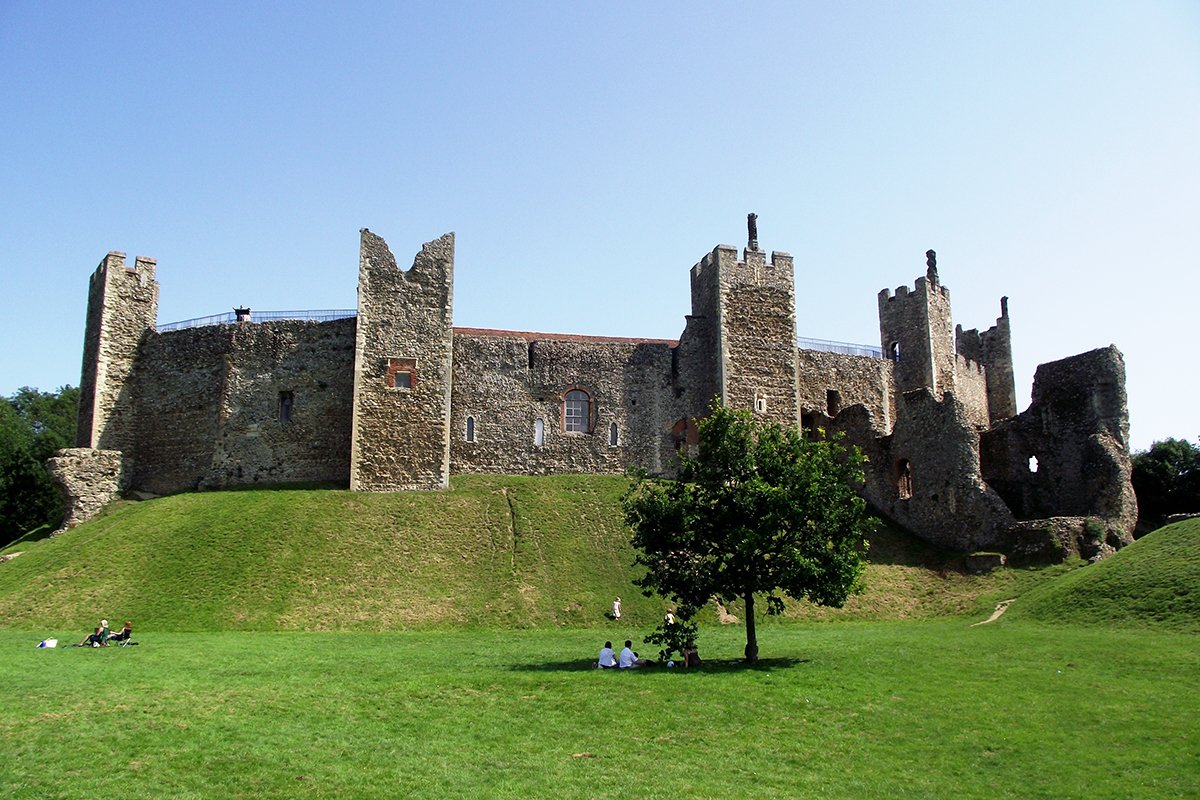
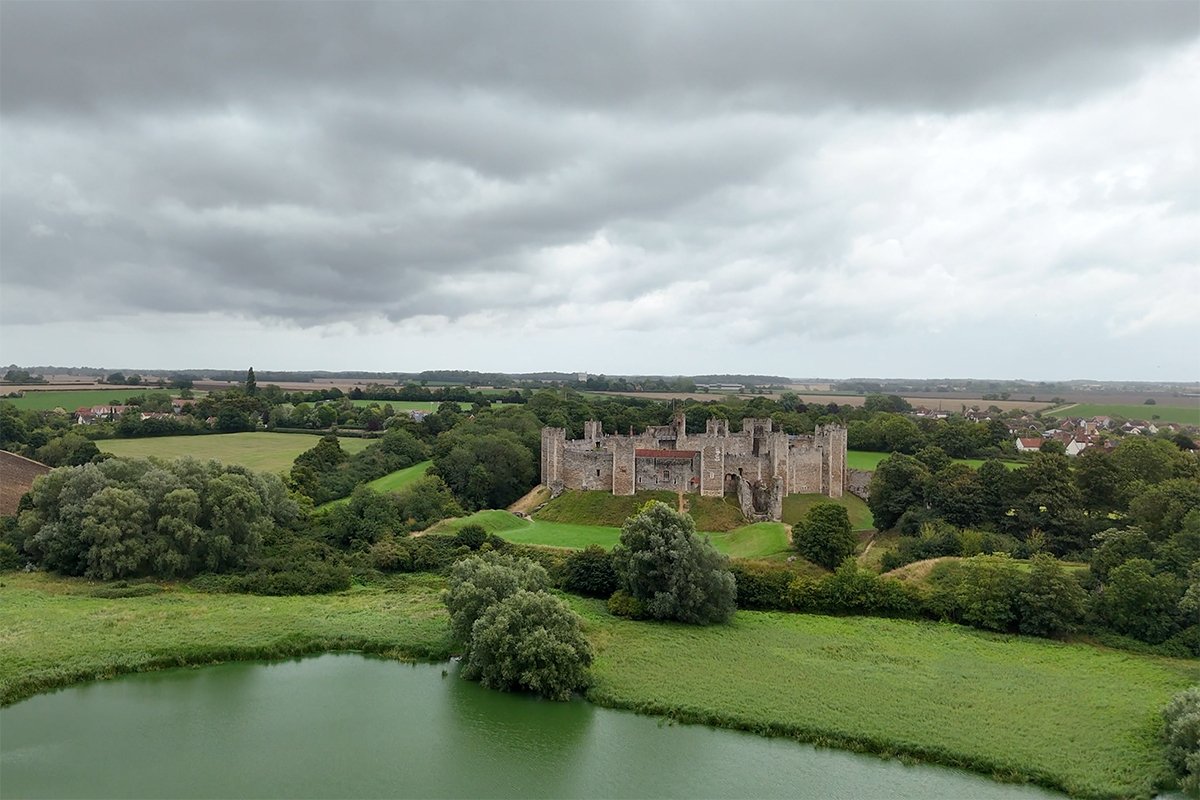
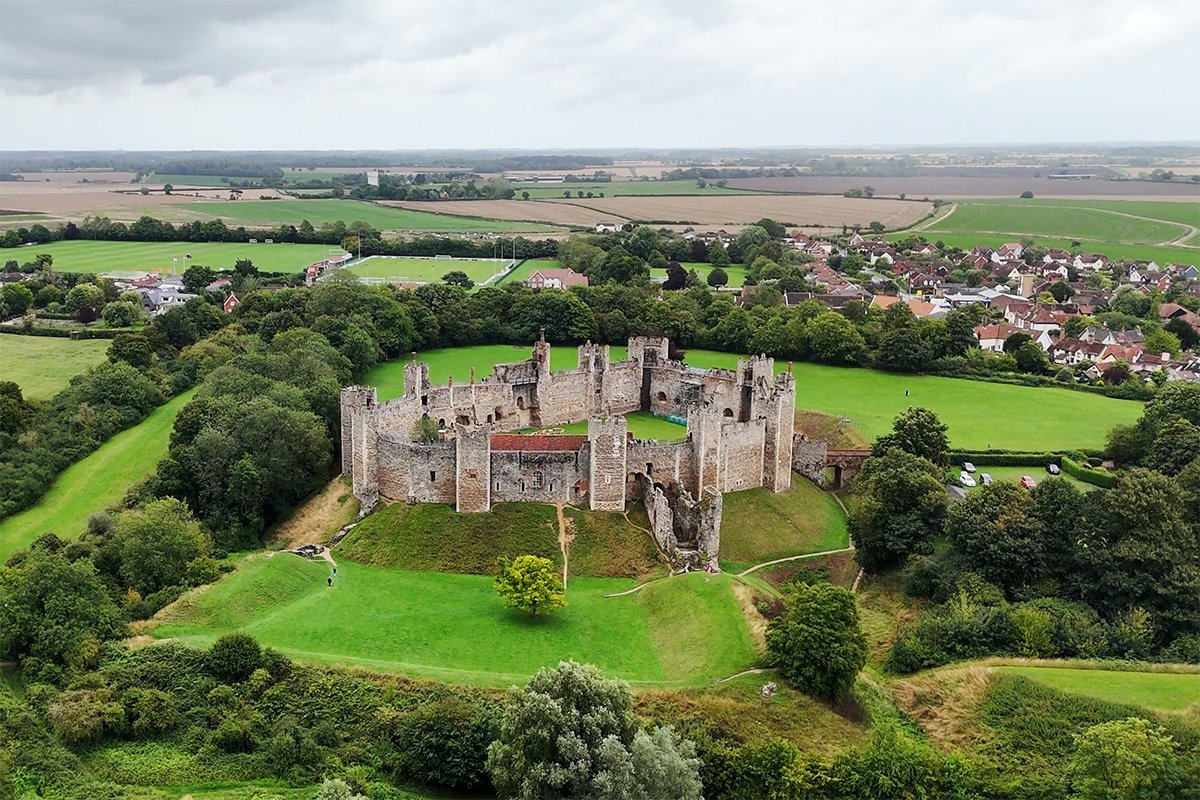
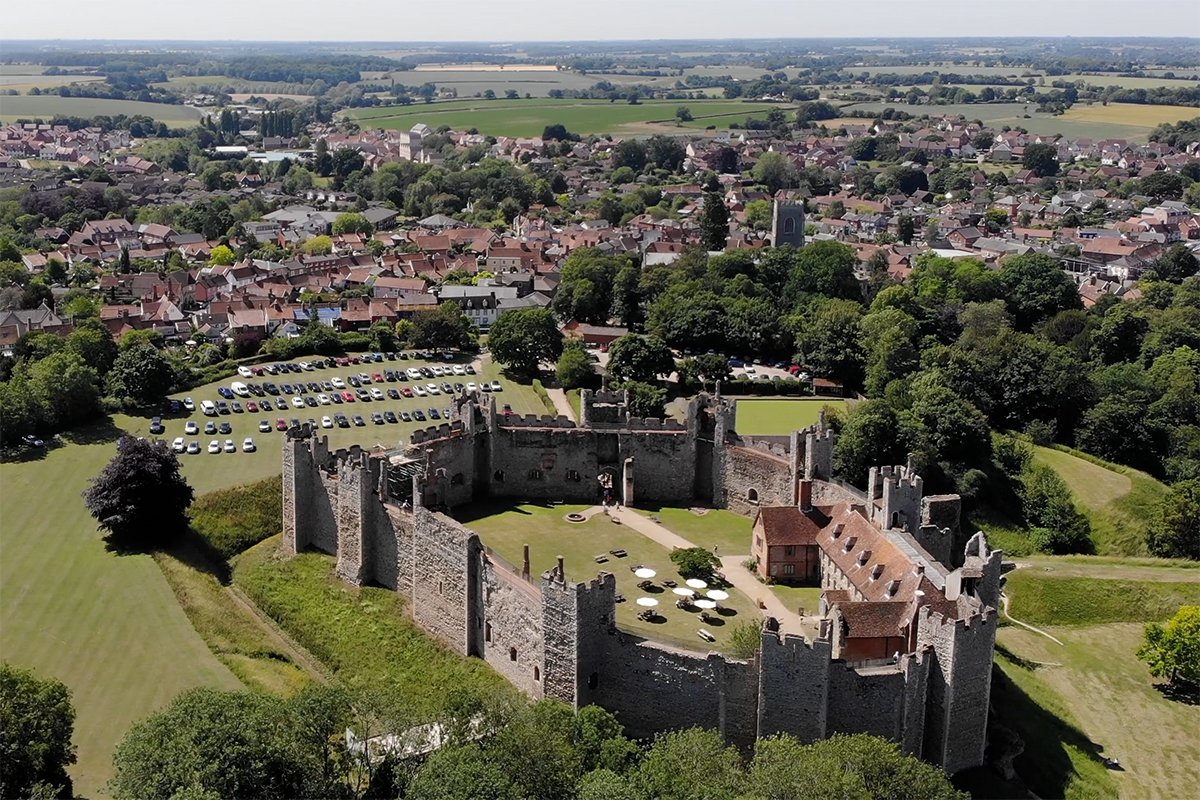
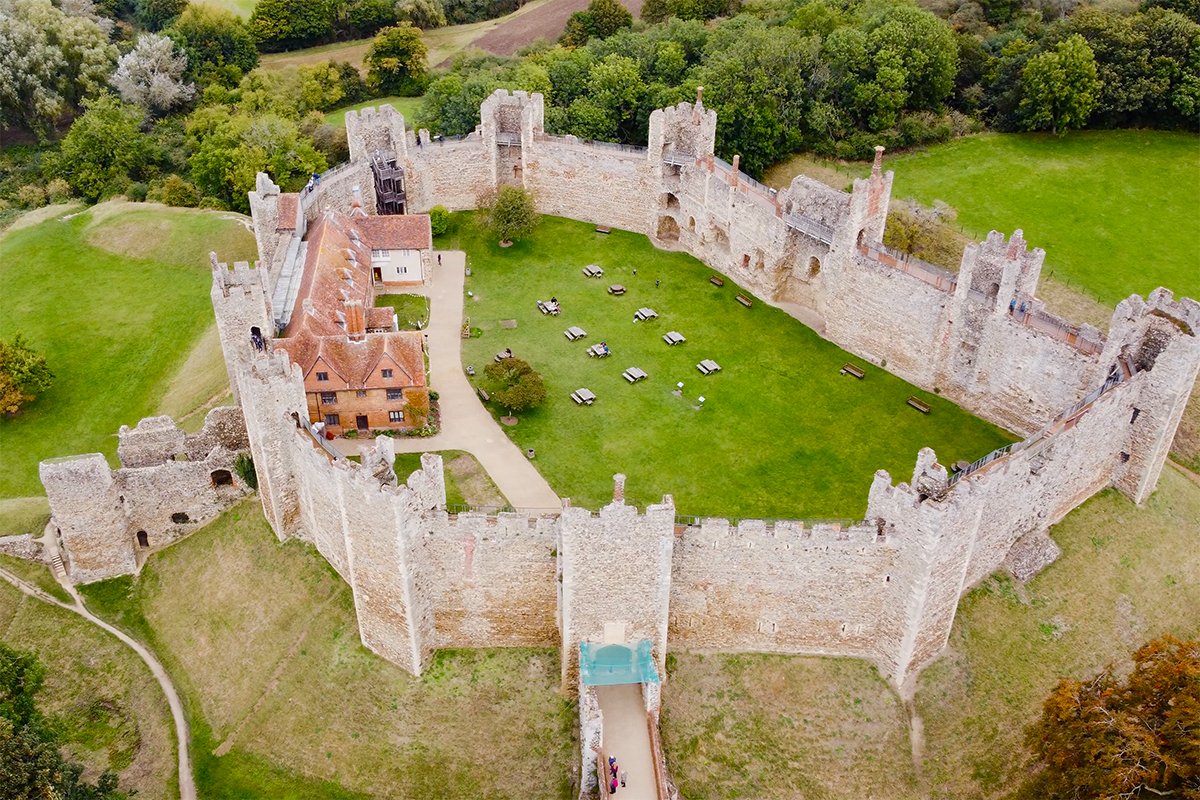
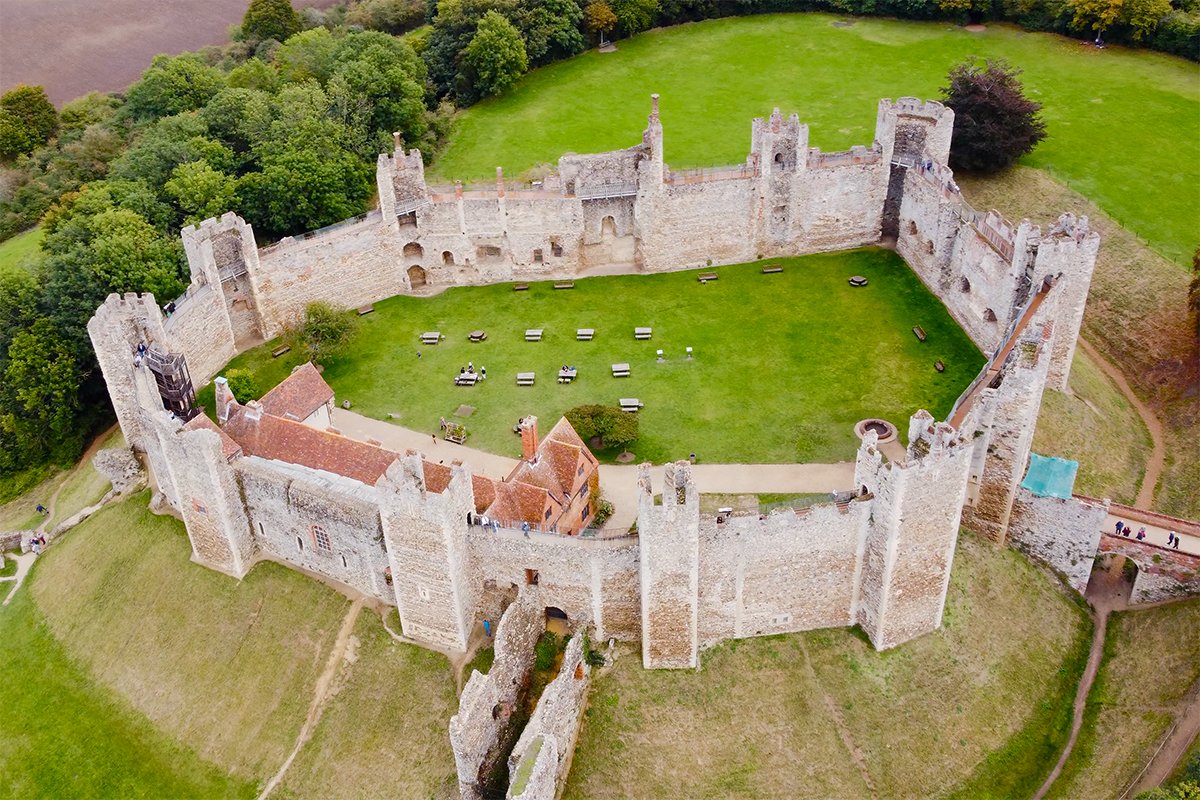
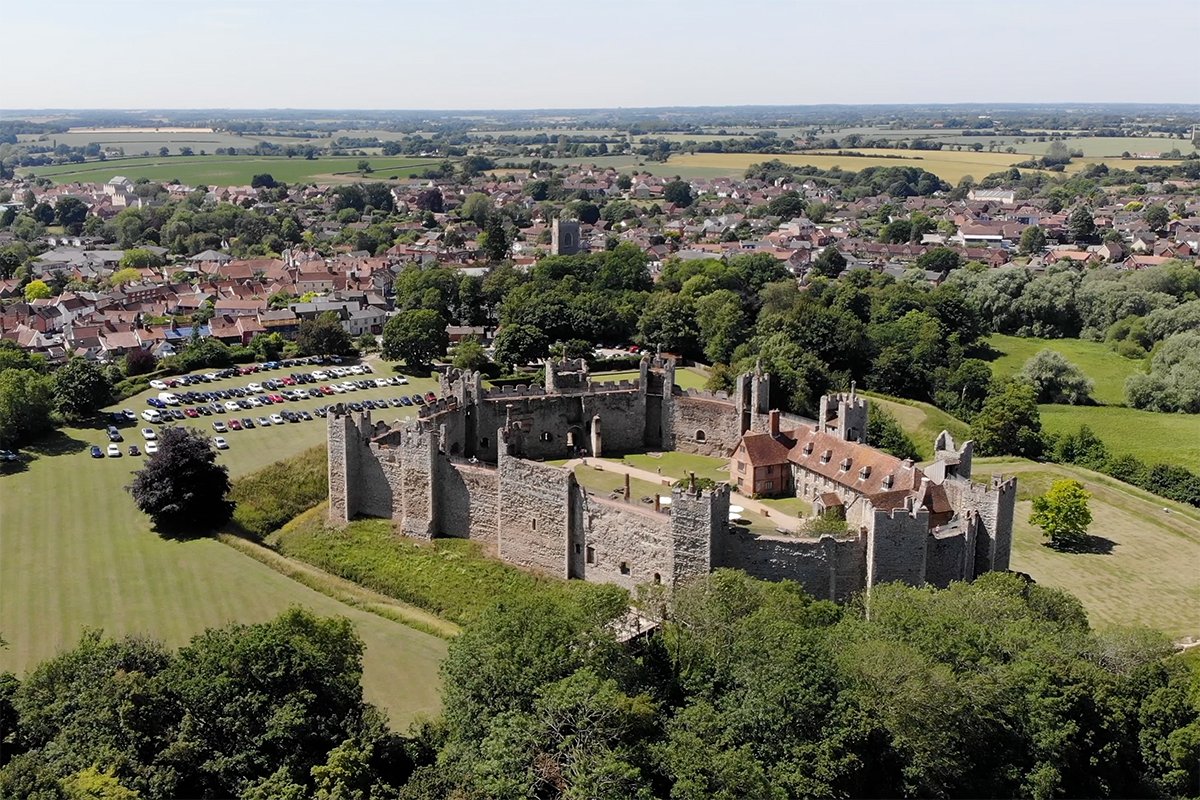
Framlingham Castle rises above its quiet mere with a confidence that once shaped the fate of a kingdom. Instead of a single mighty keep, you get a sweeping ring of wall and towers—made for walking, watching, and imagining banners snapping in the wind. It’s a place of big medieval ambition, later Tudor comfort, and one electrifying July moment in 1553 when Mary Tudor’s supporters turned this fortress into the launchpad of a crown.
Quick Facts
📍 Location: Framlingham, Suffolk, England, United Kingdom
🏗️ Construction Period: Late 11th–early 12th century origins; major stone rebuilding late 12th–early 13th century
🏰 Architectural Style: Medieval military architecture (Norman/Plantagenet)
🎭 Famous For: Mary Tudor being proclaimed Queen of England (July 1553); its no-keep design with a vast curtain wall and 13 towers; King John’s 1216 siege; later conversion into a workhouse/poorhouse
👑 Notable Figures: Bigod family (especially Roger Bigod II); King John; Mary Tudor (Mary I); Howard family (Earls and Dukes of Norfolk); Sir Robert Hitcham
🏆 UNESCO Status: No
🌐 Official Website: https://www.english-heritage.org.uk/visit/places/framlingham-castle/
Map
Historical Context
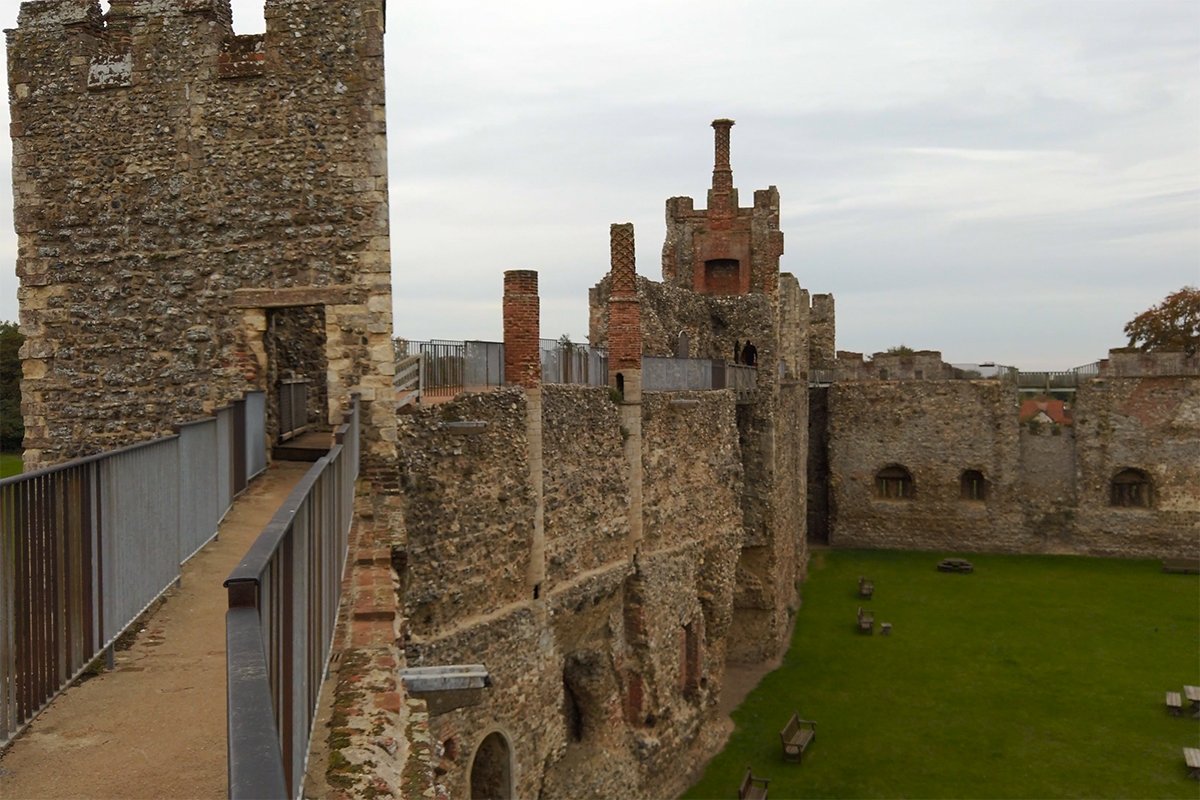
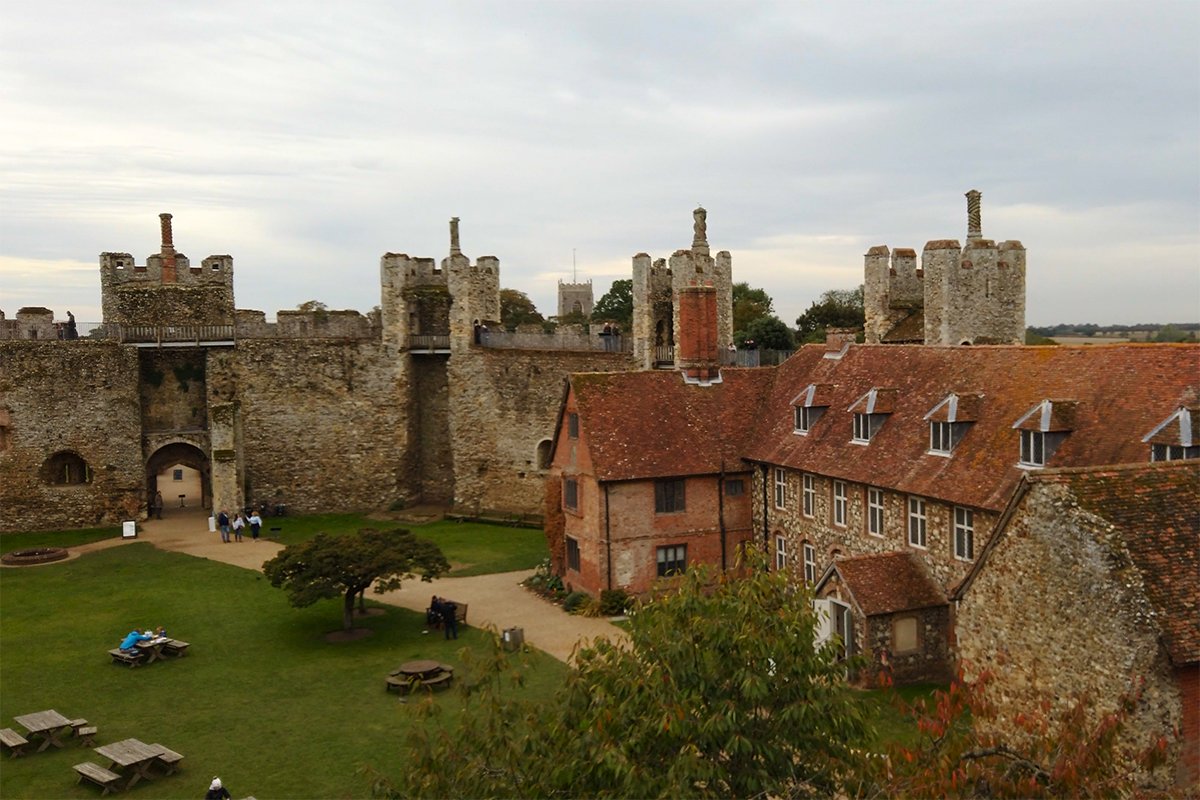
Framlingham Castle began as a post-Conquest stronghold of the Bigod family, first in timber and later in stone. Its defining look—an imposing curtain wall punctuated by 13 mural towers—took shape under Roger Bigod II around the turn of the 13th century, signalling baronial power in East Anglia. In 1216, King John seized the castle during the turmoil after Magna Carta, a reminder that this was no mere local fortress. Over centuries it passed through great noble hands, including the Howards, who added Tudor comforts such as grander windows and bold red-brick chimneys. The castle’s most dramatic moment came in July 1553: Mary Tudor rallied supporters here and was proclaimed queen, forcing the political tide to turn against Lady Jane Grey. Later, Sir Robert Hitcham repurposed the site as a workhouse, giving the fortress an unexpectedly human, institutional afterlife.
Visual Tour
Visiting Information
🗓️ Best Time to Visit: April, May, late September, and October
🗺️ Location Perks: You’re perched above Framlingham’s shimmering mere, with easy strolls into a characterful Suffolk market town. Don’t miss the waterside paths for classic skyline views of the castle’s wall-and-tower silhouette.
⏳ Estimated Visit Duration: Plan to spend 2–3 hours exploring the castle and its grounds.
💡 Visiting tips: Start with the wall-walk while your legs are fresh—those towers come with steps and uneven footing. Bring a light layer for the breezy parapets, and leave time to read the displays on Mary’s 1553 stand and the castle’s later life as a poorhouse.
Related Articles
Search