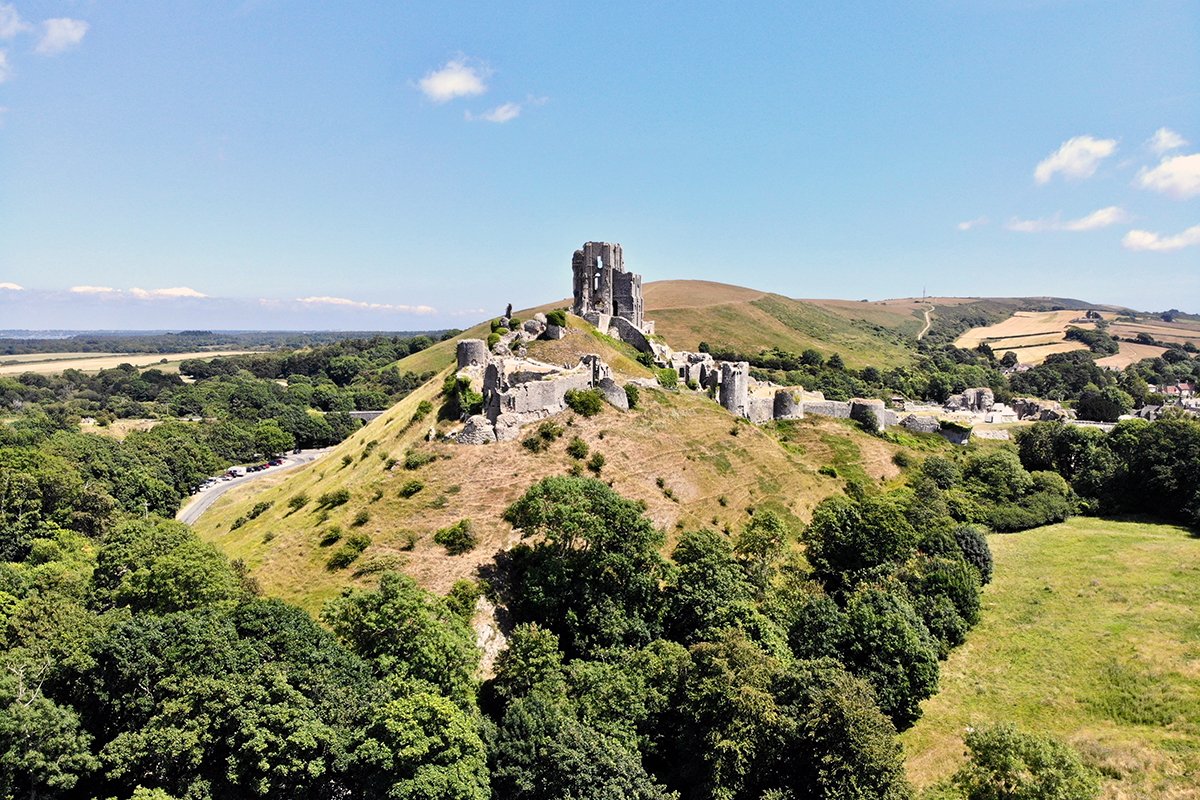
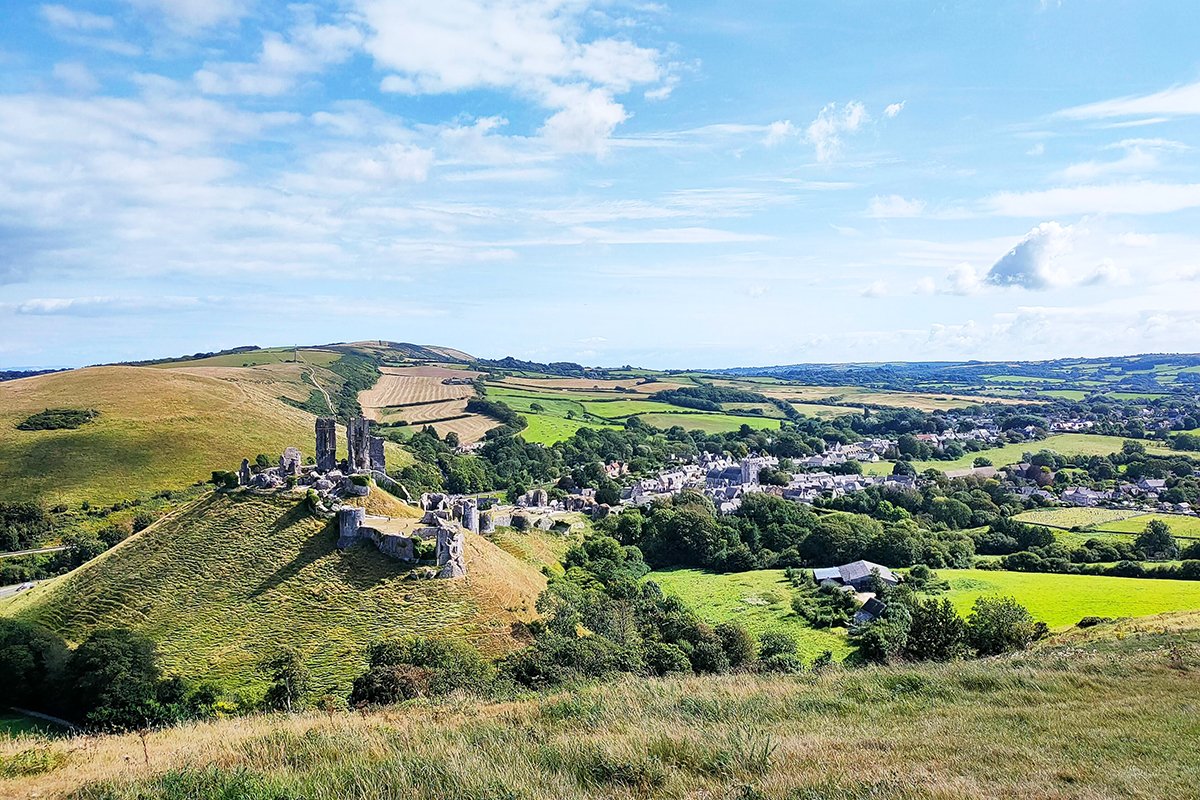
Perched high above a gap in the Purbeck Hills, Corfe Castle cuts a striking silhouette against Dorset’s big skies. These storied ruins whisper of kings, sieges, and daring defenses, yet welcome modern visitors with open views and winding paths. Wander through toppled towers, trace ancient stonework, and watch steam trains thread the valley below—an evocative mix of raw medieval drama and countryside calm.
Quick Facts
📍 Location: Corfe Castle, Dorset, England
🏗️ Construction Period: c. 1066–13th century
🏰 Architectural Style: Norman (Romanesque) military architecture
🎭 Famous For: Early Norman stonework, English Civil War sieges, defense by Lady Mary Bankes, panoramic ruins
👑 Notable Figures: William the Conqueror, King Henry I, Lady Mary Bankes, Sir John Bankes, Elizabeth I, Sir Christopher Hatton
🏆 UNESCO Status: No
🌐 Official Website: https://www.nationaltrust.org.uk/visit/dorset/corfe-castle
Map
Historical Context
Raised soon after the Norman Conquest, Corfe Castle began as a rare early stone stronghold guarding the vital route between Wareham and the coast. Its oldest surviving hall shows Saxon-style herringbone masonry, while Henry I’s great keep, built of local Purbeck limestone, dominated the summit. A royal residence, prison, and fortress, the site also echoes with the earlier 978 murder of Edward the Martyr. In the English Civil War, Lady Mary Bankes famously withstood one siege before the castle fell in 1645; Parliament then ‘slighted’ it, blasting walls and leaving the dramatic ruins that tower today over three terraced baileys, gatehouses, chapel remains, and even medieval garderobes.
Visual Tour




Visiting Information
🗓️ Best Time to Visit: April, May, late September, and October
🗺️ Location Perks: The castle crowns a natural pass with sweeping views across the Purbeck Hills. Don’t miss the Swanage Railway’s heritage steam trains gliding past the village and castle mound.
⏳ Estimated Visit Duration: Plan to spend 2–3 hours exploring the castle and its grounds.
💡 Visiting tips: Wear sturdy shoes—the slopes and steps are steep and uneven. It’s exposed on the hilltop, so bring layers. Pair your visit with a Swanage Railway ride and check the National Trust site for opening times.
Related Articles
Search