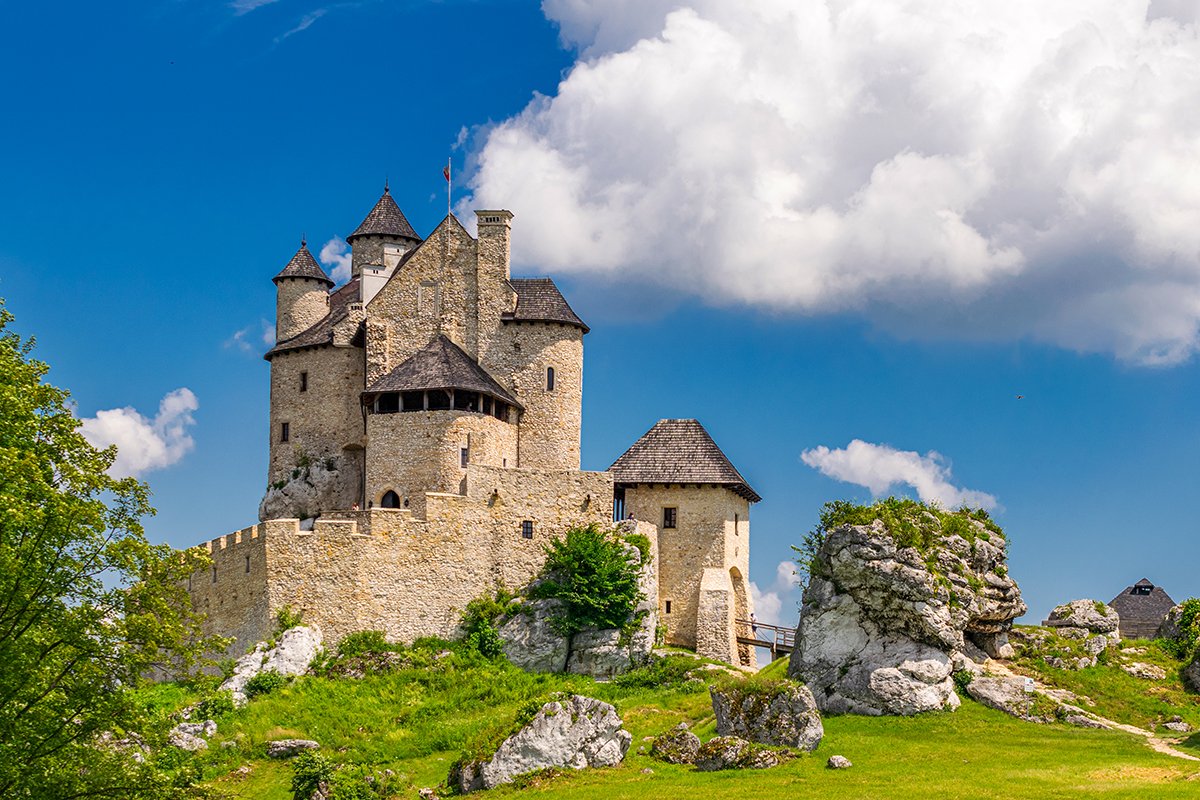
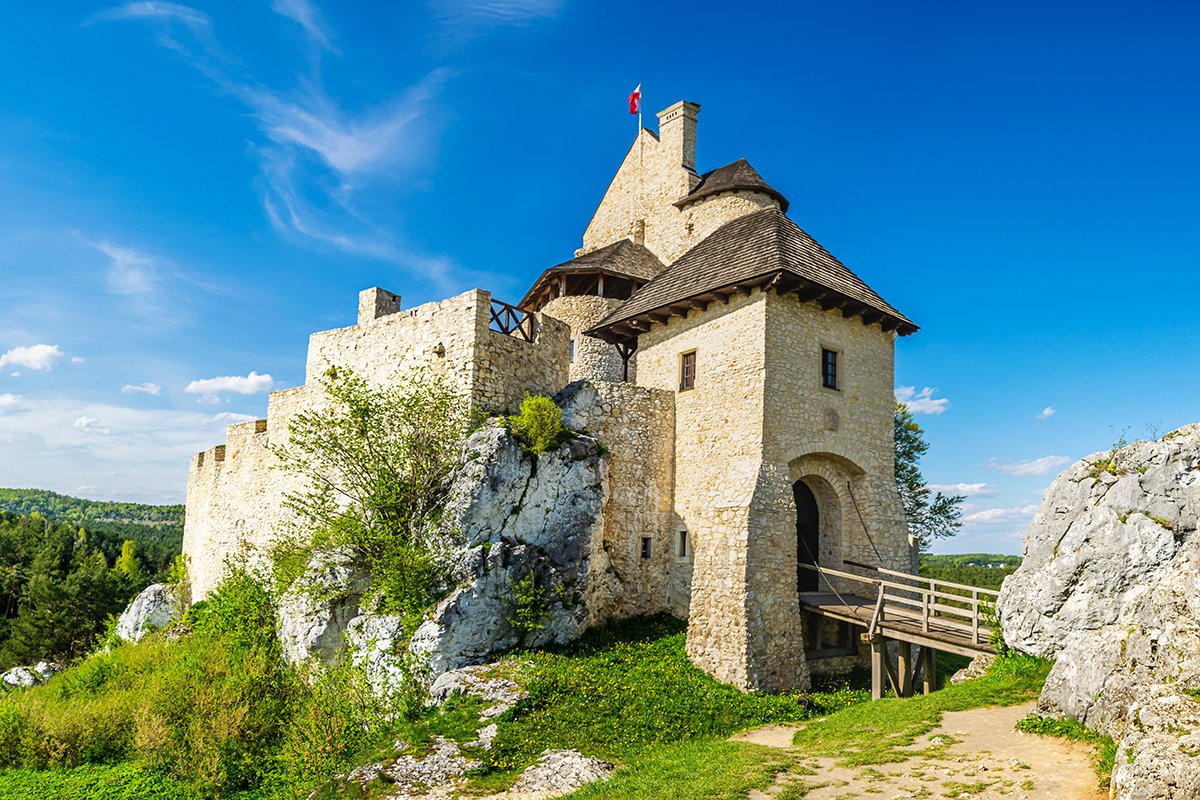
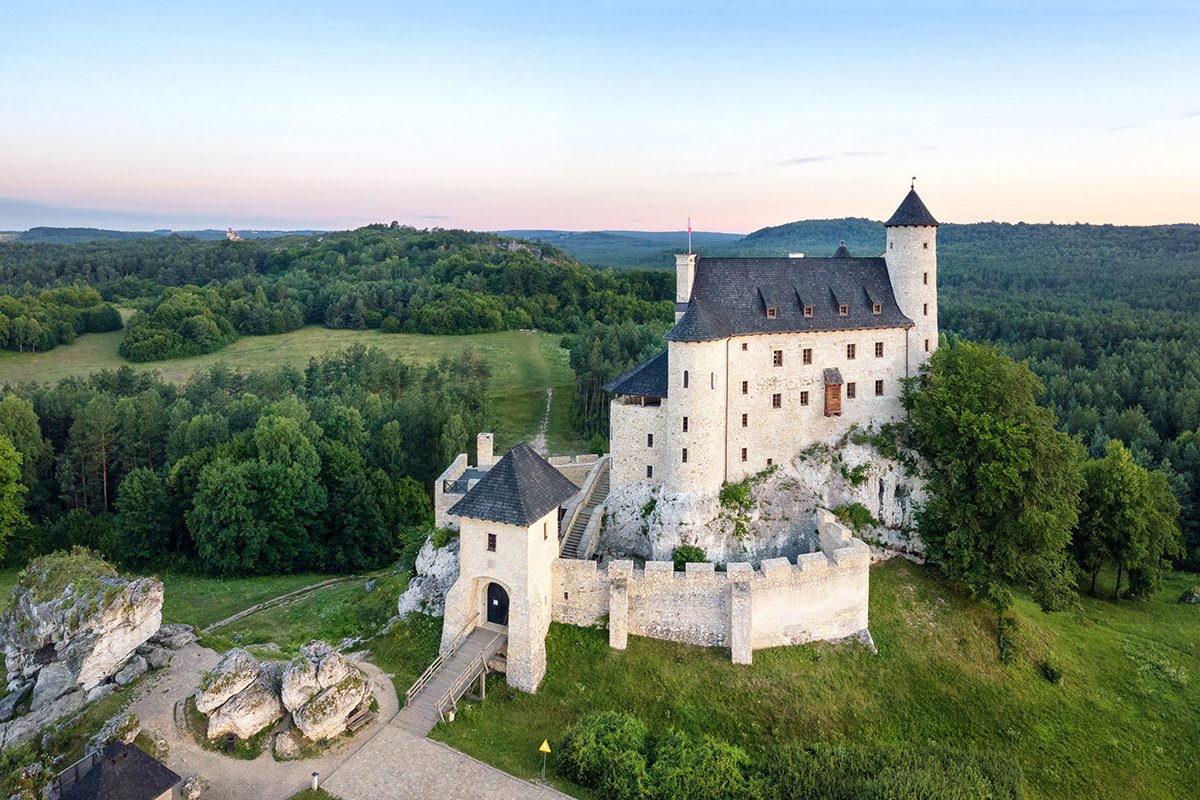
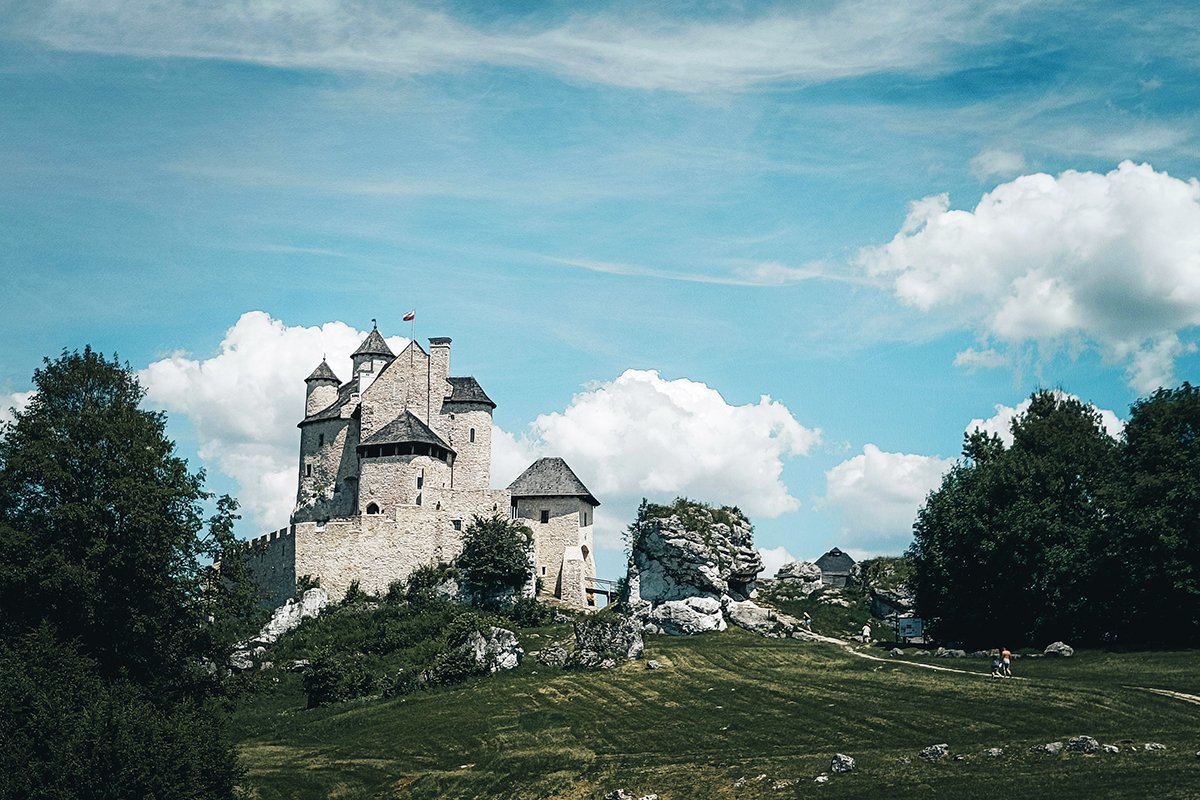
Perched on a jagged limestone outcrop in Poland’s Jura highlands, Bobolice Castle feels like it was grown from the rock itself. Built as a royal border fortress and later battered by wars, it spent centuries as a haunting ruin—until a bold modern reconstruction brought its towers and walls back into the skyline. Today, it’s one of the Eagles’ Nests you can actually step inside and explore.
Quick Facts
📍 Location: Bobolice (near Niegowa), Kraków-Częstochowa Upland (Polish Jura), Poland
🏗️ Construction Period: 14th century (c. 1350)
🏰 Architectural Style: Medieval Gothic fortress architecture (reconstructed with historicizing details)
🎭 Famous For: Eagles’ Nests Trail landmark; Casimir the Great’s border-defense chain; Swedish Deluge destruction; legends of treasure and a tunnel to Mirów Castle; extensive modern reconstruction
👑 Notable Figures: King Casimir III the Great; King Louis I the Great; Władysław Opolczyk (Duke of Opole); King Władysław Jagiełło; King John III Sobieski; the Lasecki family (modern reconstruction)
🏆 UNESCO Status: No (not a UNESCO World Heritage Site)
🌐 Official Website: https://www.zamekbobolice.pl/
Map
Historical Context
Bobolice Castle began around 1350 as a royal fortress commissioned by King Casimir III the Great, part of a defensive chain guarding Poland’s western approaches toward Silesia—what travelers now call the Eagles’ Nests. In 1370 it passed to Duke Władysław Opolczyk, and after a turbulent episode involving the knight Andrzej Schona, the crown moved to regain control. Over the centuries, noble owners rebuilt and modernized the stronghold, adding more comfortable residential and representative spaces. War undid much of that work: the castle was badly damaged in 1587 during Maximilian III Habsburg’s campaign, then shattered again in 1657 by Swedish forces in the Deluge. By 1683, it was so dilapidated that King John III Sobieski reportedly camped in tents below. Abandoned for generations, Bobolice was dramatically reconstructed from 1999 and reopened as a major visitor site.
Visual Tour
Visiting Information
🗓️ Best Time to Visit: April, May, late September, and October
🗺️ Location Perks: You’re in the heart of the Polish Jura—white limestone cliffs, forested ridges, and postcard viewpoints. Don’t miss the short, scenic walk along the ridge toward nearby Mirów Castle, one of the trail’s classic pairings.
⏳ Estimated Visit Duration: Plan to spend 2–3 hours exploring the castle and its grounds.
💡 Visiting tips: Wear sturdy shoes—the limestone paths and hilltop approach can be slick, especially after rain. Go early on weekends to dodge crowds, and pair your visit with Mirów for an easy half-day castle-and-ridge loop.
Related Articles
Search