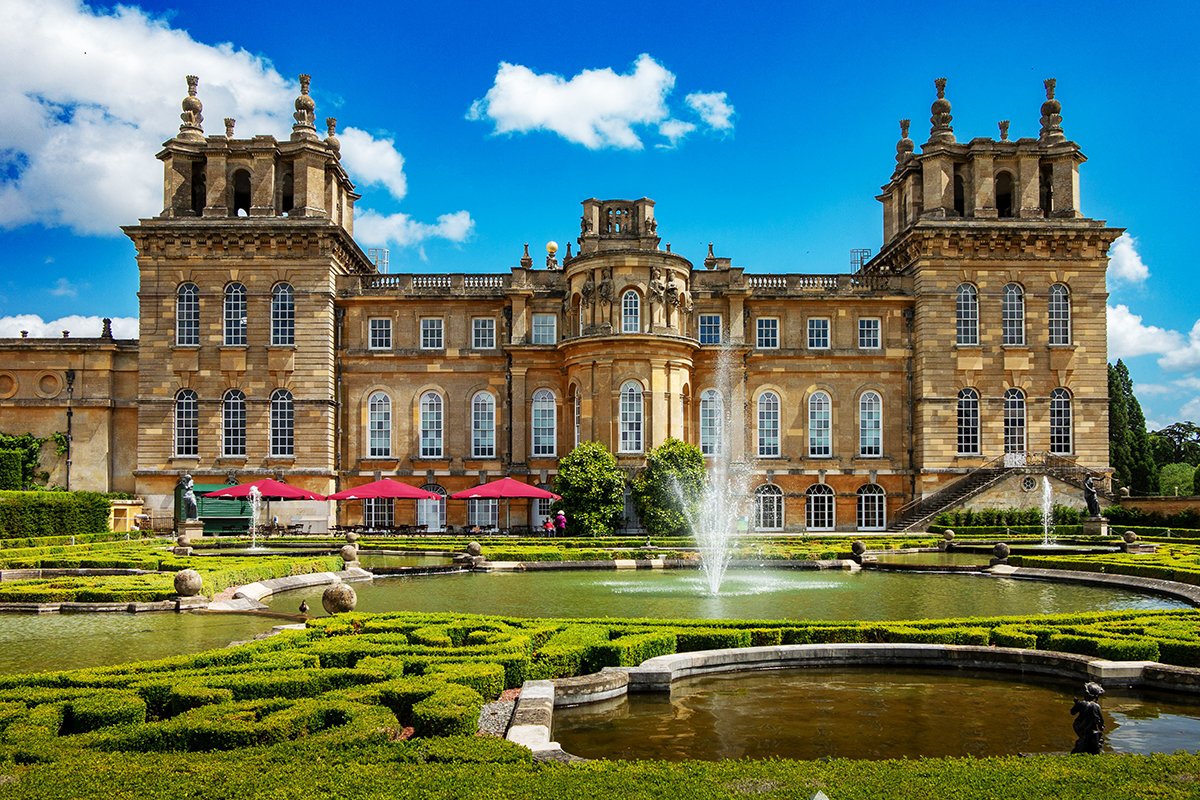
Blenheim Palace isn’t just a grand day out—it’s a statement in stone. Built as a national gift to celebrate the Duke of Marlborough’s triumph at the Battle of Blenheim, this sweeping English Baroque masterpiece pairs theatrical architecture with parkland that feels almost painted. Wander from gilded state rooms to Capability Brown’s lake-dotted vistas, and you’ll see why Blenheim still reads like power, ambition, and pageantry.
Quick Facts
📍 Location: Woodstock, Oxfordshire, England
🏗️ Construction Period: 1705–1722
🏰 Architectural Style: English Baroque
🎭 Famous For: UNESCO World Heritage status; a national monument to the Battle of Blenheim (1704); birthplace of Sir Winston Churchill; Capability Brown’s landmark landscape gardens and lakes; the Long Library and monumental state rooms
👑 Notable Figures: John Churchill, 1st Duke of Marlborough; Queen Anne; Sir John Vanbrugh; Nicholas Hawksmoor; Lancelot “Capability” Brown; Sir Winston Churchill
🏆 UNESCO Status: Yes — UNESCO World Heritage Site (Blenheim Palace), inscribed in 1987
🌐 Official Website: https://www.blenheimpalace.com/
Map
Historical Context
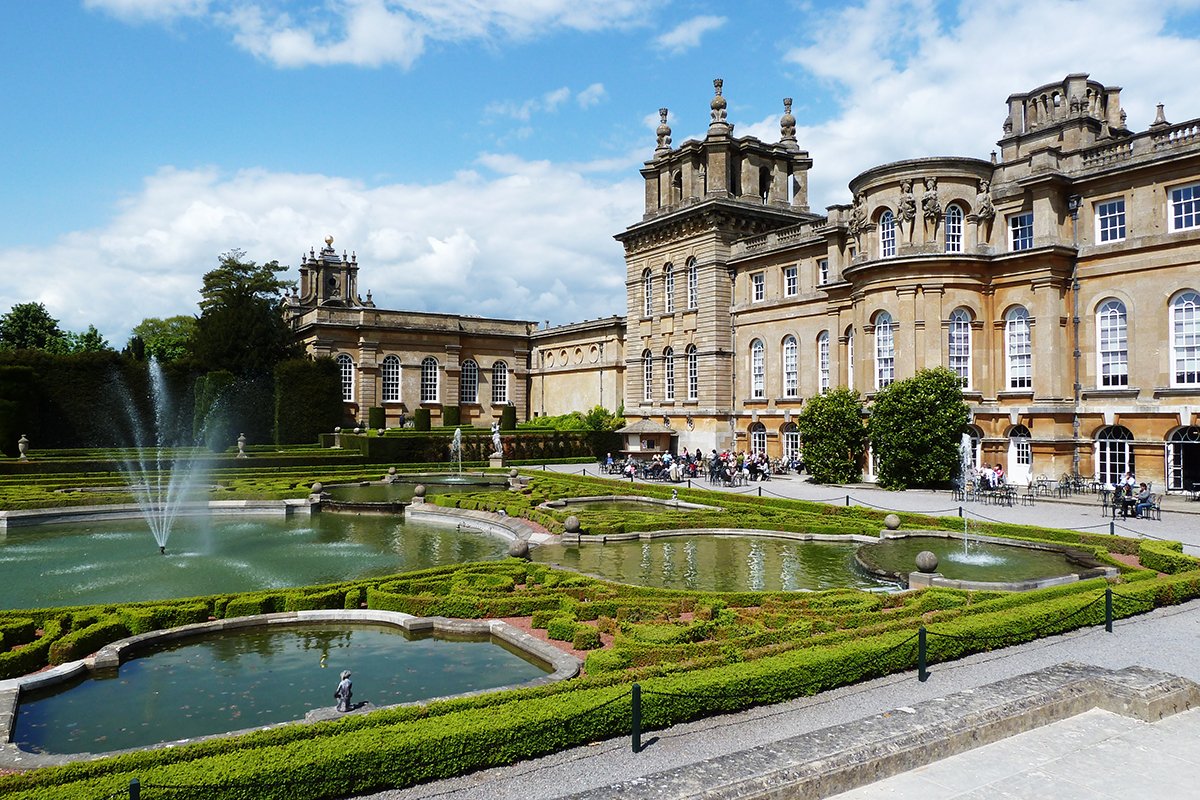
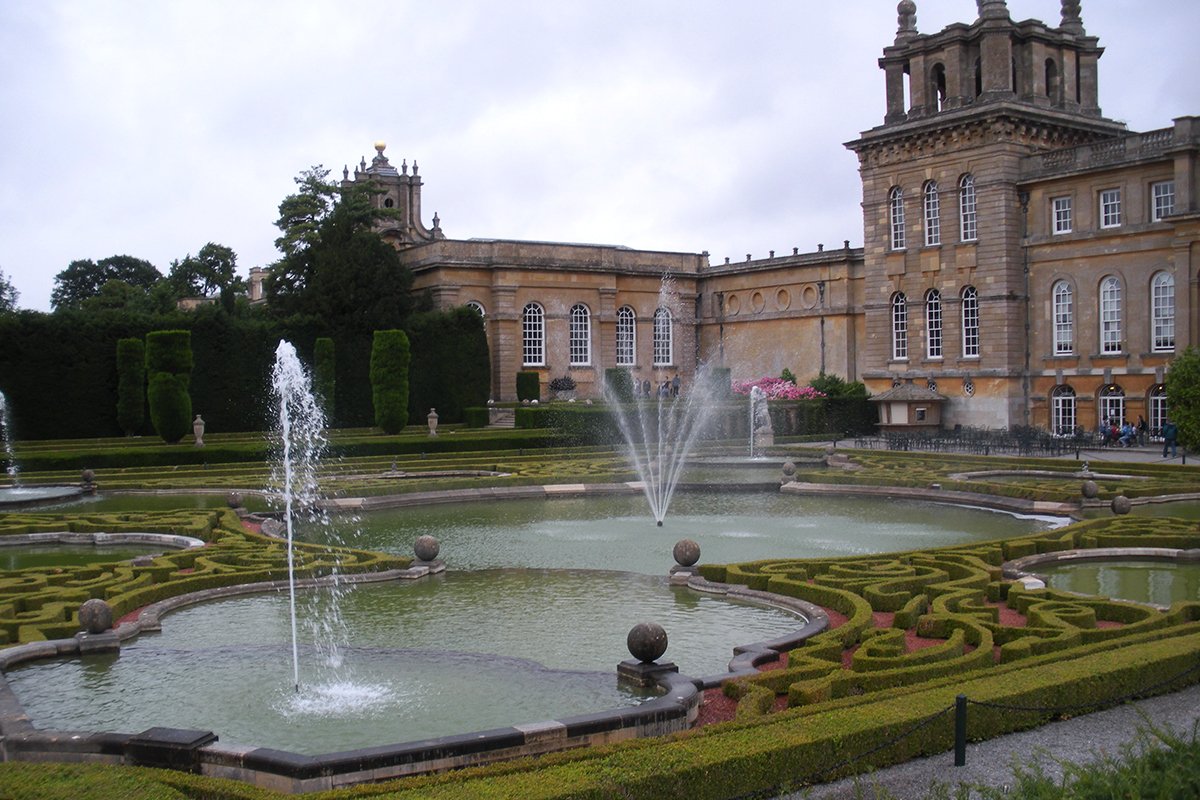
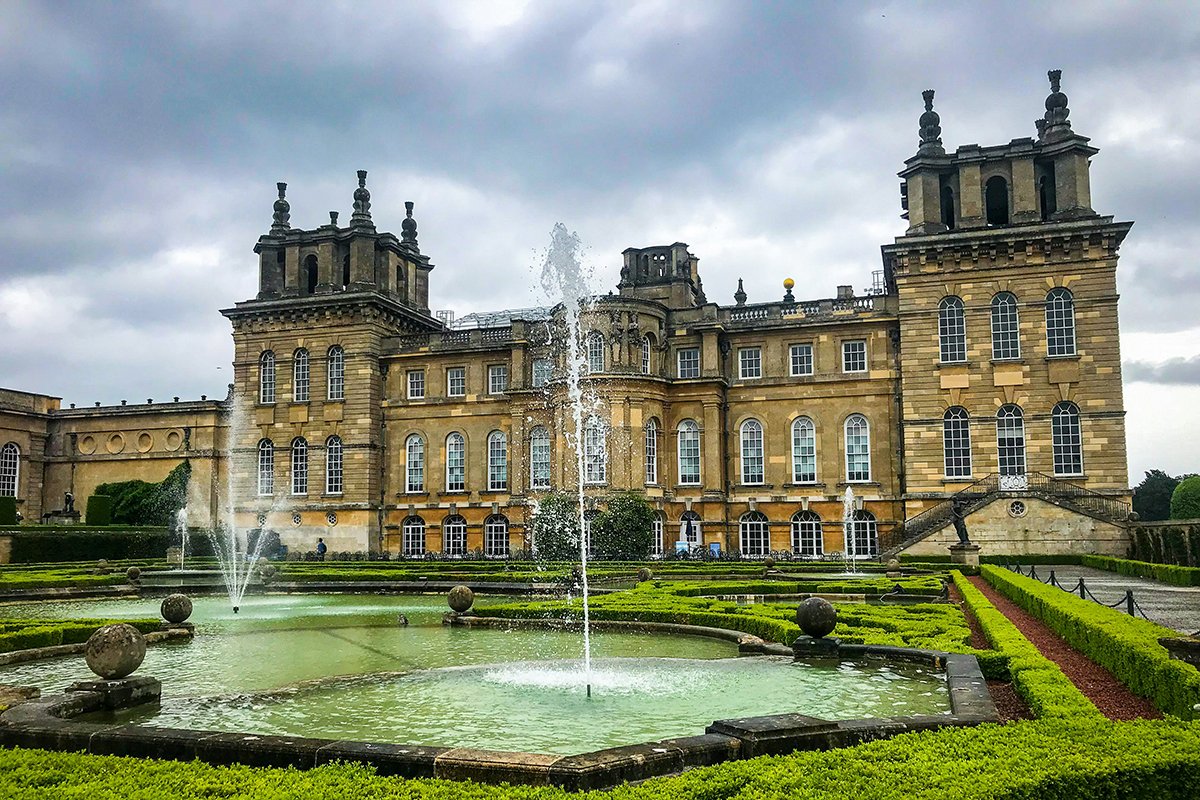
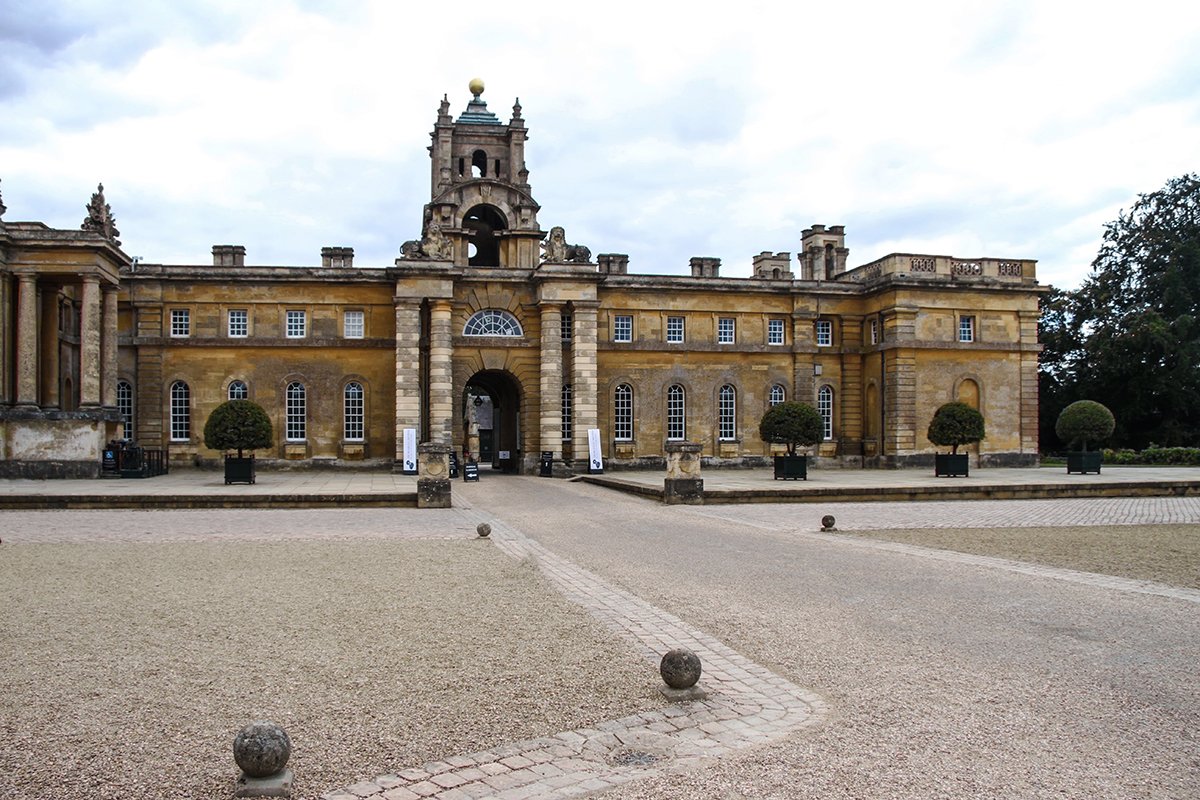
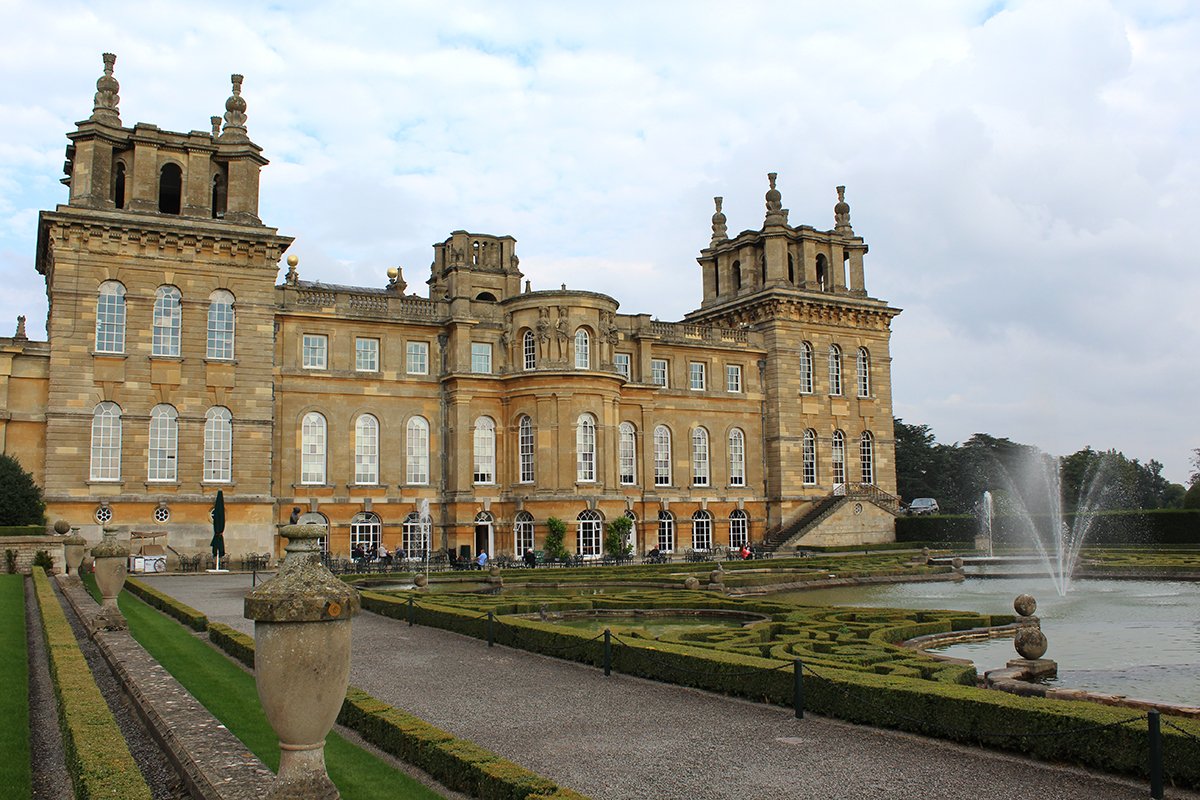
Blenheim Palace was conceived as more than a country house: it was built between 1705 and 1722 as a national gift to John Churchill, 1st Duke of Marlborough, commemorating his decisive victory at the Battle of Blenheim in 1704. Sir John Vanbrugh, with key help from Nicholas Hawksmoor, created a bold English Baroque composition—part family seat, part mausoleum, part political statement—meant to project Britain’s rising power. Inside, ceremonial rooms and painted ceilings glorify Marlborough’s campaigns, while the estate’s story later gained a new layer of fame as the birthplace of Sir Winston Churchill in 1874. The grounds evolved too: in the 1760s, Capability Brown reshaped the landscape into an influential example of the English naturalistic garden, with the River Glyme transformed into sweeping lakes and pastoral vistas.
Visual Tour


Visiting Information
🗓️ Best Time to Visit: April, May, late September, and October
🗺️ Location Perks: Woodstock is a handsome historic town with an easy, unhurried feel, and you’re also within quick reach of Oxford for museums, colleges, and classic riverside walks. The palace parkland itself is a destination—give yourself time for the lakeside views and long, open vistas.
⏳ Estimated Visit Duration: Plan to spend 4–6 hours exploring the palace, formal gardens, and a good stretch of the parkland.
💡 Visiting tips: Arrive early and head straight to the State Rooms (and the Long Library) before the peak crowds build. Wear comfortable shoes—distances between the palace, formal gardens, and wider park are bigger than they look, and indoor photography rules can vary by room or exhibition.
Related Articles
Search