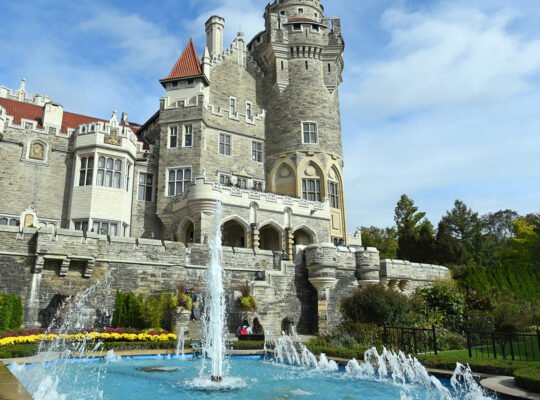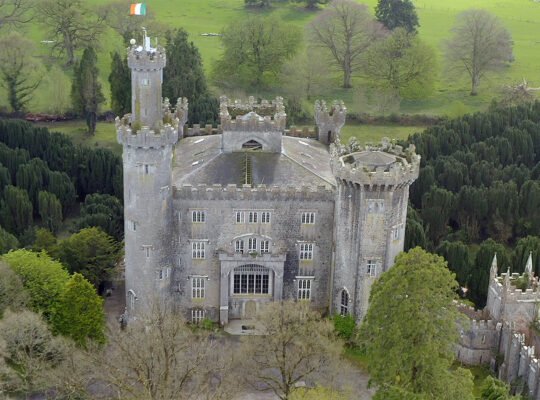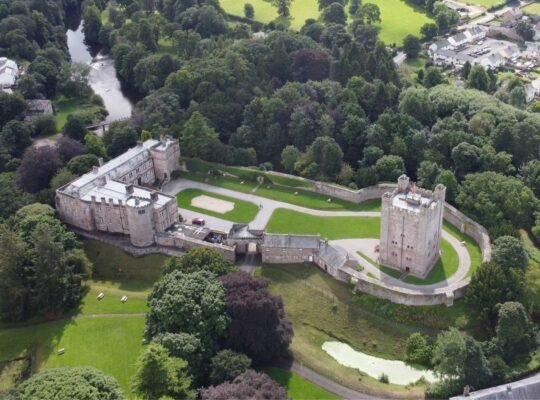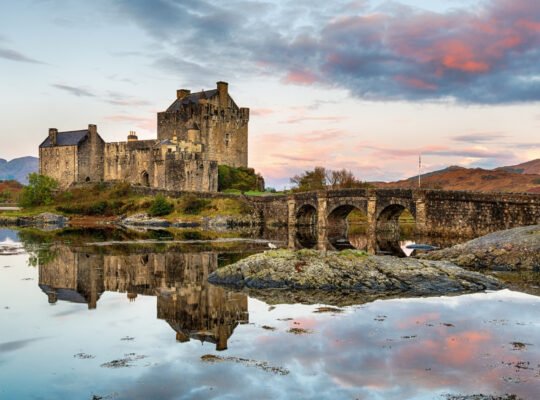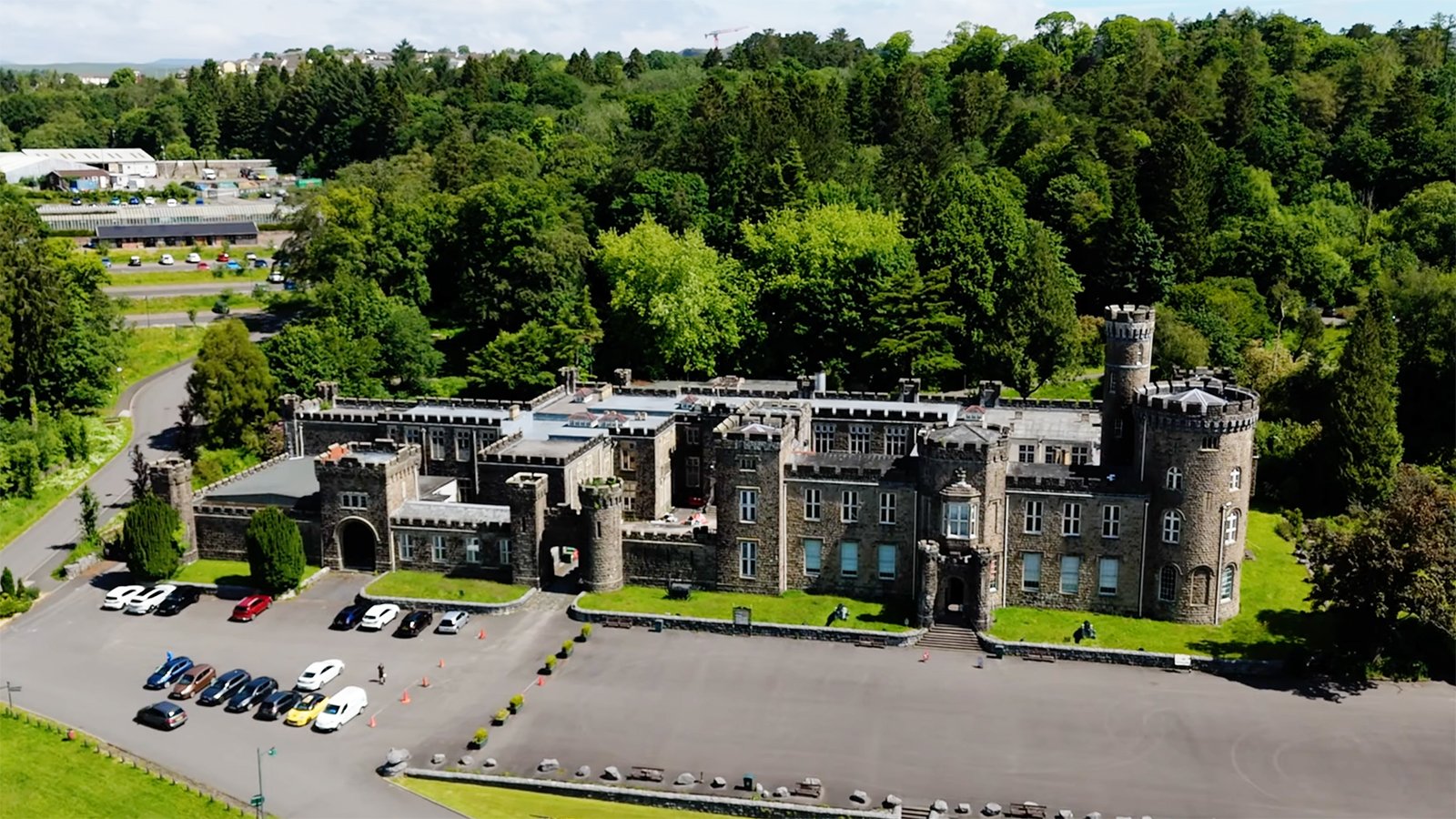
This past week (Nov 06–Nov 13, 2025) brought an unusually rich mix of royal moments, cultural celebrations, urgent heritage rescue, and breathtaking craftsmanship in the castle world. King Charles III marked his 77th birthday not in a royal palace but in the heart of South Wales at Cyfarthfa Castle — a symbolic choice that blended resilience, Welsh pride, and quiet personal significance.
Across Scotland, two major stories made headlines: Scone Palace’s long-awaited £10 million redevelopment received official approval, setting the stage for a dramatic tourism transformation, while Edinburgh Castle revealed full details of this year’s “Castle of Light” spectacle — a fire-and-ice fantasy expected to draw huge crowds through the festive season.
Further afield, Gaza began the delicate process of stabilising the war-damaged Pasha’s Palace Museum, a stark reminder of how fragile cultural heritage can be under conflict. At the same time, one of Britain’s most famous stately homes, Castle Howard, earned double acclaim for its meticulous restoration work.
Finally, momentum continues to build in the historic property market, with an exceptional set of estates — from medieval fortresses to Tudor manors and Italian strongholds — capturing the imagination of buyers worldwide.
Together, these stories reveal how castles remain powerful anchors of memory, identity, and possibility — whether celebrating community, reviving tradition, or stepping into renewed life through restoration.

1. Inside King Charles III’s 77th Birthday at Cyfarthfa Castle
King Charles III marked his 77th birthday not at Windsor, but at Cyfarthfa Castle in Merthyr Tydfil, South Wales – a 19th-century neo-Gothic mansion that has been turned into a museum, and is itself celebrating its 200th anniversary.
Arriving with Queen Camilla, the King was greeted by cheers from locals and a specially prepared birthday cake at a reception bringing together community figures, small businesses, and guests linked to his patronages, including The King’s Trust and the Royal Osteoporosis Society. Welsh actress Ruth Jones and fashion designer Julien Macdonald were among the notable attendees, underscoring how closely the event was tied to Welsh culture and creativity.
After cutting the cake inside the castle, Charles stepped out to meet waiting well-wishers, while royal social media accounts shared a new portrait of the King taken on the Sandringham Estate, thanking the public for their birthday messages. The warm scenes at Cyfarthfa unfolded against a more complex backdrop: Charles continues cancer treatment and has recently made hard decisions about the future of Prince Andrew’s titles and residence, adding a note of quiet resilience to the otherwise celebratory day.
Source: Yahoo! News Canada
2. Scone Palace Approved for a £10 Million Tourism Transformation
One of Scotland’s most storied royal sites — Scone Palace, the place where kings from Macbeth to Robert the Bruce were crowned — is about to enter a bold new chapter. Councillors have officially approved a £10 million redevelopment designed to turn the estate into a “world-class visitor attraction.”
The plan has been a decade in the making, and it’s the most ambitious update the palace has seen in generations. The former stables will be transformed into a modern visitor centre, complete with a new restaurant, shop, and ticket office. A large adventure play park and a “solar meadow” of 2,000 panels are also part of the project, signalling a push toward sustainability. Visitors will gain new walking and cycling routes linking the grounds to Stormontfield Road, opening the estate to more of the surrounding community.
The redevelopment arrives just in time for Scone Palace’s 60th anniversary of opening to the public in 2026 — a milestone Viscount William Stormont called “a chance to punch high” in Scotland’s increasingly competitive tourism scene. He noted that while the palace’s storytelling and heritage remain exceptional, its facilities “do not meet modern expectations,” making this upgrade essential if Scone wants to stand alongside destinations like the V&A Dundee or Stirling Castle.
Local councillors praised the project as both ambitious and respectful of the estate’s long history. One significant change was required before final approval: a proposed copper cladding finish for the stable block was removed after conservation officers ruled it visually inappropriate for the historic setting.
As Councillor Ian Massie put it, the redevelopment offers “a rare opportunity to enhance one of Scotland’s most historically significant landmarks, while securing its future as a sustainable, inclusive and economically vibrant destination.”
Source: The Sun (Travel)
3. Edinburgh Castle’s “Castle of Light” Returns With a New Fire-and-Ice Spectacle
One of Scotland’s most popular winter traditions is back. Castle of Light, the annual after-dark extravaganza at Edinburgh Castle, returns for its sixth year — and this season brings the show’s most ambitious theme yet: Fire and Ice.
From November 21 to January 4, the castle’s walls, towers, and ramparts will be transformed by Scotland’s largest projection-mapping event. Visitors can expect extraordinary installations, interactive moments, atmospheric soundscapes, and a brand-new storyline inspired by elemental forces.
New for 2025 is an immersive 60-minute historical walking tour, led by the enchanting Ice Queen, who guides guests through the fortress after dark. Along the route, visitors will encounter mythical creatures, including a dragon soaring across the night sky — all brought to life through cutting-edge projection technology.
The festival runs on select evenings from 4:30 pm to 9:00 pm, with last entry around 7:30–7:45 pm. Standard ticket prices start at £24 for adults, £19 for concessions, and £15 for children, with multiple family packages available.
For one night only, organisers are offering an impressive £10 ticket deal on St Andrew’s Day (November 30) — a chance for locals and visitors to experience Edinburgh Castle in a completely different light.
Produced by a consortium of leading digital artists in partnership with Historic Environment Scotland, Castle of Light has become a staple of Edinburgh’s festive calendar, blending creative innovation with centuries of Scottish heritage.
Source: The Scottish Sun
4. Gaza Begins Restoring the War-Damaged Pasha’s Palace Museum
In Gaza City, workers have begun a slow, painstaking effort to stabilize the Pasha’s Palace Museum — a medieval fortress later turned museum that was devastated during two years of conflict. Crews clear debris by hand, salvaging stones and separating what can be reused, all while surveillance drones buzz overhead.
Cultural-heritage expert Hamouda al-Dahdar says over 70% of the palace was destroyed, making it one of the hardest-hit sites in Gaza. UNESCO has recorded damage at 114 cultural sites since 2023, though local specialists estimate the real figure exceeds 200, including the Saint Hilarion Monastery and Omari Mosque.
Severe restrictions on materials mean restoration teams can do little beyond consolidating surviving walls and rescuing fragments. The palace’s pre-war collection of 17,000 artifacts vanished during the fighting, but workers have already recovered about 20 pieces from the Roman, Byzantine, and Islamic eras.
“This is not just a building — it’s the memory of the Palestinian people,” Dahdar said. Even limited salvage work marks a symbolic first step toward protecting what remains of one of Gaza’s most important historic sites.
Source: Al-Monitor
5. Castle Howard Wins Two Major Restoration Awards for Its “21st Century Renaissance”
Castle Howard — one of Britain’s most iconic stately homes and a globally recognised filming location for Brideshead Revisited and Bridgerton — has earned two major national awards for its transformative interior restoration project unveiled earlier this year.
The estate’s ambitious “21st Century Renaissance” initiative, which opened to the public in April 2025, has been honoured with:
- The Historic Houses Restoration Award 2025 (sponsored by Sotheby’s)
- The Georgian Group Architecture Award for Best Restoration of a Georgian Interior (sponsored by Savills)
The restoration marks a milestone in Castle Howard’s centuries-long story. At its heart is the spectacular reconstruction of the Tapestry Drawing Room, created within the fire-damaged remains of a room destroyed in the devastating 1940 blaze that consumed over 20 interiors and the famous dome.
Now meticulously reborn in a richly detailed 18th-century Baroque style, the room once again houses the set of tapestries woven in 1706 by John Vanderbank — The Four Seasons, inspired by the work of David Teniers — displayed as originally intended for the space.
The project also included sensitive refurbishment of the Long Gallery, the Grand Staircase, and a comprehensive redisplay of paintings, sculpture, and tapestries from the Howard family collection. These updates set the stage for Castle Howard’s upcoming 300th anniversary celebrations in 2026, honouring the legacy of its architect, Sir John Vanbrugh.
Led by architect Francis Terry with designers Remy Renzullo and Alec Cobbe, the restoration continues the Howard family’s multigenerational stewardship of the 9,000-acre estate. Custodians Nicholas and Victoria Howard praised the teams behind the project, calling the awards a tribute to “an extraordinary array of architects, designers, and craftspeople” who helped complete this once-in-a-generation renewal.
Source: CastleHoward.co.uk
6. Surging Interest in Historic Estates — This Week’s Standout Listings
A new MoneyWeek roundup highlights a surge of interest in remarkable historic estates now on the market, ranging from medieval castles to storied English manors. At the top is Italy’s Castle of Pavone, a magnificently restored 9th-century fortress at the foot of the Alps, featuring frescoed ceilings, stained-glass windows, internal courtyards, and an extraordinary 30-bedroom, 42-bathroom layout — listed at €25 million through Italy Sotheby’s International Realty.
In the UK, several properties offer deep historical pedigree. Whitney Court in Herefordshire, a 17-bedroom late-Victorian manor built in 1897 with early technological innovations such as ducted air-heating and an electric bell system, is listed at £3 million (Savills). Suffolk’s Hempnalls Hall, once gifted to Anne of Cleves after her divorce from Henry VIII, pairs Tudor charm with a moated rural setting across 10 acres, offered at £1.95 million (Jackson-Stops).
Further south, Brighstone Rectory on the Isle of Wight — a former home of naturalist William Fox, discoverer of the early T. rex skeleton — is available for £1.05 million (Fine & Country). For those seeking a true fortress estate, Bellister Castle in Northumberland blends a 17th-century mansion with a 12th-century Pele tower, positioned within National Trust parkland and priced at £2.5 million (Knight Frank).
Two listings stand out for their unusual historical associations. A Grade II-listed home on Magna Carta Lane in Surrey incorporates the charter room said to be tied to the Magna Carta signing, with riverfront gardens planted by Queen Elizabeth II; it is listed at £4.5 million (Waterview). Meanwhile, Kent’s St Andrew’s Chapel, a 15th-century religious site later owned by Tudor poet Sir Thomas Wyatt, offers cloisters, medieval windows, and atmospheric period details for £950,000 (Inigo).
Rounding out the collection is the Grade II-listed Elizabeth David House in Chelsea — the longtime home of the influential cookery writer. Listed at £6 million (Strutt & Parker), the property mixes intact heritage features with a modern garden-level extension.
Together, these estates illustrate a defining trend: buyers are increasingly drawn to homes with provenance, architectural character, and narrative depth, seeking not only luxury but the experience of living within history itself.
Source: MoneyWeek
⚜️ Final Reflections: A Week Where History Stayed Alive
From Cyfarthfa Castle’s warm birthday gathering to Gaza’s urgent salvage efforts, this week showed the full emotional spectrum of heritage — joy, resilience, reinvention, and deep cultural memory. Scotland stood firmly in the spotlight, with Scone Palace preparing for a transformative new era and Edinburgh Castle readying its most ambitious winter spectacle yet.
Meanwhile, Castle Howard’s award-winning restoration demonstrated how skilled stewardship can bring the past alive with extraordinary freshness, and the global market for historic homes reminded us that living history is not only something to visit — but, for some, something to inhabit.
Across continents and centuries, these stories share a common thread: castles continue to evolve, adapt, and inspire. They are community centres, cultural beacons, archaeological time capsules, architectural masterpieces, and, sometimes, dream homes.
As the year moves deeper into its final season, the world of castles remains as dynamic as ever — and CastleQuest Chronicles will be here each week to bring you the stories that shape these enduring icons.