Stand on the windswept ramparts of Kronborg Castle, and you quickly understand why this place became a legend. Waves crash against the stone walls below. Across the narrow strait, the coast of Sweden sits just a few kilometers away. For centuries, almost every ship entering the Baltic Sea had to pass right here—under the watchful eyes of this powerful fortress.
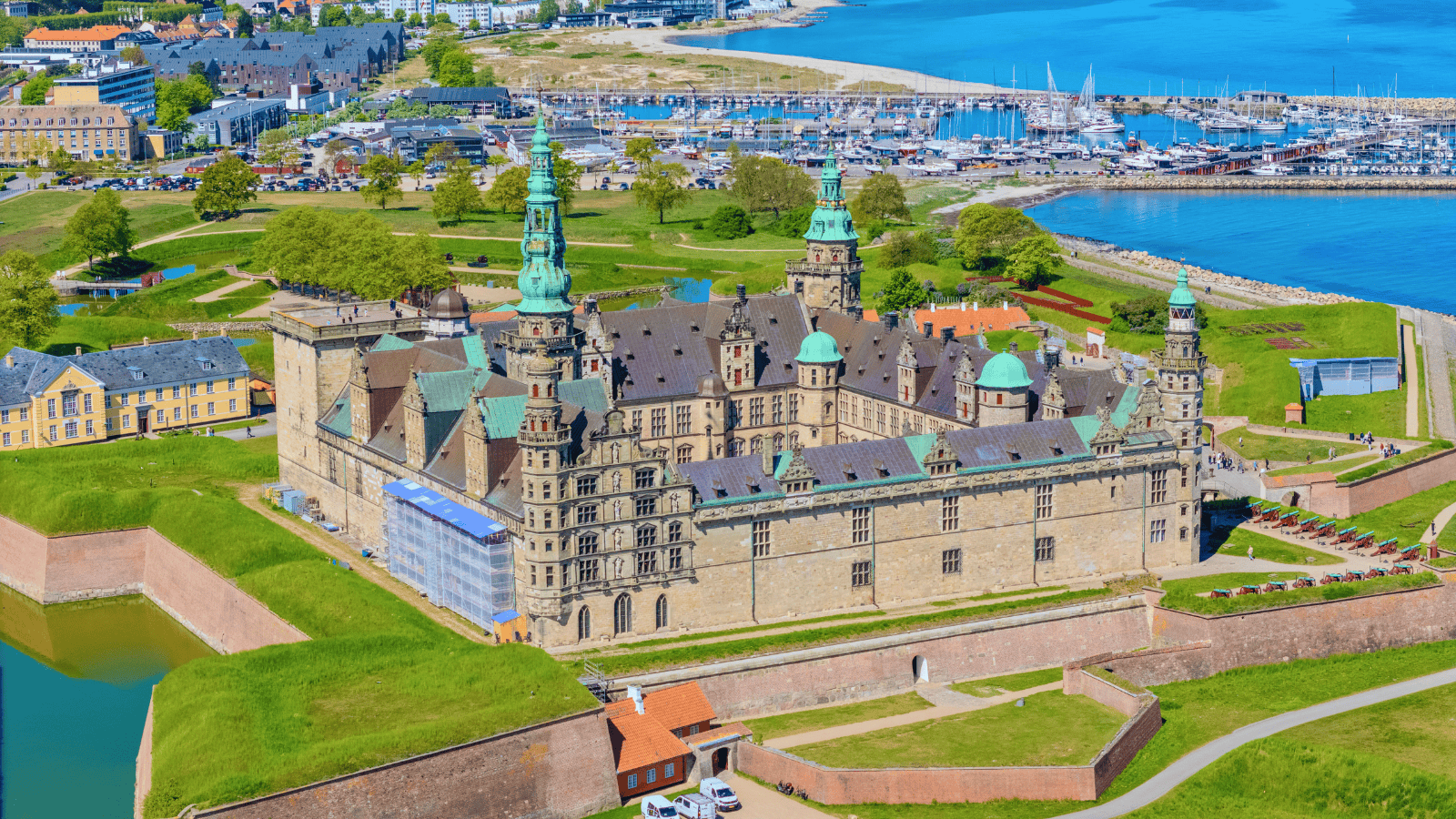
Rising above the harbor town of Helsingør in Denmark, Kronborg Castle is one of the most famous castles in Northern Europe. Transformed in the late sixteenth century by King Frederick II, it was designed to control the strategic Øresund Strait and collect tolls from passing ships. Those “Sound Dues” became one of the crown’s richest revenue streams, helping fund one of Northern Europe’s most splendid courts. The castle was not just a military stronghold—it became a royal residence and a symbol of Danish power.
But Kronborg’s fame stretches far beyond politics and trade. In literature, it became immortal as Elsinore, the setting of William Shakespeare’s Hamlet. Generations of visitors have walked through its halls imagining the prince of Denmark pacing the castle corridors, haunted by his father’s ghost.
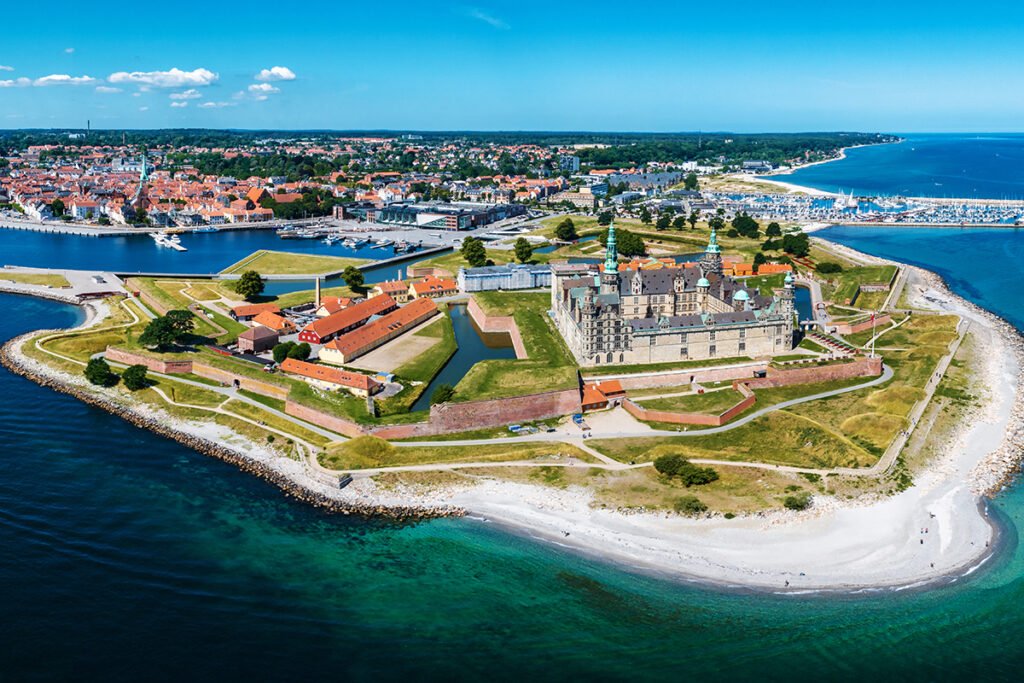
Today, Kronborg Castle is a UNESCO World Heritage Site, celebrated for its Renaissance architecture, dramatic coastal setting, and deep cultural legacy. Copper spires rise above thick bastions. Vast halls once hosted lavish royal banquets. Beneath the castle, shadowy tunnels hide centuries-old legends—including the sleeping warrior Holger Danske, said to awaken if Denmark ever faces danger.
Walking through Kronborg feels like stepping into a story where history, myth, and theater blend together. Whether you come for Shakespeare, architecture, or the sweeping views across the Øresund towards Sweden, one thing becomes clear within minutes: this castle was built to impress—and it still does.

Quick Facts About Kronborg Castle
📍 Location: Helsingør (Elsinore), Zealand, Denmark
🏗️ Construction Period: Original fortress (Krogen) built in the 1420s; transformed into Kronborg Castle between 1574 and 1585 under King Frederick II
🏰 Architectural Style: Dutch Renaissance with strong military fortifications
🎭 Famous For: Shakespeare’s Hamlet, the strategic control of the Øresund Strait, and the historic Sound Dues collected from passing ships
👑 Notable Figures: King Frederick II, King Christian IV, William Shakespeare (through the legendary setting of Hamlet)
🏆 UNESCO Status: Inscribed as a UNESCO World Heritage Site in 2000 for its outstanding Renaissance architecture and role in Baltic maritime history
🌐 Official Website: https://kronborg.dk

The Story Behind Kronborg Castle
Long before Kronborg Castle became a Renaissance showpiece or the legendary setting of Hamlet, this narrow stretch of water between Denmark and Sweden was already one of the most important shipping routes in Northern Europe. The Øresund Strait is only a few kilometers wide here. Almost every ship traveling between the North Sea and the Baltic via the Øresund had to pass through it. Whoever controlled this passage controlled trade across much of Northern Europe.
That strategic reality explains why a fortress first appeared on this spot in the early fifteenth century.
From Krogen Fortress to Royal Power
Around the 1420s, the Danish king Eric of Pomerania ordered the construction of a fortress called Krogen on the northeastern tip of the island of Zealand. The fortress served a clear purpose: enforce the Sound Dues, a toll charged to foreign ships sailing through the Øresund Strait.
Every vessel entering or leaving the Baltic Sea had to stop and pay the Danish crown. It was an incredibly lucrative system. Merchant ships carried timber, grain, metals, spices, and luxury goods across the Baltic trade routes. By taxing them, Denmark turned this narrow waterway into a reliable source of royal income.
The original Krogen fortress was practical rather than elegant. It was built for defense and surveillance, with strong walls and towers facing the sea. Cannons pointed toward passing ships, a clear reminder that ignoring the toll was not an option.
For more than a century, Krogen fulfilled its role as a military and customs stronghold. But in the sixteenth century, one ambitious king decided the fortress deserved something far more impressive.
Frederick II’s Renaissance Vision
When King Frederick II of Denmark came to power in the mid-1500s, Denmark was prosperous thanks in large part to the Sound Dues. The king wanted a fortress that reflected that wealth and authority.
In 1574, Frederick II ordered a complete transformation of the old Krogen fortress. Over the next decade, builders reshaped the site into a magnificent Renaissance castle. The new structure would be called Kronborg, meaning “Crown Castle.”
Dutch and Flemish architects were brought in to design the complex. Their influence is still visible in Kronborg’s elegant Renaissance style—symmetrical facades, tall towers with copper roofs, and decorative stonework.
Yet Kronborg was never meant to be just a palace. Frederick II wanted both beauty and power. Massive bastions and fortified ramparts surrounded the castle, turning it into one of the most formidable strongholds in Northern Europe. Cannons guarded the strait, and ships passing below the walls knew exactly who controlled the waters.
The castle also became a royal residence. Frederick II held lavish celebrations here, entertaining diplomats and nobles from across Europe. The Great Ballroom, one of the largest halls in Northern Europe at the time, hosted grand banquets, music, and dancing.
For a while, Kronborg represented the height of Danish power and wealth.
Then disaster struck.
The Devastating Fire of 1629
In 1629, a catastrophic fire swept through Kronborg Castle. Flames destroyed much of the interior, including royal apartments and decorative features.
Only the castle chapel survived largely intact.
The Danish king at the time, Christian IV, quickly ordered the castle rebuilt. Christian IV was one of Denmark’s most energetic rulers, responsible for major building projects across the kingdom.
Reconstruction began almost immediately. The exterior appearance of Kronborg was carefully restored so the castle would maintain its powerful Renaissance character. Inside, however, some rooms were redesigned according to the styles of the time.
By the mid-seventeenth century, Kronborg was once again standing proudly above the Øresund Strait.
But another conflict soon threatened its control.
Swedish Occupation
During the Dano-Swedish wars of the seventeenth century, Kronborg’s strategic location made it a major military target.
In 1658, Swedish forces successfully captured the fortress. Controlling Kronborg meant controlling the strait—and the Sound Dues that came with it.
The Swedish occupation lasted about two years. When Danish forces eventually regained control, they quickly strengthened the castle’s defenses. Additional fortifications and bastions were added around the outer ramparts to make future attacks more difficult.
Even so, the era of Kronborg as a royal residence was slowly fading.

From Royal Palace to Military Barracks
By the eighteenth century, Danish kings were spending less time at Kronborg. The castle gradually shifted from royal residence to military stronghold.
For long periods, Kronborg served as a barracks for soldiers. Parts of the castle were also used as a prison. Conditions in some sections were harsh, especially in the underground casemates beneath the fortress.
The Sound Dues continued to bring revenue to Denmark for centuries, but international pressure eventually forced the country to abolish them in 1857. With that decision, Kronborg lost the economic role that had once made it so powerful.
The fortress remained under military control until the early twentieth century.
In 1923, the Danish army finally left Kronborg. The castle was restored and opened to the public as a historic monument.
Its story, however, was about to take on an entirely different kind of fame.
Kronborg and Shakespeare’s Hamlet
Although William Shakespeare never visited Denmark, he immortalized Kronborg as Elsinore, the setting for one of the most famous plays ever written.
In Hamlet, the castle becomes Elsinore, the royal court of Denmark, where Prince Hamlet wrestles with betrayal, revenge, and the ghost of his murdered father.
Scholars still debate how Shakespeare learned about Kronborg. English actors were known to travel through Denmark in the late sixteenth century, and stories of the impressive castle likely spread across Europe.
Whatever the source, Shakespeare turned Kronborg into one of literature’s most recognizable castles.
Today, visitors often walk through the halls imagining scenes from the play. During the summer months, the castle even hosts live performances of Hamlet in its courtyards and halls.
It’s one of the rare places where history and literature blend so naturally.
A UNESCO World Heritage Site
In 2000, Kronborg Castle was officially recognized as a UNESCO World Heritage Site. The designation highlights two key reasons for its global importance.
First, Kronborg is one of the finest examples of Renaissance castle architecture in Northern Europe.
Second, it played a major role in the economic and political history of the Baltic Sea region through the Sound Dues system.
Today, Kronborg attracts visitors from around the world. Some come for Shakespeare. Others come for Danish history, dramatic architecture, or the sweeping sea views from the ramparts.
But almost everyone leaves with the same impression.
This castle didn’t just watch history pass by on the waves below. It helped shape it.

Architecture & Design
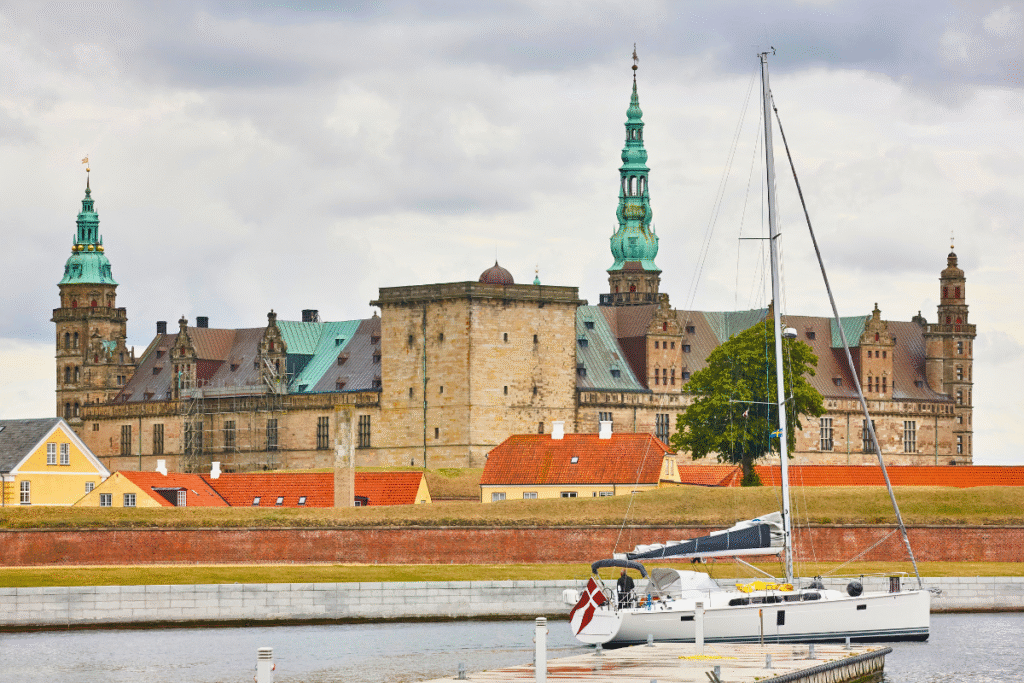
The first thing that strikes you about Kronborg Castle is its dramatic setting. The fortress stands at the northeastern tip of Zealand, where Denmark almost touches Sweden across the Øresund Strait. Ships glide past just a few hundred meters from the castle walls. From the ramparts, the Swedish city of Helsingborg is clearly visible across the water.
This location wasn’t chosen for beauty alone. Kronborg was designed to dominate the narrow passage between the North Sea and the Baltic. Its architecture blends elegant Renaissance design with the heavy defensive structures needed to control one of Europe’s most important trade routes.
A Renaissance Castle Built for Power
Kronborg’s current appearance dates largely to the transformation ordered by King Frederick II in the late sixteenth century. The architects drew inspiration from Dutch Renaissance architecture, which was spreading across Northern Europe at the time.
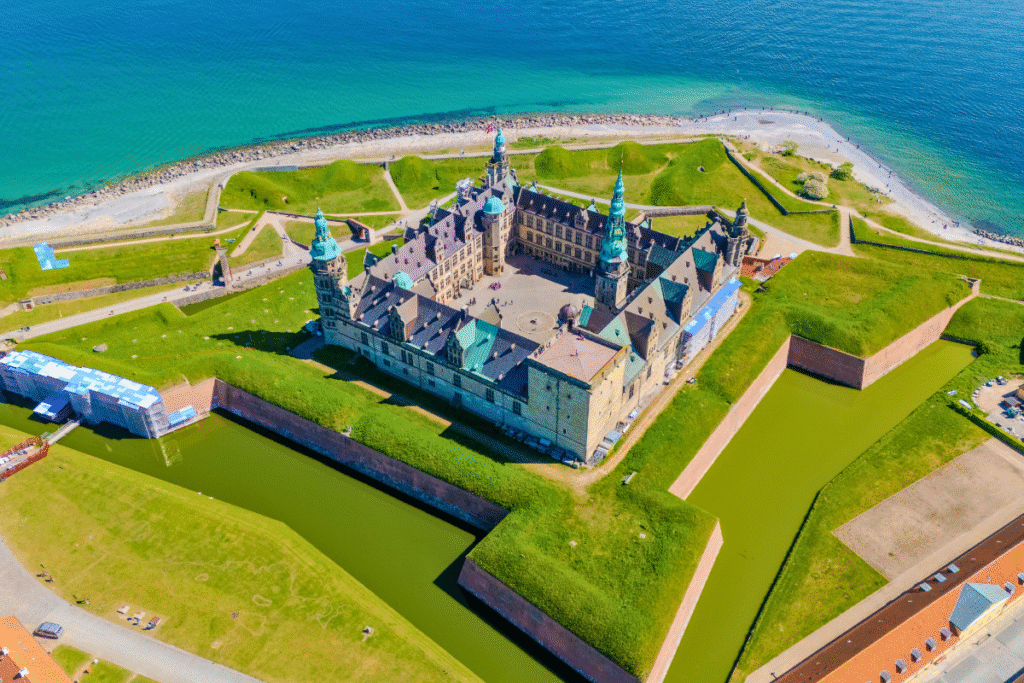
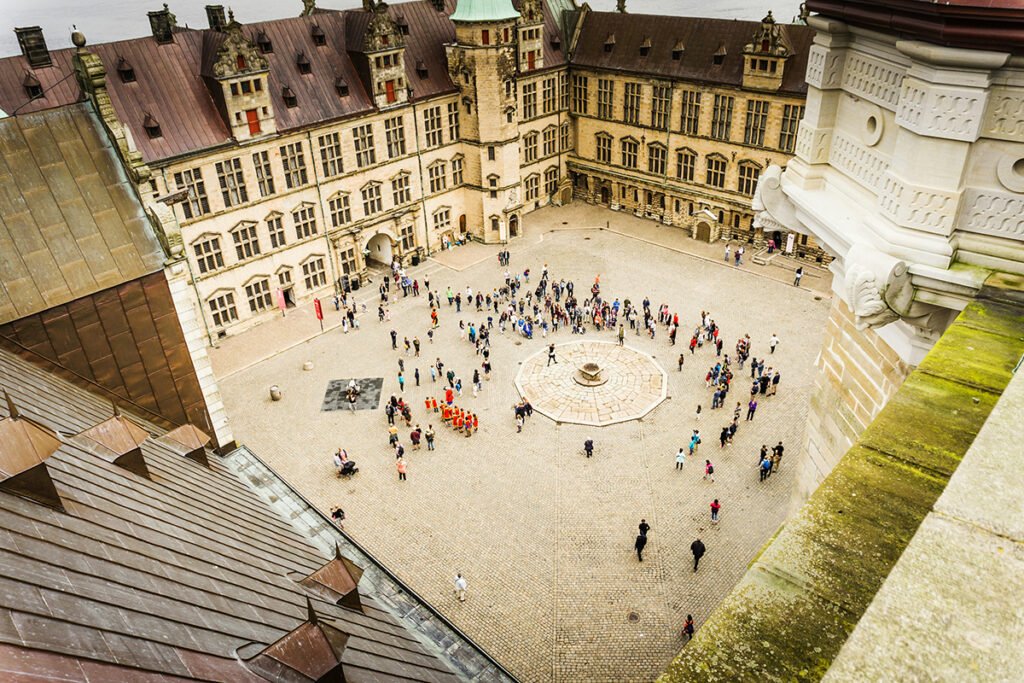
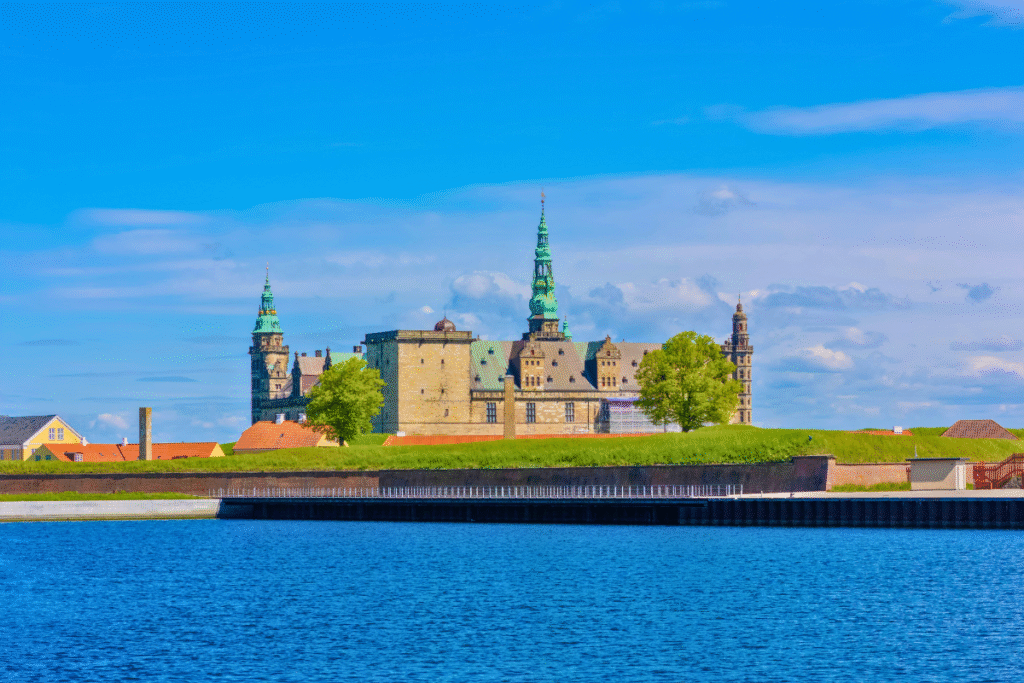
From a distance, the castle looks almost symmetrical. Four wings form a square around a central courtyard. Tall towers rise at the corners, their copper roofs glowing green after centuries of weather and sea air.
Decorative stonework frames the windows and entrances. The façades feature finely carved sandstone details that contrast with the darker stone walls. Even though Kronborg was a fortress, Frederick II clearly wanted it to impress visitors and foreign diplomats.
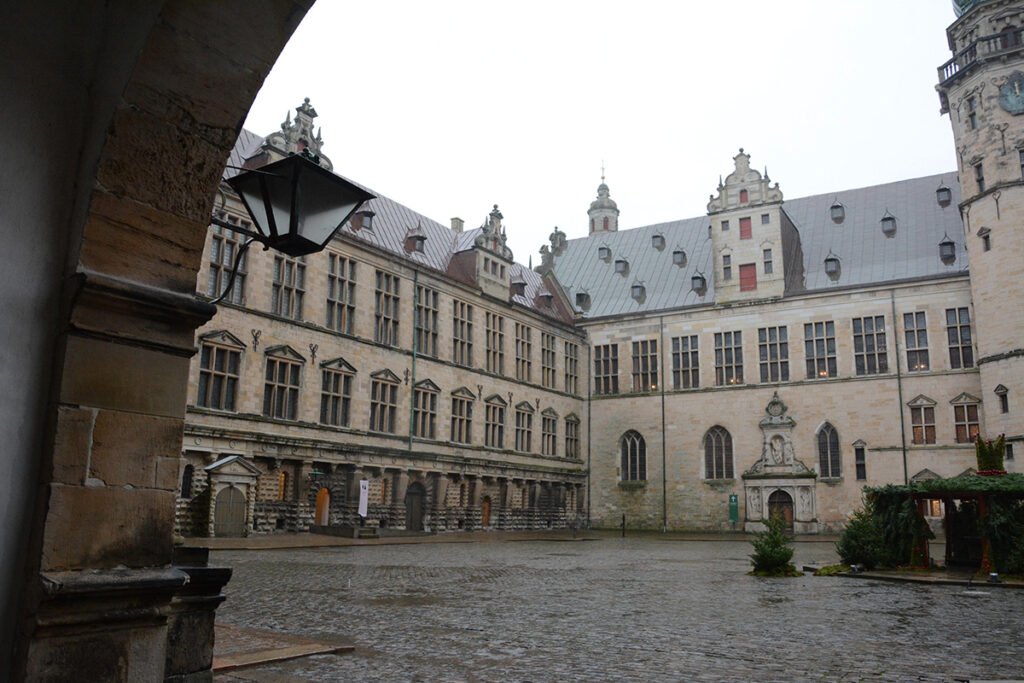
Walking through the outer gates into the courtyard, the balance between elegance and strength becomes clear. The buildings are graceful, but they stand within a powerful defensive system designed to resist attack.
The Bastions and Ramparts
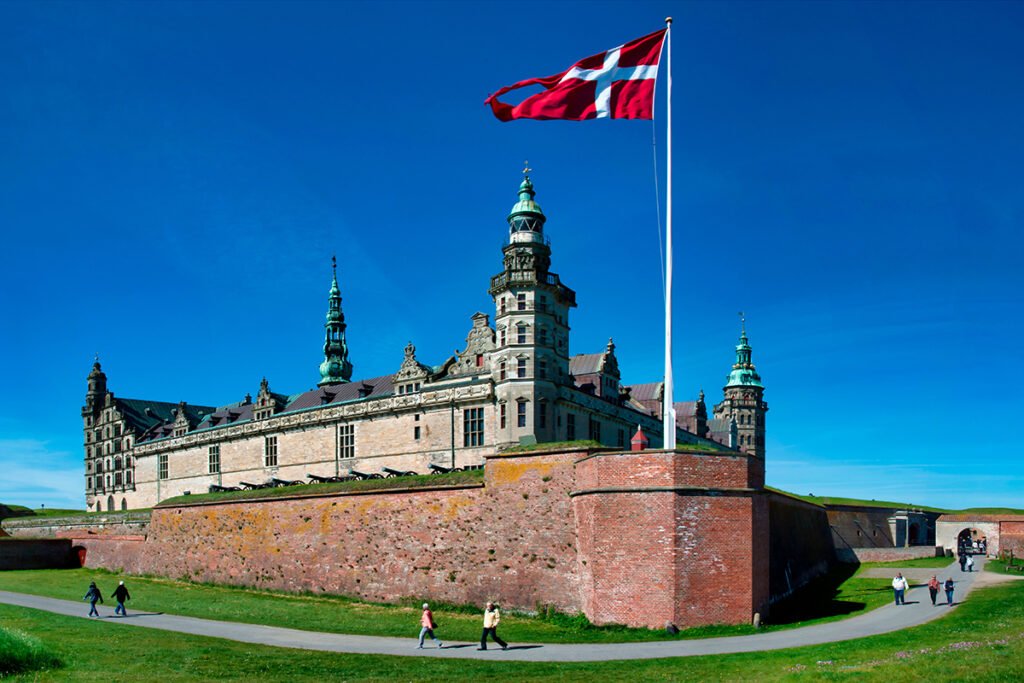
The castle itself sits inside a ring of massive earthworks and bastions. These triangular defensive structures were cutting-edge military engineering in the sixteenth century. Their angled design allowed cannons to fire along the walls, preventing enemies from approaching safely.
Surrounding the bastions are deep moats and wide grassy ramparts. Soldiers once patrolled these walls while keeping watch over the busy strait below.
Today, the ramparts offer some of the best views in Denmark. Walking along them, you can see ships moving between the Baltic Sea and the North Sea—just as sailors did centuries ago when they stopped here to pay the Sound Dues.
The wind can be strong along the walls, especially on colder days. But the sweeping coastal scenery makes the walk unforgettable.
The Great Ballroom
Inside the castle, one room stands above all the others: the Great Ballroom, historically known as the Knights' Hall (Riddersalen in Danish).
Stretching about 62 meters (203 feet) long, it was once the largest hall in Northern Europe. Frederick II built it to host royal banquets, celebrations, and diplomatic events.
When you step inside, the scale of the room is striking. The wooden ceiling arches high overhead, supported by massive beams. Long windows allow natural light to pour across the polished floors.
Imagine the atmosphere here in the late sixteenth century: nobles in elaborate clothing, music echoing across the hall, tables covered with extravagant feasts.
Although the room was damaged during the 1629 fire, it was carefully restored during reconstruction. Today, it still feels grand enough to host a royal celebration.
The Castle Chapel
One of the most remarkable parts of Kronborg is the castle chapel, which survived the devastating fire of 1629 almost untouched.
The chapel’s interior is beautifully preserved. Wooden carvings cover the walls and galleries, many of them dating from the late Renaissance period. The richly decorated pulpit and altar show the craftsmanship of the era.
Unlike many parts of the castle that were rebuilt or redesigned over the centuries, the chapel offers a rare glimpse of what Kronborg looked like during Frederick II’s reign.
Standing inside the chapel, the atmosphere feels calm and almost intimate compared to the fortress outside.
The Royal Chambers
The upper floors of the castle contain rooms that once served as royal apartments and reception halls.
Although much of the original decoration was lost in the fire, many chambers have been restored or furnished to reflect their historic character.
Visitors move through rooms that once hosted kings, queens, ambassadors, and nobles. Portraits, tapestries, and period furnishings help recreate the atmosphere of the castle’s royal past.
Some exhibitions also explore the daily life of the court and the role Kronborg played in Denmark’s political power.
The Underground Casemates
Beneath the elegant halls lies a very different world.
Deep under Kronborg Castle stretches a network of dark stone tunnels known as the casemates. These underground chambers once housed soldiers during wartime and served as storage for weapons and supplies.
The air down here is cool and damp. Dim lighting reveals thick stone pillars supporting the castle above.
In the shadows of these tunnels sits one of Denmark’s most famous legends: the statue of Holger Danske.
According to Danish folklore, Holger Danske is a legendary warrior who sleeps beneath Kronborg Castle. If Denmark ever faces great danger, he will awaken to defend the nation.
The statue shows him seated with his sword, resting but ready.
Children often love this part of the castle. Adults, too, sometimes pause quietly beside the statue, imagining the centuries of stories that surround it.
A Castle That Blends Beauty and Strength
What makes Kronborg so fascinating is the balance between elegance and military power.
From the outside, it appears as a formidable fortress guarding a vital sea passage. Inside, it reveals grand halls, royal chambers, and artistic details worthy of a Renaissance palace.
Few castles in Europe combine these two identities so effectively.
And when you step back onto the ramparts, looking out across the narrow strait where ships still pass every day, it’s easy to see why Kronborg once held such extraordinary importance.
Visiting Kronborg Castle
Kronborg Castle is one of the easiest major historic castles in Northern Europe to visit. It sits just outside the charming coastal town of Helsingør, about 45 minutes north of Copenhagen. The castle’s dramatic location by the sea, combined with its connection to Shakespeare’s Hamlet, makes it a popular day trip for travelers exploring Denmark.
But Kronborg isn’t just a place to admire from the outside. The castle invites visitors to explore its halls, underground tunnels, ramparts, and courtyards. With a bit of planning, you can easily spend several hours wandering through its history.
Here’s what you need to know before visiting.

🛣️ How to Get There
The easiest way to reach Kronborg Castle is from Copenhagen, Denmark’s capital.
By Train
Trains run frequently from Copenhagen Central Station to Helsingør. The journey takes about 45–50 minutes, and the trains are comfortable and reliable.
Once you arrive at Helsingør station, the castle is only about a 10–15 minute walk away. The route takes you past the harbor and along the waterfront, with Kronborg’s towers gradually rising into view.
It’s a pleasant walk and a great introduction to the town.
By Car
If you’re driving, the trip from Copenhagen takes around 45 minutes to an hour, depending on traffic. Parking is available near the castle grounds, though spaces can fill quickly during busy summer days.
By Ferry from Sweden
Because the castle sits right across the strait from Sweden, some visitors combine their trip with a short international crossing.
Ferries travel regularly between Helsingør (Denmark) and Helsingborg (Sweden). The crossing takes about 20 minutes, making Kronborg an easy stop for travelers exploring both countries.
Standing on the ferry deck and watching Kronborg grow larger as you approach the Danish coast is a memorable way to arrive.
🎟️ Entry & Tours
Visitors can explore Kronborg Castle in several ways. A standard ticket gives access to most areas of the castle complex, including the royal chambers, chapel, casemates, and exhibitions.
Inside the castle, you’ll find displays that explain its history, its role in controlling Baltic trade, and its connection to Shakespeare’s Hamlet. Some rooms feature period furnishings and artifacts, while others focus on storytelling and interpretation.
One of the most exciting parts of the visit is exploring the casemates, the underground tunnels beneath the fortress. These dimly lit corridors once sheltered soldiers during sieges. Today, they house the statue of Holger Danske, the legendary Danish hero said to awaken if Denmark is threatened.
Guided tours are sometimes available and can add extra context about the castle’s architecture, royal life, and military history. During certain seasons, special tours focus specifically on Shakespeare and Hamlet, exploring how Kronborg became the inspiration for Elsinore in the famous play.
For the most up-to-date information on opening hours, events, and ticket prices, it’s best to check the official Kronborg Castle website before your visit.
📅 Best Time to Visit
Kronborg Castle is open year-round, but the experience can feel very different depending on the season.
Summer (June–August) is the busiest time to visit. The weather is warm, the castle hosts cultural events, and the nearby town of Helsingør is lively with cafés and outdoor seating. Summer is also when the famous Hamlet performances often take place in the castle courtyard.
These theatrical productions are a unique experience. Watching Shakespeare’s tragedy performed inside the real-world setting of Elsinore feels almost surreal.
However, summer also brings crowds. If you visit during this season, arriving early in the morning helps you enjoy the castle before tour groups arrive.
Spring and early autumn can be ideal. The weather is still pleasant, but the crowds are smaller. Walking along the ramparts with the sea breeze and fewer visitors can make the experience feel more peaceful.
Winter brings a completely different atmosphere. The wind off the Baltic Sea can be sharp, and the gray skies often create a dramatic setting around the fortress. Fewer tourists visit during these months, which means you may have parts of the castle almost to yourself.
If you enjoy moody coastal scenery, winter visits can feel particularly memorable.
♿ Accessibility & Practical Tips
Kronborg Castle is an old fortress, and like many historic sites, it includes uneven surfaces, staircases, and cobblestone paths. That said, the site still offers a rewarding visit with some preparation.
Here are a few tips that make the experience smoother:
Wear comfortable shoes. You’ll likely walk across cobblestones, climb stairs, and explore large sections of the castle.
Bring a jacket or windbreaker. The ramparts are exposed to sea winds, even in summer.
Plan enough time. Most visitors spend two to three hours exploring the castle, though history enthusiasts may stay longer.
Don’t miss the casemates. The underground tunnels are one of the most atmospheric parts of Kronborg.
Walk the ramparts. The views across the Øresund Strait are spectacular, especially on clear days.
Take time in the courtyard. Standing in the center of the castle complex offers a great perspective on its Renaissance design.
Photography lovers will find plenty of inspiration here. The towers, sea views, and dramatic sky often combine to create striking images.
Experiencing Kronborg Beyond the Museum
What makes Kronborg special is that it doesn’t feel like a static museum. The castle still hosts events, exhibitions, and performances throughout the year.
One of the most famous events is the annual Shakespeare festival, where actors perform Hamlet and other plays within the castle walls. Hearing Shakespeare’s words echo through Kronborg’s courtyards is something many travelers remember for years.
The castle also hosts cultural exhibitions and historical displays that change periodically, offering fresh perspectives on Danish history and maritime trade.
Even without special events, simply walking the grounds can feel like stepping back in time. The wide ramparts, sea breeze, and distant ships passing through the strait all help bring the castle’s story to life.
It’s easy to imagine sailors centuries ago watching the fortress nervously as they prepared to pay their tolls.
A Visit That Combines History, Literature, and Scenery
Few castles offer such a rich combination of experiences.
At Kronborg, you can explore a Renaissance royal residence, descend into medieval tunnels, walk along defensive walls that once guarded a major trade route, and stand inside the legendary setting of Shakespeare’s Hamlet.
Add the coastal scenery of the Øresund Strait and the charm of nearby Helsingør, and the result is a destination that appeals to historians, literature lovers, photographers, and casual travelers alike.
Whether you spend a few hours here or make a full day of it, Kronborg Castle leaves a strong impression.
It’s not just a historic monument.
It’s a place where the stories of Denmark, Europe, and Shakespeare all meet at the edge of the sea.
Nearby Attractions
Kronborg Castle may be the star of Helsingør, but the surrounding area offers plenty more to explore. The town itself is charming and walkable, and the nearby coastline is dotted with museums, historic sites, and even another impressive royal castle just a short distance away.
If you’re visiting Kronborg, it’s well worth setting aside extra time to discover a few of these nearby places.
Helsingør Old Town
Just a short walk from the castle lies Helsingør’s historic center, a compact area of cobbled streets, colorful houses, and lively cafés.
For centuries, this town thrived thanks to the Sound Dues collected at Kronborg. Merchants, sailors, and diplomats passed through regularly, and the town grew wealthy from the traffic.
Today, the old town still reflects that maritime heritage. You’ll find small boutiques, bakeries, and traditional Danish restaurants tucked between historic buildings. The main square, Axeltorv, is a great place to sit with a coffee and watch daily life unfold.
Walking these streets after visiting Kronborg helps place the castle in its historical context. This town once revolved around the fortress and the ships passing its walls.
M/S Maritime Museum of Denmark
Right beside Kronborg Castle sits one of Denmark’s most impressive modern museums: the M/S Maritime Museum of Denmark.
Designed by renowned architect Bjarke Ingels, the museum is built underground inside a former dry dock. Its angular walkways and glass walls create a striking contrast with the historic castle nearby.
Inside, the exhibitions explore Denmark’s long relationship with the sea—from Viking ships to global shipping routes. Interactive displays and ship models make it an engaging stop even for visitors who normally skip maritime museums.
Because it’s located just a few minutes from Kronborg’s entrance, many travelers combine both attractions in the same visit.
Helsingør–Helsingborg Ferry Crossing
One of the simplest and most enjoyable detours is the short ferry ride across the Øresund Strait to Helsingborg, Sweden.
The crossing takes about 20 minutes, and ferries run frequently throughout the day. From the deck, you get fantastic views of Kronborg Castle rising above the Danish coastline.
Helsingborg itself is a pleasant coastal city with cafés, seaside promenades, and historic landmarks. If you enjoy exploring two countries in a single day, this quick trip makes it possible.
Fredensborg Palace
About 30 minutes south of Helsingør lies Fredensborg Palace, one of the Danish royal family’s official residences.
Built in the early eighteenth century, the palace was designed in an elegant Baroque style and is often used by the Danish royal family for official events and receptions.
While the palace interior is only occasionally open to visitors, the Fredensborg Palace Gardens are spectacular and usually accessible. The gardens feature long tree-lined avenues, sculptures, lakes, and sweeping lawns.
If you enjoy royal residences and landscaped gardens, Fredensborg makes a perfect addition to a Kronborg visit.
Louisiana Museum of Modern Art
Another excellent stop nearby is the Louisiana Museum of Modern Art, located about 25 minutes south of Helsingør along the coast.
This museum is widely considered one of the best modern art museums in Europe. Its galleries showcase works by major international artists, while large windows frame views of the Øresund Strait and sculpture gardens.
Even visitors who don’t normally prioritize art museums often enjoy Louisiana because of its peaceful setting and stunning seaside views.
Gurre Castle Ruins
For travelers interested in medieval history, the ruins of Gurre Castle offer a quieter but intriguing detour.
Located about 15 minutes inland from Helsingør, Gurre Castle dates back to the twelfth century and was once a royal residence before falling into ruin.
Today, only the earthworks and stone remains survive, surrounded by forest and lakes. Walking through the peaceful landscape gives a glimpse of Denmark’s earlier castle history—long before Kronborg rose beside the sea.
Making a Full Day Around Kronborg
With Kronborg Castle, Helsingør’s historic town center, the Maritime Museum, nearby palaces, and even a quick trip to Sweden, this corner of Denmark offers more than enough to fill a full day—or longer.
Most visitors come for Shakespeare’s legendary Elsinore.
But many leave discovering that this stretch of coast holds far more history, culture, and scenery than they expected.
FAQ about Kronborg Castle
Is Kronborg Castle really the castle from Hamlet?
Yes—at least in literature. Kronborg Castle is widely accepted as the inspiration for Elsinore, the royal castle in William Shakespeare’s Hamlet. Although Shakespeare likely never visited Denmark, the castle was well known across Europe in the late sixteenth century. Today, Kronborg embraces this connection, and performances of Hamlet are often staged within the castle walls.
How long does it take to visit Kronborg Castle?
Most visitors spend two to three hours exploring Kronborg Castle. This allows enough time to see the royal chambers, the Great Ballroom, the chapel, the underground casemates, and the ramparts. If you plan to visit the nearby Maritime Museum or attend a guided tour or performance, you may want to allow half a day.
Can you visit the underground tunnels at Kronborg Castle?
Yes. One of the highlights of the castle is the casemates, the underground tunnels beneath Kronborg. These dimly lit chambers were once used to shelter soldiers during wartime. They also house the statue of Holger Danske, the legendary Danish hero said to awaken if Denmark ever faces danger.
Is Kronborg Castle worth visiting from Copenhagen?
Absolutely. Kronborg Castle is one of the best day trips from Copenhagen. The train ride to Helsingør takes about 45 minutes, and the castle is only a short walk from the station. Its history, architecture, and connection to Shakespeare make it one of Denmark’s most famous landmarks.
What is the best time of year to visit Kronborg Castle?
Late spring, summer, and early autumn are ideal times to visit. Summer offers warm weather and cultural events such as Hamlet performances in the castle courtyard. Spring and autumn are quieter and can feel more relaxed. Winter visits are also possible and can be atmospheric, though the coastal winds can be strong.
Can you see Sweden from Kronborg Castle?
Yes. From the castle ramparts, you can clearly see Helsingborg in Sweden across the Øresund Strait. The distance between the two countries here is only about 4 kilometers (2.5 miles). Ferries travel regularly between the two cities, and the crossing takes around 20 minutes.
Why was Kronborg Castle built in such a strategic location?
Kronborg Castle was built to control the Øresund Strait, the narrow waterway connecting the North Sea and the Baltic Sea. For centuries, Denmark collected tolls known as the Sound Dues from ships passing through the strait. This system generated enormous wealth for the Danish crown.
Are guided tours available at Kronborg Castle?
Yes. Guided tours are sometimes available and can provide deeper insights into the castle’s history, architecture, and role in maritime trade. Special themed tours may focus on Shakespeare and the legend of Hamlet. Availability varies by season, so it’s worth checking the castle’s official website before visiting.
Is Kronborg Castle a UNESCO World Heritage Site?
Yes. Kronborg Castle was designated a UNESCO World Heritage Site in 2000. The recognition highlights its importance as a Renaissance fortress and its historical role in controlling Baltic trade through the Øresund Strait.
What other attractions are near Kronborg Castle?
Several excellent attractions are nearby, including Helsingør Old Town, the Maritime Museum of Denmark, Fredensborg Palace, and the Louisiana Museum of Modern Art. Visitors can also take a short ferry across the strait to explore Helsingborg in Sweden.
Final Thoughts
Standing on the ramparts of Kronborg Castle, with the Baltic winds blowing across the Øresund Strait, it’s easy to understand why this fortress became one of Europe’s most legendary castles. Few places combine strategic history, Renaissance architecture, and literary fame quite like this.
For centuries, Kronborg controlled one of the most important maritime gateways in Northern Europe. Merchant ships passed beneath its cannons. Kings hosted grand celebrations inside its halls. Soldiers guarded its walls during wars that shaped the region. And somewhere along the way, Shakespeare turned the castle into the unforgettable setting of Hamlet.
Today, Kronborg remains just as captivating. Visitors can wander through royal chambers, stand inside the largest Renaissance ballrooms in Northern Europe, explore the dark casemates beneath the fortress, and look out across the sea toward Sweden.
It’s a place where history feels alive.
💬 If you’ve already visited Kronborg Castle, we’d love to hear about your experience. Did the castle feel as dramatic as you imagined? Did you explore the underground tunnels or catch a glimpse of Sweden from the ramparts? Share your thoughts in the comments and help other travelers plan their visit.
👉 And if you’re planning more castle adventures, don’t miss our other guides, including “25 Best Castles to Visit in Europe: Iconic & Hidden Gems” and “The 25 Most Famous Castles in the World: Iconic Fortresses You Must See.” You might just discover your next unforgettable fortress.
🏰✨ Thanks for reading. If this guide helped you plan your visit to Kronborg Castle, follow along for more in-depth castle histories and practical travel insights. You can also follow us, CastleQuest Chronicles, on Instagram, Facebook, Pinterest, YouTube, TikTok, and X.