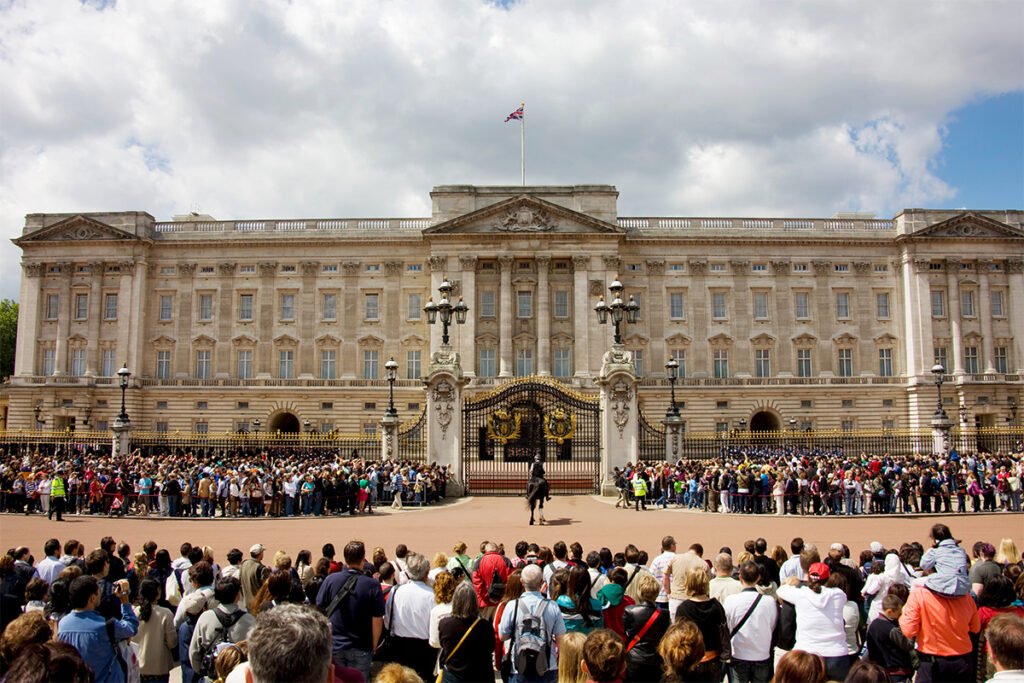
It’s just before 11 a.m. on a summer morning. The crowd along the gates grows thicker by the minute. Cameras lift. A brass band strikes its first sharp note. Then the scarlet coats and towering bearskin hats appear, marching in perfect rhythm across the forecourt.
Welcome to Buckingham Palace.
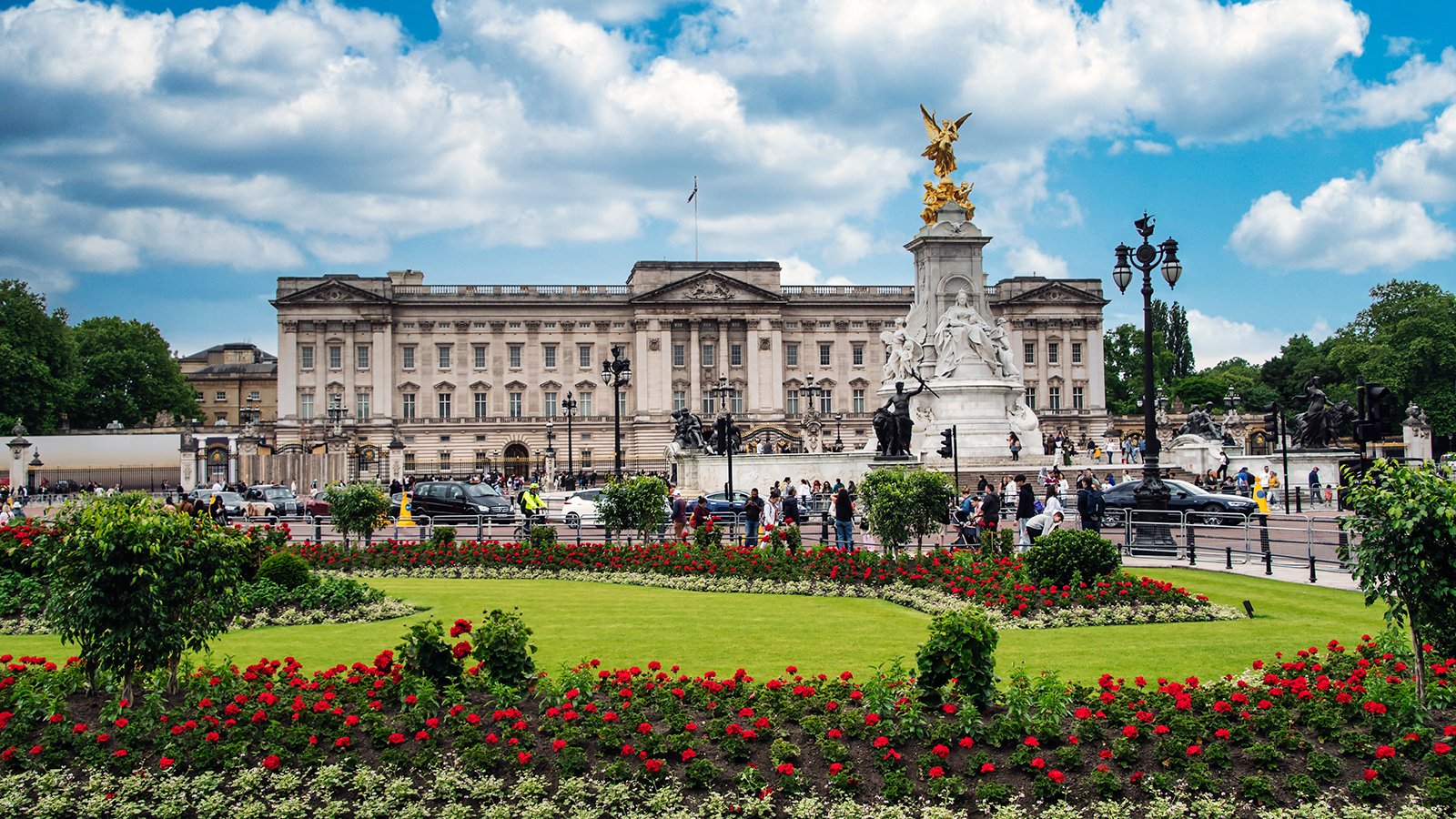
Even if you’ve seen it in photographs a hundred times, standing here feels different. The façade stretches wide and pale against the London sky. The famous balcony — the one where generations of royals have waved to cheering crowds — sits quietly above the gates. And behind those windows? A working royal residence, still at the center of British public life.
Buckingham Palace isn’t a medieval fortress with battlements and moats. It’s something else entirely. A symbol. A stage. A home. It has witnessed wartime bombings, royal weddings, jubilees, state visits, and moments that shaped modern Britain. For many travelers, it’s the first image that comes to mind when they think of London.
But here’s the real question: is it worth more than a quick photo stop?
If you plan it right, absolutely.
From the glittering State Rooms open during summer to the spectacle of the Changing of the Guard, visiting Buckingham Palace can be one of the highlights of a London trip. And even if you never step inside, the experience of standing before it — hearing the band, watching the ceremony, walking through nearby St. James’s Park — tells you something about Britain’s long royal story.
Let’s take a closer look at what makes Buckingham Palace so enduring — and how to make the most of your visit.

Quick Facts About Buckingham Palace
📍 Location: London, England, United Kingdom
🏗️ Construction Period: Originally built as Buckingham House in 1703; expanded into a palace in the 1820s–1830s
🏰 Architectural Style: Neoclassical (with earlier Baroque origins)
🎭 Famous For: Official London residence of the British monarch, Changing of the Guard, royal balcony appearances
👑 Notable Figures: George III, George IV, Queen Victoria, Elizabeth II, Charles III
🏆 UNESCO Status: Situated within the buffer zone of the Palace of Westminster and Westminster Abbey UNESCO World Heritage Site (inscribed 1987)
🌐 Official Website: Royal Collection Trust
A few numbers help put things in perspective.
Buckingham Palace has 775 rooms. That includes 19 State Rooms, 52 royal and guest bedrooms, 188 staff bedrooms, 92 offices, and 78 bathrooms. The garden behind the palace covers about 39 acres, making it the largest private garden in London.
And yes — it’s still a working palace. It hosts state banquets, diplomatic receptions, investiture ceremonies, and official events throughout the year.
When the Royal Standard flag flies above the roof, the monarch is in residence. If the Union Flag is raised instead, the King is not at the palace.
Simple details like that turn a quick glance upward into something more meaningful.

History & Royal Stories: From Townhouse to Throne
Buckingham Palace didn’t begin as a palace at all.
In 1703, it was simply Buckingham House, a large London townhouse built for the Duke of Buckingham. Comfortable. Prestigious. But far from royal. At the time, Britain’s monarchs preferred other residences, including St. James’s Palace.
Everything changed in 1761.
That year, King George III purchased Buckingham House as a private residence for his wife, Queen Charlotte. It became known as “The Queen’s House,” a quieter domestic retreat away from court life. Fourteen of their fifteen children were born there. The building still felt more like a grand home than a seat of power.
The real transformation came with George IV.
When he became king in 1820, George IV had bigger ambitions. He wanted something that reflected prestige, confidence, and royal grandeur. He hired architect John Nash to redesign the house into a palace worthy of Europe’s monarchies. Nash expanded the structure, added opulent interiors, and reimagined it in a grand Neoclassical style.
But there was a problem.
The costs spiraled. Dramatically.
Nash was eventually dismissed for overspending, and architect Edward Blore took over to complete the project. By the 1830s, Buckingham Palace had evolved into something recognizably close to what we see today.
Then came Queen Victoria.
When Victoria ascended the throne in 1837, she made Buckingham Palace the official London residence of the British monarch. That decision marked a turning point. From that moment on, the palace was no longer just a royal address. It became the symbolic heart of the monarchy.
Victoria married Prince Albert in 1840, and the palace quickly proved too small for their growing family and expanding court. Additional wings were constructed, including the famous east front — the façade facing The Mall, where the iconic balcony sits today.
That balcony would later become one of the most recognizable stages in the world.
It first gained prominence in the mid-19th century, but its emotional weight grew during the 20th century. After World War I, King George V and Queen Mary appeared there to greet crowds. But it was during World War II that the balcony became a symbol of resilience.
Buckingham Palace was bombed nine times during the Blitz.
In 1940, a bomb destroyed the palace chapel. King George VI and Queen Elizabeth (later known as the Queen Mother) remained in London throughout the war, refusing to leave despite the danger. After one bombing, the Queen Mother famously remarked that she was glad the palace had been hit. It allowed her, she said, to “look the East End in the face.”
That moment strengthened the bond between monarchy and public.
Then came 1945.
On May 8 — Victory in Europe Day — King George VI, Queen Elizabeth, and their daughters Elizabeth and Margaret appeared on the balcony to celebrate the end of the war in Europe. The crowd below surged with relief and joy. A young Princess Elizabeth later slipped anonymously into the cheering masses with her sister, wanting to experience the celebration firsthand.
Few places capture public emotion quite like that balcony.
Decades later, it would host royal weddings and jubilees that drew millions. In 1981, crowds gathered for the wedding of Prince Charles and Lady Diana Spencer. In 2011, Prince William and Catherine Middleton shared their balcony kiss here. In 2022, Queen Elizabeth II marked her Platinum Jubilee with appearances that underscored her 70-year reign.
Elizabeth II’s relationship with Buckingham Palace defined an era.
For more than seven decades, the palace was both her office and backdrop. State banquets in the glittering Ballroom welcomed presidents and monarchs from around the world. Weekly audiences with prime ministers took place within its walls. Investiture ceremonies honored citizens for their achievements.
Yet behind the pageantry, it remained a working institution.
Staff lived and worked inside. Kitchens prepared thousands of meals annually. Garden parties hosted up to 8,000 guests at a time. The palace operated like a small, self-contained community — part ceremonial stage, part administrative hub.
In September 2022, when Queen Elizabeth II passed away, Buckingham Palace once again became the focal point of national mourning. Flowers filled the gates. Crowds gathered silently in front of the façade. The palace, steady and unchanged, stood as it had through generations of joy and grief.
Today, under King Charles III, Buckingham Palace continues its role as the administrative headquarters of the monarchy. It hosts state visits, diplomatic receptions, and formal ceremonies. The Royal Standard still rises above the roof when the King is in residence.
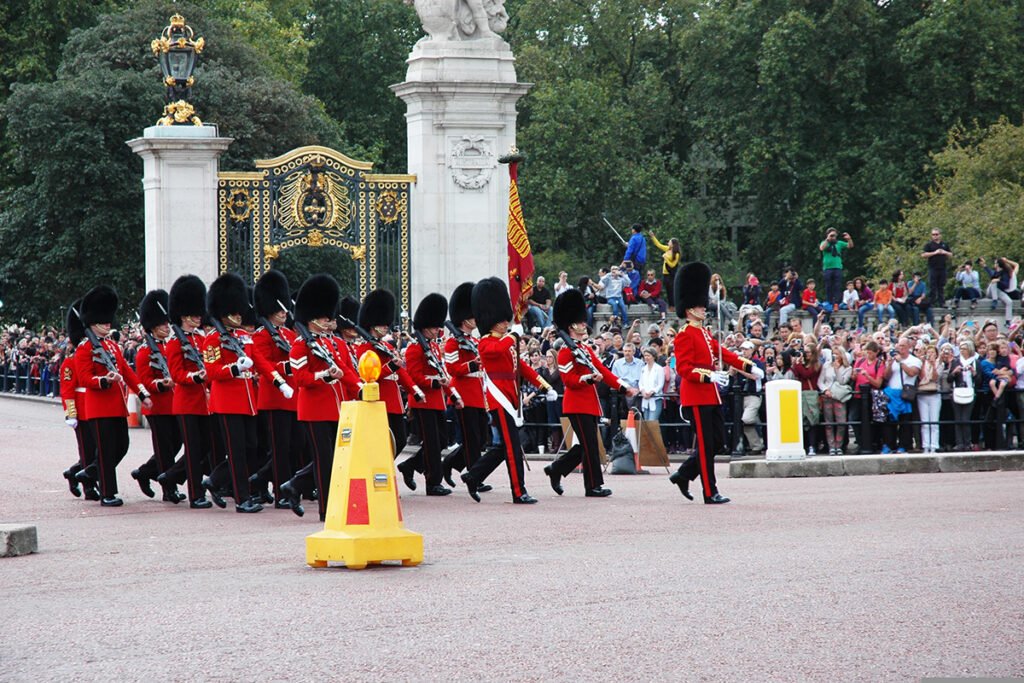
But the palace has evolved in other ways, too.
For decades, its interiors were closed to the public. That changed in 1993, when the State Rooms were opened during summer months to help fund repairs to Windsor Castle after a devastating fire. The public response was immediate and enthusiastic. Since then, visiting Buckingham Palace has become one of London’s most sought-after seasonal experiences.
This blend of private residence and public symbol makes Buckingham Palace unique.
It isn’t a medieval stronghold built for defense. It doesn’t sit atop a rocky cliff or loom over a battlefield. Instead, it reflects something different — the steady continuity of a constitutional monarchy adapting to modern life.
And perhaps that’s why it feels so powerful.
Stand in front of the gates long enough, and you’ll see tourists snapping photos, school groups pointing upward, and Londoners walking past as if it’s simply part of the cityscape. But look closer.
You’re standing before three centuries of transformation. From townhouse to palace. From private home to global symbol. From wartime target to stage for royal celebration.
Buckingham Palace has never been static. It has grown, expanded, survived, and adapted.
And that story continues every single day.

Architecture & Interior Design: Grandeur Without Battlements
If you’re expecting towers, turrets, or a medieval moat, Buckingham Palace might surprise you.
This isn’t a fortress. It’s a statement in symmetry.
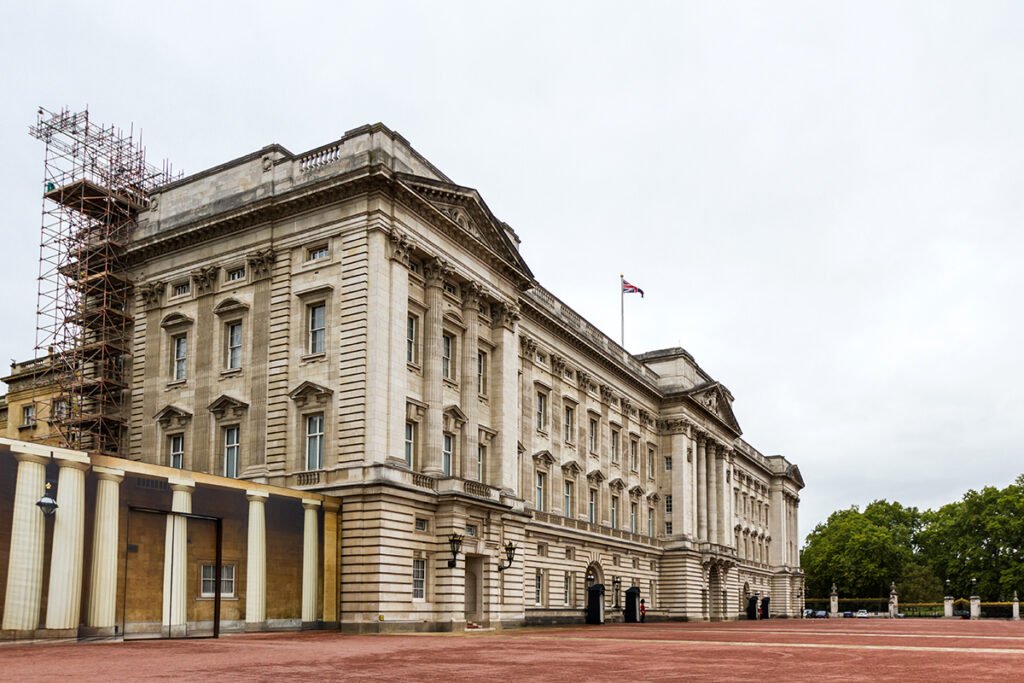
The exterior you see today — the pale Portland stone façade facing The Mall — dates largely from 1913, when architect Sir Aston Webb redesigned the east front to create the clean, balanced look we recognize now. It’s Neoclassical in style. Straight lines. Measured proportions. Columns and pilasters instead of battlements.
The effect is calm rather than dramatic.
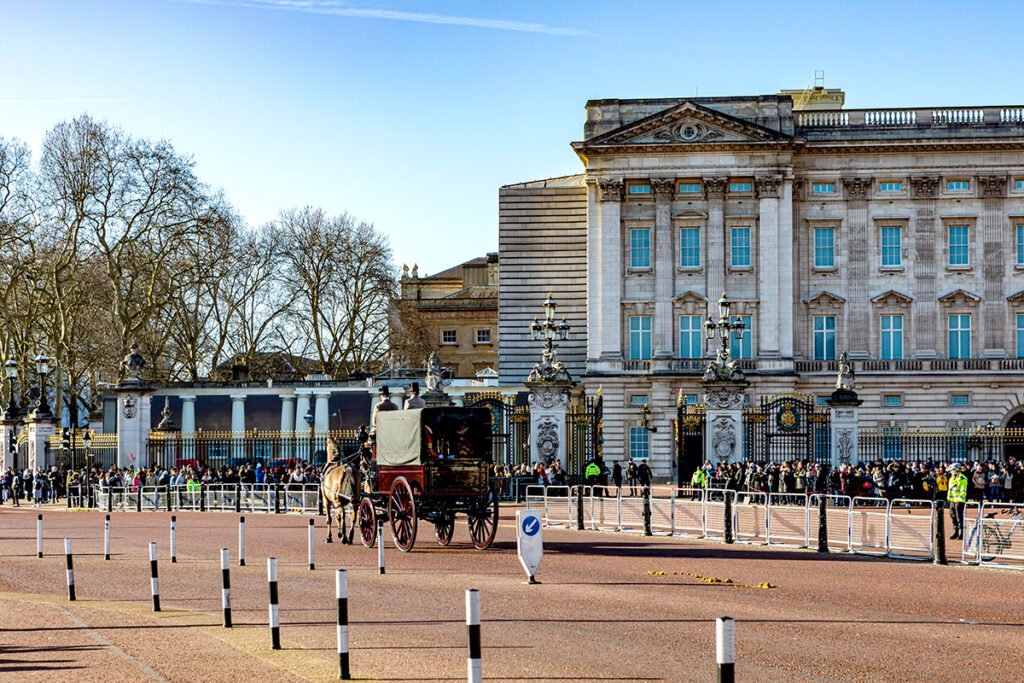
The palace stretches horizontally, wide and dignified, enclosing a central courtyard behind its gates. Those black-and-gold gates alone deserve a pause. The royal coat of arms gleams above them. Crowds press against the railings during major ceremonies. And beyond them lies the forecourt — the stage for the Changing of the Guard.
Above it all sits the balcony.
Modest in size. Immense in meaning.
Architecturally, it’s just a shallow projection supported by columns. Emotionally, it’s where history unfolds. Coronation celebrations. Jubilee waves. Royal wedding kisses. It’s amazing how much symbolism can sit within a few square meters of stone.
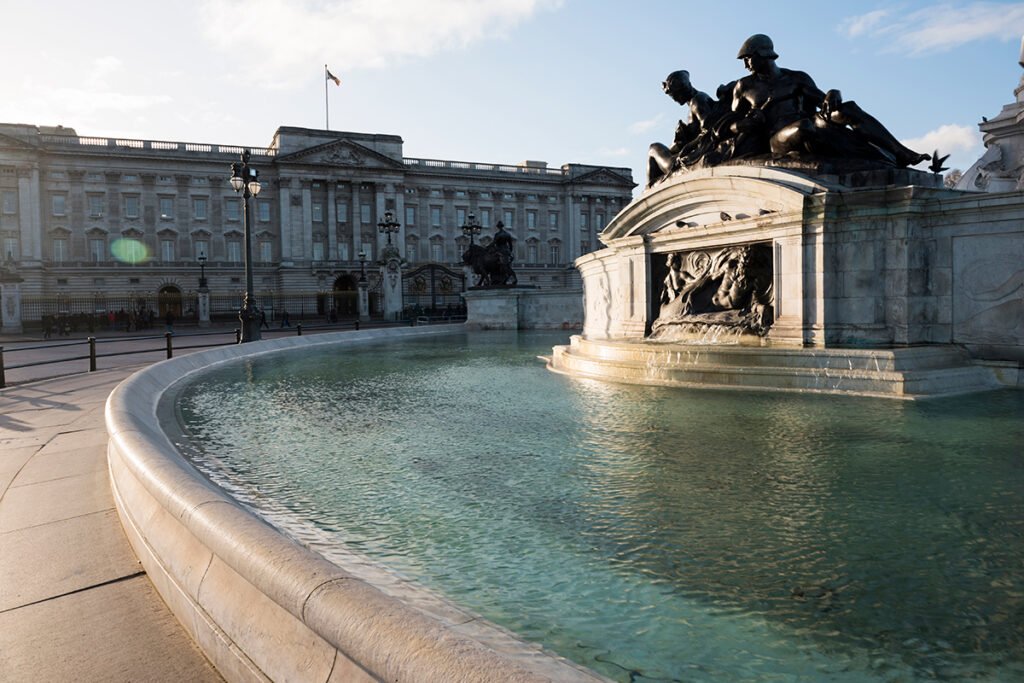
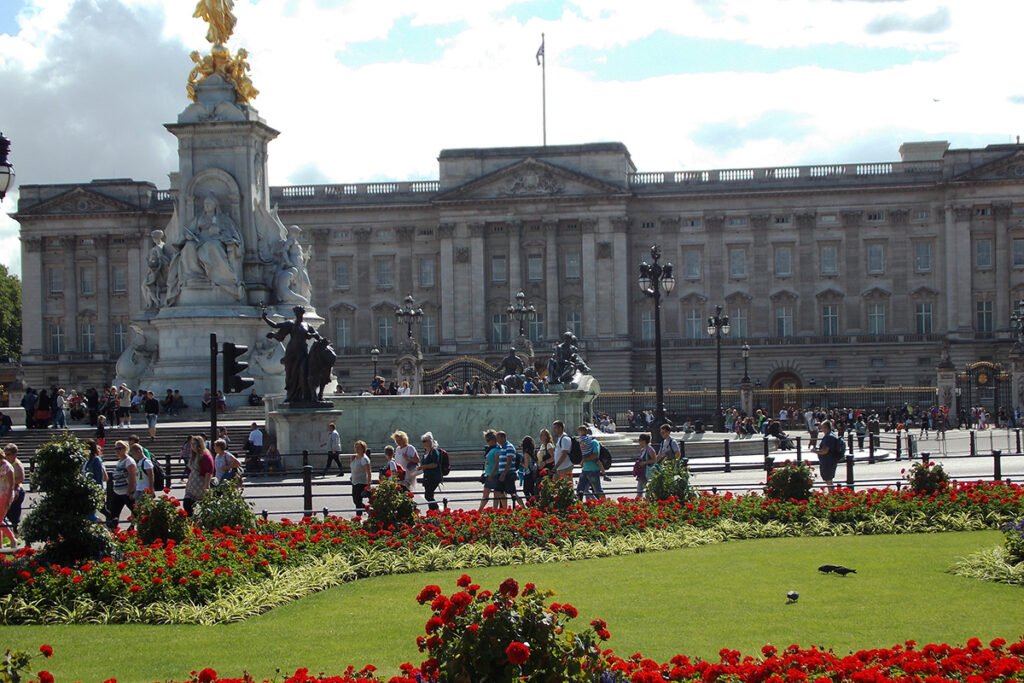
Facing the palace stands the Victoria Memorial, completed in 1911. Its white marble gleams in sunlight, crowned with a golden statue of Victory. The memorial anchors the space and frames your photographs perfectly, especially if you stand along The Mall and look toward the palace.
But the true spectacle lies inside.
Each summer, when the State Rooms open to visitors, Buckingham Palace reveals its theatrical side. These rooms were designed not for private living but for display. Diplomacy happens here. Ceremony happens here. Everything is meant to impress.
You enter through the Grand Staircase.
Red carpet flows downward in a dramatic sweep. Bronze balustrades curve elegantly. Portraits of royal figures line the walls, watching as guests ascend toward chandeliers that sparkle overhead. It feels like stepping into a period drama — except this is still very much in use.
Then come the State Rooms.
There are 19 in total, and each one leans into rich color and ornamentation. Gilded moldings frame ceilings. Massive chandeliers hang low enough to feel almost intimate. Silk wall coverings glow in shades of crimson and gold. The furniture is arranged with deliberate symmetry, much of it commissioned during the reign of George IV.
The Throne Room stands out immediately.
Deep red dominates the space. Two ceremonial thrones sit beneath a canopy, used for formal occasions and royal photographs. It’s surprisingly theatrical. You can almost imagine a coronation rehearsal unfolding inside.
The Ballroom, added in 1855, is the largest room in the palace. It hosts state banquets and investiture ceremonies. Long tables stretch beneath glittering chandeliers during diplomatic dinners. Guests sit surrounded by portraits and gilt detailing while uniformed staff move with practiced precision.
Then there’s the White Drawing Room.
This room feels more personal, though it is no less ornate. White and gold dominate the palette. Tall mirrors reflect light from crystal fixtures. A grand piano sits near the windows. It has long been used as a reception space before official events.
What’s striking about the interiors isn’t just the luxury — it’s the consistency.
Every detail reinforces continuity. The palace may have evolved structurally over time, but the decorative scheme holds onto the grandeur envisioned in the 19th century. It feels cohesive. Controlled. Almost ceremonial in its restraint.
And yet, just beyond those walls lies something unexpected.
The garden.
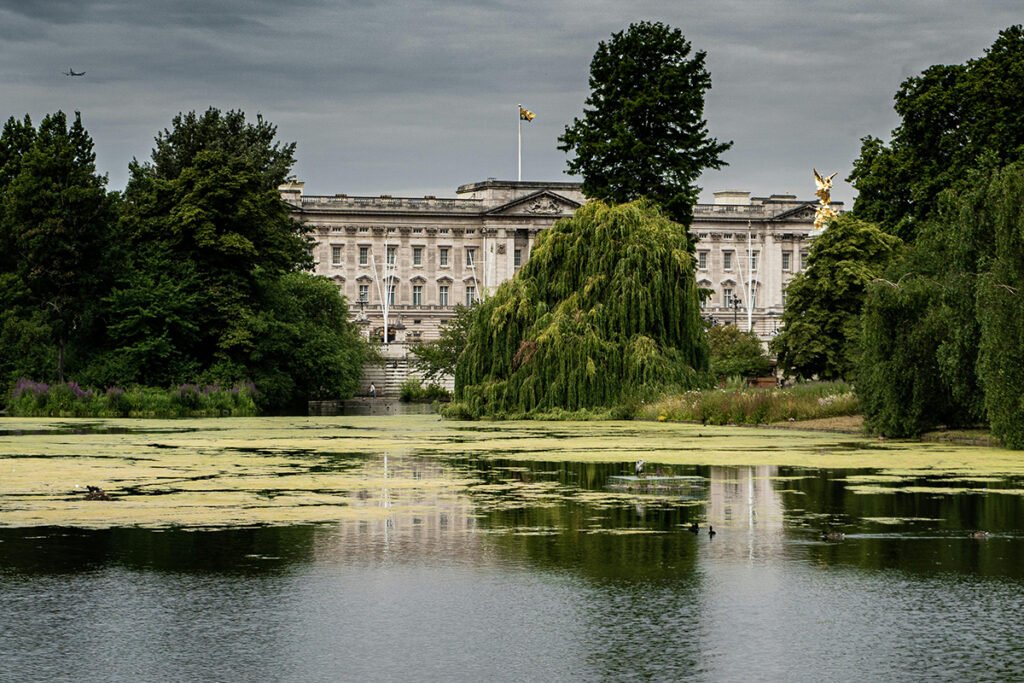
Few first-time visitors realize how vast it is. Behind the palace stretches a 39-acre garden — the largest private garden in London. It includes a lake, wildflower meadows, plane trees, and even a helicopter landing area. During summer garden parties, thousands of guests mingle across the lawns, sipping tea beneath open skies.
The contrast is striking.
From the busy traffic around Victoria Memorial, you step into quiet greenery. It feels almost hidden. Shielded from the city’s rhythm.
Architecturally, Buckingham Palace differs from medieval castles in one crucial way: it was built for diplomacy and display, not defense. There are no arrow slits. No drawbridges. No defensive towers. Its strength is symbolic rather than military.
It represents stability.
That’s why the façade remains so controlled and balanced. It projects order. Tradition. Continuity.
At night, when the crowds thin and the palace lights glow softly behind the windows, the building feels almost serene. The stone warms under golden illumination. The gates cast long shadows across the pavement.
And in that quiet moment, it becomes easier to see Buckingham Palace not just as a tourist landmark, but as a living architectural symbol — carefully shaped, deliberately grand, and still evolving as each new chapter of British history unfolds inside its walls.
Visiting Buckingham Palace: A Practical Guide for First-Time Travelers
Seeing Buckingham Palace is easy.
Visiting it properly? That takes a little planning.
Here’s how to make it worth your time.
🛣️ How to Get There
Buckingham Palace sits in central London, just west of St. James’s Park.
The easiest Underground stations are:
- Green Park (Jubilee, Piccadilly, Victoria lines) – about a 10-minute walk
- St. James’s Park (Circle and District lines) – about 10 minutes
- Victoria Station (Victoria, District, Circle lines + rail services) – about 12–15 minutes
If it’s your first time in London, I recommend walking in via The Mall. Start near Trafalgar Square and follow the broad ceremonial avenue lined with Union Flags. The approach builds anticipation. The palace slowly fills your view.
It feels intentional. Because it is.
Cycling is possible, but this area gets busy. Walking is better. You’ll want time for photos anyway.
🎟️ Entry & Tours: Can You Go Inside?
Yes — but only at certain times of year.
The State Rooms typically open to the public during summer (usually late July through September) and on selected dates in winter and spring. These are guided self-paced tours with multimedia headsets included.
You’ll see:
- The Grand Staircase
- The Throne Room
- The Ballroom
- The White Drawing Room
- A selection of State Rooms
- The garden at the end of your visit
Tickets must be booked in advance through the Royal Collection Trust. Same-day tickets are rare during peak season.
Expect security screening similar to an airport. Arrive at least 15–20 minutes before your time slot.
The full State Rooms visit takes around 2 to 2.5 hours at a comfortable pace.
There are also separate experiences:
- The Royal Mews (carriages and royal vehicles)
- The King’s Gallery (rotating art exhibitions from the Royal Collection)
- Garden Highlights tours (limited seasonal access)
If you’re short on time, at least see the palace from the outside and combine it with one of the smaller tours.
For the most up-to-date details on opening dates, tour availability, and current ticket prices, visit the official Royal Collection Trust website. It’s updated regularly and gives you a clear idea of what to expect before you book or arrive.
🎺 Changing of the Guard: What You Need to Know
Let’s be honest — this is what most people come for.
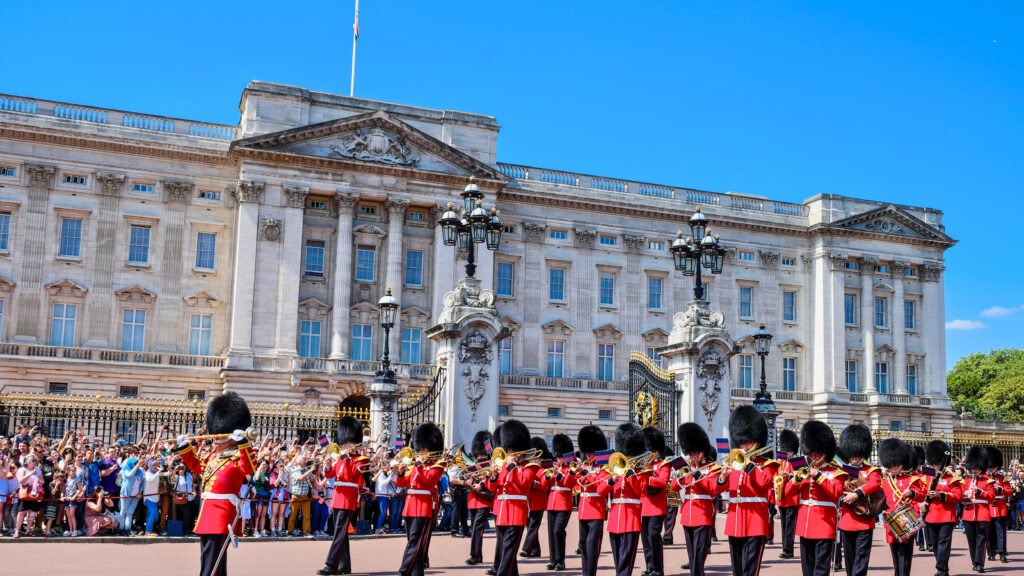
The Changing of the Guard takes place in front of Buckingham Palace, usually around 11:00 a.m. (schedule varies by season and weather). Always check the official timetable before planning your day.
Here’s how to do it right:
- Arrive 45–60 minutes early in peak season
- Stand near the palace gates for the best atmosphere
- If you prefer more space, position yourself along The Mall
- Don’t expect a quick 5-minute ceremony — it lasts around 45 minutes
The band often plays contemporary songs mixed with military music. It’s more dynamic than many visitors expect.
If crowds overwhelm you, consider watching the guards march from Wellington Barracks instead. Fewer people. Same ceremony feel.
📅 Best Time to Visit
London doesn’t really have an off-season anymore, but timing still matters.
Summer (July–September): Best for going inside. The State Rooms are open. Expect large crowds.
Late Spring (May–June): Pleasant weather. Fewer peak-season crowds. Gardens nearby look beautiful.
Autumn (September–October): Quieter than summer. Cooler temperatures. Great light for photography.
Winter: The palace exterior remains impressive, but interior access is limited. Fewer tourists overall.
If you want the best photos, come early in the morning before tour buses arrive. The light hitting the façade around 8–9 a.m. can be surprisingly soft.
Avoid mid-day weekends in July and August if you dislike crowds.
👨👩👧👦 Is It Worth It for Families?
Yes — with realistic expectations.
Children usually enjoy:
- The marching guards
- The bright uniforms
- The horses
- The royal carriages at the Royal Mews
The State Rooms tour is elegant but quiet. It’s not interactive. Teens and adults tend to appreciate it more than very young children.
Strollers are not permitted inside the State Rooms, but they can be checked at the entrance. Check the official site for specific family facilities.
Plan for breaks in St. James’s Park afterward. Ice cream and open lawns help reset everyone’s mood.
♿ Accessibility & Practical Tips
Buckingham Palace tours are accessible, but you must inform staff in advance if you require step-free access. Elevators are available where needed.
Other practical notes:
- Photography is not allowed inside the State Rooms
- Toilets are available at the start and end of the tour
- There is a gift shop at the exit (expect elegant but pricey souvenirs)
- Large bags are not permitted
Security is strict but efficient.
And yes — the palace is still a working royal residence. Tours can occasionally be adjusted due to official events.
🏞️ Combine It with a Mini Walking Route
Don’t treat Buckingham Palace as a stand-alone stop.
Here’s a simple 2–3 hour loop:
- Walk through St. James’s Park
- See the palace and Changing of the Guard
- Visit the Royal Mews or King’s Gallery
- Continue toward Westminster Abbey
- End at Big Ben and the Houses of Parliament
This makes the palace part of a larger royal and political London experience.
📸 Best Photo Spots
If you want classic shots:
- Stand directly behind the Victoria Memorial for a centered composition
- Capture the guards through the palace gates for depth
- Photograph the palace from The Mall at sunset
- Use St. James’s Park for a softer, tree-framed angle
Rainy days can actually be dramatic. The wet pavement reflects the façade beautifully.
🏷️ Is Visiting Buckingham Palace Worth It?
If you’re fascinated by royal history, state ceremony, or British pageantry — yes.
If you’re looking for medieval drama, towers, and hidden dungeons — this isn’t that kind of castle.
Buckingham Palace is about symbolism. Continuity. Ceremony. The quiet weight of tradition.
It rewards visitors who understand what they’re looking at.
And if you plan ahead, arrive early, and combine it with nearby sights, it becomes much more than a quick photo stop.
It becomes a proper London moment.
Nearby Attractions: Turn Your Palace Visit into a Royal Walk
Buckingham Palace rarely stands alone on a London itinerary. The beauty of its location is that some of the city’s most iconic sights sit just minutes away. With a little planning, you can turn your palace visit into a relaxed royal walking route.
🌿 St. James’s Park
Start here.
Just steps from the palace gates, St. James’s Park feels like a soft green buffer between ceremony and city life. Flowerbeds bloom in spring and summer. Pelicans glide across the lake. Benches line the pathways.
Walk toward the Blue Bridge for one of the best views in central London. From here, you can see Buckingham Palace in one direction and the towers of Westminster in the other. It’s peaceful. Photogenic. And a welcome breather after the crowds.
🏛️ Westminster Abbey
About a 15-20 minute walk from the palace, Westminster Abbey carries centuries of royal history under one roof.
This is where monarchs are crowned. Where royal weddings take place. Where Queen Elizabeth II was married. The Gothic architecture feels dramatically different from the palace’s Neoclassical style — tall arches, intricate stonework, stained glass glowing in filtered light.
If Buckingham Palace shows the monarchy at work, Westminster Abbey shows it in ceremony.
⏰ Houses of Parliament & Big Ben
Continue toward the River Thames, and you’ll reach one of the most photographed scenes in the world.
The Houses of Parliament rise in ornate Gothic Revival detail, with Big Ben’s clock tower anchoring the skyline. It’s only a short walk from the palace, yet the atmosphere shifts completely. Politics replaces pageantry.
Stand along Westminster Bridge for classic views. If time allows, consider a guided tour of Parliament to see the debating chambers inside.
🐎 The Royal Mews
If you’re curious about royal transport, this is worth adding.
Located just south of the palace, the Royal Mews houses ceremonial carriages and modern royal vehicles. The Gold State Coach alone — used at coronations — is impressive enough to justify a visit. It’s ornate, heavy, and unmistakably theatrical.
Families often find this more engaging than the State Rooms.
🎨 The King’s Gallery
Adjacent to the palace, this gallery hosts rotating exhibitions from the Royal Collection. Expect paintings, decorative arts, manuscripts, and objects connected to royal history.
It’s quieter than the main palace tour and can be a smart alternative if State Room tickets are unavailable.
The real advantage of Buckingham Palace’s location is flexibility.
You can build a half-day around it. Or a full day. Or simply pause for photos before continuing toward Westminster.
However you approach it, the palace sits at the heart of a compact stretch of London where monarchy, politics, parks, and ceremony all meet within walking distance.
That’s rare in a city this size.
And it makes your visit feel connected — not isolated — to the wider story of London.
Buckingham Palace FAQ: 10 Questions Visitors Always Ask
Can you go inside Buckingham Palace?
Yes — but only during selected times of the year. The State Rooms are typically open to visitors in summer and on limited dates in winter and spring. Tickets must be booked in advance through the Royal Collection Trust.
Is Buckingham Palace worth visiting?
If you’re interested in royal history, state ceremonies, or British pageantry, absolutely. The interior State Rooms are impressive, and even seeing the palace from outside during the Changing of the Guard can feel memorable. If you’re expecting medieval drama, however, this isn’t that kind of castle.
How long does a visit take?
The State Rooms tour usually takes 2 to 2.5 hours at a relaxed pace. If you’re only visiting the exterior and watching the Changing of the Guard, plan for at least 1–1.5 hours, including waiting time.
When is the Changing of the Guard?
The ceremony typically takes place around 11:00 a.m., but the schedule varies depending on the season and weather. It is not held every day. Always check the official timetable before planning your visit.
How early should I arrive for the Changing of the Guard?
In peak season, arrive 45–60 minutes early to secure a good viewing spot near the palace gates. For fewer crowds, consider watching the guards march along The Mall instead.
How much are Buckingham Palace tickets?
Ticket prices vary depending on the experience (State Rooms, Royal Mews, King’s Gallery). Standard adult tickets for the State Rooms are typically in the higher London attraction range. Prices change annually, so check the official website for current rates.
Is photography allowed inside Buckingham Palace?
Photography and filming are not allowed inside the State Rooms. You can take photos outside the palace grounds, including during the Changing of the Guard.
Is Buckingham Palace good for children?
Yes, especially for families interested in royal stories and ceremonial displays. Children often enjoy the guards and royal carriages. The State Rooms tour is elegant but quiet, so very young children may find it less engaging.
Can you see the King at Buckingham Palace?
The monarch occasionally appears on the balcony during major national celebrations, but there is no regular opportunity to see the King. The Royal Standard flag flying above the palace indicates when the monarch is in residence.
What is the best time of day to visit?
Early morning offers softer light and fewer crowds for exterior photos. Mid-morning is best for the Changing of the Guard. Late afternoon can be calmer once the tour groups depart. If you plan to go inside, book one of the earlier time slots for a more relaxed experience.
Final Thoughts: More Than a Photo Stop
Buckingham Palace isn’t the oldest castle in Britain. It doesn’t have towers rising over a battlefield or ancient stone walls scarred by siege.
What it offers instead is continuity.
Stand in front of those gates and you’re looking at the modern face of a centuries-old monarchy. The balcony above you has seen wartime defiance, royal weddings, jubilees, and national celebrations. Inside, diplomacy unfolds beneath chandeliers and gilded ceilings. Outside, visitors from around the world gather every single day.
Is it grand? Yes.
Is it symbolic? Absolutely.
Is it worth your time in London? For most travelers, without question.
The key is simple: plan ahead. Arrive early. Combine it with St. James’s Park or Westminster. If you can, step inside the State Rooms during summer. If not, stay for the Changing of the Guard and let the atmosphere sink in.
💬 If you’ve already visited Buckingham Palace, I’d love to hear about it. Did you tour the State Rooms? Catch the Changing of the Guard? Was it everything you expected — or did something surprise you? Share your experience in the comments below. Your insights might help another traveler plan their visit.
👉 And if royal history has you hooked, don’t stop here. Explore our in-depth guide “Windsor Castle Uncovered: History, Architecture, Legends & Practical Tips”, discover even more historic fortresses in “Top 10 Best Castles to Visit in England: History & Travel Tips”, or broaden your horizons with “25 Best Castles to Visit in Europe: Iconic & Hidden Gems.”
The story of Europe’s castles doesn’t end at Buckingham Palace. In many ways, it’s just the beginning.
🏰✨ Thanks for reading. If this guide helped you plan your visit to Buckingham Palace, follow along for more in-depth castle histories and practical travel insights. You can also follow us, CastleQuest Chronicles, on Instagram, Facebook, Pinterest, YouTube, TikTok, and X.