You see it before you fully believe it.
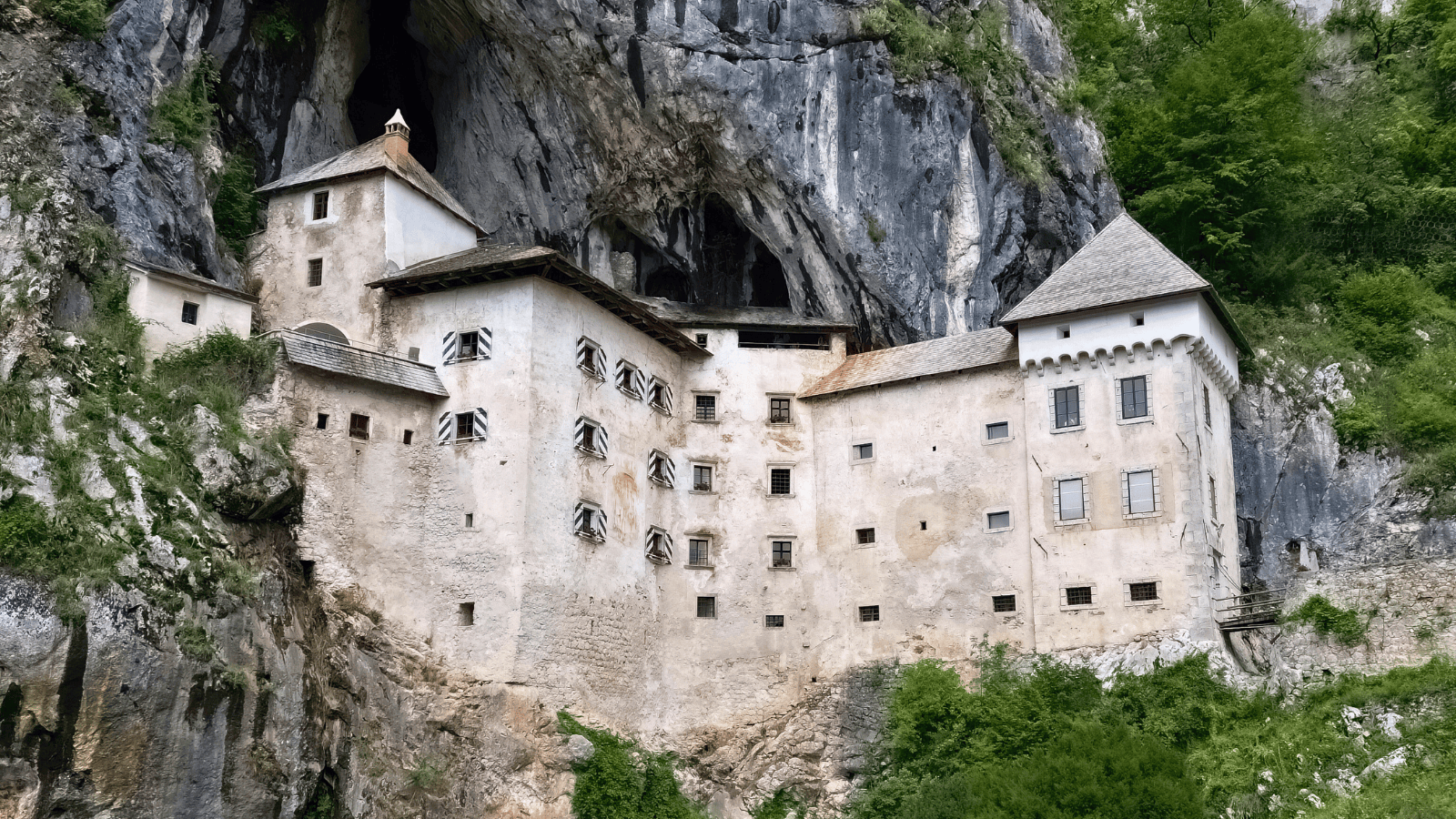
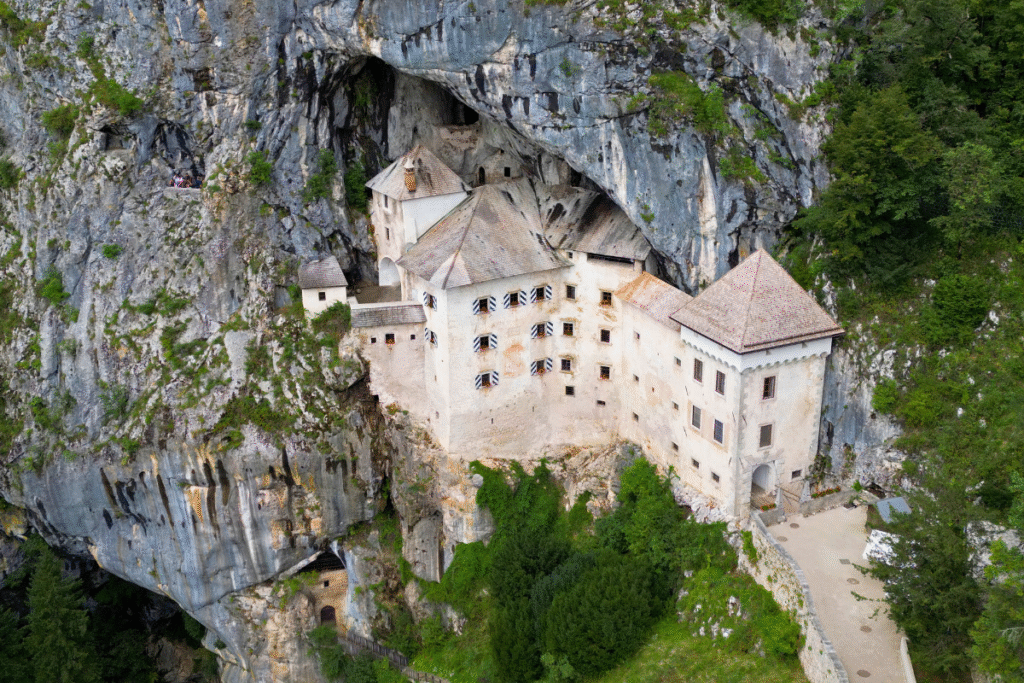
A white-walled fortress clings to a towering limestone cliff, half natural cave, half human ambition. The rock rises steep and gray behind it. Swallows cut through the air. Below, green forest spreads across the valley. And there, impossibly wedged into the stone, stands Predjama Castle — the most dramatic castle built into a cliff you’re ever likely to see.
It feels less constructed than discovered. As if someone found a cave in the rock face and thought, “Yes. Let’s live here.”
But Predjama Castle in Slovenia isn’t just a visual spectacle. It’s a story of defiance. Of a rebellious knight named Erasmus of Lueg who mocked a powerful empire. Of secret tunnels snaking through the rock behind the fortress. Of a siege that dragged on for months — and ended in betrayal.
This is not a palace of polished ballrooms and royal excess. It’s a fortress shaped by survival. The limestone cliff isn’t just a backdrop. It’s part of the defense system. Behind the visible walls lies Predjama Cave, a vast underground world that once allowed supplies to slip in unseen while enemies waited outside.
And that’s what makes this place unforgettable. It’s raw. Strategic. Slightly wild.
If you’re exploring Slovenia castles or planning a stop near Postojna Cave, Predjama Castle deserves far more than a quick photo from the parking lot. Step inside, climb its narrow staircases, stand at the windows where Erasmus once watched his enemies below — and suddenly this cliffside stronghold doesn’t feel like a postcard.
It feels alive.

Quick Facts About Predjama Castle
📍 Location: Predjama village, near Postojna, southwestern Slovenia
🏗️ Construction Period: First mentioned in 1274; largely rebuilt in the 16th century
🏰 Architectural Style: Medieval fortress with Renaissance additions
🎭 Famous For: Being a castle built into a cliff; the legend of Erasmus of Lueg; its connection to Predjama Cave
👑 Notable Figures: Erasmus of Lueg (Erazem Predjamski)
🏆 Record: Guinness World Record holder for the largest cave castle in the world
🌍 UNESCO Status: Not individually listed (Postojna Cave region is internationally recognized)
🌐 Official Website: Postojnska jama (Postojna Cave Park official site)
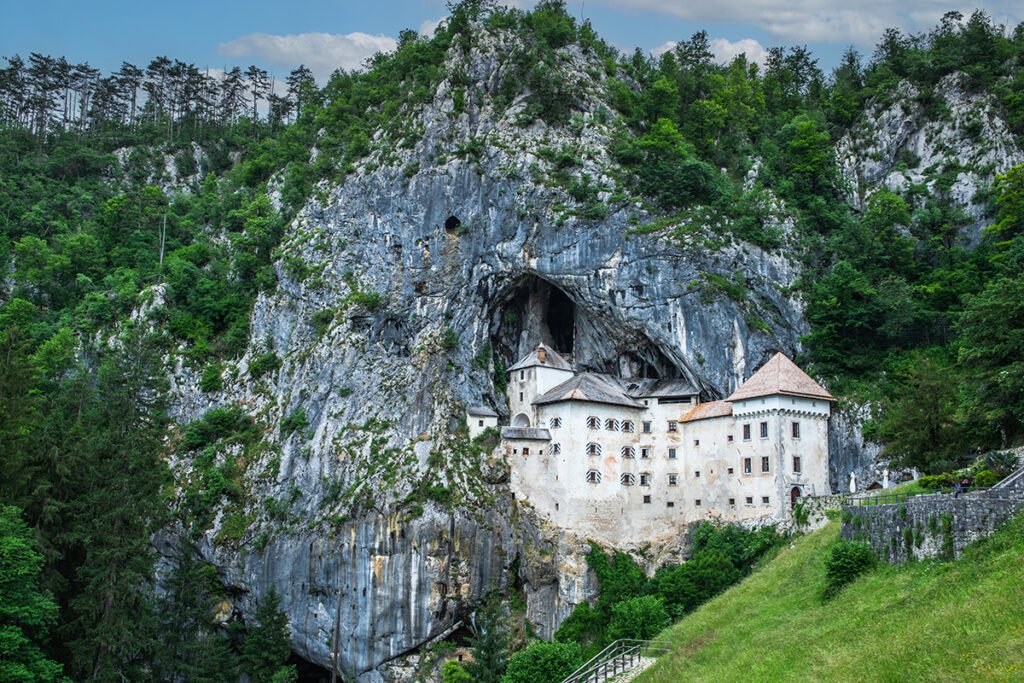
Perched dramatically within a 123-meter-high limestone cliff, Predjama Castle in Slovenia stands just 9 kilometers from Postojna Cave. Its setting is as strategic as it is theatrical. The natural cave system behind the castle is not decorative — it was once a lifeline.
Today, the castle is part of the wider Postojna Cave Park complex, and many visitors combine both attractions in a single day. But make no mistake: Predjama Castle is not a side note. It’s one of the most extraordinary fortresses in Europe — a medieval stronghold literally fused with the rock that protects it.

History & Legends of Predjama Castle
Long before cameras and parking lots, there was only rock.
The cliff above present-day Predjama village rises sheer and pale, carved by water and time. It was in this natural hollow — a vast cave system already etched into the limestone — that medieval builders saw opportunity. The earliest written record of Predjama Castle dates to 1274, when it was known by its German name, Luegg. Even then, it was already something unusual: a fortress anchored directly into the mouth of a cave.
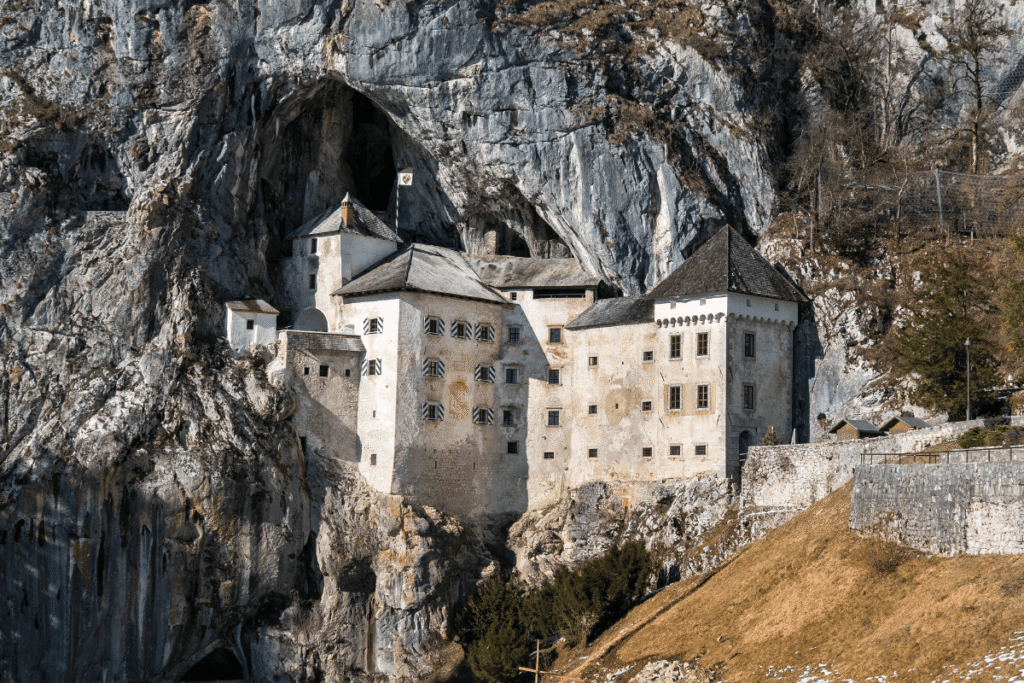
The original structure was likely Gothic in style, modest compared to what you see today. But its location made it formidable. With a vertical rock wall protecting the rear and one narrow approach from the front, it was nearly impossible to attack from behind. Nature did half the defensive work.
Over the centuries, control of the region shifted between noble families under the broader influence of the Habsburgs. The castle changed hands. Walls were reinforced. Interiors adapted. But it was in the late 15th century that Predjama Castle, Slovenia, entered legend.
That legend begins with a knight.
The Rebel in the Cliff
His name was Erasmus of Lueg — or Erazem Predjamski in Slovene — a minor nobleman with a reputation for trouble. The most widely told version of the story says he killed a commander of the Habsburg imperial army, possibly in a dispute over honor. The act put him in direct opposition to Emperor Frederick III.
Erasmus fled to his family’s stronghold: the castle built into the cliff.
From here, the story becomes part documented history, part folklore.
Trieste forces under imperial forces surrounded the fortress. A siege began. It was expected to end quickly. After all, no castle can hold out forever.
Except this one had a secret.
Behind the visible structure lay Predjama Cave, a vast underground network stretching deep into the hillside. Hidden passages led upward and out through the forest above. Supplies could be smuggled in. Messages carried out. According to legend, Erasmus even mocked his besiegers by tossing fresh cherries down from the walls to show he was far from starving.
The siege dragged on for months.
Frustration grew among the imperial troops. Cannons pounded the front walls, but the cliff absorbed much of the impact. The limestone overhang shielded the upper structure. Attacking from the rear was impossible. It was one of the most secure natural fortresses in Central Europe.
But no defense is perfect.
The most dramatic version of the tale says Erasmus was betrayed by one of his own servants. A signal was given when the knight stepped into a small wooden structure protruding from the wall — the castle’s toilet, built over the cliff edge. A cannon was fired. Erasmus was killed instantly.
It’s a grim detail. Almost too cinematic.
Historians agree that Erasmus died during the siege in 1484, but the exact circumstances remain unclear. Still, the betrayal-and-cannonball story has endured for centuries. When you stand inside the castle and look toward the outer wall, guides will point out the spot where it supposedly happened.
And whether or not the details are perfectly accurate, the story fits the place.
Destruction and Reinvention
After Erasmus’ death, the castle fell under Habsburg control. The original medieval structure suffered damage during the siege and from subsequent conflicts. In the 16th century, it was extensively rebuilt in Renaissance style by the noble Cobenzl family.
What you see today largely reflects that 1500s reconstruction. Defensive features were modernized. Living quarters improved. The fortress evolved from a purely medieval stronghold into a more livable residence — though “comfortable” might still be a stretch.
The cliff remained central to its identity. Builders did not attempt to tame it. They worked with it. Floors align unevenly with the rock. Rooms tuck into natural cavities. Stone walls blend seamlessly into limestone.
For centuries after its reconstruction, the castle functioned more as a noble residence than a battlefield fortress. Political tensions shifted elsewhere. The age of siege warfare waned.
But the legends stayed.
Between Myth and Memory
Today, Predjama Castle stands as one of Slovenia’s most iconic historic sites. Not because it was the largest fortress in Europe. Not because kings ruled from here. But because of its setting — and because of Erasmus.
Visitors still ask about the cherries.
They ask about the hidden tunnel. About the betrayal. About whether the cave truly stretches kilometers into the Karst plateau (it does — the cave system behind the castle is part of a much larger underground network).
The line between legend and fact isn’t always sharp here. But that’s part of the experience. Medieval castles were never just stone and mortar. They were stages for power struggles, ambition, and survival.
Standing inside Predjama Castle, you don’t just see history. You sense it in layers.
The medieval foundations.
The Renaissance rebuild.
The echo of a cannon in the valley below.
And above all, the cliff — patient and immovable — still holding the fortress in its grasp.

Architecture & Design: A Fortress Fused with the Cliff
From a distance, Predjama Castle looks unreal.
It doesn’t sit on the cliff. It disappears into it.
The 123-meter-high limestone wall rises sharply behind the structure, and the castle seems to grow straight out of the rock face. No moat. No surrounding ramparts. Just stone, cliff, and sky.
This isn’t decorative drama. It’s strategy.
A Castle Built Into a Cliff
Most medieval castles sought elevation — hilltops, ridges, promontories. Predjama went further. It embedded itself directly into a natural cave system. The rear wall of the fortress is not constructed stone. It’s raw limestone.
That single decision changed everything.
The cliff acts as a shield. From above, attackers had no access. From behind, the rock made assault impossible. Even artillery fire from the valley had limited effect, since much of the structure is protected by the massive overhang of the cave ceiling.
It’s one of the clearest examples in Europe of a castle built into a cliff not as spectacle, but as military logic.
The Cave Behind the Walls
Step inside, and you quickly realize this isn’t a typical floor plan.
Rooms don’t follow clean, symmetrical lines. Floors rise and fall. Corridors bend unexpectedly. Natural rock pushes into living spaces. In some chambers, the cave wall forms part of the interior.
Behind the visible castle lies Predjama Cave, a sprawling underground network that once functioned as a secret supply route. Narrow passages snake upward through the rock. Some sections are tight and uneven. Others open into vast chambers.
During the siege of Erasmus of Lueg, these passages were critical. Supplies could be brought in through hidden openings at the top of the cliff, allowing defenders to survive far longer than expected.
Today, parts of the cave system are accessible seasonally through guided tours, depending on weather and bat conservation periods. Even without entering the full cave network, you sense its presence. The air feels cooler. Slightly damp. Alive.
Defensive Intelligence
The visible façade of Predjama Castle faces outward toward the valley. Windows are narrow. Openings are strategic. The main entrance was once heavily fortified.
The structure you see today largely dates to the 16th-century Renaissance reconstruction, but medieval defensive thinking still defines the layout.
Key defensive elements include:
- Narrow staircases that slow movement
- Elevated windows designed for archers
- A drawbridge system in earlier phases
- Thick outer walls reinforced during reconstruction
The cliff overhang also prevented attackers from scaling directly above the castle and dropping down. It’s an elegant example of using geography as architecture.
Inside the Living Quarters
Despite its rugged setting, Predjama Castle wasn’t purely a military outpost. It was a home.
As you move through the interior, you’ll find:
- A small chapel
- A knight’s hall
- Living quarters with simple wooden furnishings
- A kitchen area
- Storage rooms carved partly from natural rock
The Renaissance renovations improved comfort, at least by 16th-century standards. Windows were slightly enlarged. Decorative elements were added in modest fashion. But this was never a palace of gold leaf and tapestries.
It’s practical. Solid. Grounded.
Standing in the main hall, you’ll notice how light filters in from the front while the rear fades into shadow. The cliff dictates where sunlight enters. It shapes the rhythm of the rooms.
You’re constantly aware of the rock behind you.
Vertical Living
Because of its constrained position within the cave opening, the castle rises vertically in tiers. Levels stack tightly. Movement between floors involves steep wooden staircases and uneven stone steps.
It feels compact. Strategic. Layered.
From certain upper windows, you get sweeping views across the green Karst landscape. The valley stretches outward. Forests ripple toward the horizon. It’s easy to imagine Erasmus standing there, watching for imperial banners below.
The higher you climb, the more dramatic the perspective becomes. And the more you appreciate how exposed — yet protected — this position was.
A Rare Architectural Hybrid
There are cliffside fortresses across Europe. There are cave castles in various forms. But few integrate natural rock and constructed masonry as seamlessly as Predjama.
It’s not simply attached to the cliff. It’s fused with it.
That fusion creates something unusual: a structure that feels both engineered and organic. Human ambition meeting geological permanence.
You don’t just tour rooms here.
You move through a negotiation between stone and survival — between what nature offered and what medieval builders dared to build.
Visiting Predjama Castle: What You Need to Know Before You Go
Seeing Predjama Castle from the parking area is impressive.
Walking inside it is something else entirely.
The experience isn’t polished or theme-park smooth. It’s steep staircases. Cool stone walls. Narrow passages. And moments where you stop, look up at the cliff above you, and think: how did they build this here?
If you’re planning a visit, here’s exactly what to expect.
🛣️ How to Get There
Predjama Castle sits about 9 kilometers from the town of Postojna and roughly 50 kilometers southwest of Ljubljana.
From Ljubljana (by car):
The drive takes about one hour via the A1 motorway toward Koper. Exit at Postojna, then follow the signs toward Predjama. The final stretch winds through forested countryside and small villages. It’s scenic and easy.
From Ljubljana (public transport):
Take a train or bus to Postojna (about 1–1.5 hours). From Postojna, seasonal shuttle buses often run to the castle during peak months. Outside high season, you may need a taxi.
From Postojna:
If you’re already visiting Postojna Cave, reaching the castle is simple. Many visitors combine both in the same day. By car, it’s a 15-minute drive through rolling green hills.
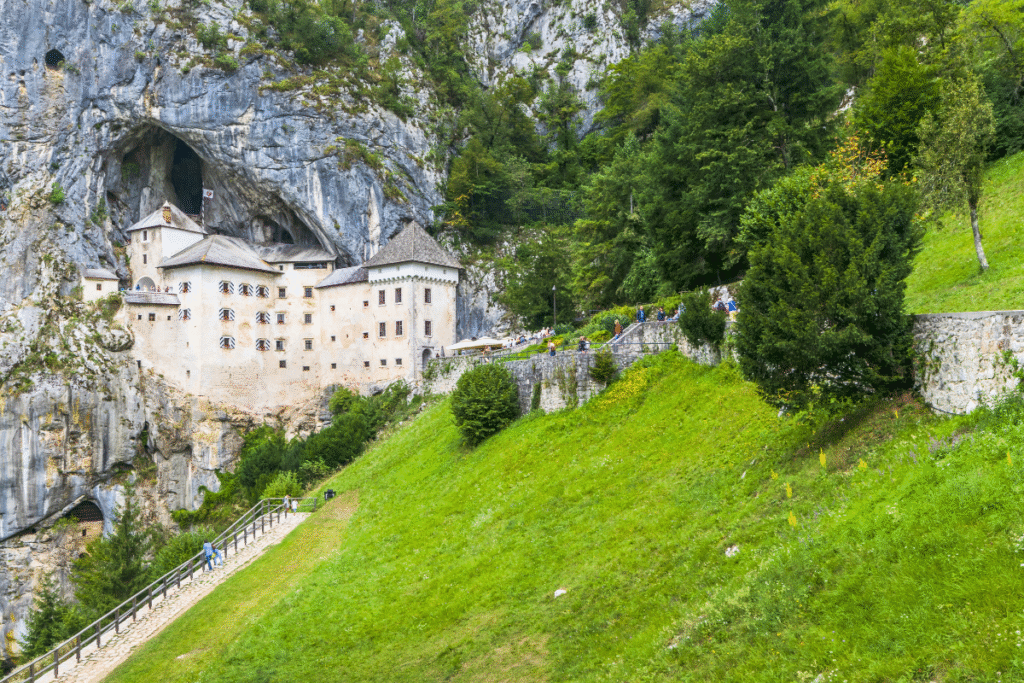
Parking near the castle is straightforward and well organized. From the lot, it’s a short walk to the entrance — and that first full frontal view of the fortress wedged into the cliff.
Take your time here. This is one of the best photo angles.
🎟️ Entry & Tours
Predjama Castle is managed as part of the Postojna Cave Park complex.
You can purchase:
- A castle-only ticket
- A combined ticket for Predjama Castle and Postojna Cave (often a better value if you plan to see both)
Prices vary slightly by season, so check the official Postojna Cave website before visiting. Combined tickets typically offer meaningful savings compared to buying separately.
Most visitors explore the castle with an audio guide, included with the ticket in multiple languages. The audio format works well here because the space is compact and self-paced. You move from room to room, listening as you go.
Guided group tours are also available at times, but the audio guide provides flexibility — especially helpful when navigating narrow staircases.
Expect your visit inside the castle to take about 60–90 minutes, depending on how slowly you move and how long you linger at viewpoints.
📅 Best Time to Visit
Predjama Castle feels different in every season.
Spring (April–June):
Green hills surround the cliff. Wildflowers dot the valley. Weather is comfortable, and crowds are moderate.
Summer (July–August):
This is peak season. Expect more visitors, especially midday. Arrive early in the morning or later in the afternoon for a quieter experience. The surrounding forest provides shade, and the castle interior stays naturally cool thanks to the cave.
Summer also allows access to certain parts of Predjama Cave that may be closed in colder months due to bat conservation.
Autumn (September–October):
Arguably one of the most beautiful times to visit. The Karst landscape turns gold and rust. Fewer crowds. Crisp air. Excellent photography conditions.
Winter (November–March):
Opening hours are shorter. Some cave areas are closed. But the castle against a gray winter sky has a stark, dramatic mood. If you prefer quiet, this is your season.
No matter when you go, check opening hours in advance. They vary by month.
♿ Accessibility & Practical Tips
This is a medieval fortress built inside a cliff.
That means stairs. Lots of them.
There are steep wooden staircases, uneven stone steps, and tight passageways. The layout is not wheelchair accessible, and visitors with mobility limitations may find sections challenging.
Wear comfortable shoes.
You’ll be climbing.
Bring a light jacket.
Even in summer, the cave-influenced interior remains cool and slightly damp.
Photography tips:
- The best exterior shots are from the main viewing area below the castle.
- Morning light illuminates the façade more evenly.
- Inside, lighting is low in some areas — steady hands help.
Allow enough time.
If you’re combining Predjama Castle and Postojna Cave, plan at least half a day. Rushing both in two hours diminishes the experience.
Food & facilities:
There’s a café and restaurant area near the parking lot, along with restrooms and a small gift shop. Once inside the castle, facilities are limited.
What It Actually Feels Like Inside
Let’s be honest: some castles feel repetitive after a while.
Predjama doesn’t.
You constantly sense the cliff behind you. The walls aren’t purely constructed — they merge into natural rock. Floors tilt slightly. Light filters in unevenly.
The audio guide tells the story of Erasmus of Lueg as you move through the rooms. When you reach the outer defensive areas and look down into the valley, you begin to understand why the siege lasted so long.
And when you step into the small projecting toilet structure — yes, that one — you can’t help but think about the cannon legend.
The higher you climb, the better the view. Forest stretches out below. The valley feels peaceful now. It’s hard to imagine soldiers camped outside for months.
But that contrast is part of the magic.
Predjama Castle isn’t about royal grandeur. It’s about ingenuity. Survival. Defiance.
It’s not oversized. It’s not covered in gilded ceilings.
It’s dramatic because it had to be.
Should You Combine It with Postojna Cave?
If you’re already near Postojna, the answer is yes.
Postojna Cave offers a completely different experience: vast underground chambers, a train ride through limestone formations, and enormous stalactites. It’s geological spectacle.
Predjama Castle is human story embedded in that same Karst landscape.
Together, they give you both sides of the region: nature’s architecture and medieval adaptation.
Many visitors say they expected the cave to be the highlight — and left talking more about the castle.
By the time you walk back down to the parking area and turn for one last look, something shifts.
It no longer seems impossible.
It seems inevitable.
Of course, someone built a fortress here.
The cliff was waiting for it.
Things to Do Near Predjama Castle
One of the best things about visiting Predjama Castle is that it sits in the heart of Slovenia’s Karst region — an area packed with natural wonders, quiet villages, and easy day trips. You could spend an entire weekend here without repeating yourself.
Here are a few places worth adding to your plan.
🕳️ Postojna Cave
Just 15 minutes away, Postojna Cave is one of Europe’s most famous underground systems. Unlike the rugged intimacy of Predjama, this is scale on another level.
You board a small electric train that glides through vast limestone halls filled with towering stalactites and stalagmites. The chambers feel cathedral-sized. It’s dramatic, theatrical, and surprisingly accessible.
If you’re choosing only one nearby attraction, this is the obvious pairing. The combined ticket makes it easy, and the contrast between natural cave formations and the castle built into a cliff is striking.
🌍 Škocjan Caves
If you prefer something wilder and less polished, head about 30 minutes southwest to the Škocjan Caves. This UNESCO-listed site feels more raw than Postojna.
Here, you walk along suspended pathways high above an underground river roaring through a vast canyon-like chamber. The scale is humbling. The atmosphere is darker. More dramatic.
It’s a favorite for travelers who want a stronger sense of nature’s power — and fewer crowds.
🍷 Vipava Valley
Need a change of pace after stone corridors and cave air?
Drive about 40 minutes west to Vipava Valley. Rolling vineyards replace limestone cliffs. Small villages dot the landscape. Local wineries offer tastings of crisp white wines like Zelen and Pinela.
This is slow travel territory. Long lunches. Quiet roads. Mountain backdrops.
It pairs surprisingly well with a morning at the castle. Medieval drama first. Wine country calm afterward.
🏙️ Ljubljana
If you’re based in Ljubljana, Predjama makes an easy day trip. But don’t rush back too quickly.
Slovenia’s capital is compact, elegant, and relaxed. Its riverside cafés, green bridges, and hilltop Ljubljana Castle offer a different kind of historic atmosphere — less defensive, more romantic.
Spend an evening strolling along the Ljubljanica River after your castle visit. It’s a gentle contrast to the cliffside fortress.
🚗 A Quick Word on Timing
If you’re combining attractions, pace yourself.
Predjama Castle deserves at least an hour inside. Postojna Cave takes about 90 minutes to two hours. Add driving time, and you’re looking at half a day minimum.
If you have two days in the region, even better. The Karst landscape rewards those who linger.
And that’s the quiet surprise of visiting Predjama: the castle may be the headline, but the surrounding region is the full story.
FAQ About Predjama Castle
How old is Predjama Castle?
The first written record of Predjama Castle dates to 1274. However, the structure you see today largely reflects a 16th-century Renaissance reconstruction built after damage from medieval conflicts and the famous siege of Erasmus of Lueg.
Why is Predjama Castle famous?
Predjama Castle is famous for being a castle built into a cliff and for the legend of Erasmus of Lueg, the rebellious knight who reportedly survived a long siege thanks to secret cave passages behind the fortress. Its dramatic setting makes it one of the most unique castles in Europe.
Is Predjama Castle worth visiting?
Yes — especially if you appreciate unusual architecture and strong storytelling.
It’s not the largest or most luxurious castle, but its fusion with the limestone cliff and the connected cave system creates an experience you won’t find elsewhere in Slovenia.
Can you visit the cave behind the castle?
Yes, but access depends on the season.
Parts of Predjama Cave are open to visitors during warmer months, typically through guided tours. Some sections close in winter to protect bat populations. Always check current conditions before visiting.
How long does a visit take?
Plan for 60 to 90 minutes inside the castle itself.
If you combine it with Postojna Cave, allow at least half a day. Rushing both sites in a short window reduces the experience.
Is Predjama Castle suitable for children?
Older children usually enjoy it, especially the secret passage stories and the siege legend.
However, there are many steep stairs and narrow spaces. Strollers are not practical inside the castle, and very young children may find the climb tiring.
When is the best time to visit Predjama Castle?
Spring and autumn offer the best balance of weather and manageable crowds.
Summer provides full cave access but can be busy. Winter is quieter and more atmospheric, though some cave sections may be closed.
Do you need to buy tickets in advance?
During peak summer months, buying tickets in advance is recommended — especially if you plan to visit both Predjama Castle and Postojna Cave on the same day.
In the shoulder seasons, same-day tickets are usually available.
Is Predjama Castle accessible to visitors with mobility issues?
Unfortunately, no.
The castle includes multiple steep staircases, uneven stone steps, and tight passages. It is not wheelchair accessible and may be challenging for visitors with limited mobility.
Can you visit Predjama Castle as a day trip from Ljubljana?
Absolutely.
The castle is about one hour by car from Ljubljana, making it an easy and rewarding day trip. Many travelers combine it with Postojna Cave for a full-day excursion in Slovenia’s Karst region.
Final Thoughts: Why Predjama Castle Stays With You
Some castles impress you with size.
Others with gold ceilings and royal history.
Predjama Castle does something different.
It stays in your mind because it feels improbable.
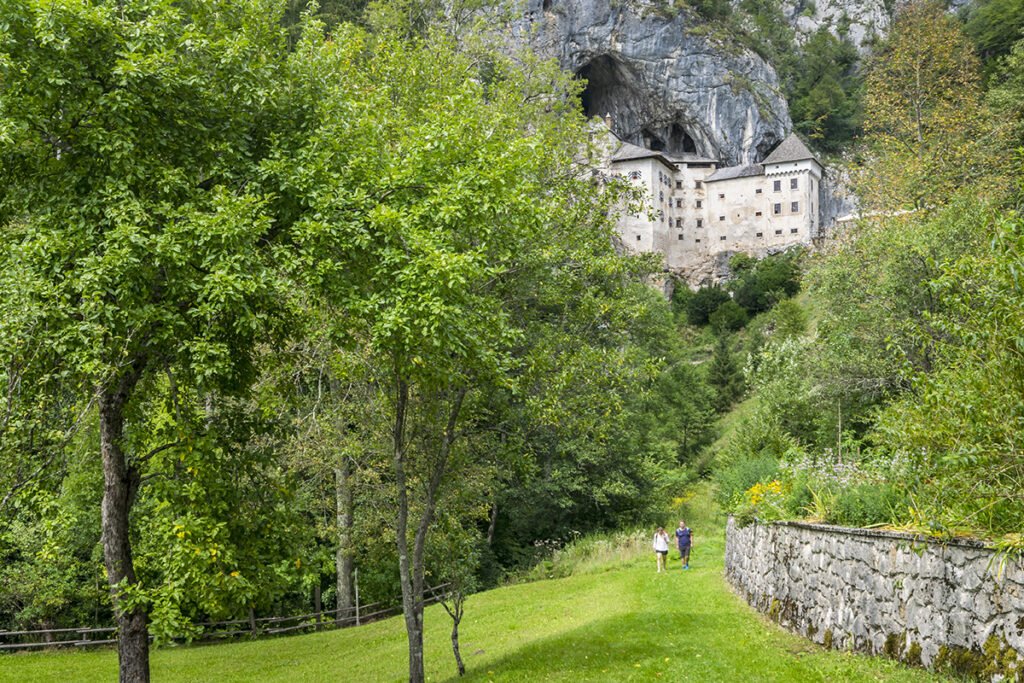
A fortress pressed into a 123-meter cliff. A cave hidden behind stone walls. A rebellious knight holding off an empire. The place feels less designed and more discovered — as if medieval builders simply adapted to what nature offered and refused to build anywhere else.
You don’t walk through endless halls of ornamentation here. You climb narrow staircases. You lean into rock. You stand at windows that once watched a besieging army below. The setting does half the storytelling.
If you’ve already visited Predjama Castle, what stayed with you most?
Was it the legend of Erasmus? The cave passages? The view from the upper windows? I’d genuinely love to hear about your experience — share your thoughts in the comments and let other travelers know what surprised you.
And if this cliffside fortress sparked your curiosity, don’t stop here.
👉 Continue your journey with our guide to 25 Best Castles to Visit in Europe: Iconic & Hidden Gems, where you’ll find dramatic hilltop strongholds, fairytale palaces, and lesser-known medieval treasures across the continent.
🌍 Or go even bigger with The 25 Most Famous Castles in the World: Iconic Fortresses You Must See, featuring legendary landmarks from every corner of the globe.
Because once you’ve stood beneath a castle built into a cliff, it’s hard not to start wondering where the next unforgettable fortress might be.
🏰✨ Thanks for reading. If this guide helped you plan your visit to Predjama Castle, follow along for more in-depth castle histories and practical travel insights. You can also follow us, CastleQuest Chronicles, on Instagram, Facebook, Pinterest, YouTube, TikTok, and X.