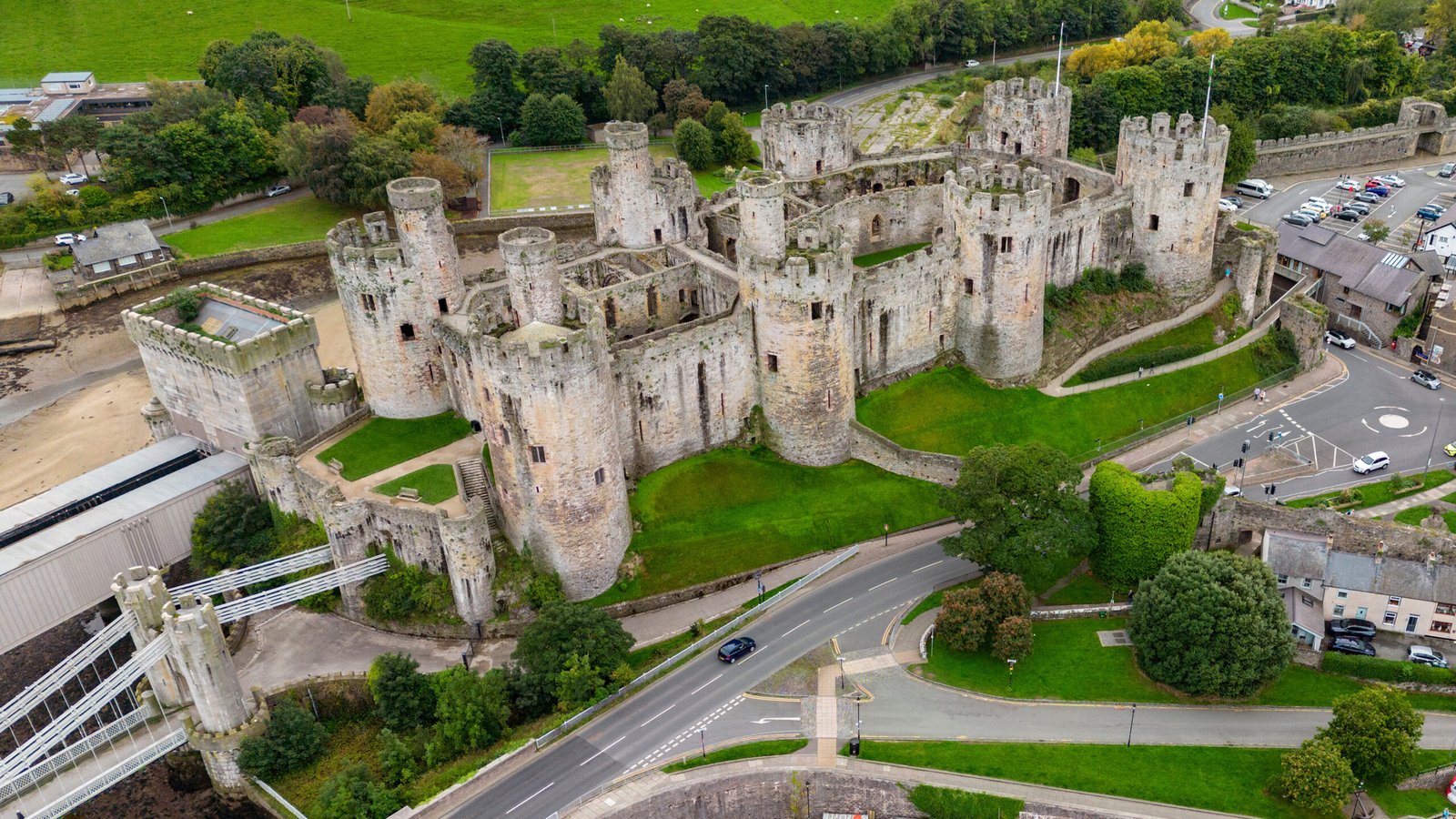
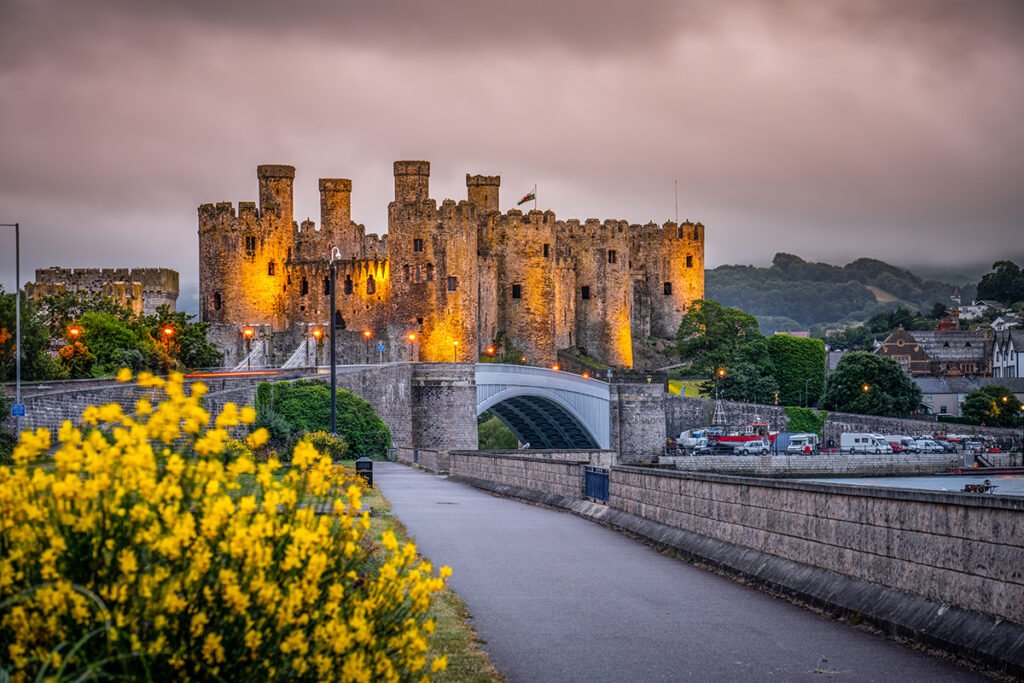
Rising straight from the rocky edge of the Conwy Estuary, Conwy Castle doesn’t ease you in gently. It hits you all at once. Eight massive towers. Thick stone walls. A position so commanding it feels almost unfair. Even today, centuries after the last soldier left its battlements, this castle still dominates the landscape with quiet confidence.
Built at the end of the 13th century by order of Edward I, Conwy Castle was never meant to be subtle. It was a statement of power, planted deliberately in the heart of North Wales during one of the most turbulent chapters in British medieval history. This was a conquest in stone. And it worked. Along with its perfectly preserved town walls, Conwy became one of the most formidable strongholds in Europe, both militarily and symbolically.
What makes Conwy Castle special isn’t just its scale or its near-perfect condition. It’s how completely the setting, the town, and the fortress merge into a single story. From the battlements, you can trace the line between land and sea, between Welsh resistance and English control. Few castles make history feel this tangible.
Walking through Conwy today is not about imagining ruins. It’s about stepping into a space that still knows exactly what it was built for. Narrow staircases twist upward inside tower walls. Arrow slits frame views of mountains and water. The wind cuts across the walls just as it did for medieval guards watching the horizon.
This guide takes you deep inside Conwy Castle. We’ll explore its dramatic history, its clever design, the lives once lived within its walls, and what it’s really like to visit today. Whether you’re planning a trip to North Wales or building a castle bucket list, Conwy is one fortress you don’t just visit. You feel it.

Quick Facts: Conwy Castle at a Glance
📍 Location: Conwy, North Wales, United Kingdom
🏗️ Construction Period: 1283–1289
🏰 Architectural Style: Medieval military architecture (Edwardian castle)
👑 Founder: King Edward I of England
⚔️ Primary Purpose: Military fortress and royal stronghold
🧱 Defensive Features: Eight towers, massive curtain walls, twin barbicans, strategic estuary position
🏘️ Associated Site: Conwy Town Walls (almost fully intact)
🏆 UNESCO World Heritage Status: Yes – part of the Castles and Town Walls of King Edward in Gwynedd (designated 1986)
⏱️ Suggested Visit Duration: 1.5 to 2 hours (castle only)
👣 Combined Visit Time: Half day with town walls and Plas Mawr
🎟️ Managed By: Cadw (Welsh Government heritage service)
🌐 Official Website: https://cadw.gov.wales/visit/places-to-visit/castell-conwy
Perched between the mountains of Snowdonia and the tidal waters of the Conwy Estuary, Conwy Castle wasn’t built in isolation. It was designed as part of a complete fortified town, where castle, walls, harbor, and streets worked together as a single defensive system. That rare level of preservation is what places Conwy among the most important medieval castles in Europe—and why it still feels so complete today.

The History of Conwy Castle: Edward I’s Iron Grip on Wales
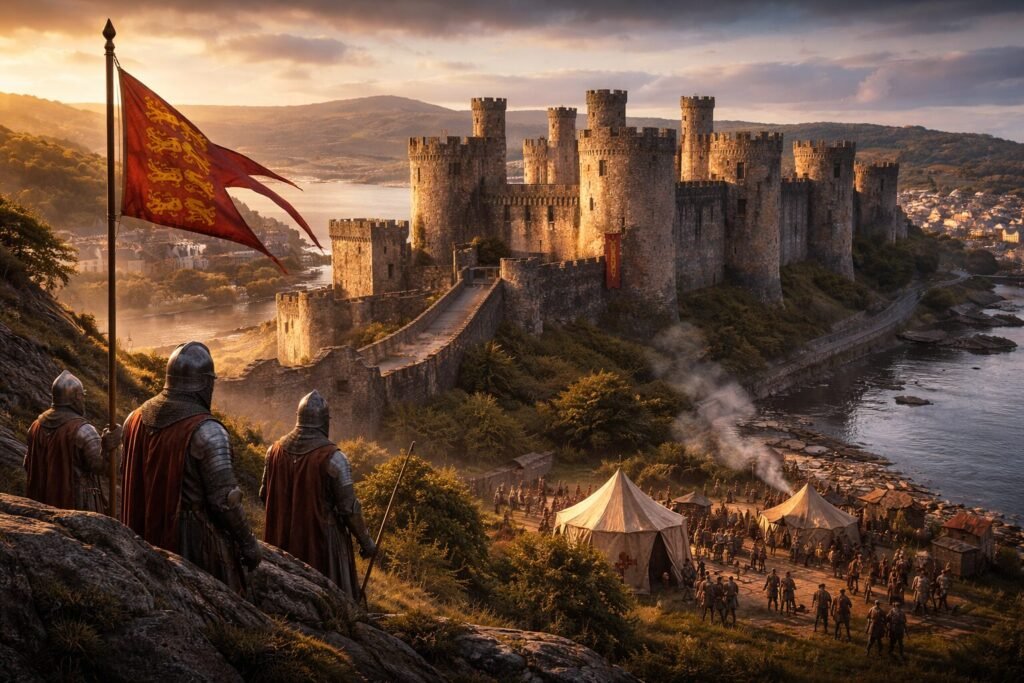
To understand Conwy Castle, you have to start with ambition. Not the quiet kind, but the ruthless, calculated ambition of a king determined to redraw the map of Britain. When Edward I turned his attention to Wales in the late 13th century, he wasn’t interested in compromise. He wanted control. Permanently.
By 1282, the final Welsh uprising led by Llywelyn ap Gruffudd had collapsed. The native princes of Gwynedd were defeated, and Edward moved quickly to secure his victory. His solution was bold and brutally effective: a chain of massive stone castles planted across North Wales, each one supported by fortified towns and English settlers. This network would later be known as the “Iron Ring,” and Conwy was one of its strongest links.
Construction of Conwy Castle began in 1283, almost immediately after the conquest. The location was no accident. The site sat at a strategic crossing point of the Conwy Estuary, with access to the sea for supplies and a commanding view inland toward the mountains. It also replaced an existing Welsh princely site, sending a clear message about who now ruled the region.
Edward entrusted the design to James of St George, the most accomplished military architect of his time. Under his supervision, Conwy rose at remarkable speed. In just six years, between 1283 and 1289, the castle and much of the surrounding town walls were completed. This wasn’t medieval improvisation. It was a coordinated, well-funded military project, costing a fortune and employing hundreds of skilled workers.
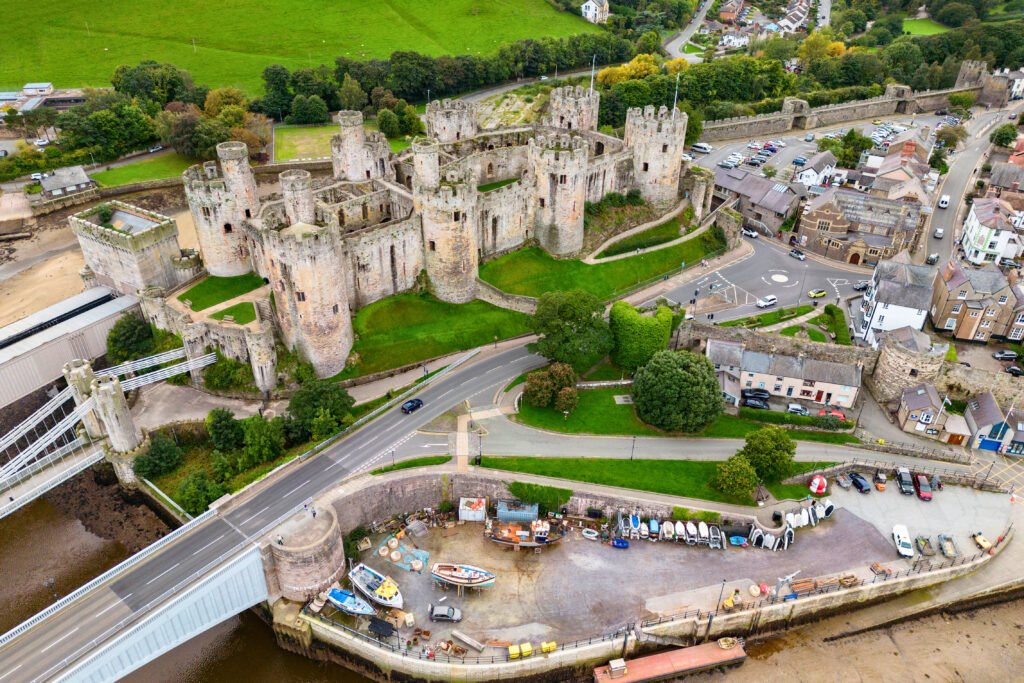
Conwy Castle was not meant to be a royal palace, but it was built to royal standards. Its eight towers were carefully arranged for maximum defense. The curtain walls were thick, high, and punctuated with arrow slits that covered every approach. Twin barbicans protected the main entrances. From land or sea, attackers faced layer after layer of obstacles. For its time, Conwy was close to impregnable.
Yet history has a way of testing even the strongest walls.
In 1294, just a few years after its completion, Conwy faced its first serious challenge during the rebellion led by Madog ap Llywelyn. Welsh forces swept through the region, capturing towns and cutting off supply lines. Edward I himself became trapped inside Conwy Castle during the winter, besieged by rebels while storms raged outside. Supplies ran dangerously low. At one point, the king was forced to rely on a risky sea resupply to avoid starvation.
The castle held. The rebellion eventually collapsed, reinforcing the effectiveness of Edward’s strategy. Conwy had proven its worth not just as a symbol of power, but as a functioning military stronghold under real pressure.
Over the following centuries, Conwy Castle remained in English hands, but its role slowly shifted. As Wales became more firmly integrated into the English crown, the need for such heavy fortifications declined. By the late Middle Ages, the castle was already slipping into partial neglect. Maintaining a structure of this scale was expensive, and without constant military use, deterioration set in.
The English Civil War in the 17th century gave Conwy one last moment of strategic relevance. Royalist forces occupied the castle for much of the conflict, using it as a defensive position against Parliamentary troops. When the Royalists finally surrendered in 1646, Parliament ordered the castle to be “slighted,” meaning deliberately damaged to prevent future military use. Walls were breached, structures weakened, and Conwy was effectively retired as a fortress.
Unlike many castles, however, Conwy was never fully dismantled or quarried for stone. Its sheer scale and solid construction worked in its favor. While roofs disappeared and interiors decayed, the main structure survived remarkably intact.
By the 19th century, attitudes toward medieval ruins began to change. Romantic artists and early preservationists saw beauty and value in these ancient fortresses. Conwy Castle became a destination for travelers and painters, its dramatic silhouette capturing the imagination of a new generation.
Today, Conwy Castle stands as one of the best-preserved medieval fortresses in Europe. Together with the castles of Caernarfon Castle, Harlech Castle, and Beaumaris Castle, it forms a UNESCO-listed group recognized for its exceptional military architecture and historical importance.
What makes Conwy’s history so compelling is not just the events it witnessed, but how clearly those events are written into its stone. Every tower, wall, and gate speaks of conquest, control, and endurance. This is not a castle softened by time. It still tells its story honestly, and it does so without saying a word.

Legends, Myths, and Life Within the Walls
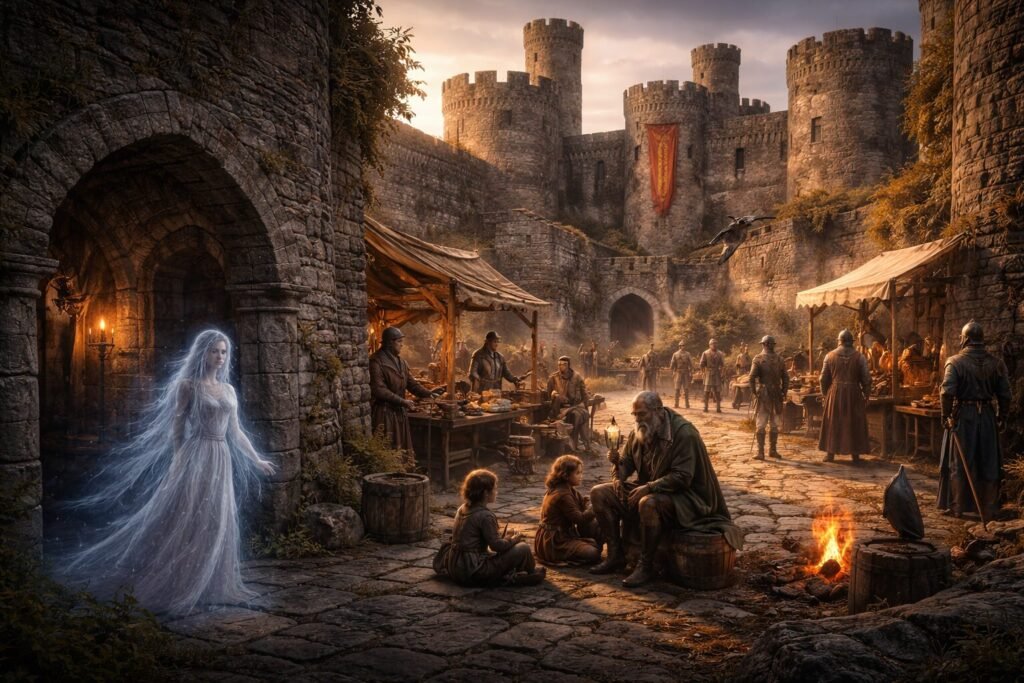
For all its military precision, Conwy Castle was never just a machine of war. It was also a place where people lived, waited, worried, argued, and endured long stretches of monotony broken by moments of fear. Over time, those human experiences blurred into legend, giving the castle a second life beyond recorded history.
Unlike castles tied to a single ghost story or dramatic curse, Conwy’s legends feel grounded. They grow naturally from siege, isolation, and power struggles rather than from folklore added later for effect. That makes them more believable, and in many ways, more unsettling.
One of the most enduring stories centers on the winter of 1294–1295, when Edward I found himself trapped inside his own fortress during the Welsh uprising. While official records confirm the siege and supply shortages, local tradition adds a darker color. Stories speak of guards rationing bread so thin it barely counted as food, of bitter winds howling through unfinished stonework, and of tension rising inside the walls as hunger set in. Whether exaggerated or not, the idea of a conquering king reduced to survival inside Conwy flips the power narrative on its head. For a brief moment, the fortress designed to control Wales became a prison of stone.
Life inside Conwy Castle during peacetime was hardly comfortable either. This was not a decorative residence filled with tapestries and warm chambers. Soldiers slept in cramped quarters inside towers or along the walls. Fires were carefully controlled to avoid smoke buildup or accidental damage. Privacy was almost nonexistent. Daily routines revolved around guard shifts, weapon maintenance, and constant vigilance over the town and estuary below.
The castle also held administrators, craftsmen, and servants who supported the garrison. Cooks prepared meals from salted meat, grain, and whatever fresh supplies could be brought in by sea. Blacksmiths repaired armor and arrowheads. Messengers came and went through the gates, carrying orders, reports, and news from across the region. The castle functioned as a small, enclosed world, sealed off whenever danger threatened.
Local legend claims that secret passages once connected parts of the castle to the town or shoreline. While no confirmed tunnels have been discovered, the belief persists, fueled by the castle’s layered design and hidden staircases. When you climb the narrow spiral stairs inside the towers today, it’s easy to understand why such stories took hold. The interior feels deliberately confusing, built to disorient anyone who didn’t know it well.
Another set of stories focuses on the relationship between the English garrison and the Welsh population outside the walls. Tension was constant. Conwy town was deliberately settled with English residents, while Welsh inhabitants were pushed outside the fortified perimeter. This forced separation created resentment that simmered for generations. Some tales describe acts of quiet resistance: supplies going missing, misleading information passed to officials, or guards unnerved by unseen watchers beyond the walls at night. Whether truth or rumor, these stories reflect a deeper reality of occupation and distrust.
There are also whispers of hauntings, though Conwy Castle is less theatrical about them than many sites. Visitors sometimes report sudden drops in temperature inside towers, unexplained echoes, or the sensation of being watched along the battlements at dusk. No single ghost dominates the narrative. Instead, the castle feels collectively haunted, as if the weight of centuries never fully lifted. It’s not a place of jump scares. It’s a place of presence.
What stands out most in Conwy’s human story is endurance. The people who lived and worked here were not heroes from legend. They were soldiers standing long watches in freezing rain. Servants hauling water up steep stairs. Messengers riding through dangerous territory. Townspeople lived under the shadow of walls that both protected and controlled them. Their lives rarely appear in chronicles, but their labor shaped the castle as much as royal ambition did.
Walking through Conwy today, those human traces linger. The worn stone steps dip slightly where countless feet passed. Window embrasures frame views that once mattered for survival, not scenery. Even the silence feels intentional, like the castle is waiting, just as it has always done.
Conwy Castle’s legends don’t try to turn it into something it isn’t. They reinforce what the walls already say. This was a place built for power, held through discipline, and lived in by people who had no choice but to adapt. That quiet, human struggle is what gives Conwy its lasting presence.
Architecture & Design: A Masterclass in Medieval Defense
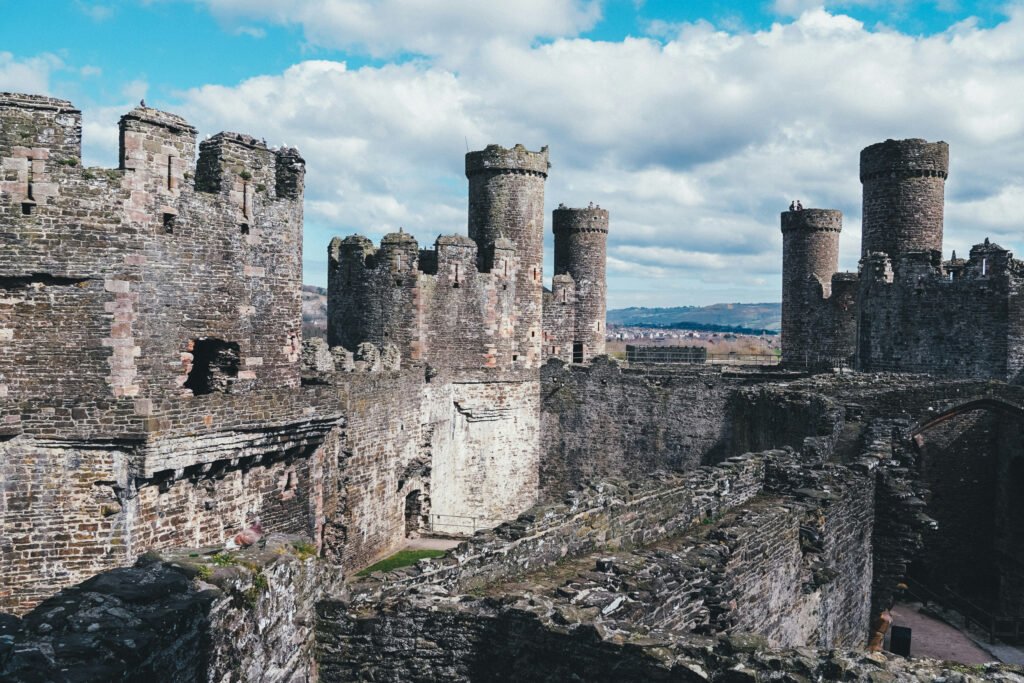
Conwy Castle doesn’t impress by accident. Every wall, tower, and passage was planned with purpose, making it one of the clearest expressions of late 13th-century military architecture anywhere in Europe. This is a fortress designed to dominate its surroundings, control movement, and withstand sustained attack, all while projecting unmistakable authority.
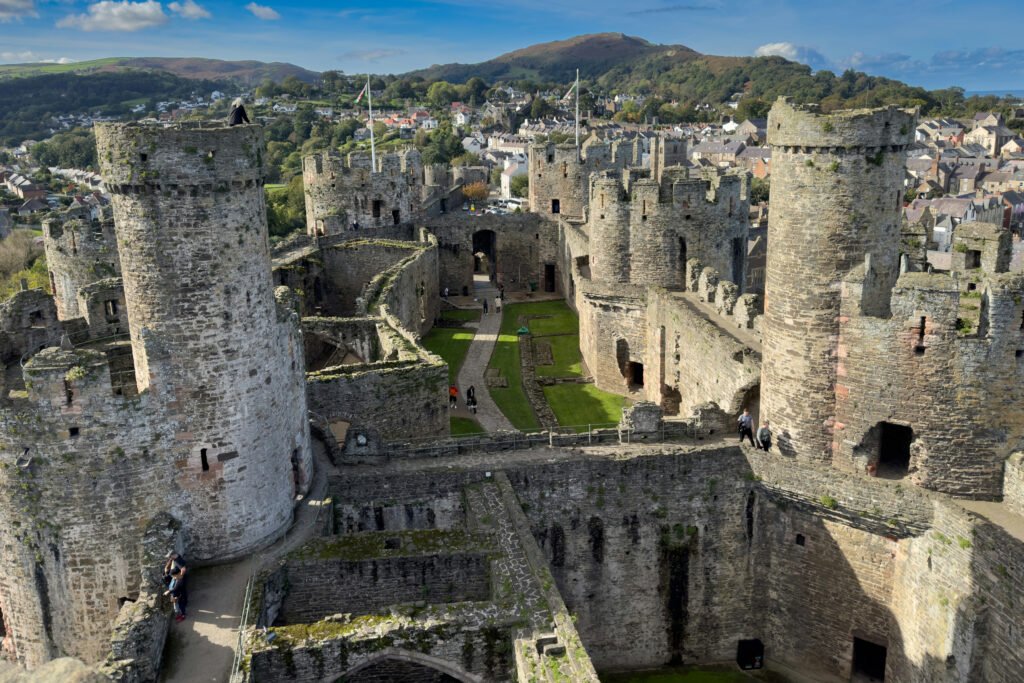
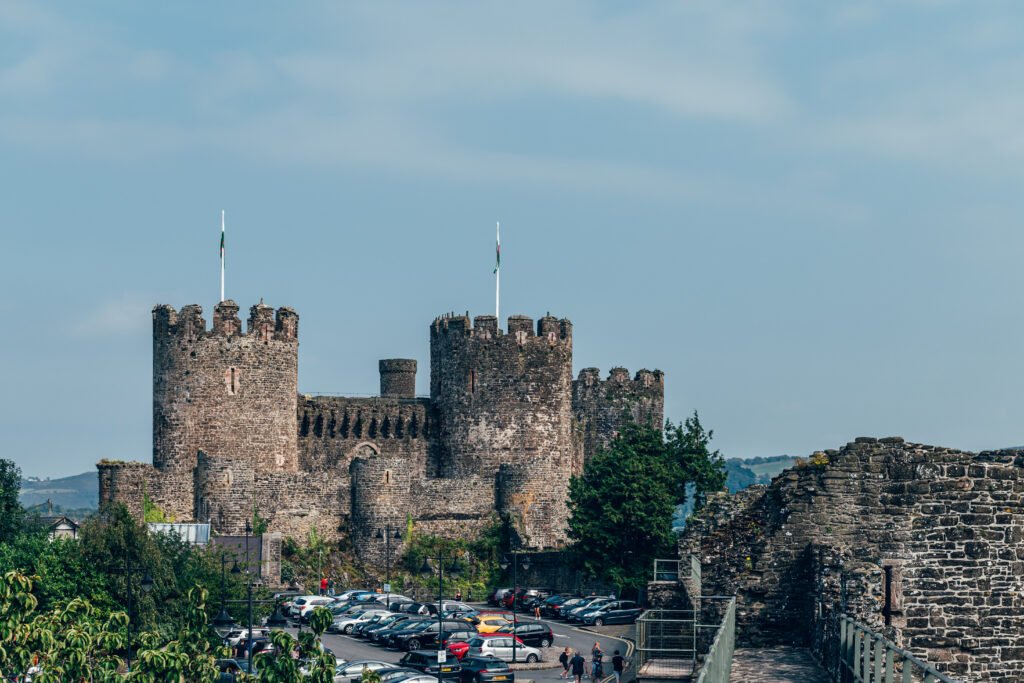
At first glance, the structure feels almost symmetrical. Eight massive towers rise from thick curtain walls, arranged in two wards: an outer ward facing the town and an inner ward overlooking the estuary. This layout allowed defenders to fall back in stages if parts of the castle were breached, forcing attackers to fight uphill, through choke points, and under constant fire.
The towers are the castle’s defining feature. Tall, round, and powerfully built, they were designed to eliminate blind spots and resist undermining. Each tower had multiple levels, connected by narrow spiral staircases that twisted clockwise. That detail mattered. Right-handed defenders descending the stairs had more room to swing a sword, while attackers climbing up were cramped and exposed. It’s a small design choice with lethal consequences.
Conwy’s curtain walls are equally imposing. In places, they reach over three meters thick, built to absorb the impact of siege engines. Arrow slits are carefully angled to allow defenders to fire while remaining protected. Walk along the battlements today, and you can see how overlapping fields of fire covered every approach, from the town below to the shoreline beyond.
The main entrances were the castle’s most vulnerable points, and Conwy treats them accordingly. Twin barbicans guarded the gates, forcing visitors and enemies alike to pass through long, narrow corridors under direct fire from above and the sides. Heavy doors, portcullises, and murder holes turned entry into a calculated risk. If attackers reached the gate at all, they were already exhausted and exposed.
Unlike later castles that blended defense with luxury, Conwy remains unapologetically functional. There are no grand halls designed for comfort. Living spaces were tight, practical, and often cold. Fireplaces existed, but the heat was uneven and limited. This was not a place built to entertain. It was built to endure.
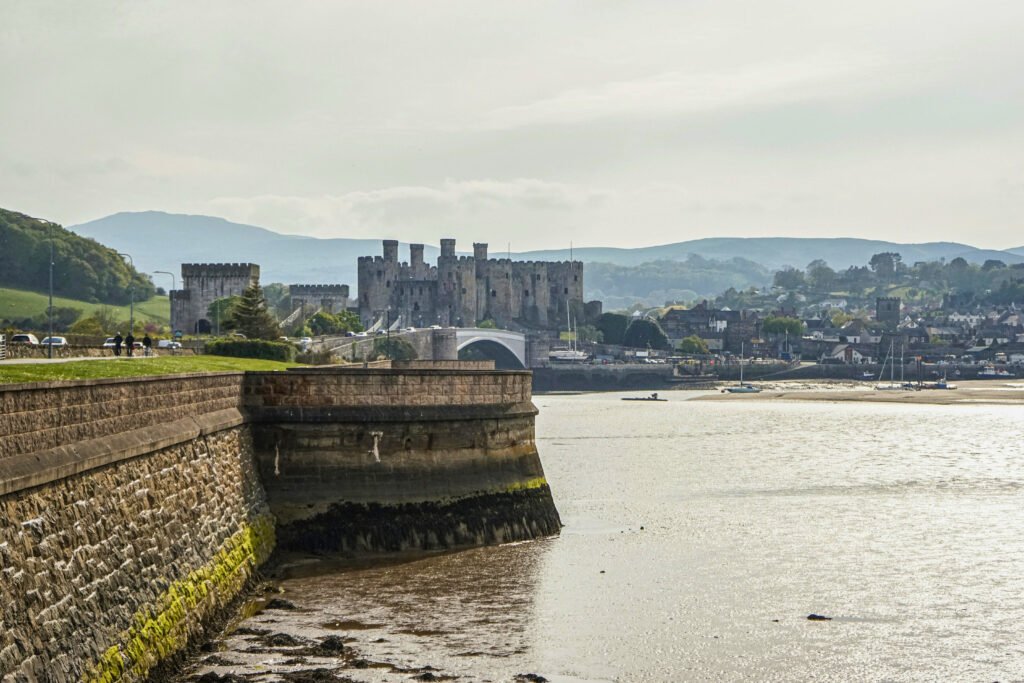
What makes Conwy especially striking is how it integrates with the landscape. The castle sits directly on rock, with walls rising almost organically from the ground. On the estuary side, the towers loom above tidal waters, allowing supply ships to reach the castle even during sieges. On the landward side, the walls connect visually and strategically with the town fortifications, creating a unified defensive system rather than a standalone stronghold.
Compared to other Edwardian castles in North Wales, Conwy feels more compact and aggressive. Where some castles emphasize symbolism or urban grandeur, Conwy prioritizes control. There is a sense that nothing here is wasted. Every space serves a purpose, even if that purpose is simply to intimidate.
Walking through the castle today, the design still works on you. The narrow passages slow your pace. The height of the towers pulls your gaze upward. The thick walls muffle sound, creating a sense of isolation even on busy days. You don’t just see the architecture. You feel it shaping how you move and think.
That is Conwy Castle’s greatest architectural achievement. It doesn’t rely on decoration or restoration to impress. The structure itself does the work. More than seven centuries later, it still communicates power, control, and permanence with absolute clarity.
Walking Through Conwy Castle Today: What to Expect

Visiting Conwy Castle today feels less like touring a ruin and more like entering a structure that has simply paused mid-sentence. The curtain walls are largely intact, and several towers are still climbable via restored spiral staircases. The scale is immediate. From the moment you step through the gate, the castle makes it clear that this is a place meant to be explored vertically as much as horizontally.
The approach sets the tone. The outer gate rises ahead of you, framed by thick stone and narrow openings that once bristled with defensive intent. Passing inside, the space opens into the outer ward, where the sense of enclosure becomes obvious. High walls cut off the town beyond, and the noise drops away. Even on busy days, the castle has a way of absorbing sound.
From here, most visitors instinctively head upward. The towers are the real draw, and each one offers a slightly different perspective. Climbing them means navigating steep, spiral staircases worn smooth by centuries of use. The steps are uneven and narrow, and in places the light fades, forcing you to move carefully. It’s not difficult, but it is physical. This is part of the experience. Conwy doesn’t let you forget that medieval castles were not designed for comfort.
Reaching the battlements is the reward. From the walls, the view stretches across the Conwy Estuary, the rooftops of the town, and toward the distant mountains. On a clear day, the landscape feels almost theatrical. You can immediately see why this location mattered. Every approach, whether by land or sea, lies exposed beneath the walls. The strategic advantage is obvious without a single explanation panel.
The inner ward feels more intimate. This is where the heart of the castle once functioned, with service buildings, storage areas, and access points between towers. While roofs and floors are long gone, the layout remains legible. You can trace how people moved through the space, how defenders could retreat inward if needed, and how control was maintained through layered design.
Interpretive panels are present but discreet. They provide context without overwhelming the site, leaving room for imagination. That balance works in Conwy’s favor. The castle doesn’t need a heavy explanation to impress. Its structure tells most of the story on its own.
One of the most striking aspects of walking through Conwy is how accessible the walls remain. You can walk long stretches of the battlements along the designated wall‑walks, not just stand at one or two viewpoints. The height is real, and the drops are steep, but solid stone parapets keep everything secure. For anyone with a head for heights, this is where the castle truly comes alive.
Photographers tend to linger here, especially in the late afternoon when the light softens, and the stone takes on warmer tones. The contrast between grey walls, green hills, and tidal water creates natural compositions in every direction. Even casual photos tend to come out well.
Despite its scale, Conwy Castle is manageable. A focused visit takes about 90 minutes, though it’s easy to spend longer if you explore every tower and pause often for views. There’s no fixed route, which allows you to wander at your own pace and return to favorite spots.
The surfaces are uneven, and accessibility is limited in places, particularly in the towers. Flat areas and ground-level sections are still enjoyable, but visitors should be prepared for steps and inclines. Sturdy footwear makes a real difference here.
What stands out most is how present the castle feels. This is not a fenced-off monument viewed from a distance. You’re inside it. You’re climbing it. You’re tracing the same paths guards once walked. Conwy Castle doesn’t ask you to imagine the past. It puts you directly inside it.
Visiting Conwy Castle: Practical Travel Tips for a Smooth Experience
Conwy Castle is one of those places where a little planning pays off. The site itself is straightforward to visit, but timing, weather, and logistics can dramatically shape how much you enjoy it. Here’s what you need to know before you go, based on what actually matters on the ground.
How to Get There
Conwy is easy to reach, even without a car. If you’re coming by train, Conwy Station sits just a short walk from the castle entrance. The route takes you through the heart of the old town, which is a nice way to arrive. Trains run regularly from Llandudno Junction, which connects to major lines from Chester, Manchester, and beyond.
Driving is equally simple. Conwy is well signposted from the A55 North Wales Expressway. Council-run pay-and-display car parks are right next to the entrance (with accessible spaces), plus others near the town walls and marina—all within easy walking distance. Parking fills quickly in peak season, especially late morning onward, so arriving early makes a real difference.
Once you’re in town, everything is walkable. The castle, town walls, Plas Mawr, shops, and cafés all sit close together, making Conwy ideal for a car-free visit.
Tickets and Entry
Conwy Castle is managed by Cadw, the Welsh Heritage Service. Tickets are purchased on-site or online. Buying ahead is useful during busy periods, though walk-up entry is usually available.
Cadw membership grants free entry, which can be excellent value if you plan to visit multiple castles in Wales. Check for occasional deals or bundles with nearby sites like Plas Mawr through Cadw or local tourism.
The castle is mostly outdoors, so closures are rare. However, individual towers or sections may close temporarily during high winds or for safety reasons.
For the most up-to-date information on opening times, seasonal hours, and current ticket prices, check the official Cadw page for the castle. It’s updated regularly and gives you a clear picture of what to expect before you arrive.
Best Time of Day to Visit
Timing matters here more than people expect.
Early morning is the best window if you want quieter conditions and clear views. Arriving near opening time lets you explore the towers before crowds build and before tour groups arrive. The light is also softer, which is ideal for photos from the battlements.
Late afternoon is the second-best option, especially in spring and summer. The castle empties slightly as families move on, and the low sun brings out texture in the stonework. Just be mindful of closing times, as you don’t want to rush the final sections.
Midday tends to be the busiest, particularly between 11:00 and 14:00. If that’s when you arrive, expect to share staircases and viewpoints. It’s still worth visiting, but patience helps.
Best Season to Visit
Conwy Castle works year-round, but each season offers a different experience.
Spring brings longer days and fresh color in the surrounding hills. It’s one of the best times for walking the walls without summer crowds.
Summer offers the most reliable weather, but it’s also peak season. Expect more visitors, especially during school holidays. Early starts are key.
Autumn is underrated. Cooler air, dramatic skies, and fewer crowds make it a strong choice, especially for photographers.
Winter is quiet and atmospheric. The castle remains open on most days, and you’ll often have entire sections to yourself. The downside is weather exposure. Wind off the estuary can be biting, and some upper areas may close during storms.
What to Wear and Bring
Conwy Castle is exposed. Very exposed.
Comfortable, sturdy footwear is essential. Stone steps are uneven and can be slippery in wet weather. Avoid smooth soles.
Layered clothing works best. Even on sunny days, the wind on the battlements can be sharp. In colder months, gloves and a warm jacket are worth having.
Bring water, especially in summer. There are no cafés inside the castle itself, though plenty are available just outside in town.
A small backpack is fine, but keep it light. Narrow staircases and tight corners make bulky bags awkward.
Accessibility Considerations
Conwy Castle is partially accessible, but limitations are significant.
Ground-level areas, including the outer and inner wards, are relatively manageable. Some paths are uneven but wide.
The towers and battlements require climbing steep staircases with no lifts. Visitors with limited mobility may not be able to access upper levels, which is where many of the views are.
If accessibility is a concern, pairing a castle visit with a walk along the town walls or a visit to Plas Mawr can help balance the experience.
How Long to Plan for Your Visit
For the castle alone, plan 1.5 to 2 hours. That allows time to explore several towers, walk the walls, read interpretive panels, and pause for views.
If you enjoy photography or tend to linger, 2.5 hours is not excessive.
Many visitors combine the castle with:
- A walk along the town walls
- Lunch in Conwy town
- A visit to Plas Mawr
Together, this makes for an excellent half-day itinerary.
Visiting with Children
Conwy Castle works well for families, especially with older children.
Kids usually love the towers, staircases, and sense of exploration. The ability to move freely rather than follow a fixed route helps keep interest high.
That said, supervision is important. Drops are real, staircases are narrow, and some areas are exposed to wind.
For younger children, pacing the visit and allowing time to run around open courtyard areas makes a big difference.
Photography Tips
Conwy is extremely photogenic, but a few tips help maximize results.
Morning light favors views toward the town and mountains. Afternoon light works better for estuary-facing shots.
Wide-angle lenses shine on the battlements, while telephoto shots can isolate details like arrow slits and tower textures.
Cloudy days are not a disadvantage. Overcast skies soften shadows and bring out stone detail, often producing more dramatic images than bright sun.
Drones are not permitted.
Food, Restrooms, and Nearby Amenities
There are no food services inside the castle, but restrooms are available near the entrance.
Conwy town offers plenty of cafés, bakeries, and pubs within minutes of leaving the castle. This makes it easy to plan a break before or after your visit without backtracking.
Many visitors choose to explore the castle first, then settle into town for lunch once the crowds peak.
A Final Practical Tip
Don’t rush Conwy Castle.
It rewards slow exploration. Climb a tower, step back down, walk the walls, sit for a moment, then move on. The experience isn’t about checking boxes. It’s about letting the space work on you.
With a bit of planning and the right expectations, Conwy Castle delivers one of the most complete and satisfying castle visits anywhere in Wales.
Conwy Town & Its Castle Walls: A Complete Medieval Stronghold
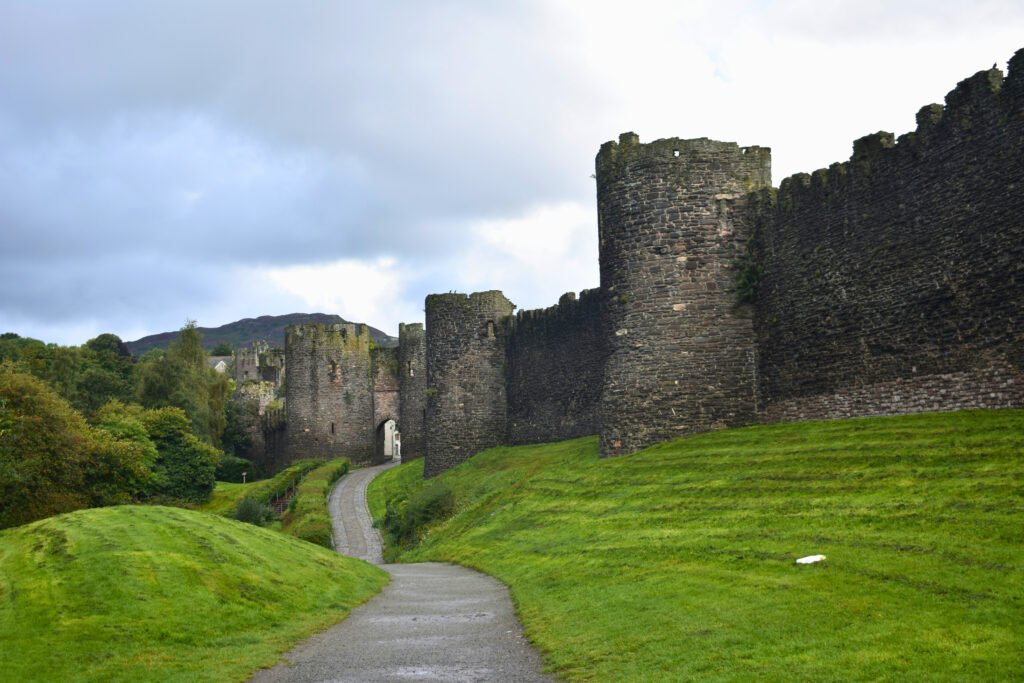
One of the reasons Conwy feels so powerful is that the castle was never meant to stand alone. It was built as the anchor of a fully fortified town, and remarkably, that system still exists today. Conwy Town Walls wrap almost entirely around the old town, creating one of the best-preserved medieval urban defenses in Europe.
The walls were constructed alongside the castle in the late 13th century, forming a single defensive vision. Together, castle and town acted as a controlled settlement for English colonists, merchants, and administrators, deliberately excluding the Welsh population from within the walls. This wasn’t just about protection. It was about control, order, and long-term occupation.
Stretching for roughly 1.3 kilometers, the town walls remain largely intact, punctuated by round towers and historic gateways. Walking them today is not an afterthought. It’s one of Conwy’s highlights, and in some ways, it rivals the castle itself.
Access points are clearly marked, and the walk is easy to follow. You don’t need special equipment or fitness. The walls rise and fall gently, offering elevated views into gardens, streets, and rooftops on one side, and outward toward the river, estuary, and hills on the other. It’s a rare chance to see a living town from a medieval defensive perspective.
What makes the experience special is how seamlessly old and new coexist. Below you, modern life unfolds. Cafés buzz. Church bells ring. Boats drift along the water. And yet the stone beneath your feet hasn’t moved in centuries. Few places offer such a clear sense of continuity.
The walls also give context to the castle’s dominance. From this height, you can see how Conwy Castle towers over everything else, positioned at the town’s edge like a final line of authority. The visual relationship between walls and the fortress becomes obvious. This was a layered defense system designed to funnel movement, protect settlers, and deter rebellion.
Several towers along the walls are accessible, allowing you to step inside and look out through narrow openings once used by guards. These spaces are quieter than the castle and often overlooked by visitors, making them ideal for slower exploration. They also offer some of the best angles for photographing the castle itself, framed by stone and sky.
At ground level, Conwy town retains much of its medieval layout. Narrow streets twist between stone buildings, many dating back centuries. The atmosphere is intimate rather than grand, and that contrast works beautifully. After the scale and severity of the castle, the town feels human and lived-in.
Plas Mawr, the Elizabethan townhouse near the center of town, adds another layer to the story. It represents a later chapter in Conwy’s history, when prosperity replaced siege mentality. Visiting both sites on the same day gives a fuller picture of how Conwy evolved beyond its military origins.
What’s most striking is how complete the experience feels. In many historic towns, walls are fragmentary or isolated. In Conwy, they still function as a coherent loop. You can walk them almost in full, return to street level, and step directly into shops, bakeries, or a quiet harbor path.
Together, the town walls and castle form a rare survival. They show not just how medieval defenses were built, but how they shaped everyday life. Conwy isn’t a backdrop for history. It’s a place where history still defines the space you move through.
If you have time for only one extra activity beyond the castle, make it the walls. They don’t just complement the fortress. They complete it.
Nearby Attractions & Side Trips Worth Adding to Your Visit
One of Conwy’s quiet strengths is how much sits within easy reach. You can build a full day around the castle and town walls, but if you have extra time, the surrounding area opens up quickly. History, coastline, and mountains all press in close, making Conwy an ideal base for short, rewarding detours.
Plas Mawr: Elizabethan Life Behind Thick Walls
Just a few minutes’ walk from the castle, Plas Mawr offers a completely different view of power and prosperity. Built in the late 16th century, this Elizabethan townhouse is one of the finest of its kind in Britain. Where Conwy Castle is austere and military, Plas Mawr is domestic and expressive.
Inside, richly restored rooms show how wealthy families lived generations after the age of conquest. Carved plaster ceilings, wide hearths, and furnished chambers bring everyday life into focus. Visiting Plas Mawr after the castle helps balance the story. You move from control and defense to comfort and status, all within the same walled town.
Llandudno: Victorian Seaside Contrast
A short train ride or drive away, Llandudno feels like a world apart. This elegant seaside resort rose to prominence in the 19th century, long after Conwy’s military relevance faded. Its wide promenade, pastel buildings, and pier offer an easy, relaxed counterpoint to stone walls and battlements.
Llandudno works especially well if you’re traveling with family or want a slower afternoon. Cafés, coastal walks, and sea views give your day a lighter rhythm after the intensity of the castle.
The Great Orme: Views, Wind, and Space
At the edge of Llandudno rises Great Orme, a massive limestone headland that dominates the coastline. You can reach the summit by foot, tramway, or cable car, depending on energy and weather.
From the top, the views stretch across the Irish Sea, back toward Conwy, and deep into the Welsh countryside. It’s one of the best vantage points in North Wales, and on clear days, you can see why control of this coast mattered for centuries. The Great Orme also has prehistoric sites and military remnants, adding yet another historical layer to the landscape.
Snowdonia National Park: Mountains at the Castle’s Back Door
Looking inland from Conwy Castle, the mountains rise quickly. Snowdonia National Park begins just beyond the town, offering everything from gentle valley walks to challenging peaks.
You don’t need to be a serious hiker to enjoy it. Short drives lead to scenic viewpoints, lakes, and easy trails that showcase the raw beauty of North Wales. For travelers with an extra day, Snowdonia turns a castle-focused trip into a broader exploration of Welsh landscape and identity.
Conwy Marina & Estuary Walks
Closer to home, the marina and estuary paths offer a calm way to wind down after exploring stone and stairs. Walking along the water gives you a different perspective on the castle, watching it shift in light as the tide moves. It’s especially peaceful in the evening, when day visitors leave, and the town settles.
How to Combine These Stops
If time is limited, pair Conwy Castle with Plas Mawr and the town walls for a focused half day. With a full day, add Llandudno or a Great Orme visit. If you have two days, Snowdonia deserves its own space.
What makes these side trips work so well is proximity. None feels forced or exhausted. They extend the story of Conwy rather than pulling you away from it. Wherever you go next, the castle remains the visual and historical anchor, reminding you how deeply this landscape and its history are intertwined.
Conwy Castle for Different Travelers: Who Will Love It Most
Conwy Castle has a rare ability to work for many kinds of travelers without feeling diluted. Its strength lies in how clearly it presents itself. It doesn’t try to be everything at once, yet different visitors walk away with very different highlights. Here’s how Conwy tends to land, depending on who you are and how you like to travel.
History Lovers and Castle Enthusiasts
If you care about medieval history, Conwy Castle is as close to essential as it gets.
This is not a romantic ruin softened by time. It’s a textbook example of late 13th-century military architecture, built by Edward I at the height of his power. The design is clear. The purpose is obvious. The context is unavoidable. You can see how conquest worked, not just read about it.
What makes Conwy especially satisfying is how intact the system remains. Castle, town walls, street layout, and harbor still form a coherent whole. For anyone interested in how castles functioned beyond symbolism, Conwy delivers real answers. You leave understanding not just what happened here, but how it was made to last.
First-Time Castle Visitors
Conwy works surprisingly well for people who don’t normally chase castles.
The layout is intuitive. There’s no confusing route or overwhelming size. You can explore freely without feeling lost or rushed. Interpretation panels explain just enough without drowning you in dates.
The experience is physical in a way that keeps attention engaged. You climb. You look out. You move through spaces that clearly had meaning. Even visitors who arrive with limited background knowledge usually leave impressed by how real and immediate it feels.
If Conwy is your first major medieval castle, it sets a high bar.
Families with Children
For families, Conwy Castle hits a sweet spot, especially with children old enough to climb stairs confidently.
The towers and battlements feel like a playground built of stone, but with real history behind it. Kids tend to engage naturally, imagining guards, sieges, and lookout posts without much prompting. The freedom to explore at your own pace helps keep energy high.
That said, this is not a hands-on museum. There are no costumes, interactive screens, or reenactments built in. Younger children may tire quickly, especially on busy days or in poor weather. Supervision is essential near staircases and high walls.
Pairing the castle with the town walls or a relaxed lunch afterward usually balances the experience well.
Photographers and Visual Travelers
Conwy is exceptionally kind to photographers.
The castle’s position gives you multiple angles, elevations, and backgrounds. From the battlements, you can frame mountains, water, rooftops, and sky in a single shot. Inside the walls, textures and repeating patterns create strong compositions even in flat light.
Golden hour is especially rewarding, but Conwy holds its own under clouds. Overcast skies bring out stone detail and give images a dramatic, brooding quality that suits the site.
Even smartphone photographers tend to come away with striking results. The castle does much of the work for you.
Slow Travelers and Wanderers
If you prefer depth over speed, Conwy Castle rewards patience.
There’s no fixed path forcing you forward. You can climb a tower, descend, sit for a moment, then move on. The site encourages repetition. Many visitors return to the same viewpoint multiple times as the light and atmosphere shift.
Combining the castle with a slow walk along the town walls, followed by coffee in Conwy town, creates a day that feels unrushed and complete. You don’t need to pack in multiple attractions to feel satisfied here.
Travelers Short on Time
Even on a tight schedule, Conwy delivers.
A focused 90-minute visit gives you a strong sense of the site. The proximity of the train station and town center means there’s little wasted time on logistics. If you’re passing through North Wales or connecting destinations, Conwy is an efficient stop that doesn’t feel compromised.
It’s one of the few major castles where a shorter visit still feels meaningful.
Travelers Seeking Comfort and Ease
This is where expectations matter.
Conwy Castle is exposed, uneven, and physical. There are stairs, wind, and stone underfoot. It’s not a place designed for comfort-first sightseeing. Visitors who prefer flat paths, seating, and indoor exhibits may find parts of the experience demanding.
That said, ground-level exploration still offers value, and the town itself provides plenty of comfort once you step outside the walls.
Who Might Skip It?
Very few, honestly.
If you actively dislike walking, heights, or outdoor sites in unpredictable weather, Conwy may not be your ideal stop. Likewise, travelers seeking ornate interiors or fully furnished rooms may prefer later palaces.
But for anyone curious about how medieval power actually looked and functioned, Conwy Castle remains one of the most rewarding visits in Wales.
It adapts to the traveler, not the other way around.
Frequently Asked Questions About Conwy Castle
Is Conwy Castle worth visiting?
Yes, absolutely. Conwy Castle is one of the best-preserved medieval fortresses in Europe and offers a complete experience that includes the castle, town walls, and historic center. Its scale, setting, and level of access make it one of the most rewarding castle visits in Wales.
How does Conwy Castle compare to other Welsh castles?
Conwy stands out for its balance. It is more complete and immersive than many castles and easier to explore than larger sites like Caernarfon. Unlike Beaumaris, which was never finished, Conwy feels fully realized, with its town walls adding an extra layer of historical depth.
How long should I plan to visit Conwy Castle?
Plan for 1.5 to 2 hours for the castle alone. If you include the town walls and nearby sites like Plas Mawr, a half-day is ideal. Visitors who enjoy photography or slow exploration may want closer to 3 hours.
Is Conwy Castle suitable for children?
Yes, especially for older children. The towers, staircases, and battlements are engaging and encourage exploration. Younger children will need close supervision due to steep stairs and high walls.
Is Conwy Castle accessible to visitors with limited mobility?
Partially. Ground-level areas are accessible, but most towers and battlements require climbing narrow staircases. Visitors with mobility challenges may still enjoy the outer and inner wards, as well as the town walls at street level.
When is the best time of year to visit Conwy Castle?
Spring and autumn offer the best balance of weather and crowd levels. Summer has the most reliable weather, but is busier. Winter visits are quieter and atmospheric, though weather conditions can limit access to upper areas.
Can you walk on the walls of Conwy Castle?
Yes. Walking the battlements is one of the highlights of the visit. You can explore long stretches of wall and climb several towers, gaining panoramic views over the town, estuary, and surrounding countryside.
Are there guided tours available?
Conwy Castle is primarily self-guided, with interpretive panels throughout the site. Cadw occasionally offers guided tours or special events, but most visitors explore at their own pace.
Can you visit Conwy Castle and the town walls on the same day?
Yes, and it’s highly recommended. The castle and town walls were designed as a single defensive system, and experiencing both together provides a much deeper understanding of medieval Conwy.
Is Conwy Castle crowded?
It can be during peak summer months and midday hours. Visiting early in the morning or later in the afternoon helps avoid the busiest periods and allows for a more relaxed experience.
Final Thoughts: Why Conwy Castle Stays With You
Conwy Castle doesn’t rely on spectacle or restoration to make its point. It simply stands there, confident in what it is and what it has survived. Long after you leave the battlements and step back into town, the shape of it lingers in your mind. The weight of the walls. The height of the towers. The way land, water, and stone lock together with almost unsettling precision.
What sets Conwy apart is completeness. This isn’t just a castle you walk through. It’s a fortified town, a strategic coastline, and a political statement that still reads clearly centuries later. You don’t need imagination to understand it. The structure does the explaining for you.
Some castles charm. Some impress. Conwy does something rarer. It convinces. You feel why it mattered. You see how it worked. And you understand why it endured when so many others faded into fragments.
Whether you arrive as a history enthusiast, a curious traveler, or someone simply following the coastline of North Wales, Conwy Castle meets you at eye level. It doesn’t ask for reverence, only attention. Give it time. Climb its towers. Walk its walls. Let the wind off the estuary do the rest.
If Conwy sparks your interest, it’s only the beginning. Wales and Europe are filled with castles that tell very different stories, shaped by landscape, ambition, fear, and power. Keep exploring, and you’ll start to see how each one fits into a much larger picture.
Some places you visit. Others stay with you. Conwy Castle is firmly in the second category.
💬 If you’ve visited Conwy Castle, feel free to share your experience—everyone notices something different as they climb the towers or walk the walls. Was it the views over the estuary, the scale of the fortifications, or how complete the town still feels?
👉 And if you’re planning your first visit, this is the perfect starting point for exploring more of the United Kingdom’s remarkable castles. From the great medieval fortresses of North Wales to dramatic cliff-top ruins and grand royal strongholds across England, there’s no shortage of places where history still feels close at hand. If Scotland is calling, its castles offer a very different mood—wilder landscapes, darker stories, and some of the most atmospheric strongholds in the Highlands and islands. Each one tells its own story, shaped by land, power, and conflict, just like Conwy.
🏰✨ Thanks for reading. If you enjoyed this article, follow along for more in-depth castle stories and travel guides. You can also find us on Instagram, Facebook, Pinterest, YouTube, TikTok, and X. And if you’re ready to keep exploring, you can browse all our castle articles here—many more castles, and many more stories, are on the way.