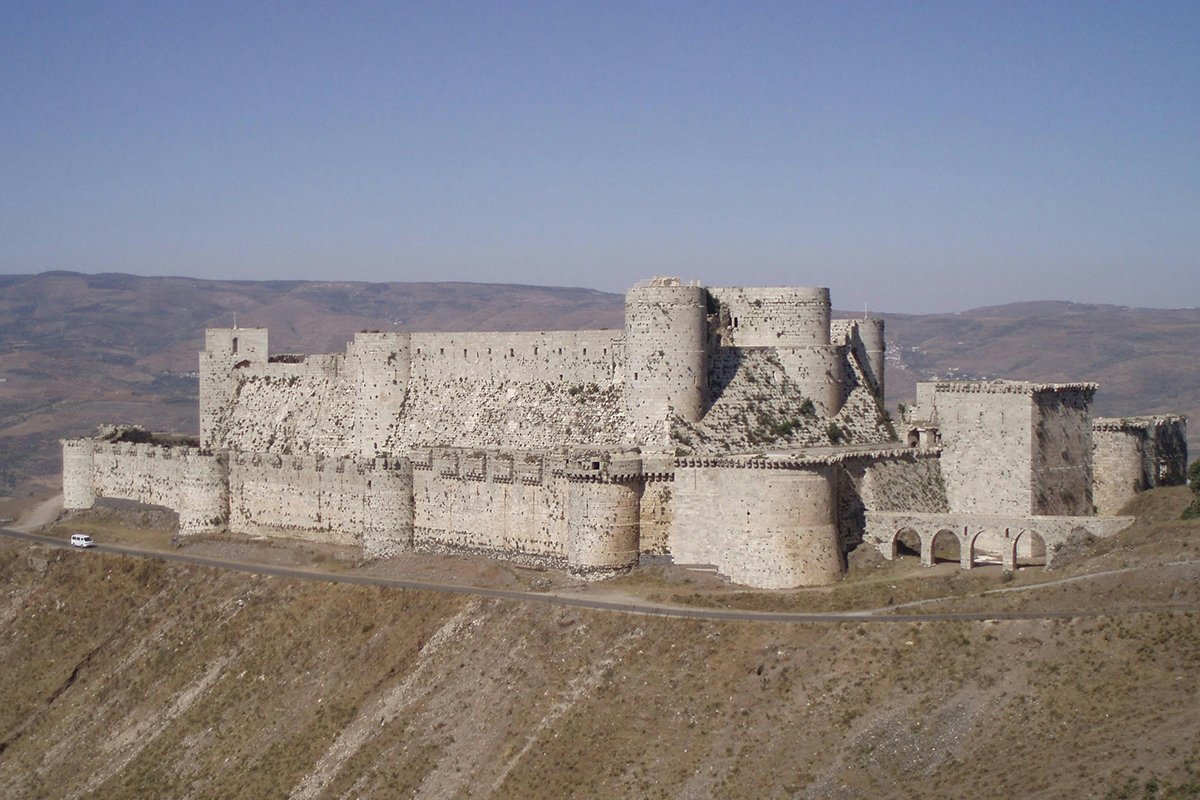
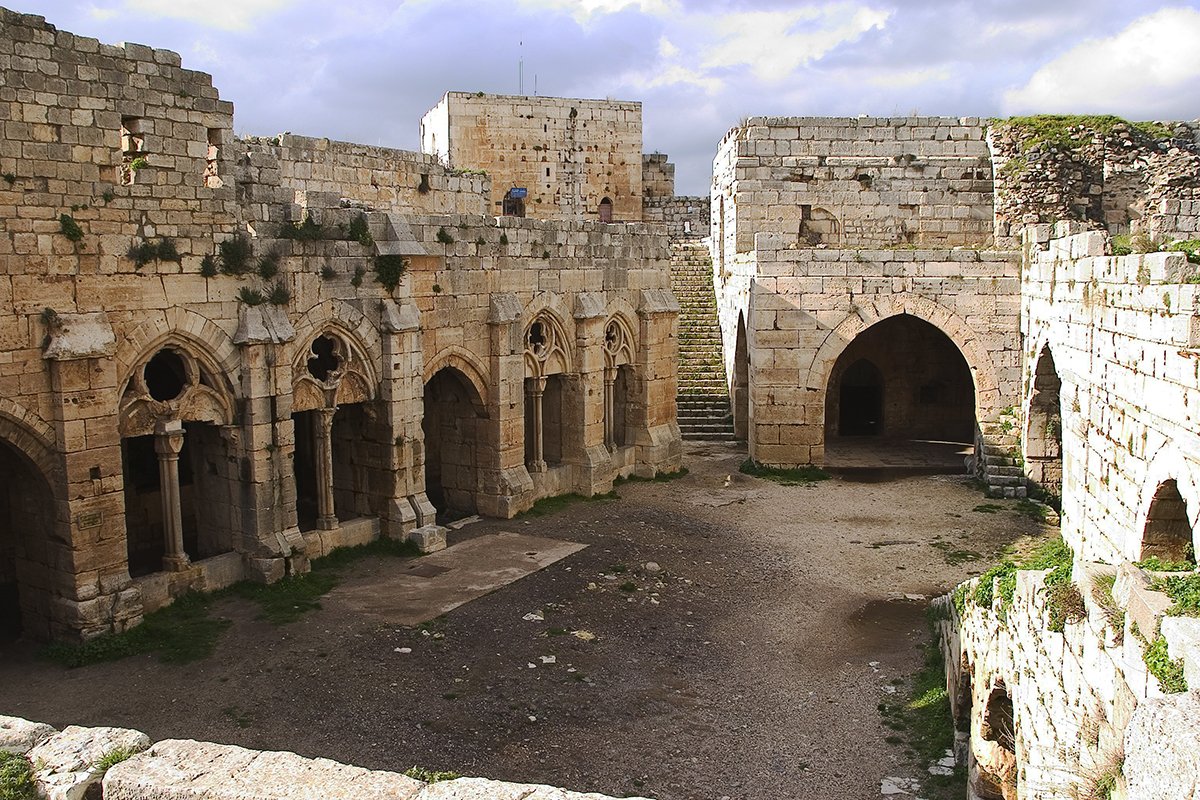
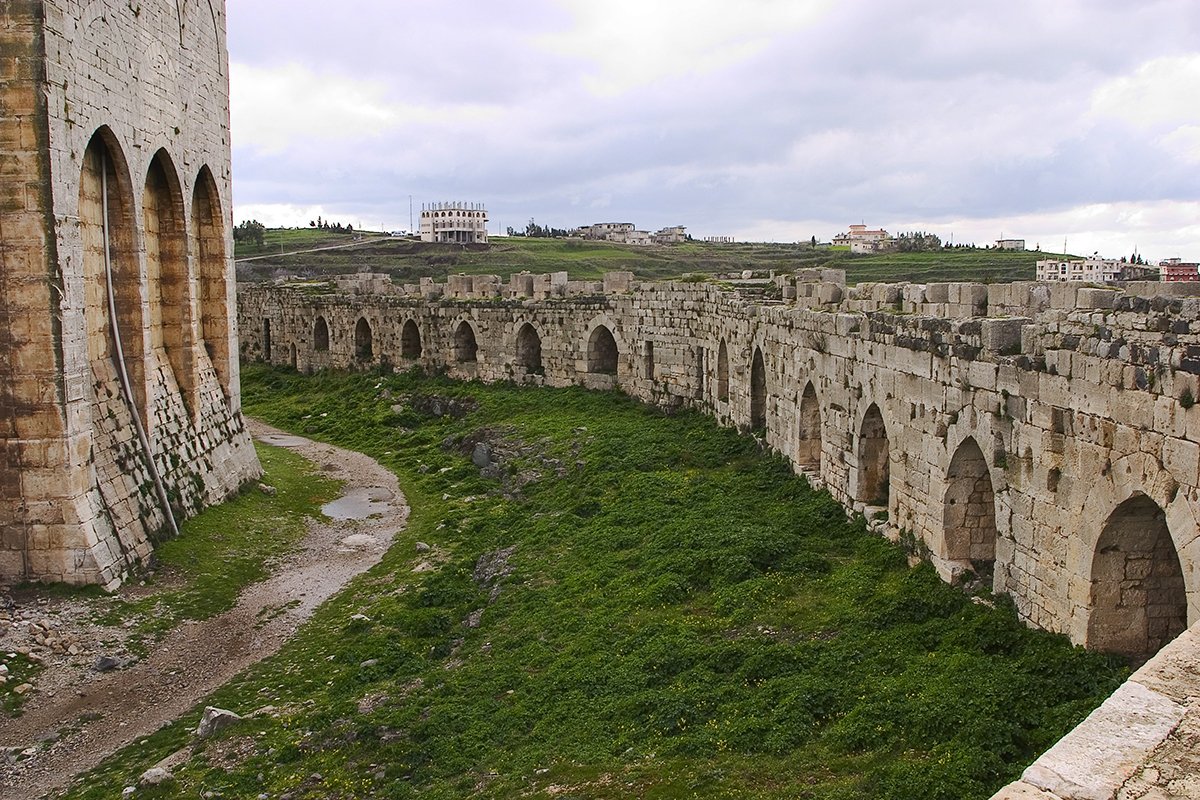
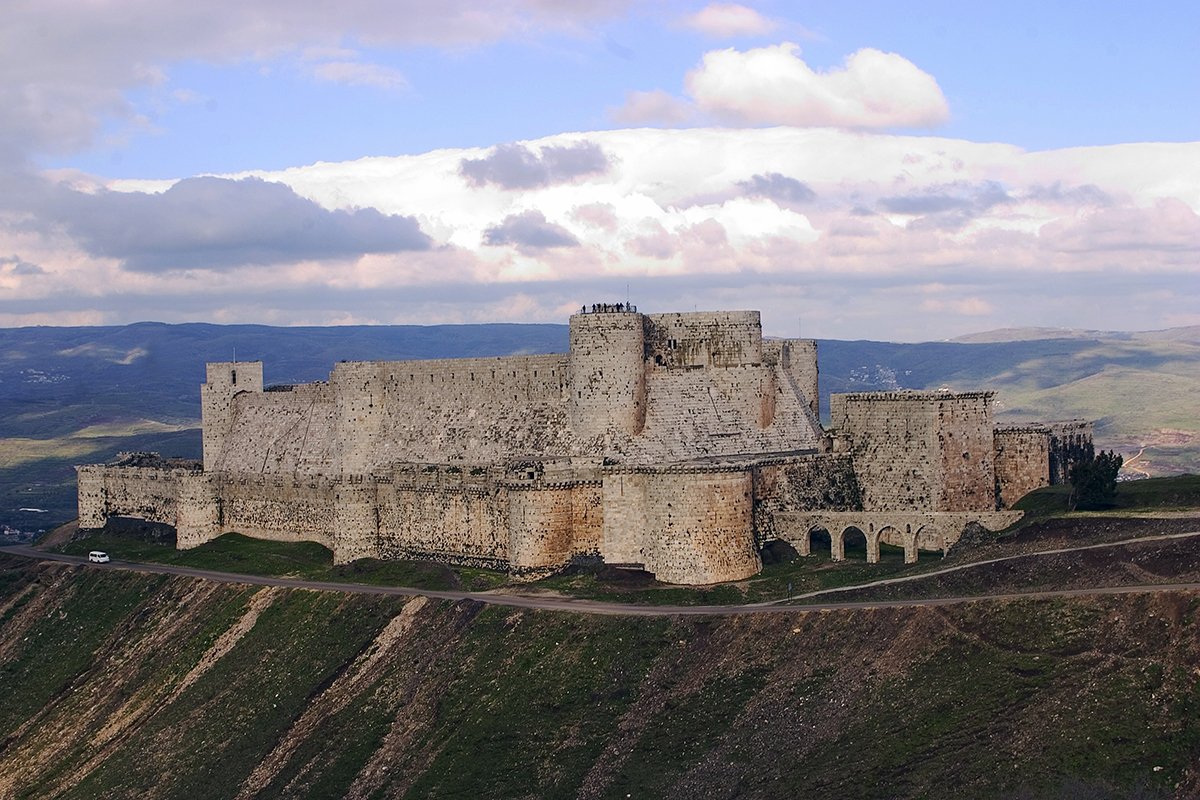
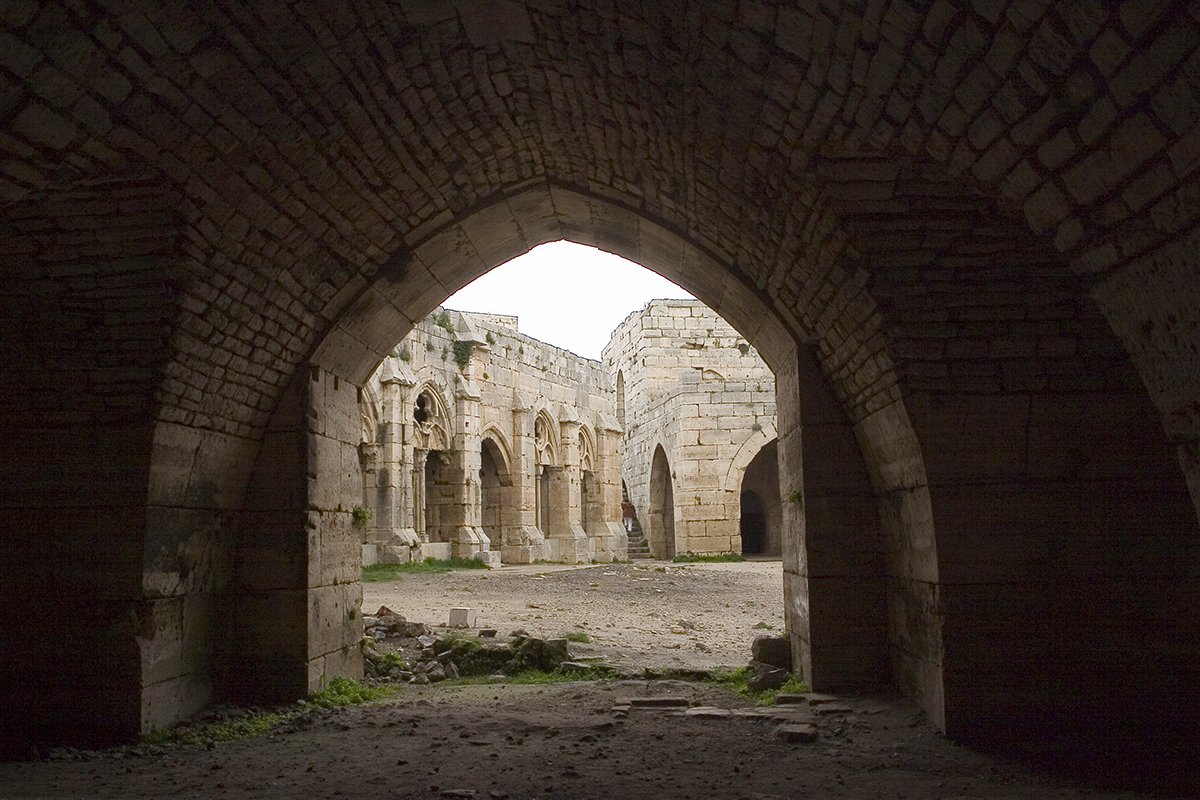
Perched above Syria’s Homs Gap, Krak des Chevaliers feels less like a ruin and more like a stone warship still holding the ridge. Its towers, double walls, and deep ditch show medieval defense at its most confident—and most elegant. Walk the ramparts and you’ll see why historians call it the archetype of the Crusader concentric castle, and why UNESCO ranks it among the world’s great fortresses.
Quick Facts
📍 Location: Near Al-Husn (Qal’at al-Hosn), Homs Governorate, Syria
🏗️ Construction Period: 1031-13th century (major Hospitaller rebuilds 1142-1271)
🏰 Architectural Style: Romanesque and Gothic Crusader military architecture with later Mamluk additions
🎭 Famous For: One of the best-preserved Crusader castles; concentric (double-enceinte) design; Baybars’ 1271 siege and surrender-by-ruse tradition; UNESCO-listed fortified architecture
👑 Notable Figures: Knights Hospitaller; Sultan Baybars I
🏆 UNESCO Status: Yes — 2006, inscribed as ‘Crac des Chevaliers and Qal’at Salah El-Din’
🌐 Official Website: https://en.wikipedia.org/wiki/Krak_des_Chevaliers
Map
Historical Context
Long before it became a Crusader icon, the hilltop was known as Hisn al-Akrad—'the Fortress of the Kurds'—held by an Abbasid-era garrison from 1031. After the Crusaders took the site in 1109, it entered its defining chapter in 1142, when the Knights Hospitaller received it and rebuilt on a formidable scale. Over the next century they shaped Krak into a textbook concentric fortress: a high inner castle wrapped by a lower outer enceinte, thick curtain walls, round flanking towers, and a wide ditch carved to isolate the stronghold from the slope. It served as the Hospitallers' powerhouse in the County of Tripoli, anchoring raids and controlling movement through the Homs Gap. In 1271, Mamluk Sultan Baybars captured it after hard fighting and an oft-told negotiated surrender, then strengthened and inscribed the fortress for his own era.
Visual Tour
Visiting Information
🗓️ Best Time to Visit: April, May, late September, and October
🗺️ Location Perks: The castle commands sweeping views over the Homs Gap—one of Syria’s key natural corridors between coast and interior. Don’t miss the panorama from the outer towers, especially when late light picks out the fortress’s pale limestone.
⏳ Estimated Visit Duration: Plan to spend 2-3 hours exploring the castle and its grounds.
💡 Visiting tips: Wear sturdy shoes for steep, uneven stairs and worn ramparts, and bring water—shade can be scarce on the walls. Interiors run darker and cooler, so a small flashlight helps in vaulted corridors; always check current access and safety conditions before you go.
Related Articles
Search