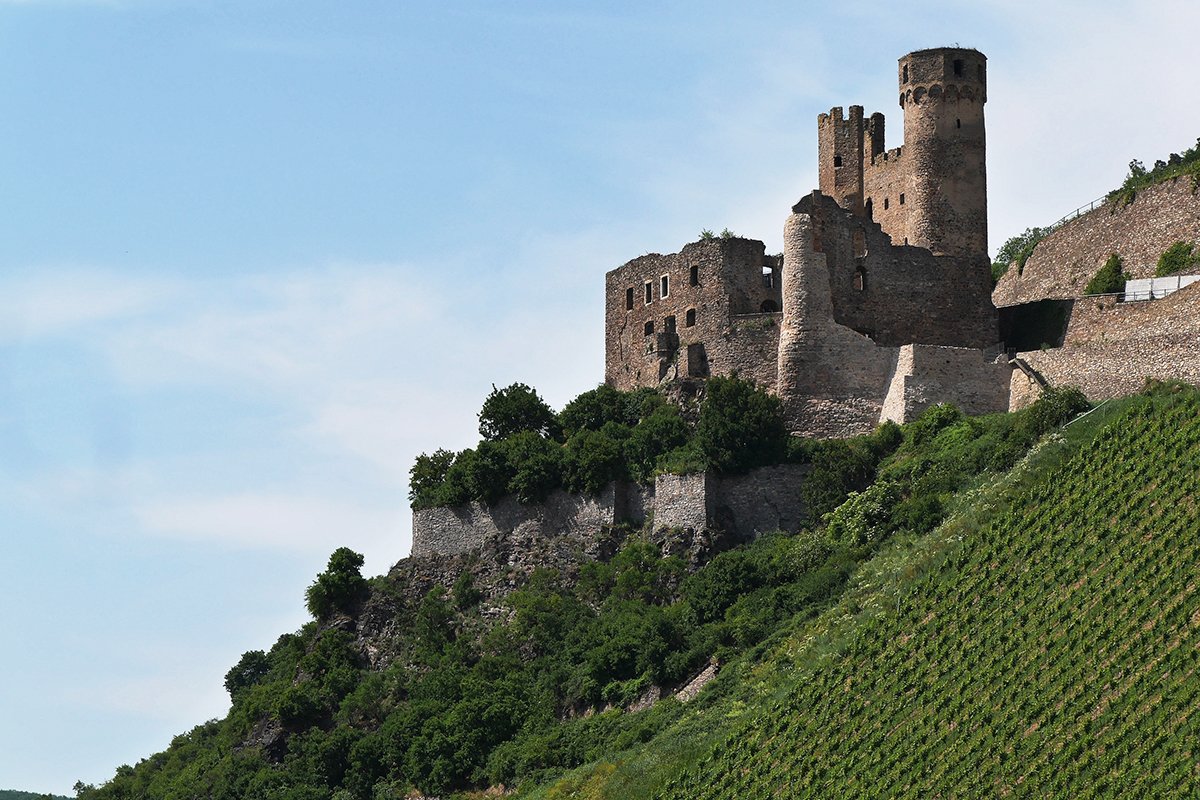
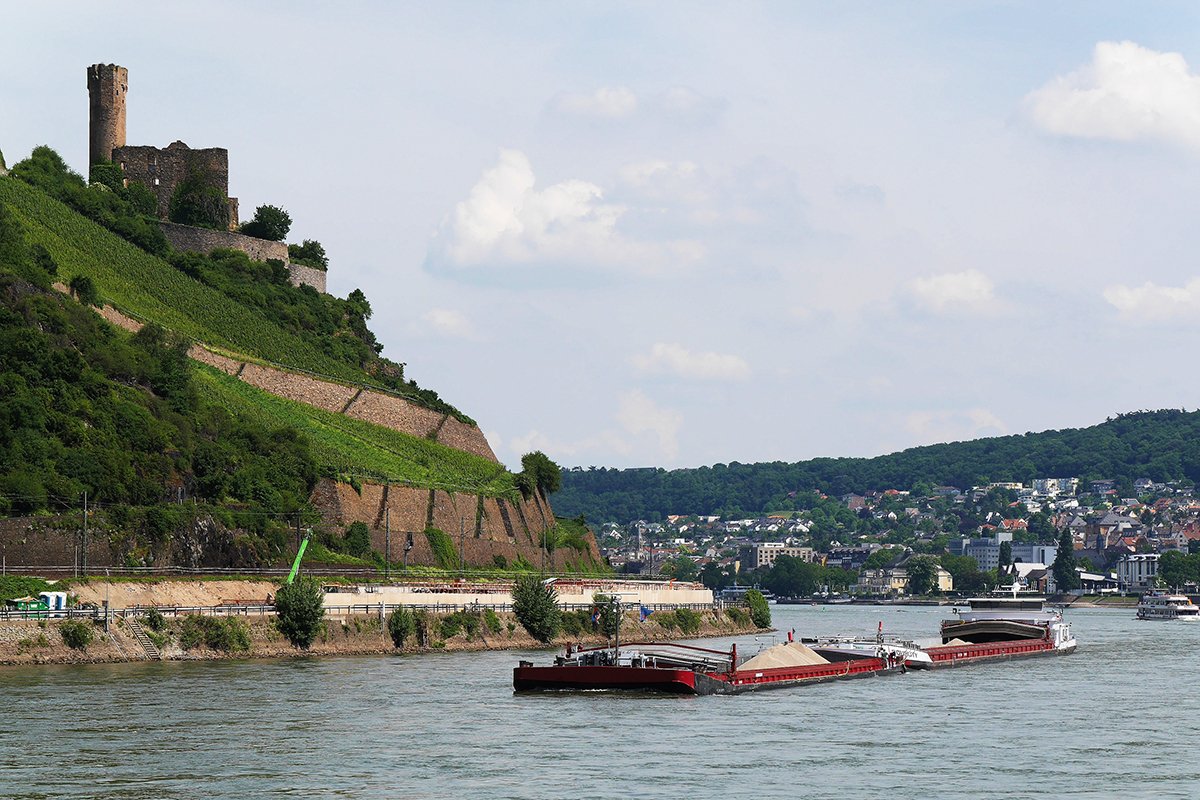
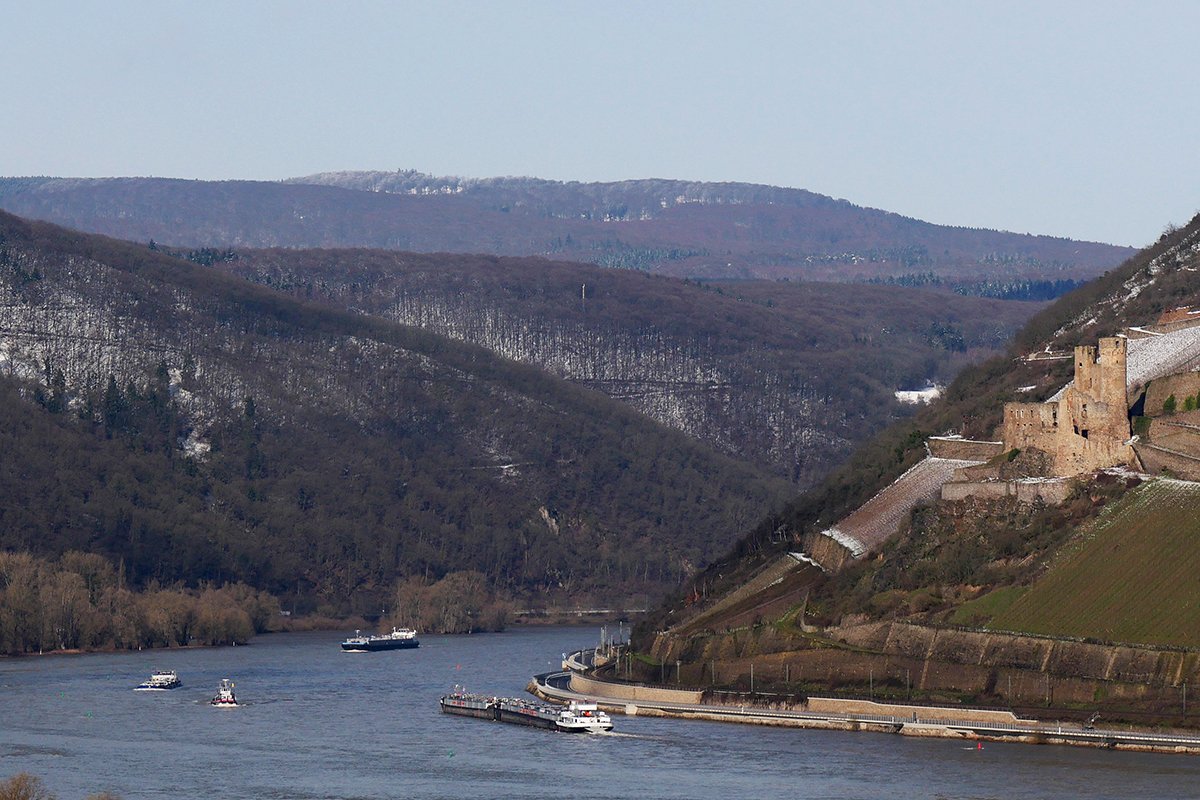
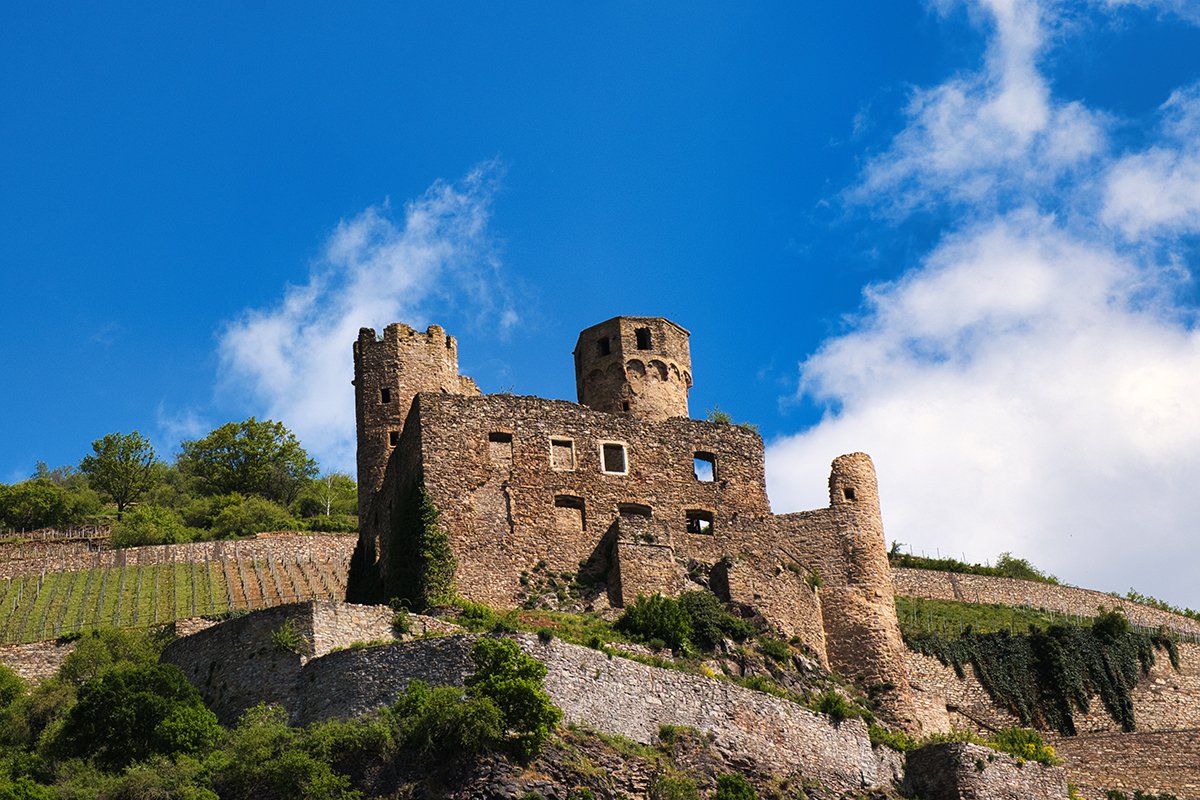
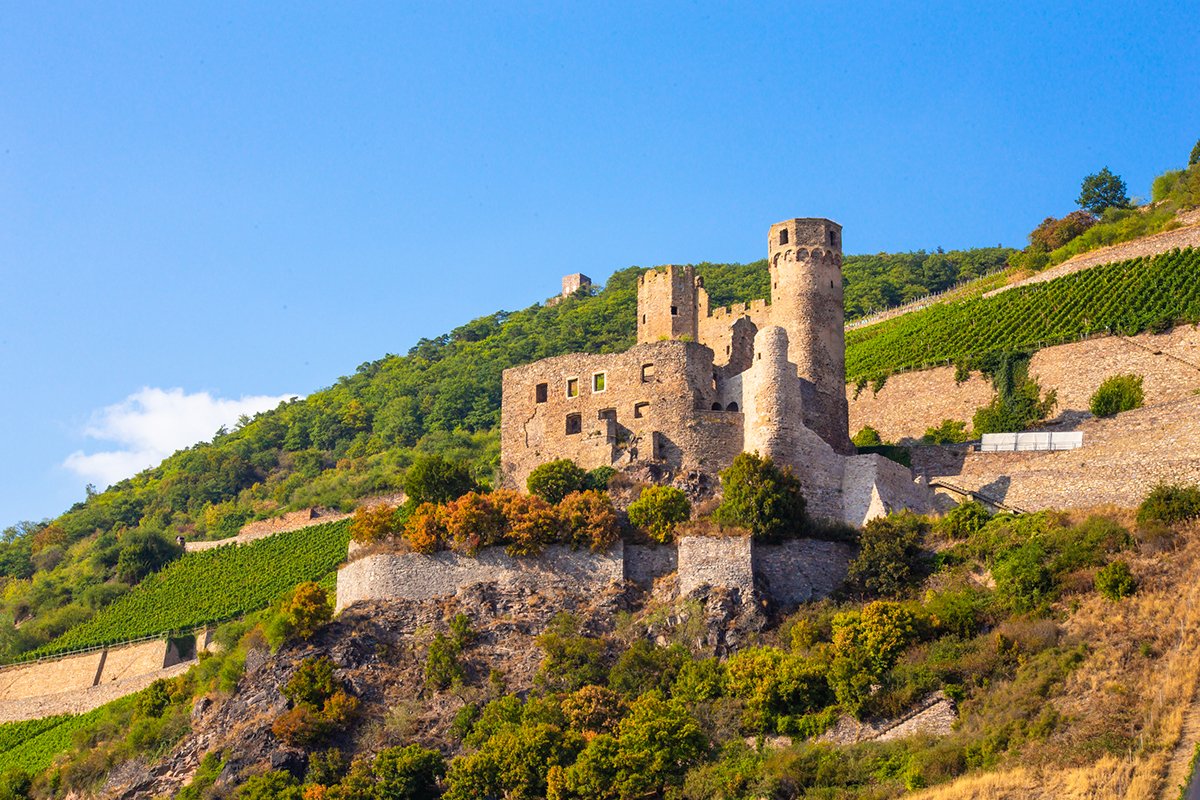
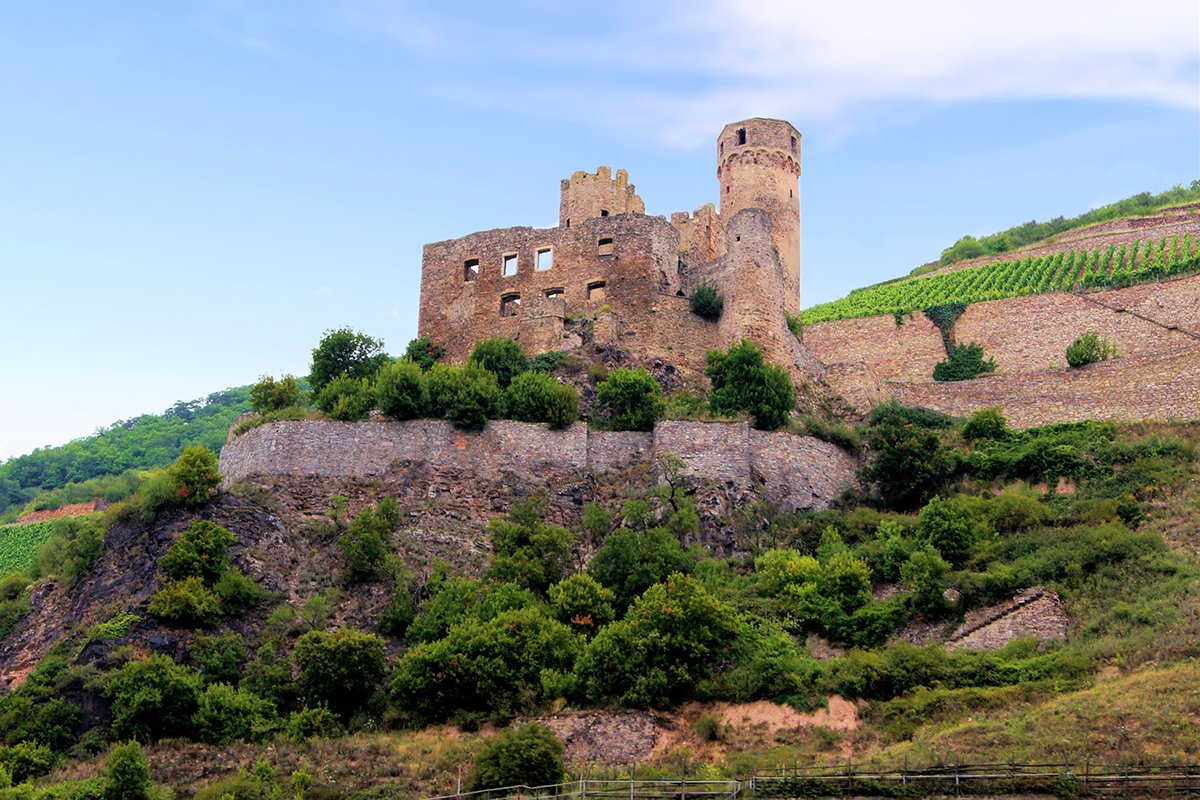
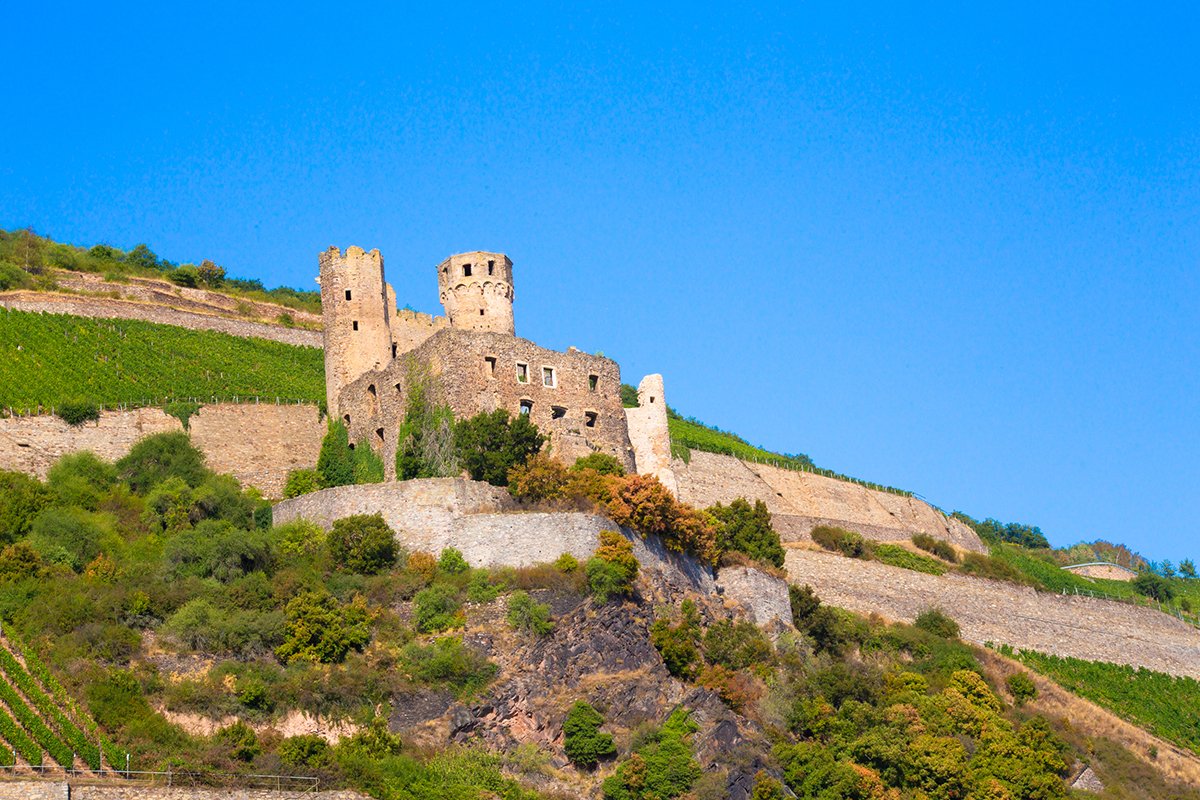
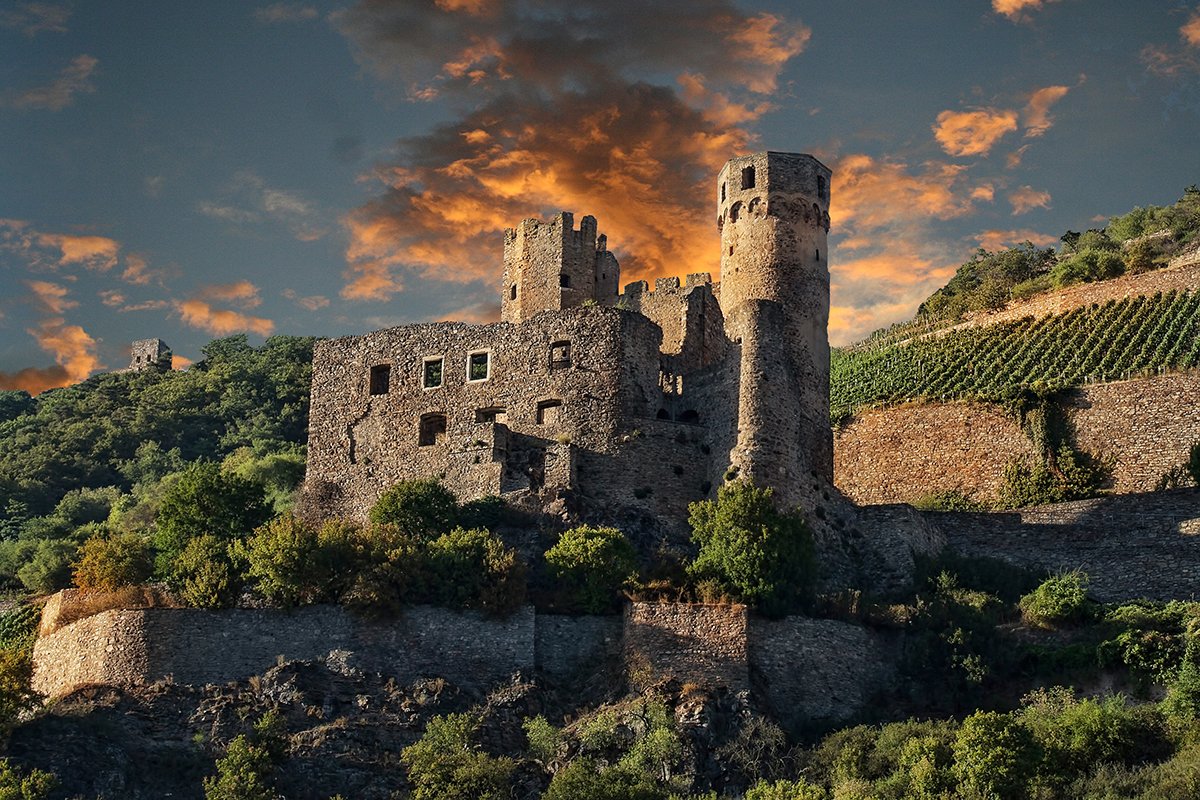
Perched above the Rhine’s vineyard-cloaked slopes, Ehrenfels Castle is the kind of ruin that stops you mid-walk. Two tall round towers and a mighty shield wall still rise over the river, hinting at the days when archbishops taxed passing ships and watched the hazardous Binger Loch below. Seen from a boat—or from Bingen across the water—it’s pure Romantic Rhine drama.
Quick Facts
📍 Location: Rüdesheim am Rhein, Hesse, Germany
🏗️ Construction Period: 1211–1212 (13th century)
🏰 Architectural Style: Medieval defensive architecture (Rhine toll castle; shield-wall design)
🎭 Famous For: Twin-towered shield wall; controlling Rhine tolls and navigation at the Binger Loch; dramatic Romantic-era ruin scenery; links with the Mäuseturm (Mouse Tower)
👑 Notable Figures: Siegfried II von Eppstein (Archbishop of Mainz, founder/rebuilder); Konrad II of Mainz (archbishop-elect associated with an election held at the site)
🏆 UNESCO Status: Yes — 2002, UNESCO World Heritage: Upper Middle Rhine Valley
🌐 Official Website: https://www.schloesser-hessen.de/en/burgruine-ehrenfels
Map
Historical Context
Ehrenfels Castle was (re)built around 1211–1212 under Siegfried II von Eppstein, Archbishop of Mainz, to secure influence on a contested Rhine corridor—and to collect customs from ships forced to slow near the treacherous Binger Loch. Working in tandem with the Mäuseturm on a river island, it helped monitor navigation and enforce tolls. The fortress became a strategic stronghold in regional power struggles, later featuring in clashes tied to toll rights, including the Rhenish Toll War (1301). Its reputation for security is underscored by records that it safeguarded the Mainz Cathedral treasures in 1374, and it’s also linked to the election of Archbishop Konrad II. After repeated wartime occupations—especially during the Thirty Years’ War—French troops destroyed it in 1689 during the Palatine War of Succession, leaving the famous ruin seen today.
Visual Tour
Visiting Information
🗓️ Best Time to Visit: April, May, late September, and October
🗺️ Location Perks: You’re right in the heart of the UNESCO-listed Upper Middle Rhine Valley—vineyards, river cruises, and castle silhouettes in every direction. Don’t miss the river views toward Bingen and the nearby Mäuseturm, which once helped control traffic through the rapids.
⏳ Estimated Visit Duration: Plan to spend 1–2 hours walking up, enjoying viewpoints, and circling the exterior walls.
💡 Visiting tips: Wear sturdy shoes—the vineyard paths can be steep and slick after rain, especially near the ruin. The interior is typically closed unless you pre-arrange a guided visit, so plan for outside viewing and viewpoints along the Rheinsteig.
Search