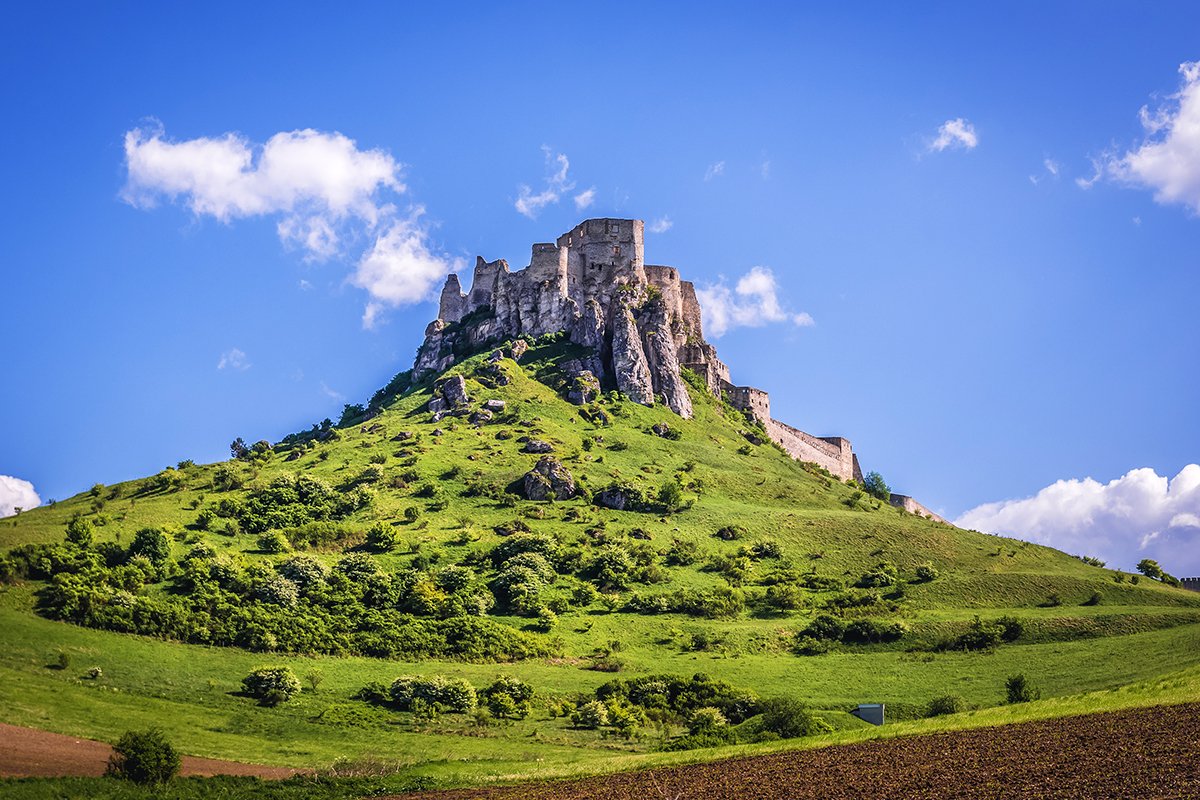
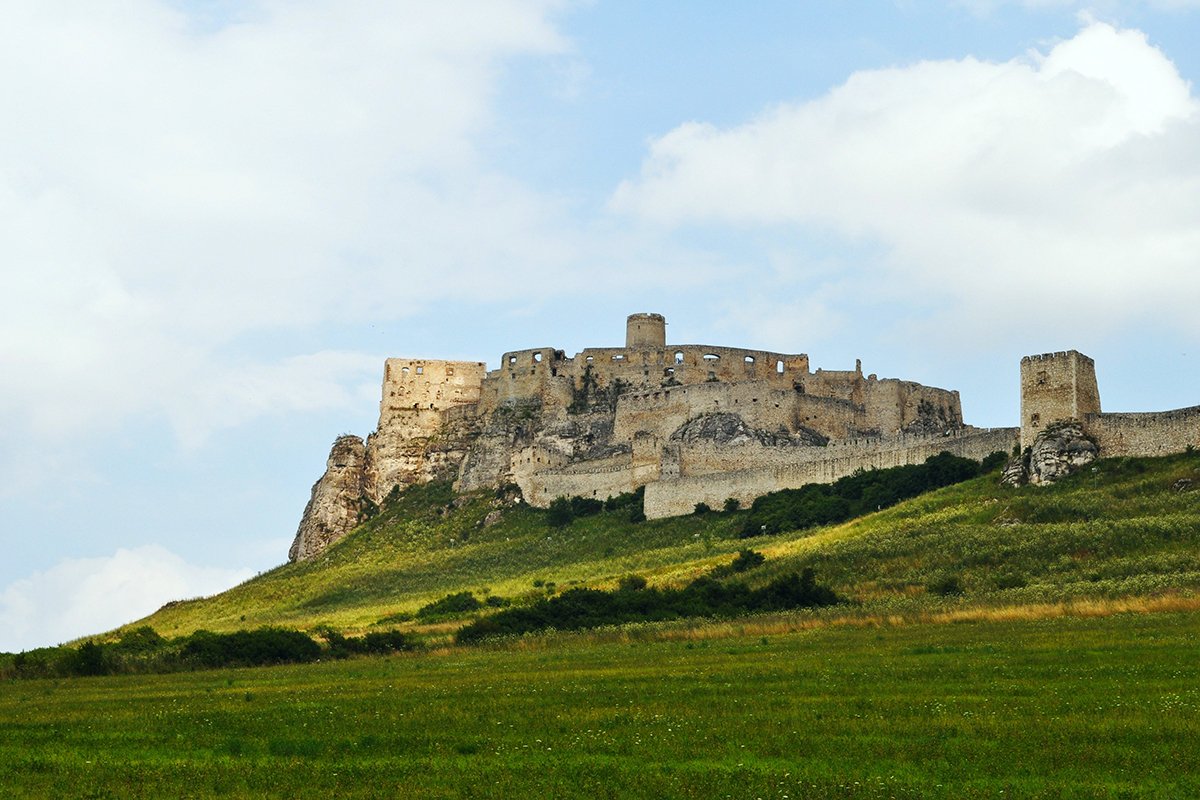
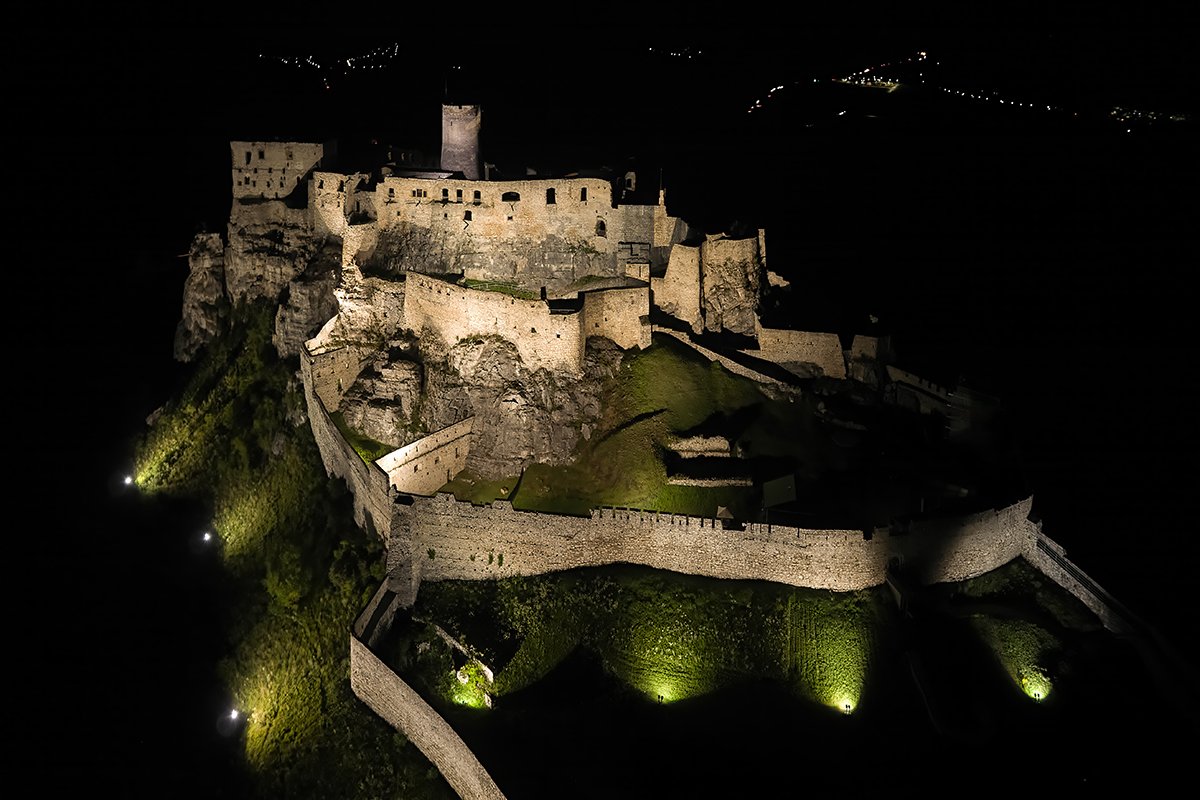
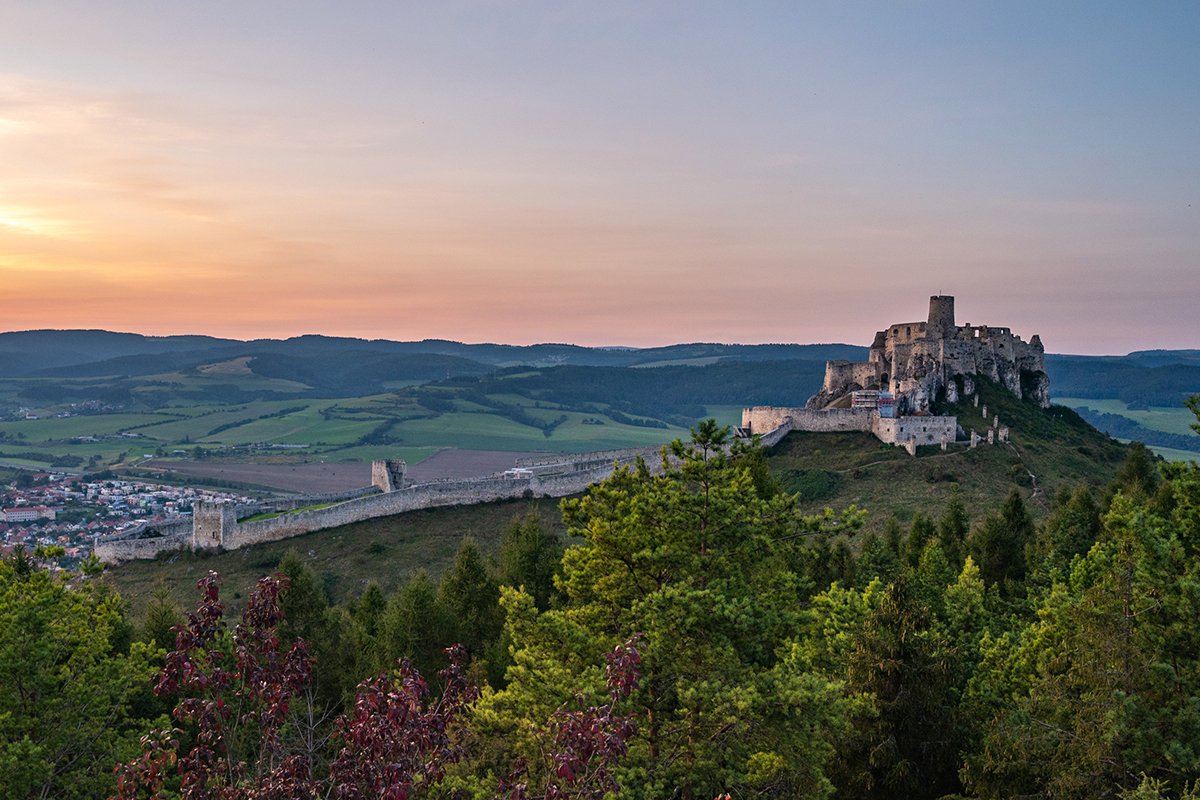
Perched on a pale travertine ridge above Spišské Podhradie, Spiš Castle spreads across the skyline like a stone city. It’s vast, windswept, and wonderfully layered—Romanesque foundations, Gothic fortifications, and later Renaissance comfort all stitched together. Walk its courtyards and you’ll feel how the place shifted from frontier stronghold to aristocratic showpiece, and finally to a haunting, photogenic ruin reborn as a museum.
Quick Facts
📍 Location: Spišské Podhradie, Spiš region, Slovakia
🏗️ Construction Period: Early 12th century–15th century (with later Renaissance modifications)
🏰 Architectural Style: Romanesque, Gothic, and Renaissance elements
🎭 Famous For: One of Europe’s largest castle sites; resisting the Mongol/Tartar invasion of 1241; its multi-tiered defensive system and panoramic tower views
👑 Notable Figures: King Béla IV; the Zápolya family (including Ján Zápoľský); the Thurzó family; the Csáky family
🏆 UNESCO Status: Yes — 1993, UNESCO World Heritage inscription with Spišská Kapitula and Žehra (Spiš Castle and associated cultural monuments)
🌐 Official Website: https://www.spisskyhrad.sk/en.html
Map
Historical Context
Spiš Castle began rising in the early 1100s as a frontier fortress guarding the Kingdom of Hungary’s northern edge, with its first recorded mention in 1120. Its hilltop position wasn’t chosen for romance—it was built for control, with commanding sightlines over the approaches below. After the Mongol invasion of 1241, the castle held firm, then expanded under King Béla IV with stronger towers and added residential spaces. Over the centuries it grew into the political and administrative heart of Szepes County, changing owners from Hungarian kings to the Zápolya, Thurzó, and Csáky families. A catastrophic fire in 1780 tipped it into ruin, but restoration from the 1970s helped secure its 1993 UNESCO listing and a new life as a museum and archaeological landmark.
Visual Tour
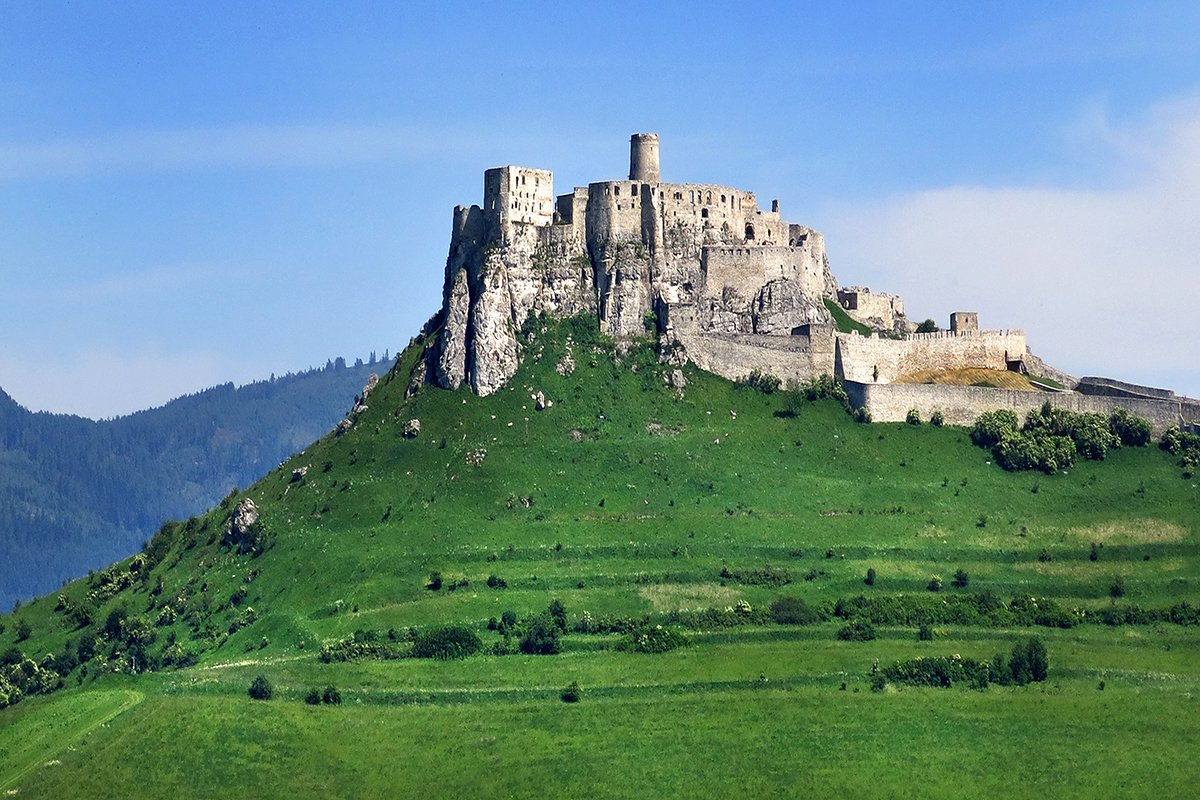
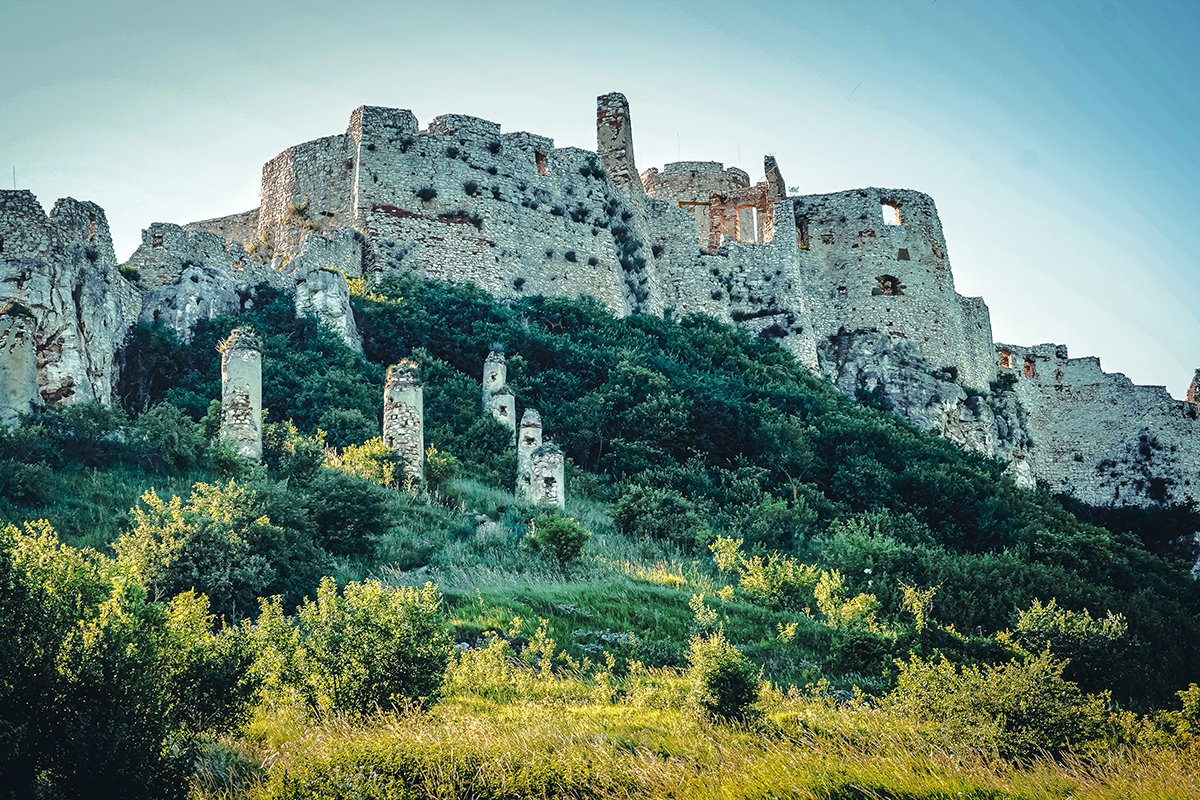
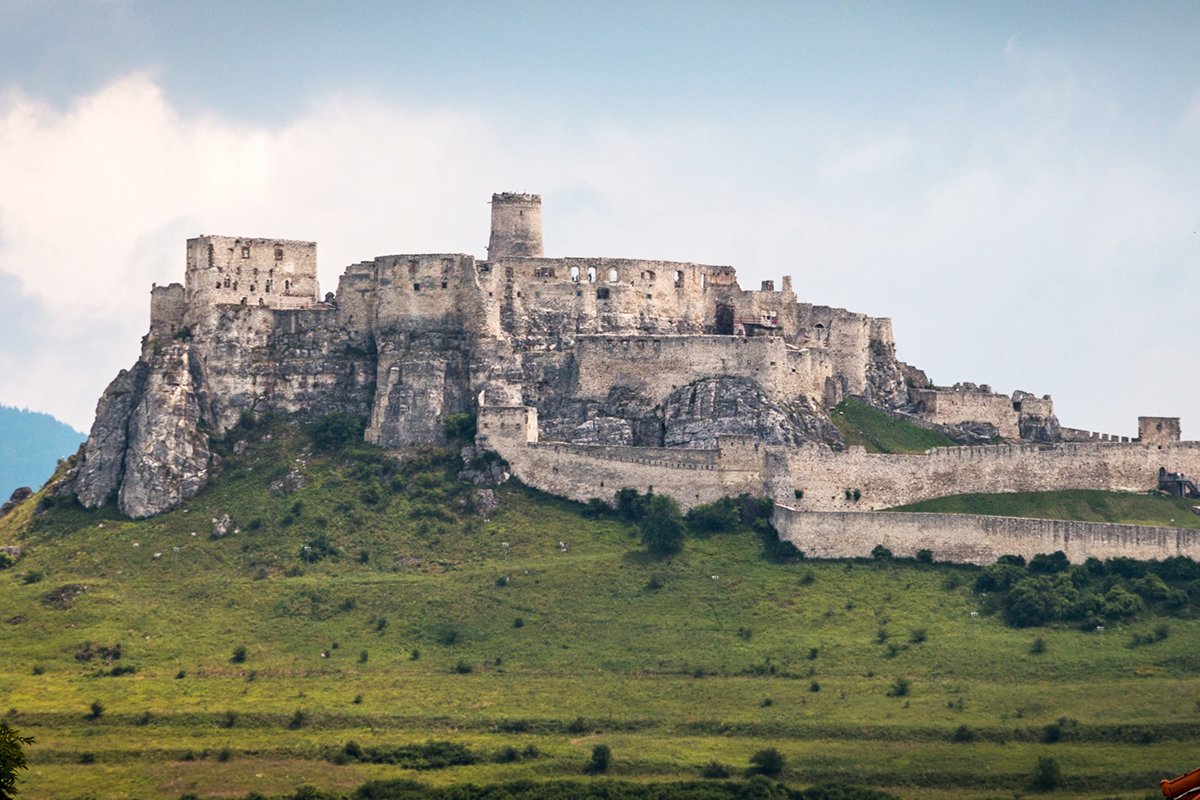
Visiting Information
🗓️ Best Time to Visit: April, May, late September, and October
🗺️ Location Perks: You’re in the heart of the Spiš landscape, where church spires, castle ruins, and rolling hills stack beautifully on the horizon. Pair the castle with nearby Spišská Kapitula and the frescoed church at Žehra for a full UNESCO-worthy day.
⏳ Estimated Visit Duration: Plan to spend 2–3 hours exploring the castle and its grounds.
💡 Visiting tips: Head up to the central tower early for the clearest light and the best wide-angle photos before crowds build. Wear sturdy shoes—those long courtyards and uneven stone paths are part of the experience—and save time for the museum rooms (chapel, armory, and even the darker corners like the torture display).
Search