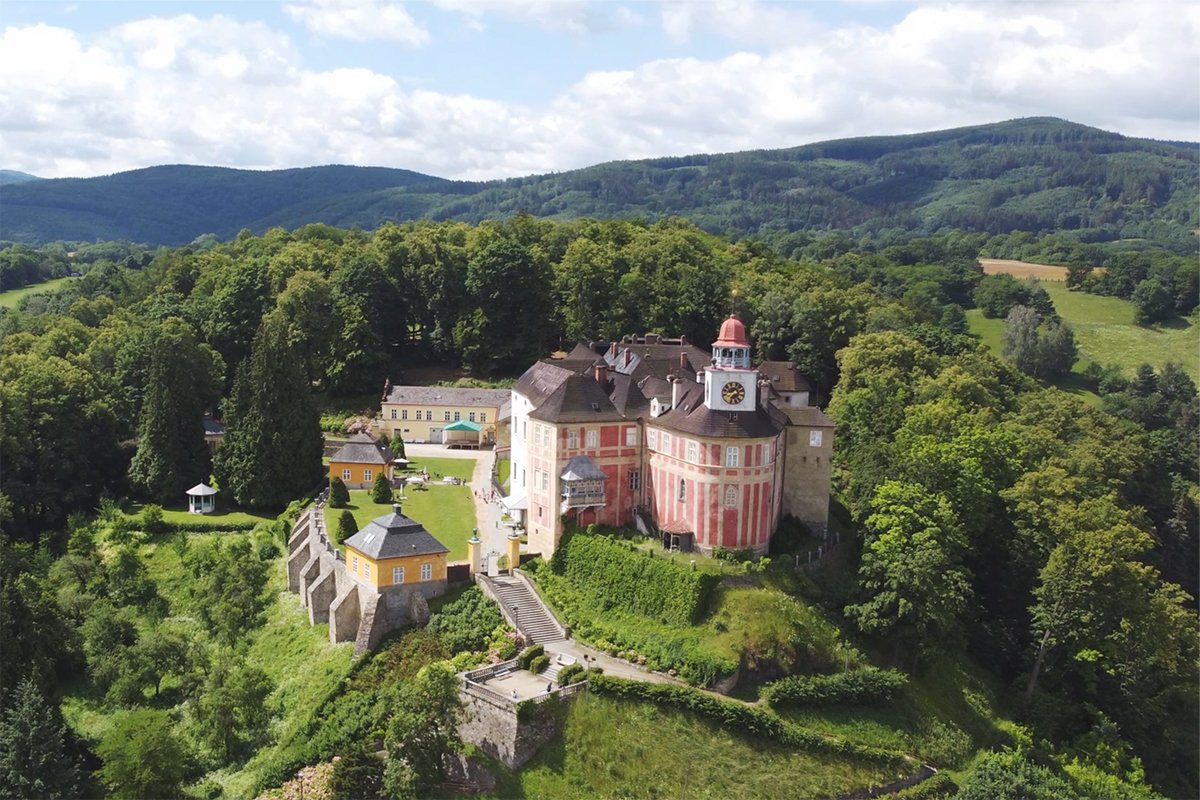
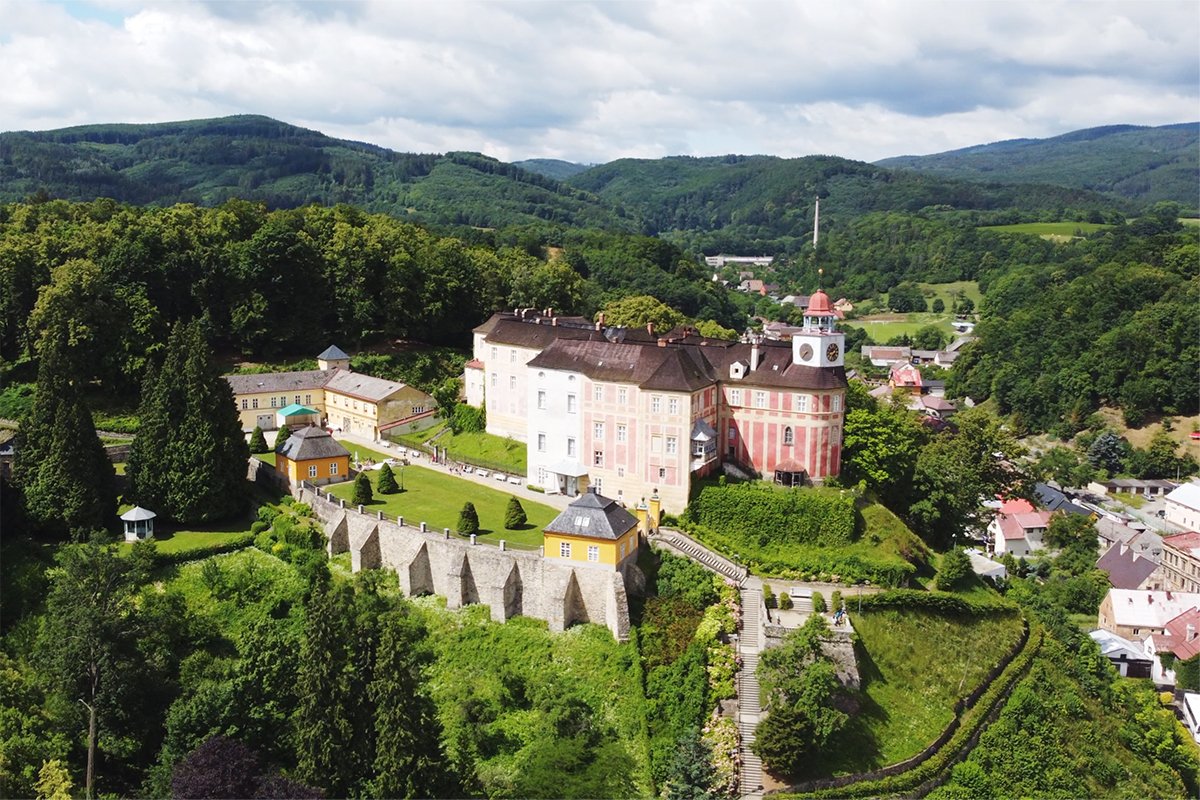
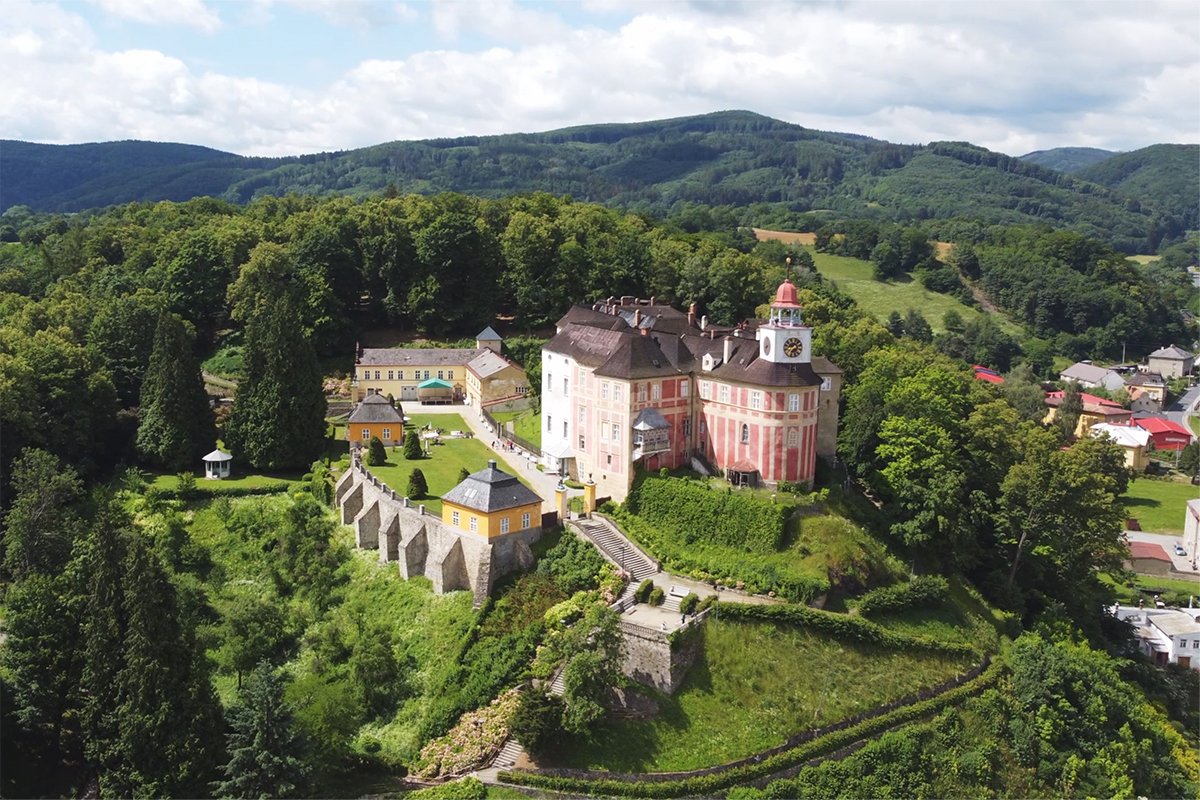
Perched dramatically on a rocky hill above Javorník, Jánský Vrch Castle feels like a quiet lookout over the Czech–Polish borderlands. Behind its restrained façades, you’ll find surprisingly rich Baroque and Classicist rooms, preserved furnishings, and two atmospheric chapels. It’s a place where centuries of bishop-princes, clever engineering, and daily life—from ceremonial halls to kitchens—still linger in the details.
Quick Facts
📍 Location: Javorník, Silesia (Olomouc Region), Czech Republic
🏗️ Construction Period: 1307–18th century (major Baroque rebuilding; later 19th-century updates)
🏰 Architectural Style: Medieval origins; Baroque chateau with Classicist interiors
🎭 Famous For: 600 years as the summer seat of the Bishops of Wroclaw; remarkably preserved interiors and furnishings; rare courtyard gaslights; two chapels; collection of tobacco pipes and historic textiles
👑 Notable Figures: Prince Bolko I of Świdnica; the Bishops of Wroclaw (owners from 1348 for ~600 years); Bishop Philipp Gotthard of Schaffgotsch
🏆 UNESCO Status: No
🌐 Official Website: https://www.zamek-janskyvrch.cz/en
Map
Historical Context
Jánský Vrch Castle began as a strategic medieval castle, first mentioned in 1307 when it belonged to Prince Bolko I of Świdnica. In 1348 it passed to the Bishops of Wroclaw, who held it and the surrounding territory for roughly six centuries, turning the hilltop stronghold into a refined summer residence and a cultural anchor for northern Silesia. In the late 15th century it took the name Jánský Vrch—“John’s Peak”—honoring John the Baptist, patron saint of the bishops. The most decisive change came in the 18th century, when rebuilding under Bishop Philipp Gotthard of Schaffgotsch shaped it into the Baroque chateau visitors see today. Inside, technological flourishes arrived too: a water main around the 18th/19th-century turn, and later, gas lighting that still makes the courtyard a rarity.
Visual Tour
Visiting Information
🗓️ Best Time to Visit: April, May, late September, and October
🗺️ Location Perks: You’re right on the edge of northern Silesia, with easy day trips into spa country. Pair the chateau with the Priessnitz Spa Resort and the Jeseník Water Fortress for a well-rounded slice of regional history.
⏳ Estimated Visit Duration: Plan to spend 2–3 hours exploring the castle and its interiors.
💡 Visiting tips: Choose a guided tour that includes the chapels and representative chambers to catch the best artworks and preserved furnishings. Bring a light layer—stone castles can feel cool even in summer—and leave time for a slow stroll through the courtyard to see the rare gas lighting.
Search