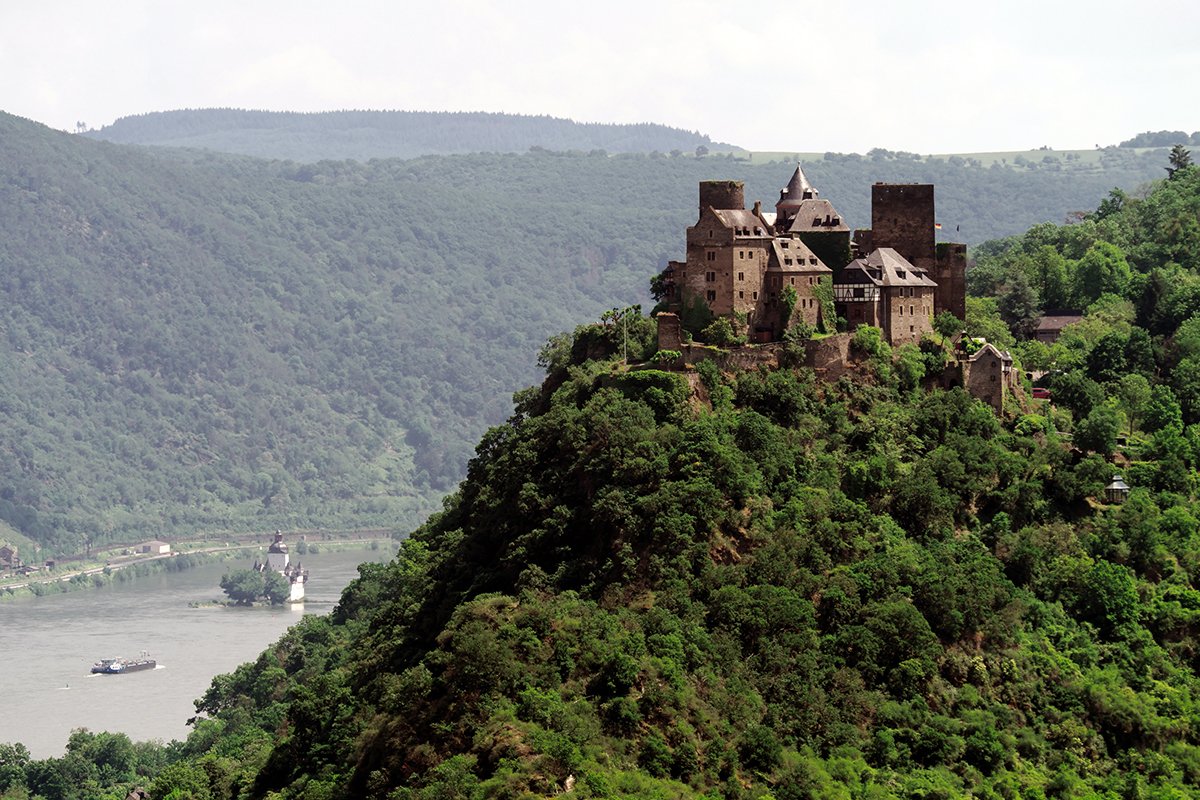
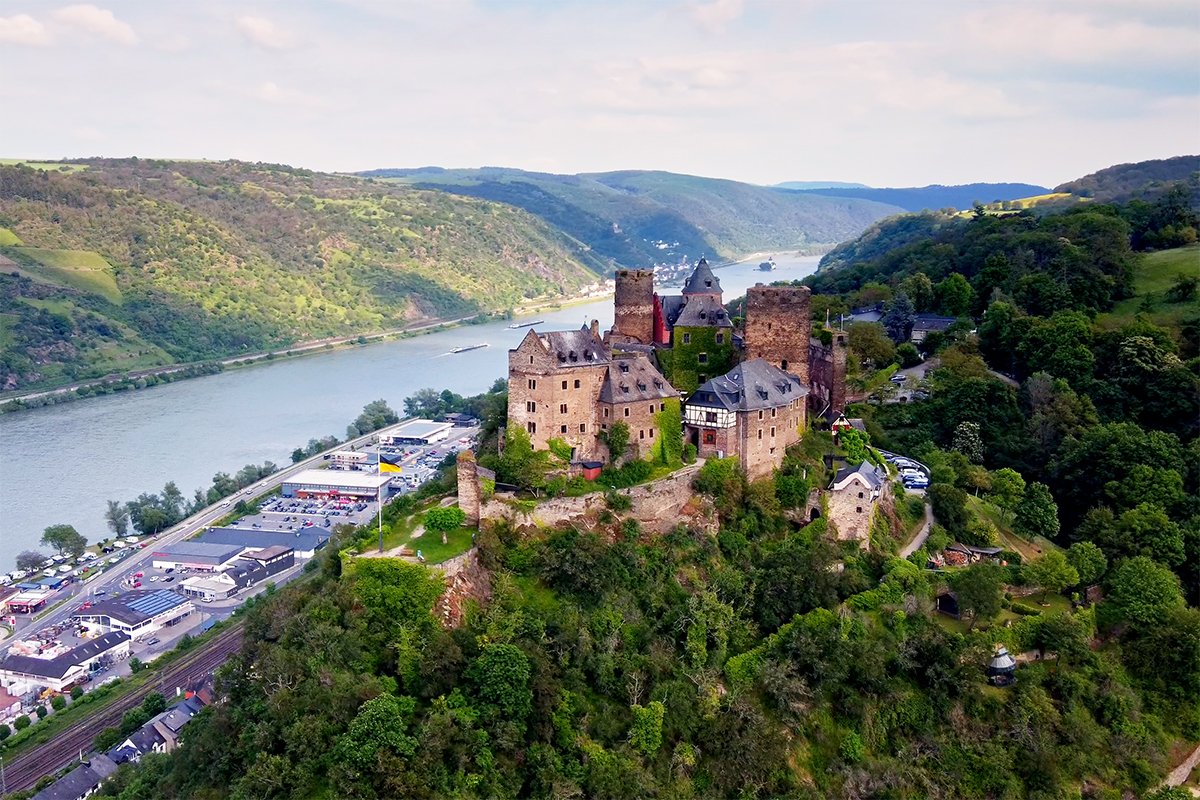
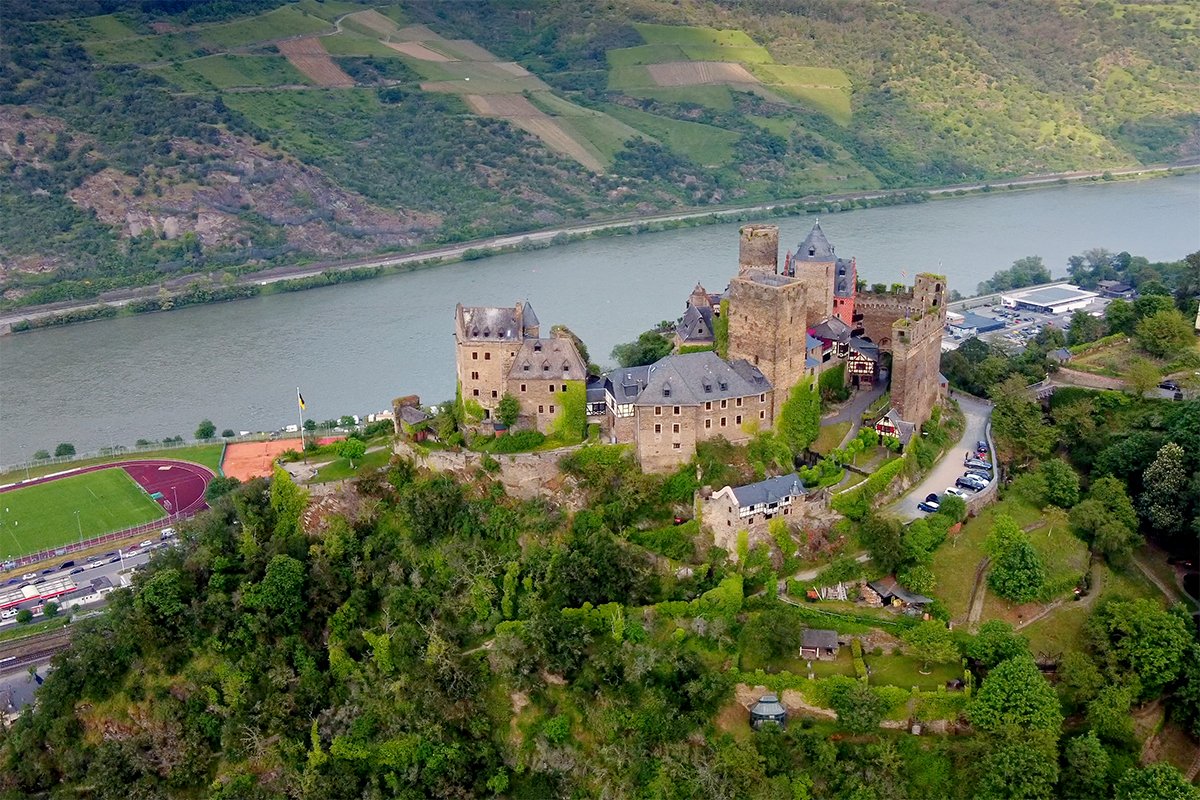
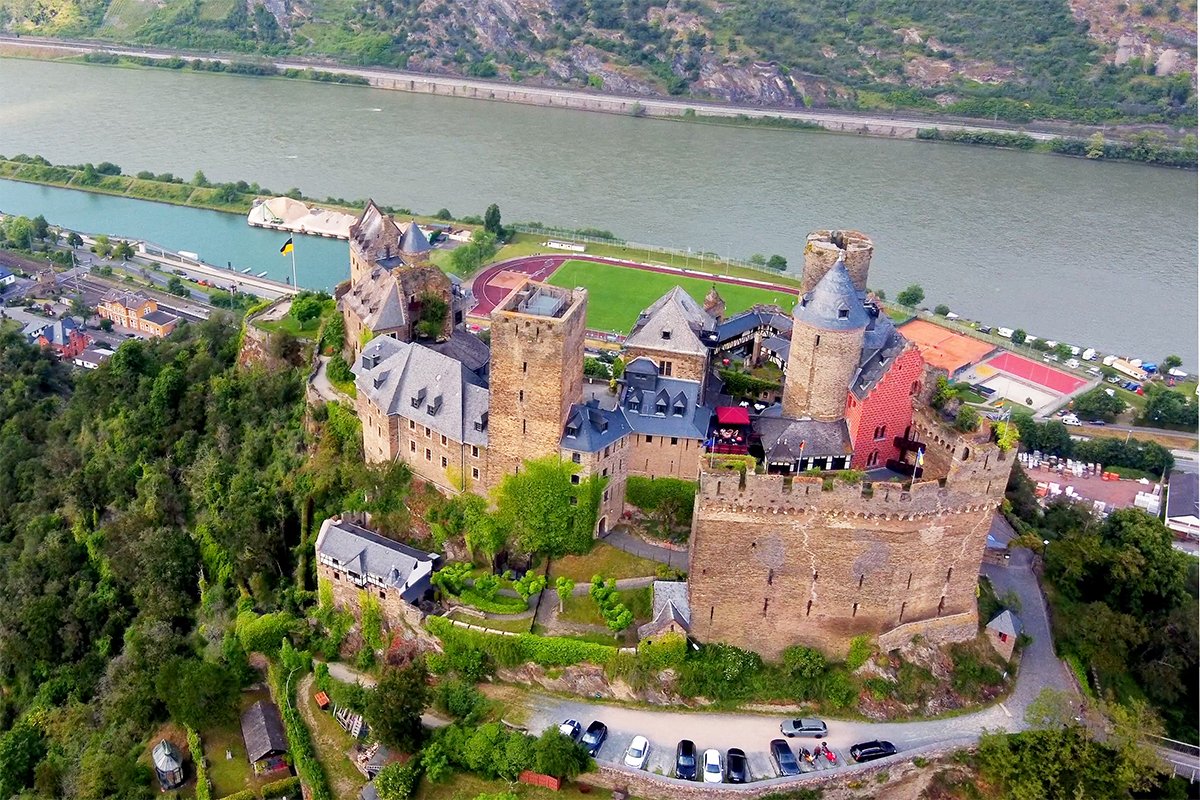
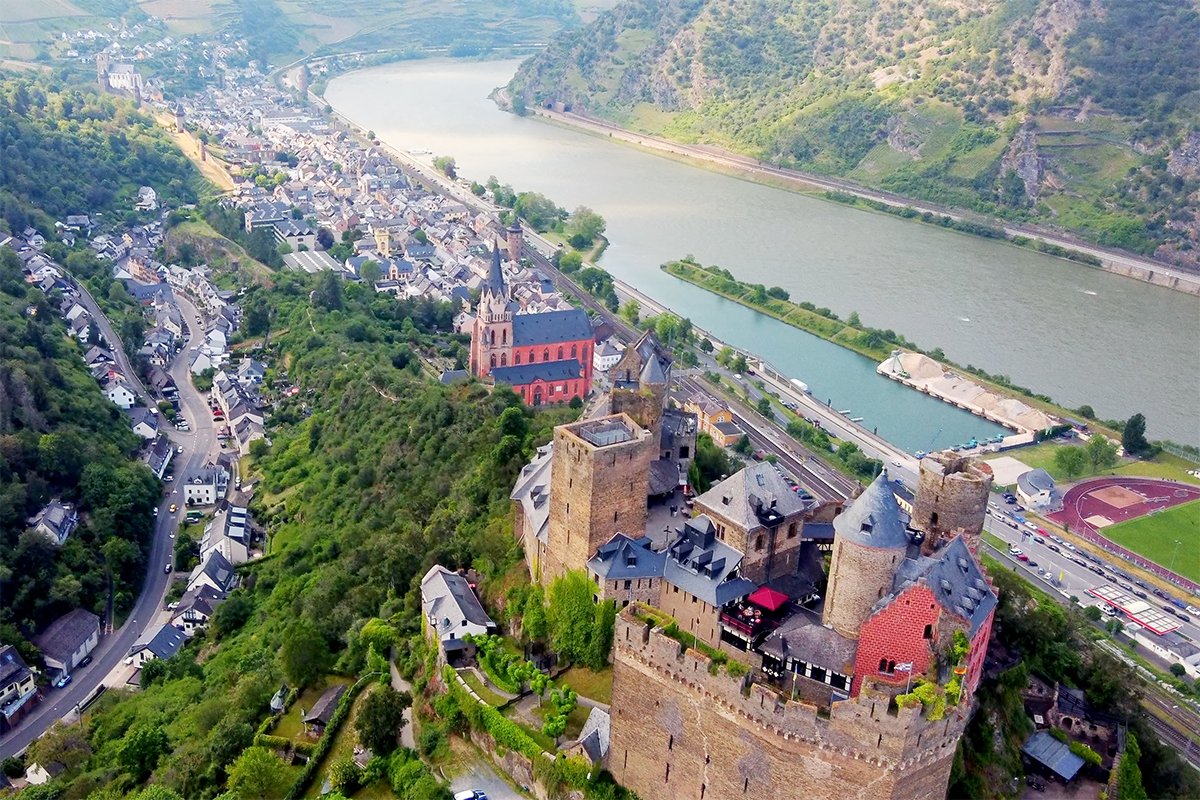
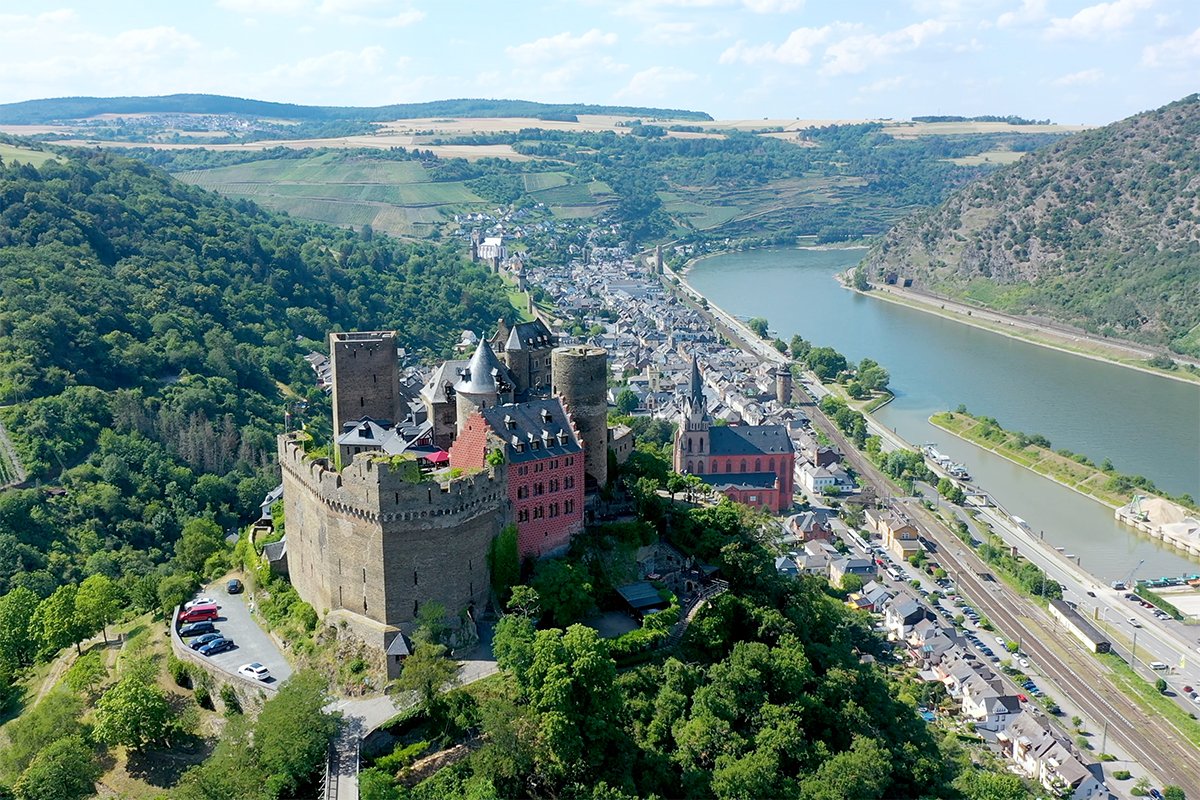
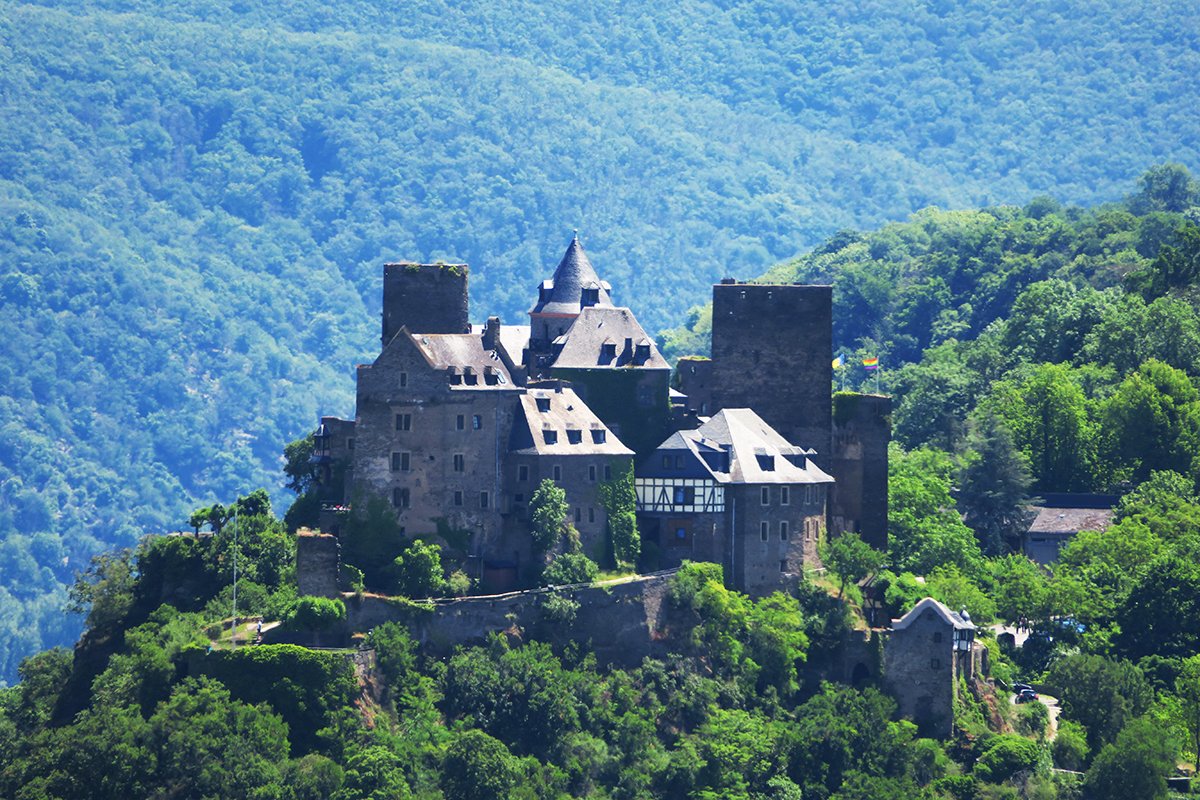
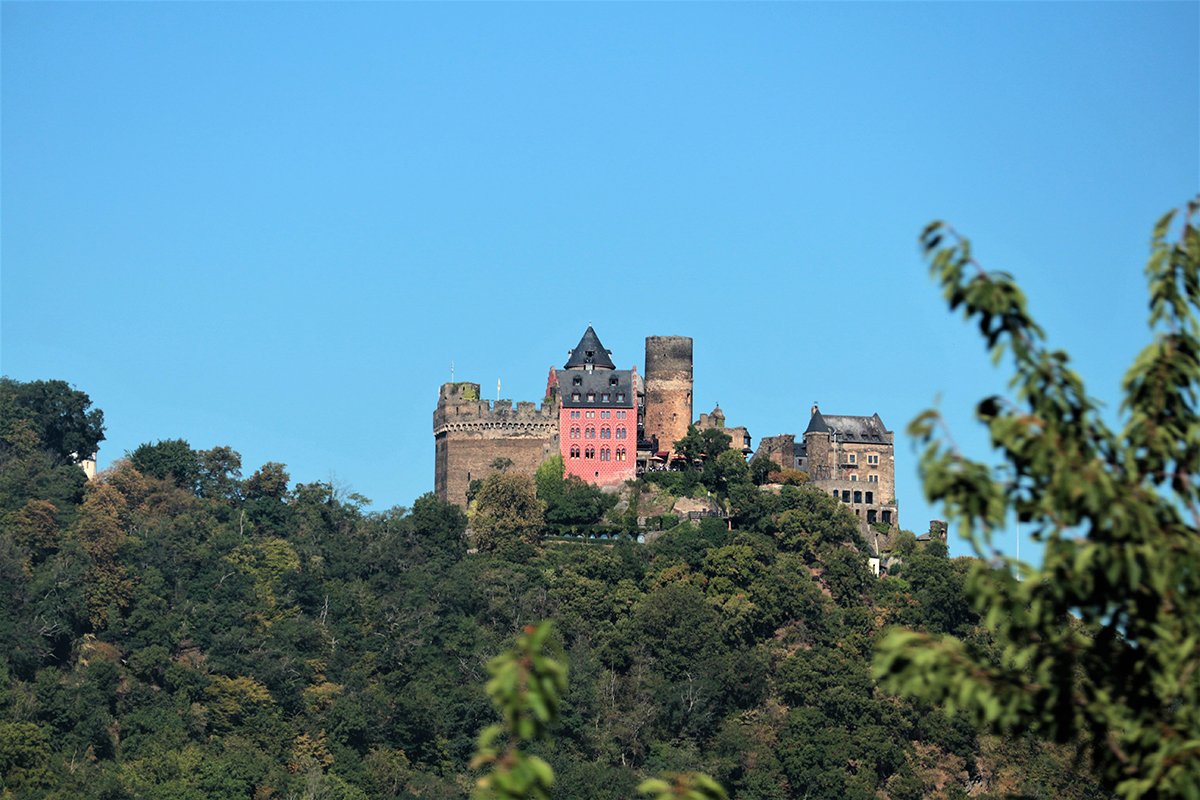
Perched high above Oberwesel, Schönburg Castle feels like the Rhine’s storybook guardian—part medieval stronghold, part gracious hideaway. Today you can sleep within its walls, wander a small museum in the gate tower, and linger on terraces that look straight down the river’s famous bends. It’s a place where hard history—tolls, feuds, and fire—meets the softer romance of gardens and sunset views.
Quick Facts
📍 Location: Oberwesel, Rhineland-Palatinate, Germany
🏗️ Construction Period: First half of the 12th century (built); expanded through the 13th–14th centuries; restored 20th century (completed by 1914)
🏰 Architectural Style: Romanesque core with later medieval (Gothic-era) defensive additions; 20th-century historicist restoration
🎭 Famous For: Rhine toll power base, dramatic 1689 destruction, towering shield wall and zwingers, Romantic-era fame as a celebrated ruin, and its modern role as a castle-hotel and museum
👑 Notable Figures: Count Palatine Hermann von Stahleck (probable founder); the Lords of Schönburg (medieval rulers and toll holders); Friedrich von Schönburg “Marshal Schomberg”; Victor Hugo; Mr. Rhinelander (restorer); the City of Oberwesel; the Hüttl family (hotel leaseholders)
🏆 UNESCO Status: Yes — part of the UNESCO World Heritage Site “Upper Middle Rhine Valley” (2002)
🌐 Official Website: https://www.hotel-schoenburg.com/en
Map
Historical Context
Schönburg Castle rises above Oberwesel as a reminder that the Rhine was once Europe’s busiest commercial highway—and a prize worth fighting over. First recorded sometime between 911 and 1166 and likely built in the early 12th century, it became the seat of the Lords of Schönburg, who controlled the town and famously levied tolls on passing river traffic. An unusual “heir castle,” it was divided among sons rather than kept by a single heir; at its peak in the 14th century, dozens of family branches lived within the same fortified complex. After centuries of feuds and shifting power, disaster struck in 1689 when French troops burned Oberwesel and the castle during the War of the Palatine Succession. Left a ruin for nearly 200 years—and admired by Romantic travelers like Victor Hugo—it was later restored in the early 1900s and eventually returned to the city, reimagined today as a hotel and museum.
Visual Tour
Visiting Information
🗓️ Best Time to Visit: April, May, late September, and October
🗺️ Location Perks: Schönburg sits in the heart of the Upper Middle Rhine Valley, where vineyards, river cruises, and castle silhouettes stack up around every bend. Don’t miss Oberwesel’s old town and riverside viewpoints—this stretch of the Rhine was made for slow wandering.
⏳ Estimated Visit Duration: Plan to spend 2–3 hours exploring the castle’s viewpoints, courtyards, and the Gate Tower Museum (and longer if you dine or stay overnight).
💡 Visiting tips: Book the restaurant or an overnight stay ahead in peak season, especially on weekends. Wear grippy shoes—the paths and stairways are steep and uneven—and if you want garden access, note that some areas are reserved for hotel guests.
Search