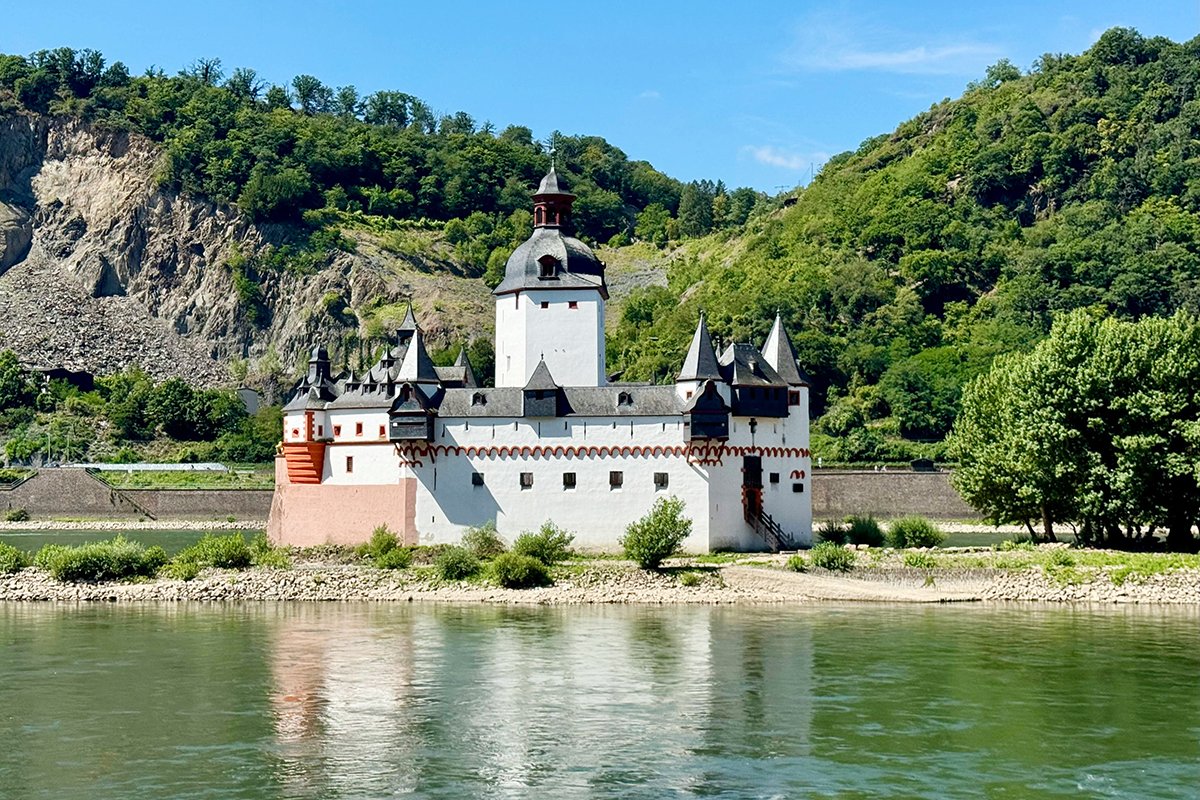
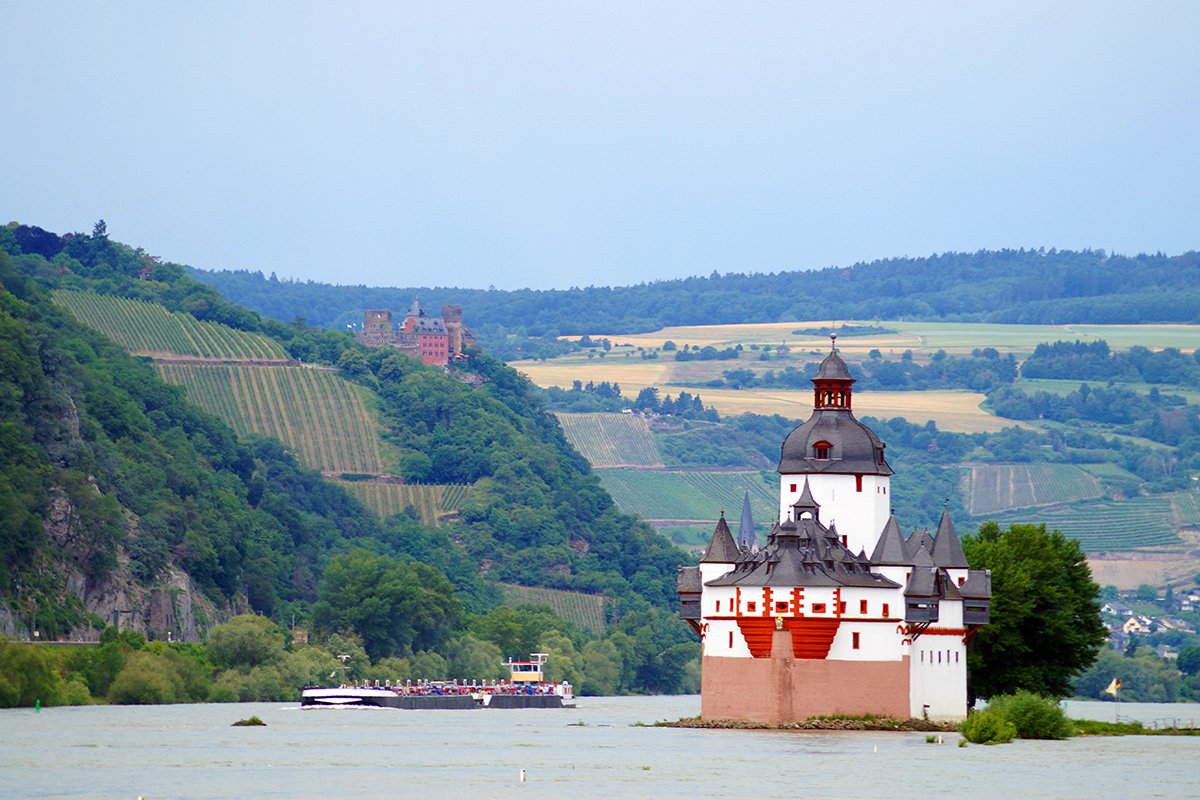
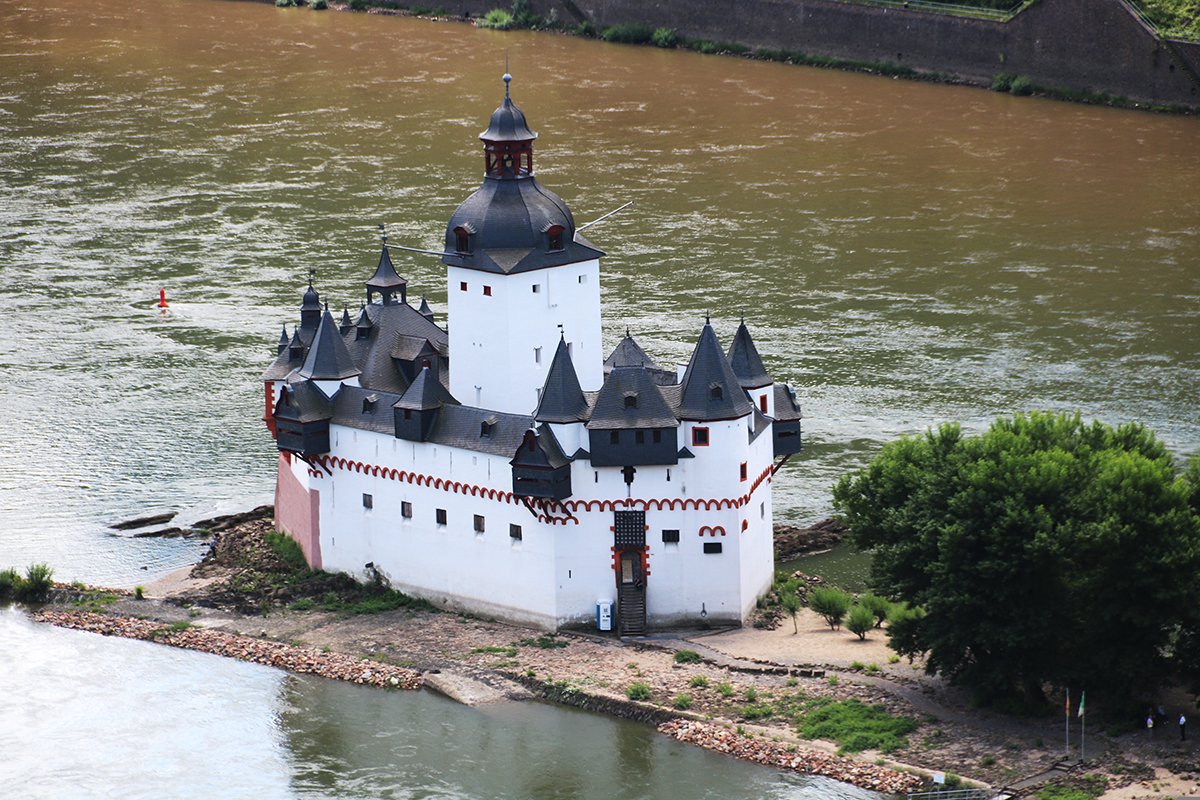
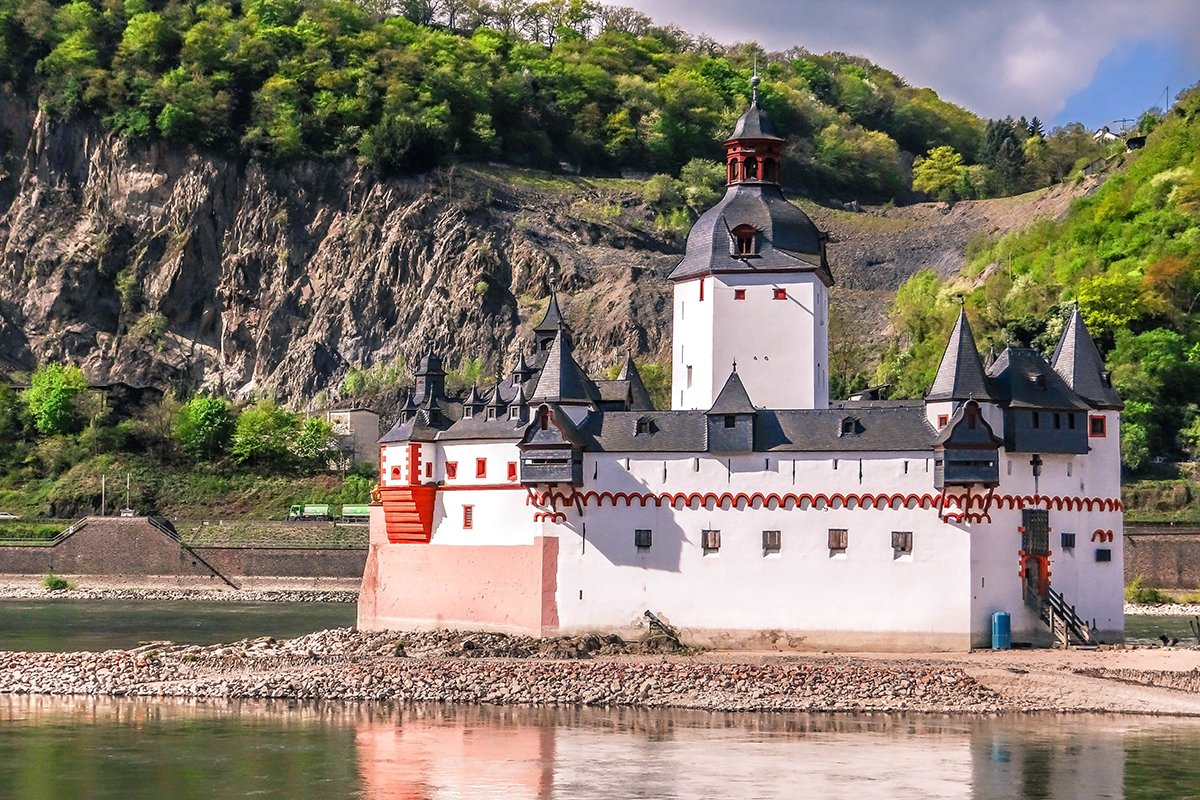
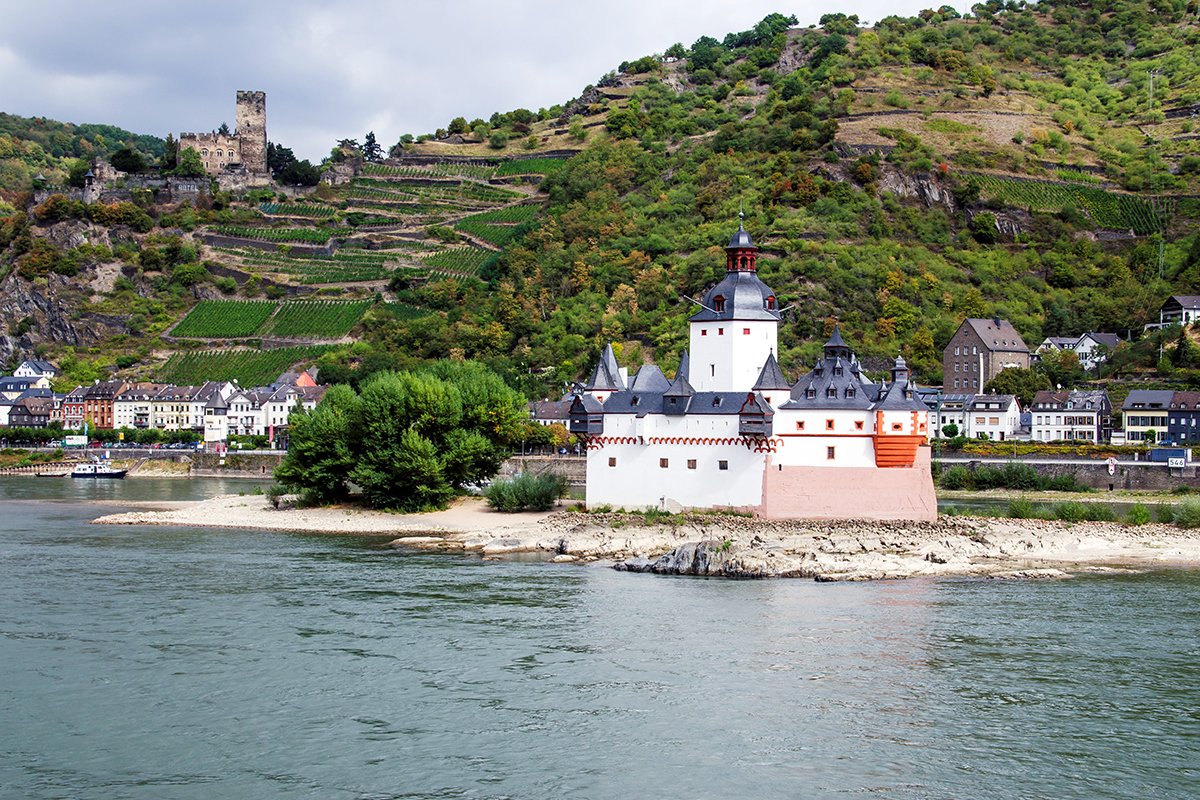
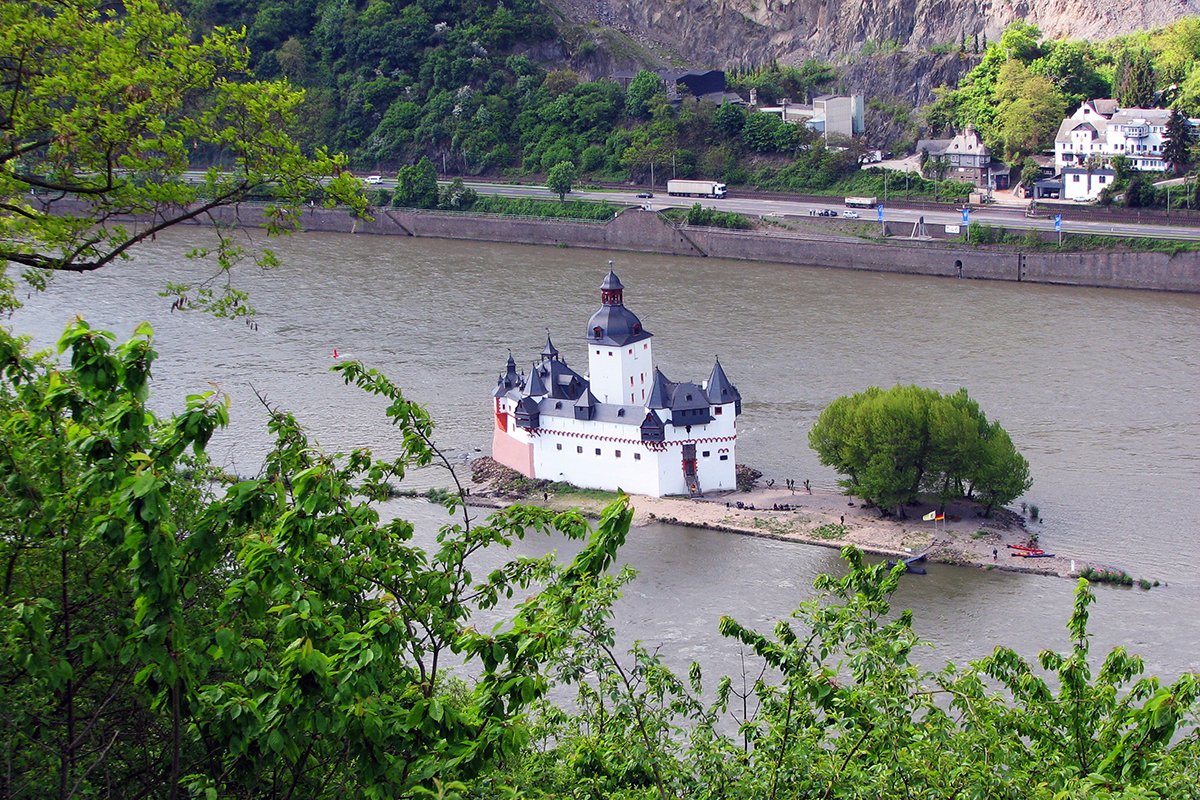
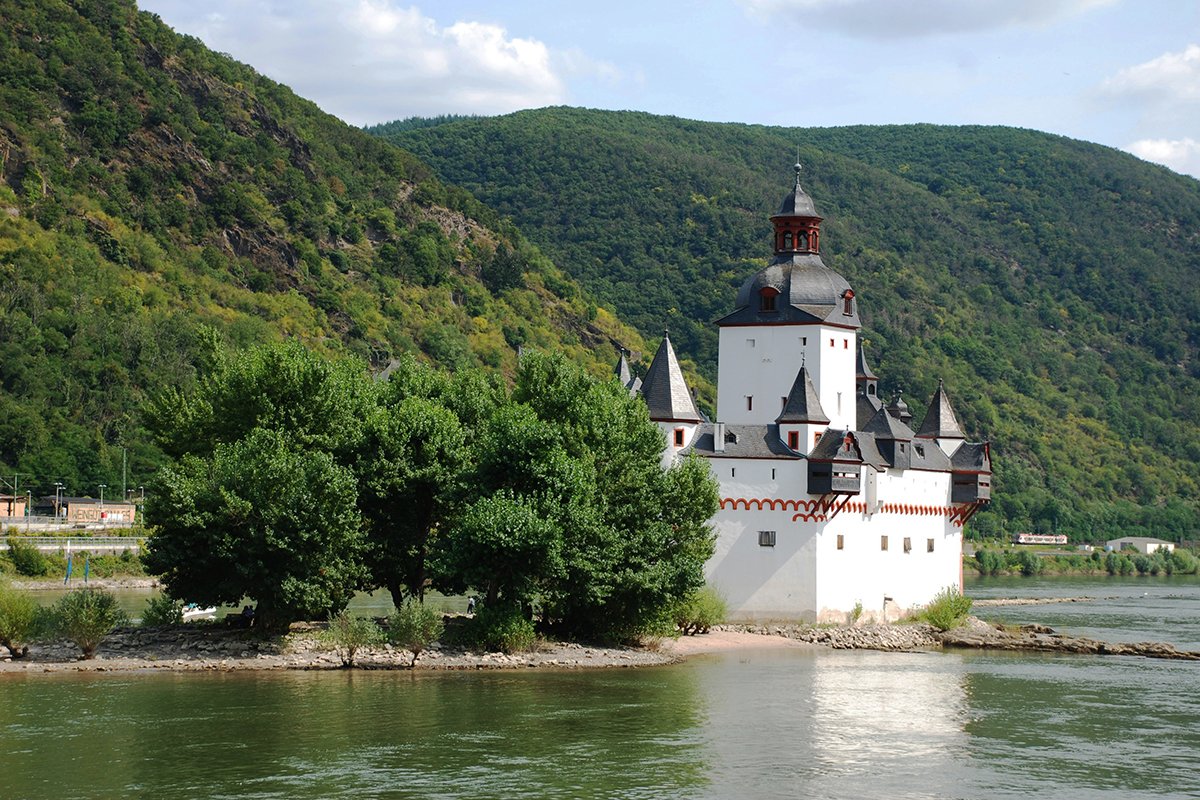
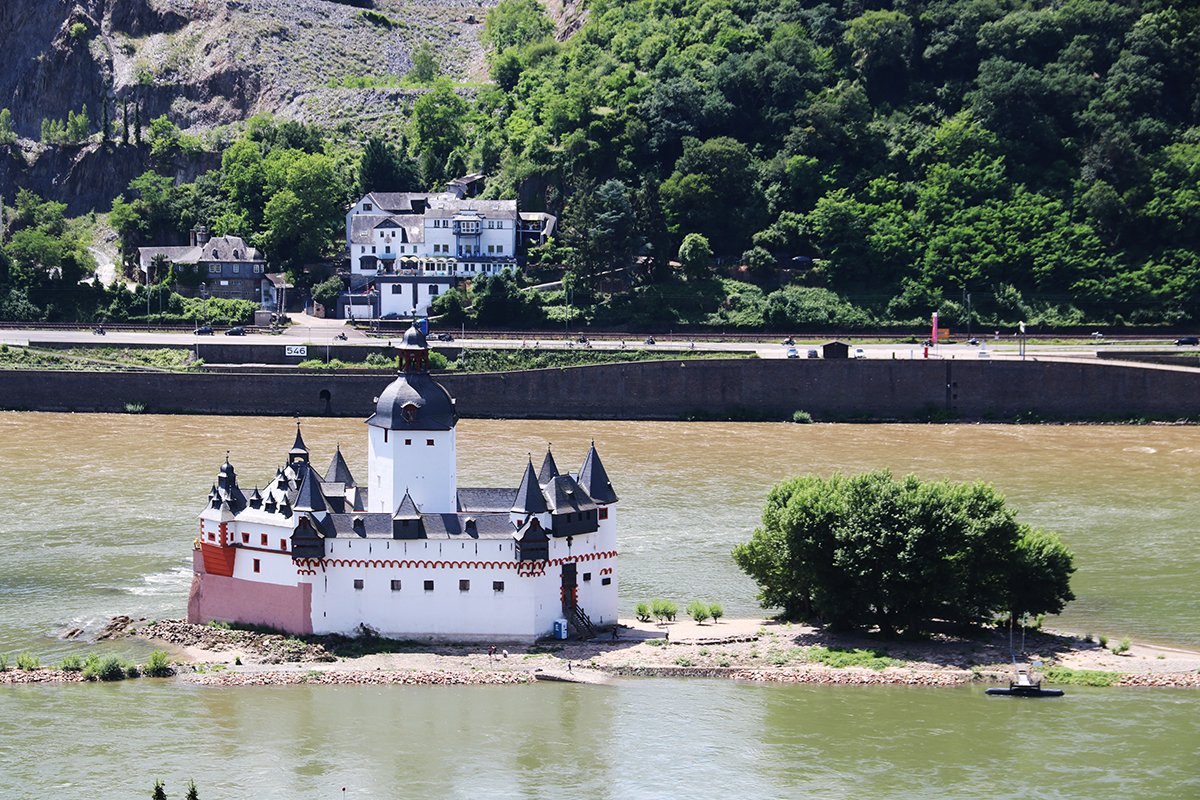
Pfalzgrafenstein Castle sits like a stone ship anchored in the Rhine—compact, bright-walled, and famously hard to ignore. Built to make every passing vessel stop and pay, it turned river traffic into revenue for medieval rulers. Even better (for its legend), the little island fortress was never conquered. Today, you reach it by boat and step into a snug museum in the heart of the Rhine Gorge.
Quick Facts
📍 Location: Kaub, Rhineland-Palatinate, Germany
🏗️ Construction Period: 1326–1327 (expanded 1339–1342; artillery works 1606–1607; roof cap 1714)
🏰 Architectural Style: Medieval military architecture with Baroque additions
🎭 Famous For: A medieval Rhine toll station on an island; ship-like silhouette; never conquered; 1504 siege and Blücher’s 1814 Rhine crossing nearby
👑 Notable Figures: Louis IV (Ludwig) of Bavaria (founder); Elector Friedrich IV (artillery bastion patron); Gebhard Leberecht von Blücher (1814 crossing)
🏆 UNESCO Status: Yes — part of the “Upper Middle Rhine Valley” UNESCO World Heritage Site (2002)
🌐 Official Website: https://tor-zum-welterbe.de/en/pfalzgrafenstein
Map
Historical Context
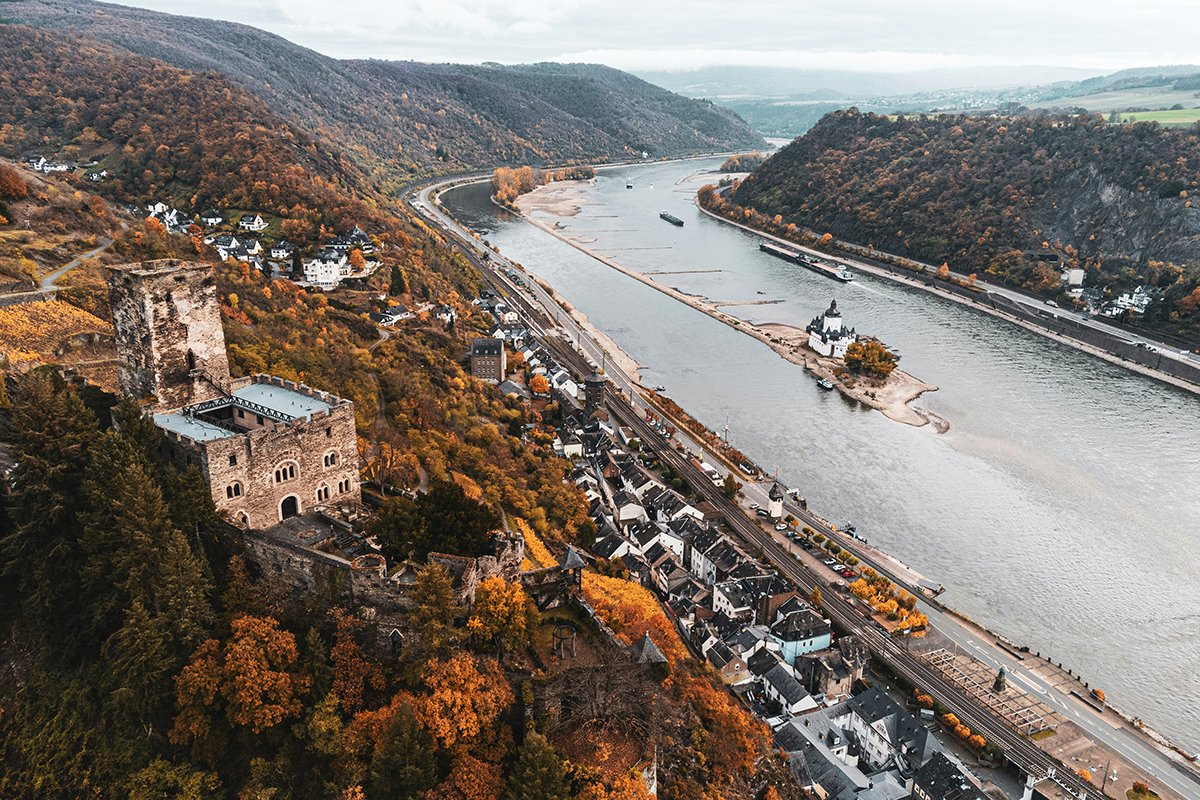
Pfalzgrafenstein rose in 1326–1327 under Louis IV of Bavaria as a pointed statement of power: a toll castle planted on Falkenau Island in a narrow Rhine bottleneck where ships had little choice but to slow down. A pentagonal keep—shaped to shrug off ice and currents—was soon wrapped by stout walls, and the fortress worked in tandem with Gutenfels Castle and the fortified towns nearby to police trade. It endured pressure without surrender, including a 39-day siege in 1504, and later hosted Spanish troops during the Thirty Years’ War. In 1814, the island became a strategic stage for Blücher’s coalition crossing against Napoleon. Tolls ended in 1867, and the once-hard-nosed customs post now welcomes visitors as a museum.
Visual Tour
Visiting Information
🗓️ Best Time to Visit: April, May, late September, and October
🗺️ Location Perks: You’re in the UNESCO-listed Upper Middle Rhine Valley, where castles stack the hillsides and the river bends deliver postcard views. Don’t miss the sightline to Kaub and nearby Gutenfels Castle across the water.
⏳ Estimated Visit Duration: Plan to spend 1–2 hours exploring the castle and its museum rooms.
💡 Visiting tips: Arrive early and time your visit around the small boat/ferry schedule—high water or winter conditions can interrupt service. Wear sturdy shoes: expect narrow stairs, low doorways, and breezy battlements.
Search