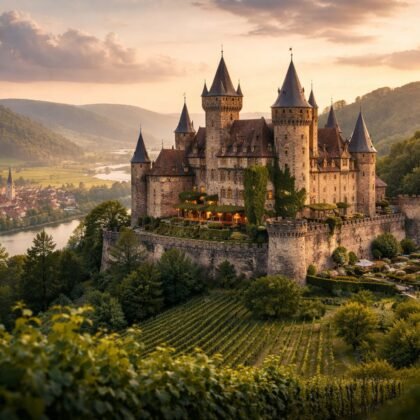
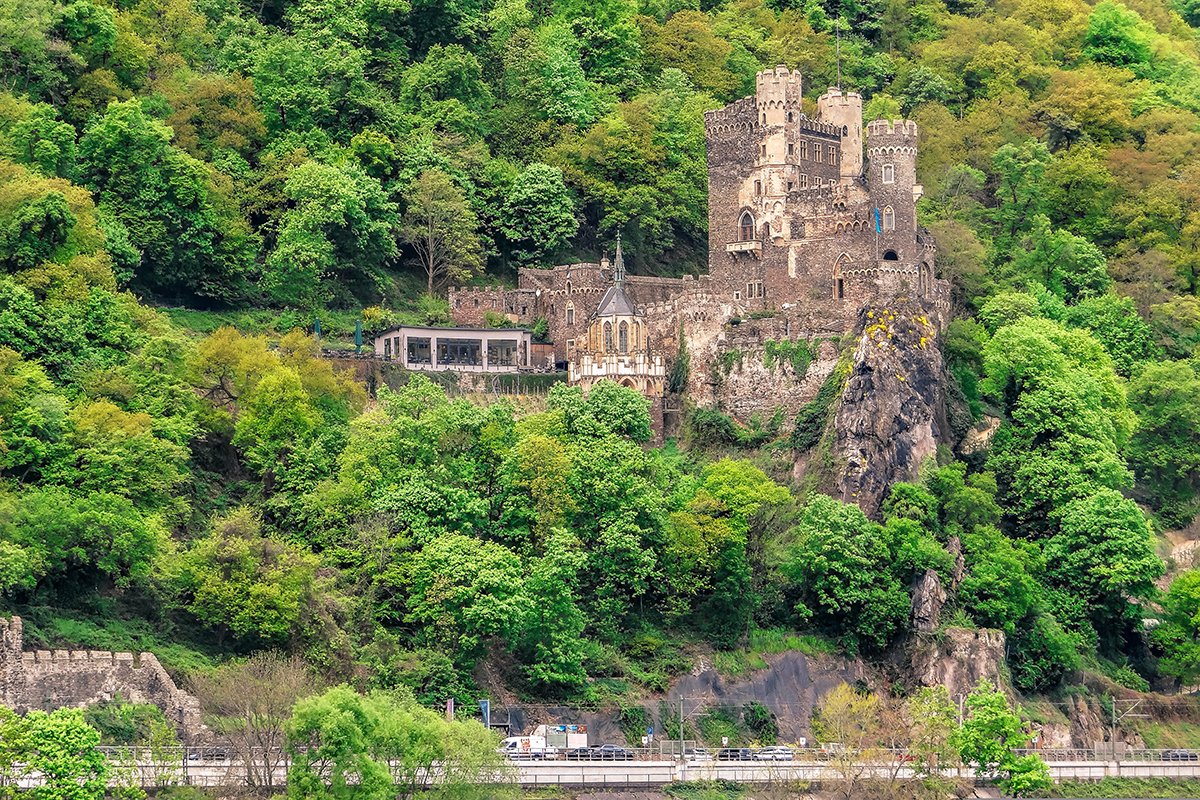
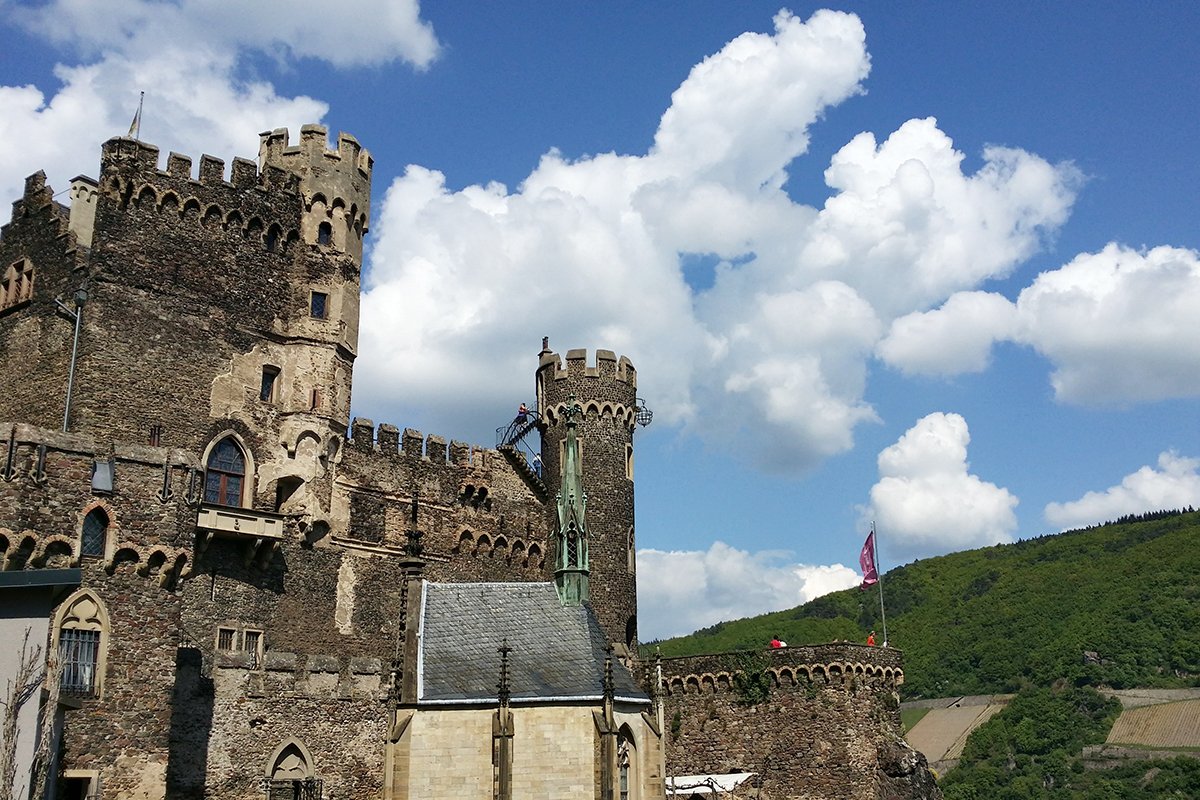
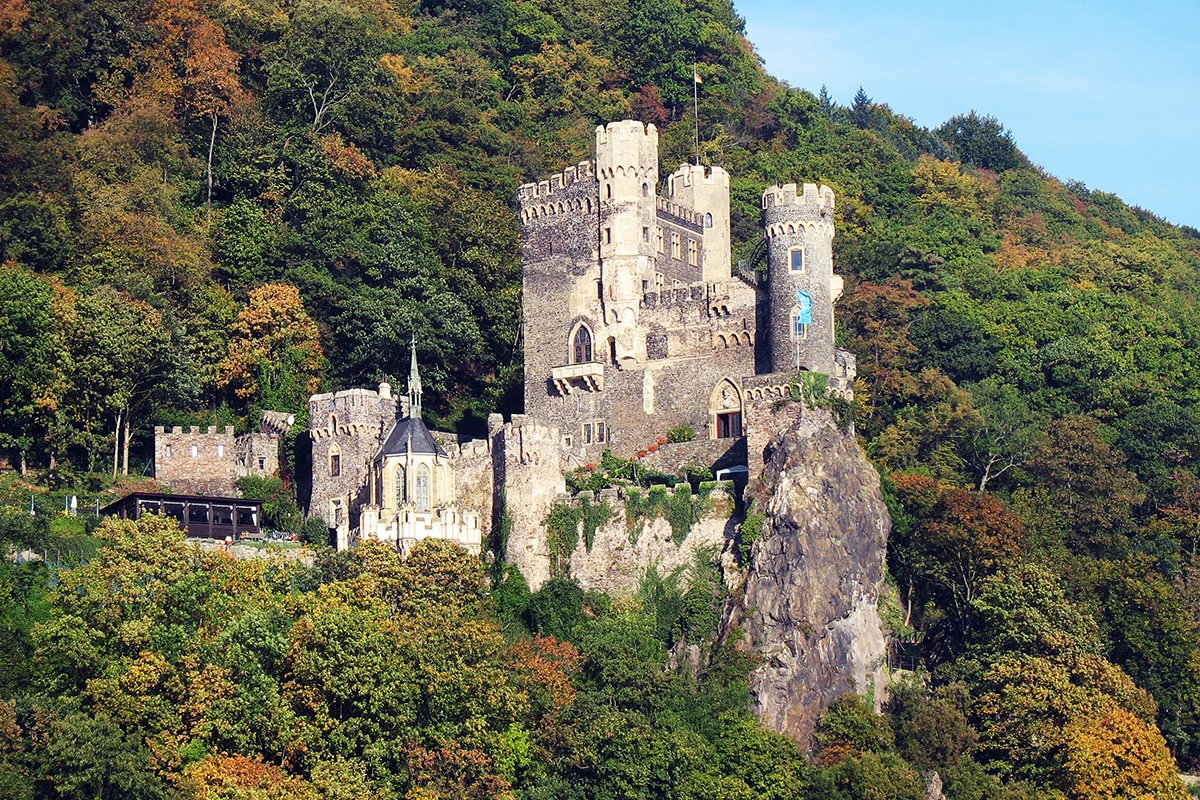
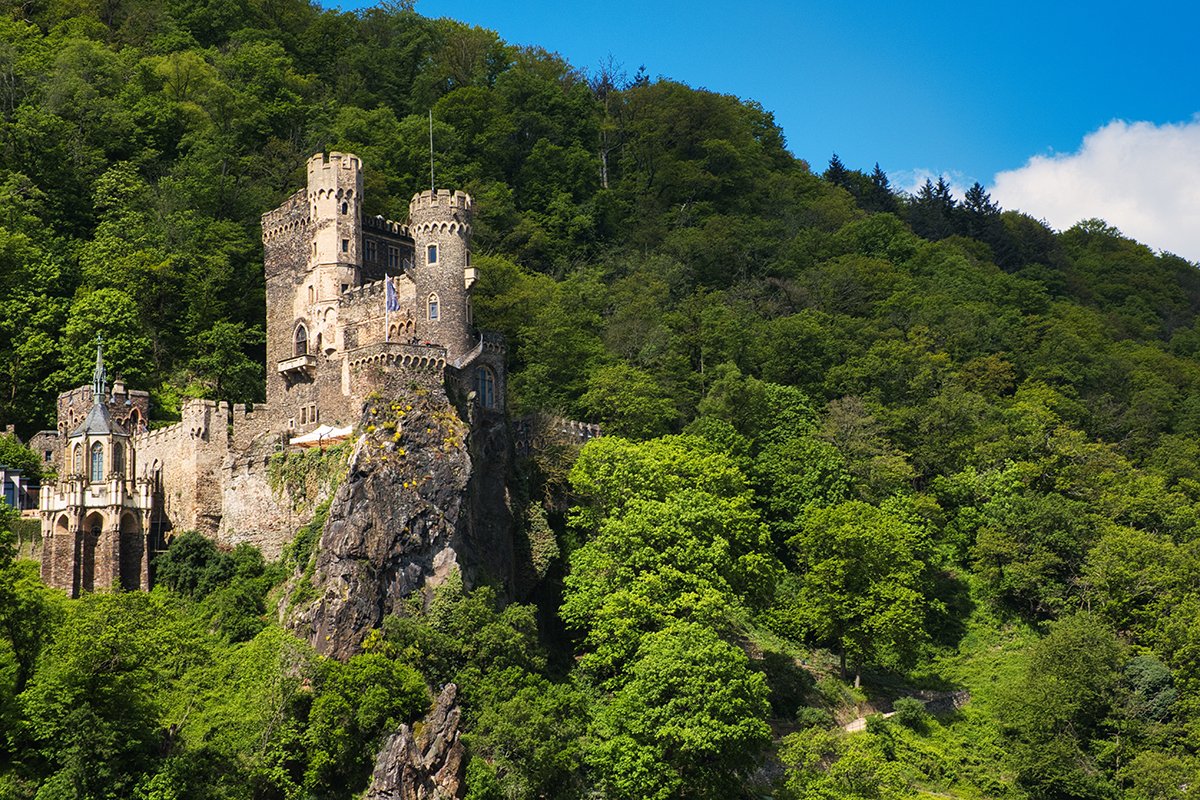
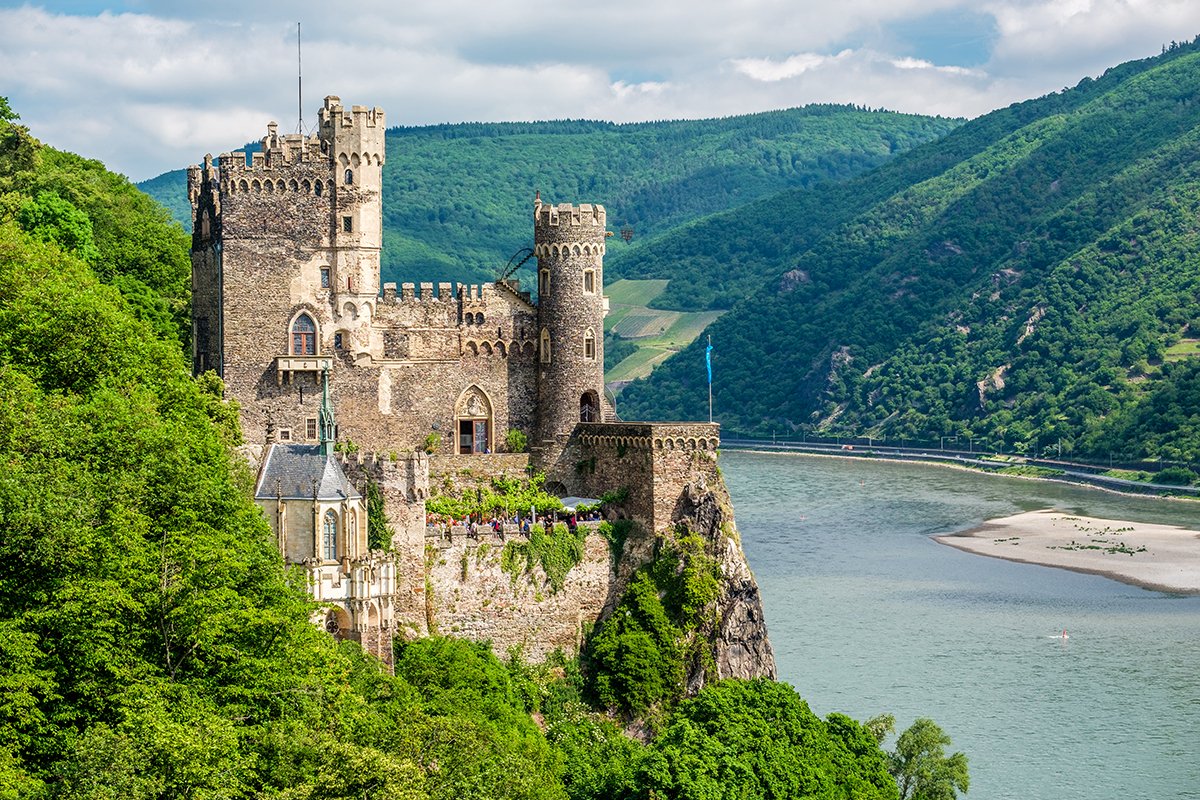
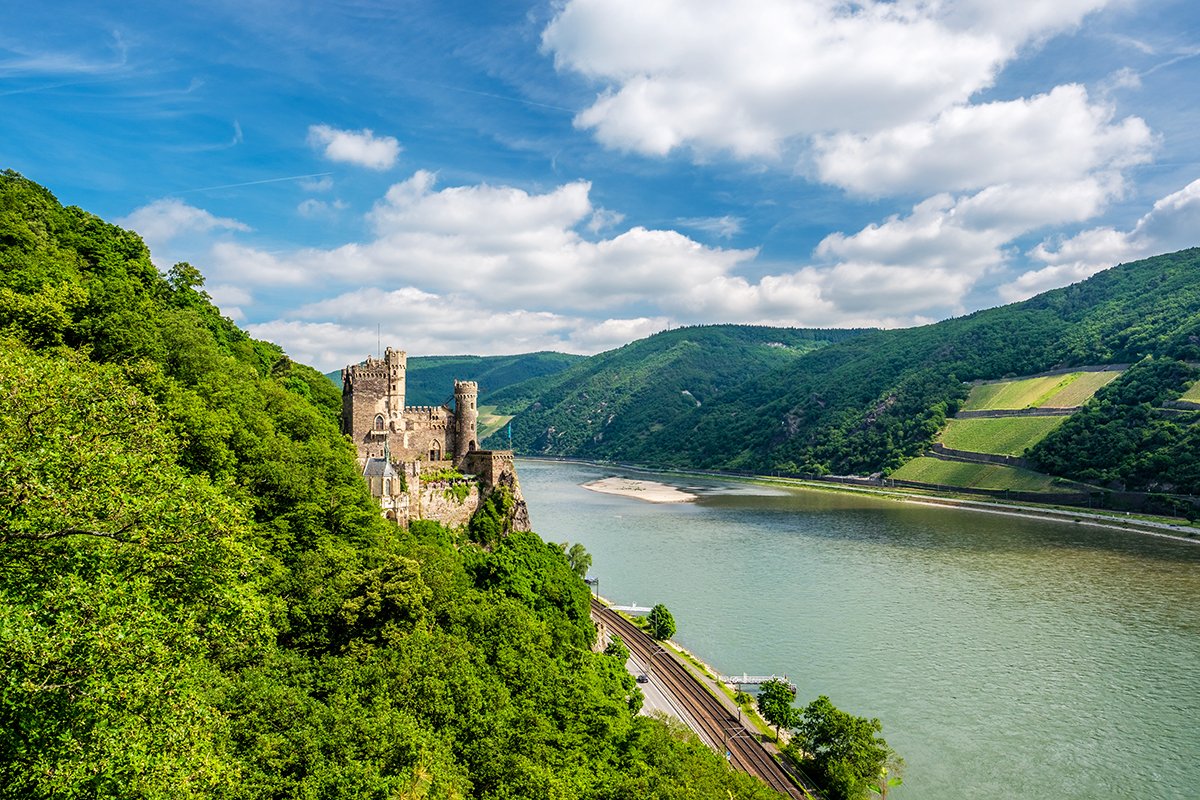
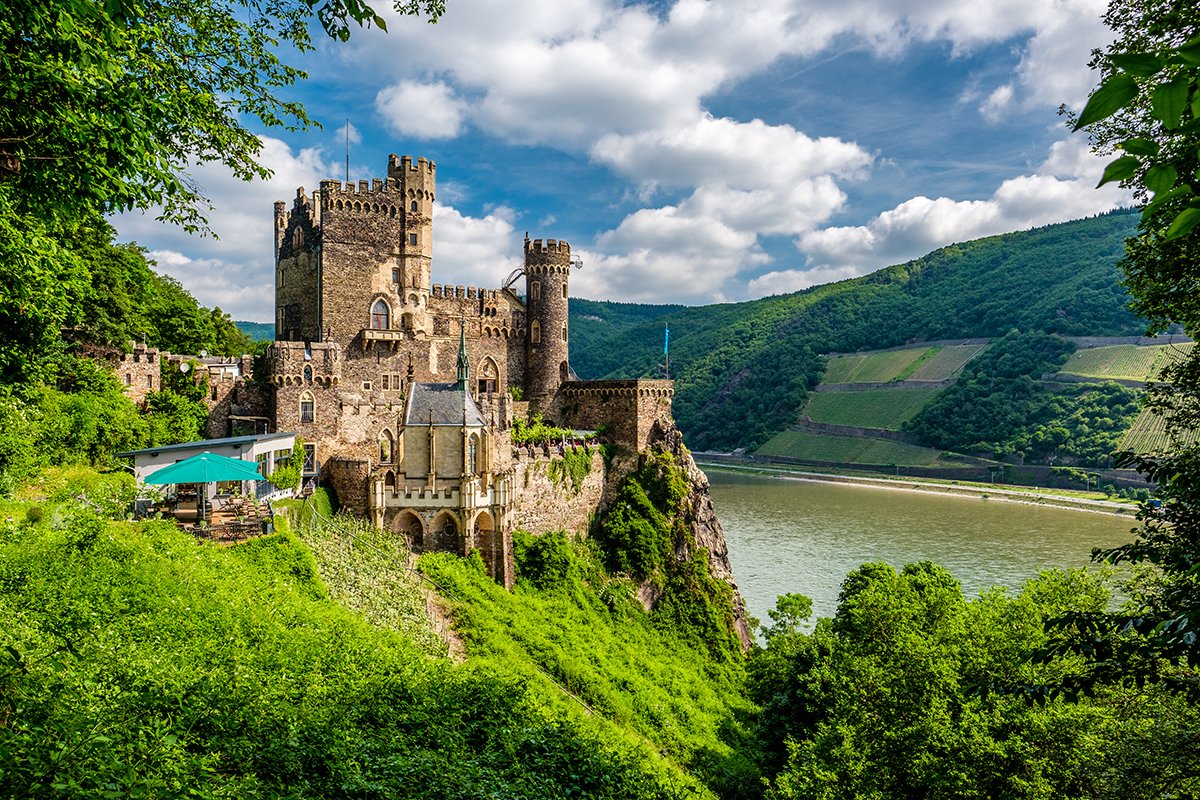
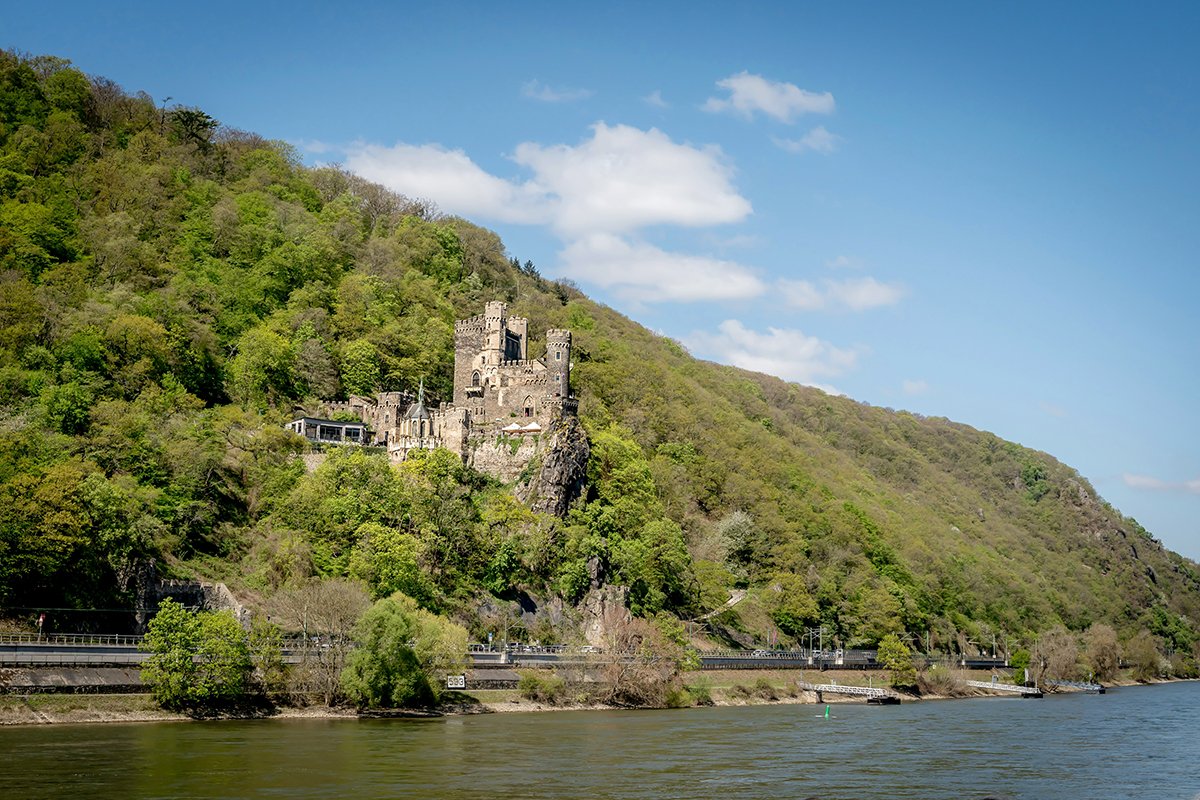
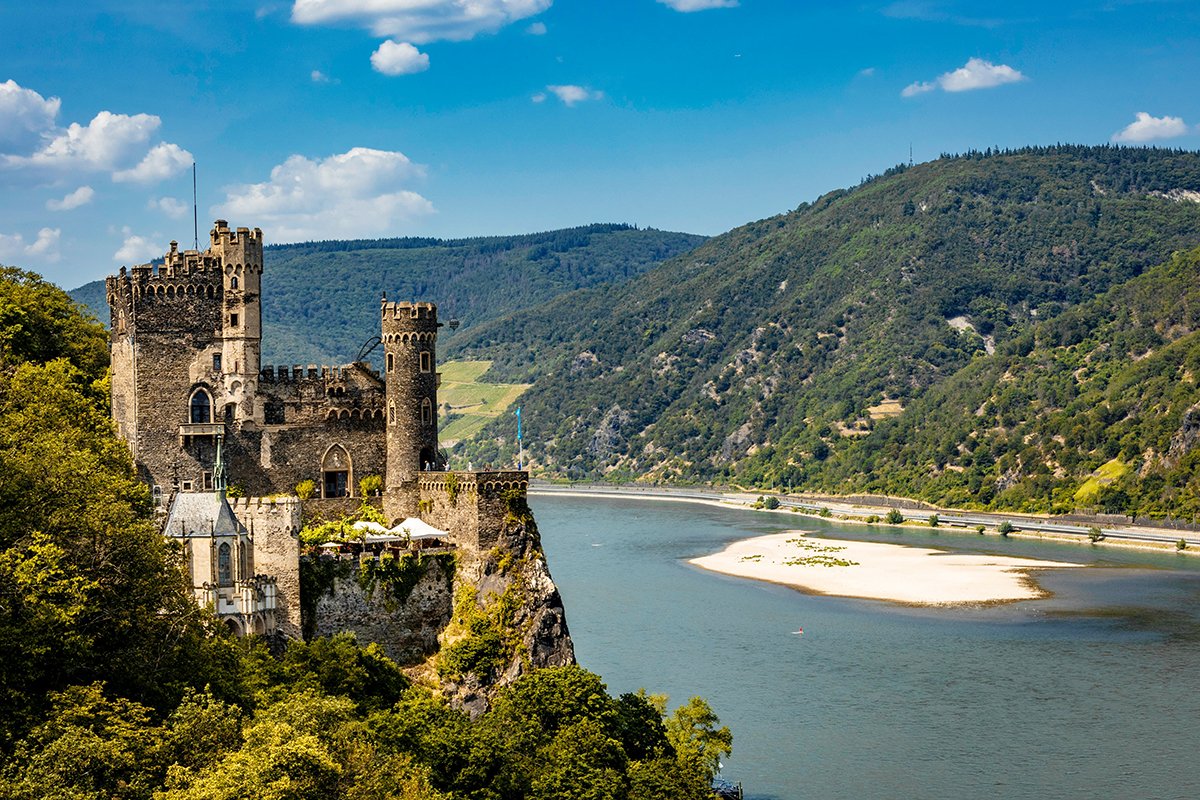
Perched high above a dramatic bend in the Rhine, Rheinstein Castle feels like a scene lifted from a Romantic painting—because, in many ways, it is. Medieval bones meet 19th-century Neo-Gothic flair, from its working defenses to a chapel with gleaming stained glass. Come for the views from the keep, linger in the terraced gardens, and leave with the Rhine Valley’s story echoing behind you.
Quick Facts
📍 Location: Trechtingshausen, Rhineland-Palatinate, Germany
🏗️ Construction Period: c. 1316–1317 (rebuilt 1825–1829)
🏰 Architectural Style: Medieval fortification with 19th-century Neo-Gothic (Romantic) reconstruction
🎭 Famous For: A pioneering 19th-century Romantic castle reconstruction on the Rhine; panoramic Rhine views; Neo-Gothic chapel and crypt; working drawbridge and portcullis; the Burgundy Garden vine
👑 Notable Figures: Archbishops of Mainz (founders); Prince Frederick of Prussia (restorer and resident); Hermann Hecher (1975 purchaser and preserver)
🏆 UNESCO Status: Yes — part of the UNESCO World Heritage Site “Upper Middle Rhine Valley” (2002)
🌐 Official Website: https://www.burg-rheinstein.de/
Map
Historical Context
Rheinstein began life in the early 14th century, built by the Archbishop of Mainz to watch the Rhine like a hawk—tracking river traffic, enforcing tolls, and discouraging robber knights from preying on merchants. Its rocky perch above the water gave it a natural advantage, but by the mid-1300s its strategic value waned, and the cost of upkeep eventually turned it into a 17th-century ruin. Then came its second act: in 1823, Prince Frederick of Prussia bought the remains and, between 1825 and 1829, rebuilt Rheinstein in the spirit of Romantic medievalism—an influential model for Rhine Valley restorations. He later made it his favorite residence (1842) and added a Neo-Gothic chapel and crypt, drawing illustrious visitors such as Queen Victoria and Empress Alexandra Feodorovna.
Visual Tour
Visiting Information
🗓️ Best Time to Visit: April, May, late September, and October
🗺️ Location Perks: You’re in the heart of the Upper Middle Rhine Valley—vineyards, river cruises, and storybook towns line the banks. Don’t miss the nearby Rhine viewpoints and the easy access to Bingen and its riverside promenades.
⏳ Estimated Visit Duration: Plan to spend 2–3 hours exploring the castle and its grounds.
💡 Visiting tips: Wear grippy shoes—the approach and paths can be steep, especially around the landscaped park. Arrive earlier in the day for clearer Rhine views from the keep and a quieter look inside the chapel and courtyard.
Search