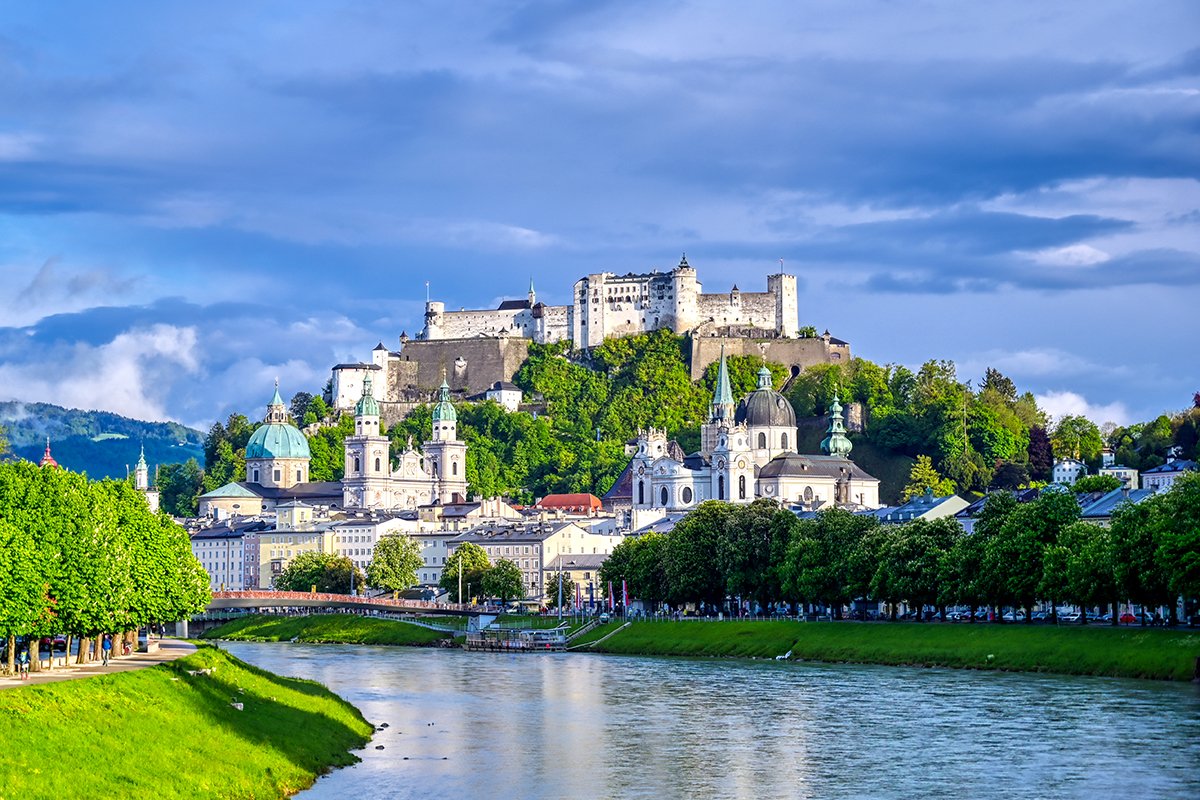
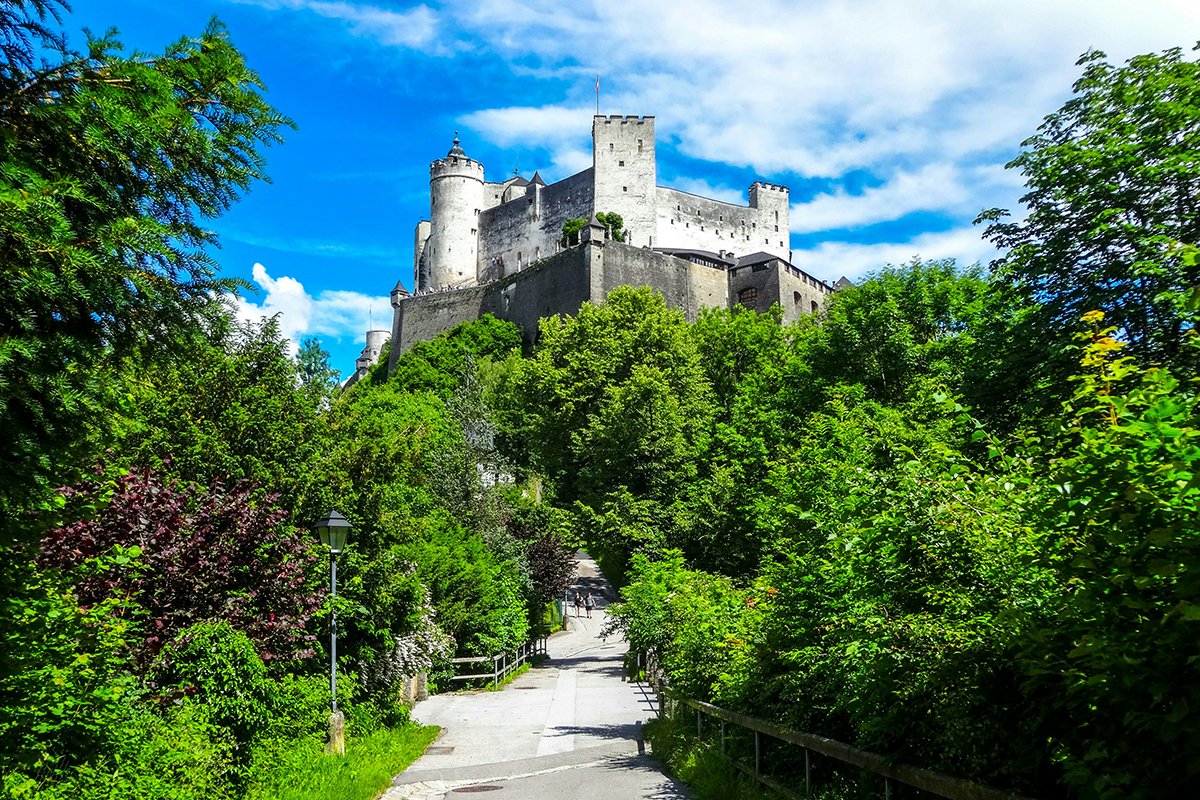
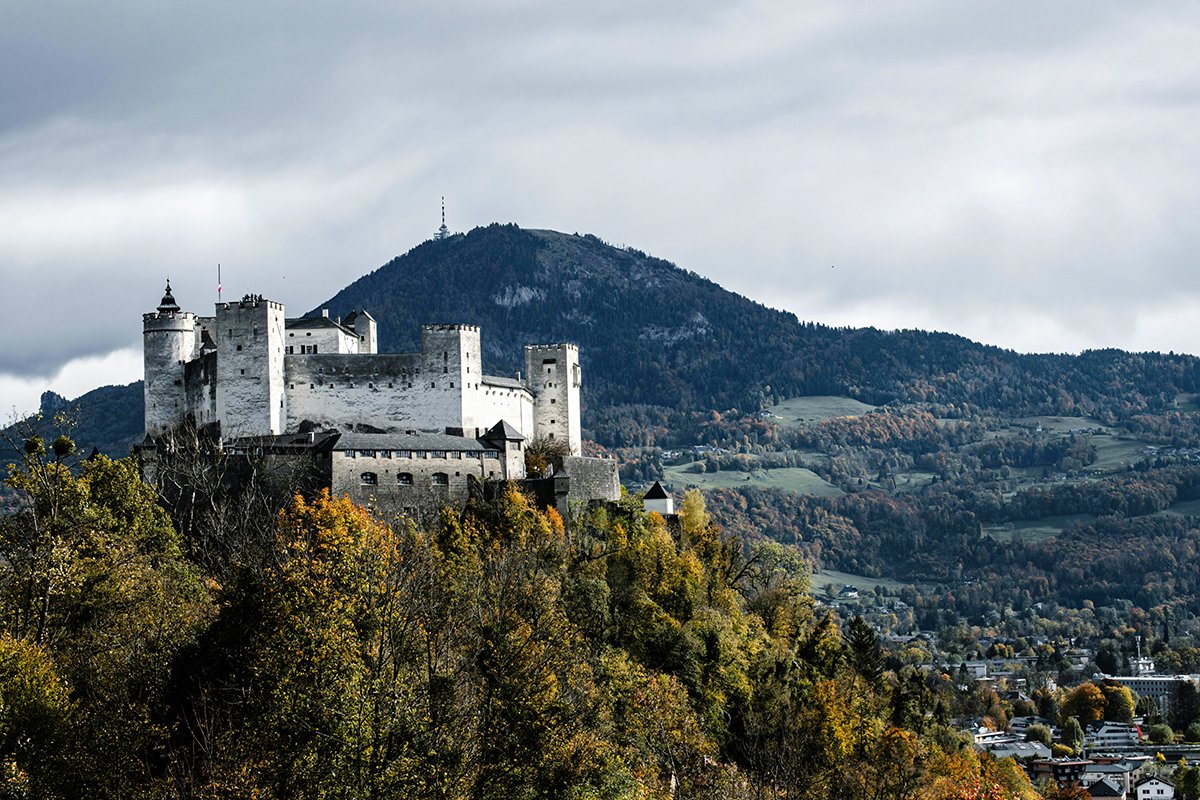
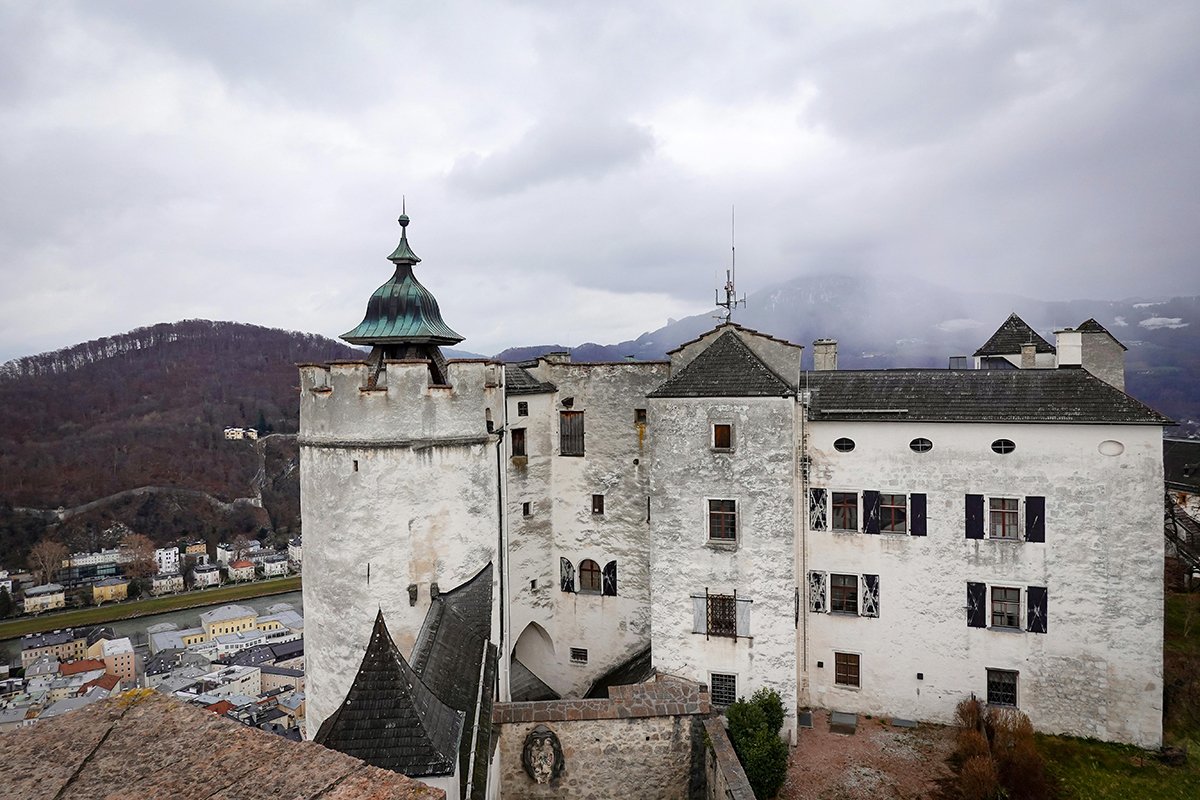
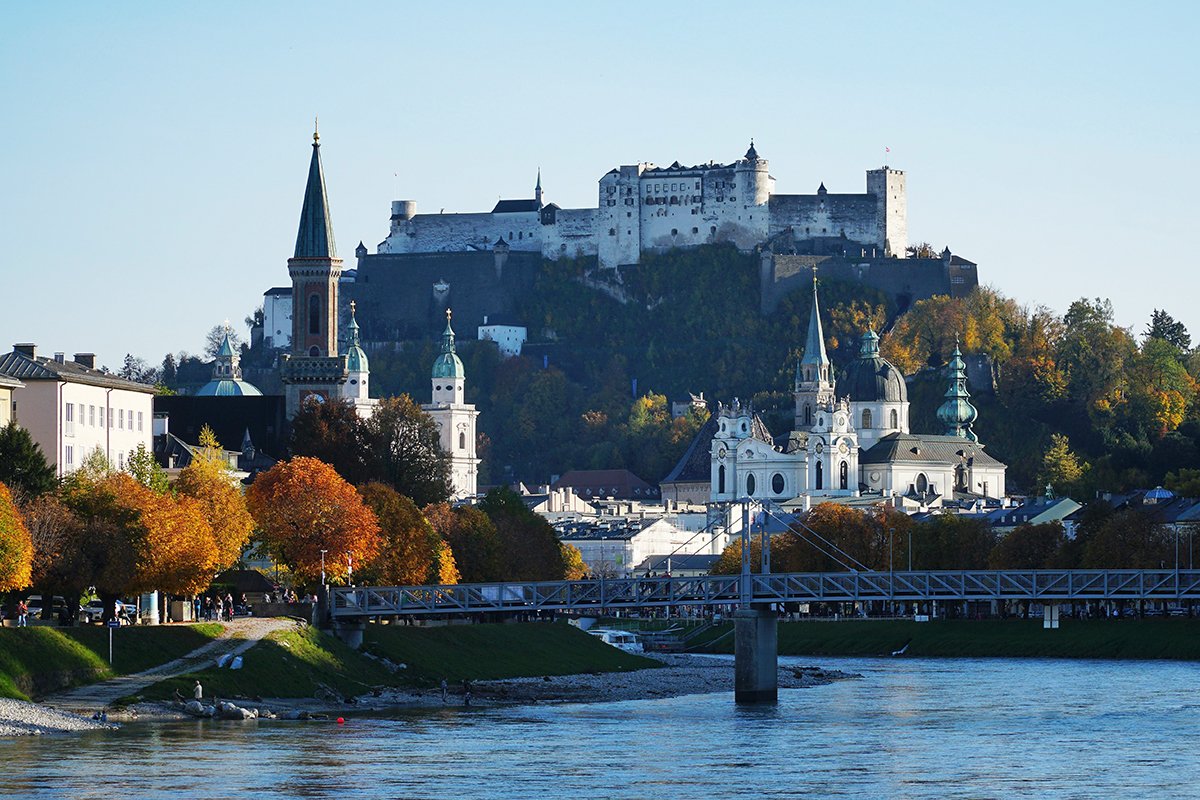
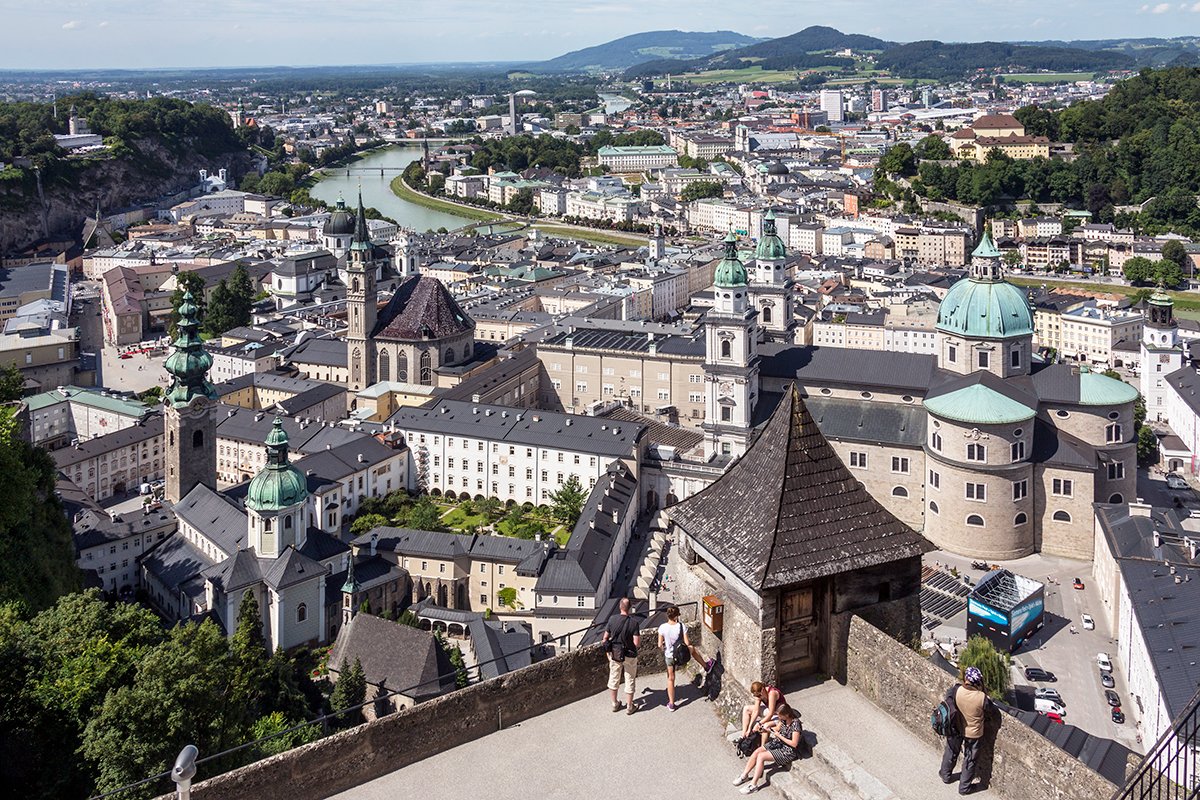
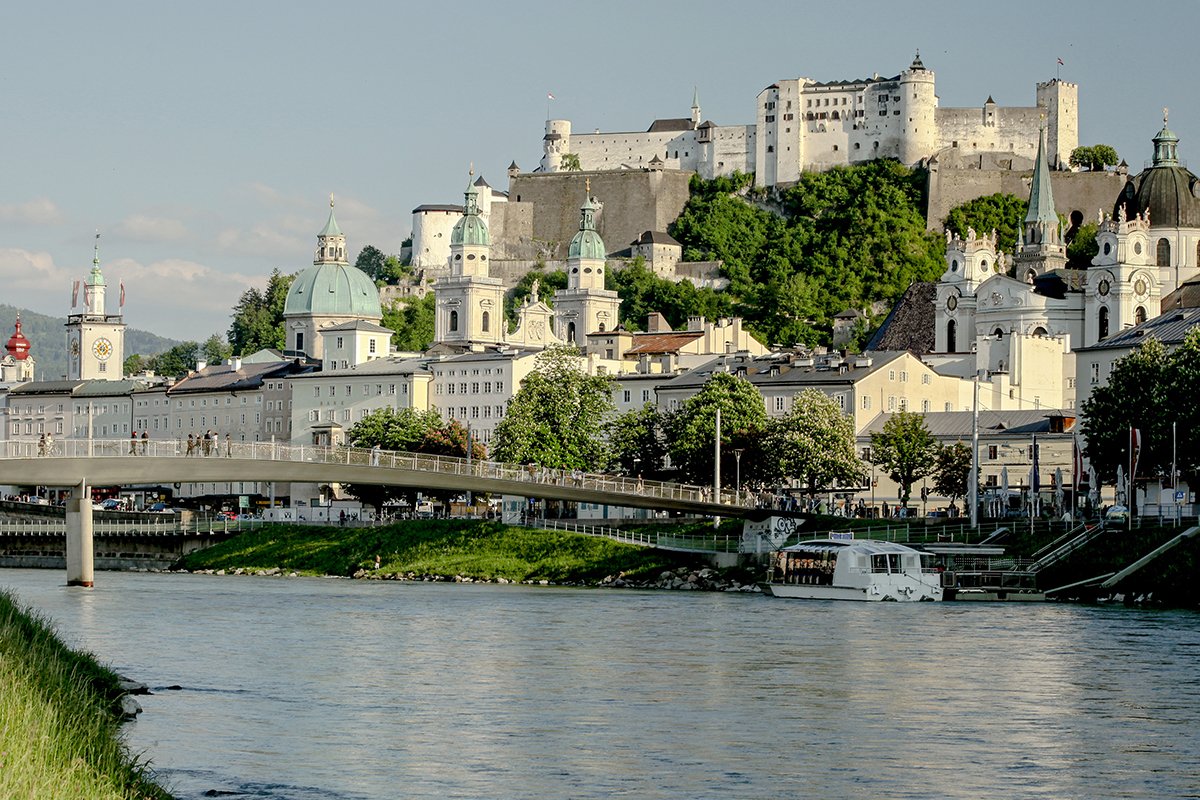
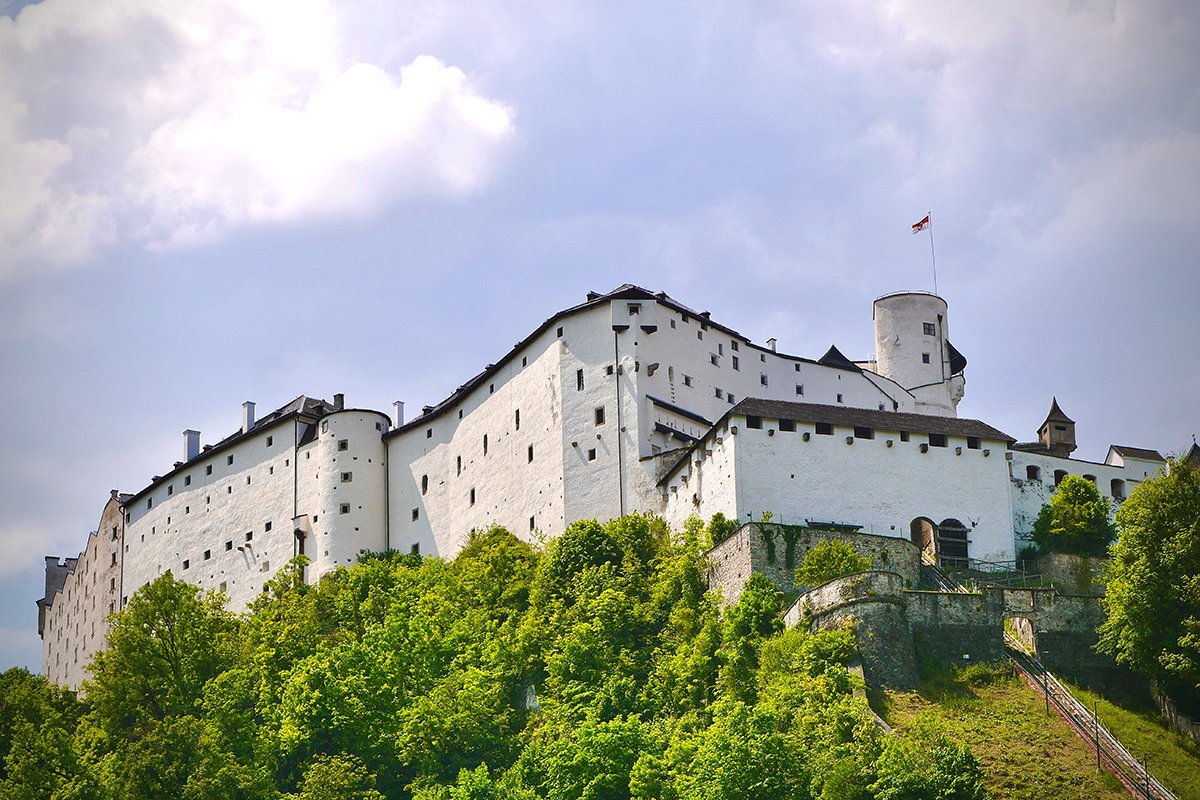
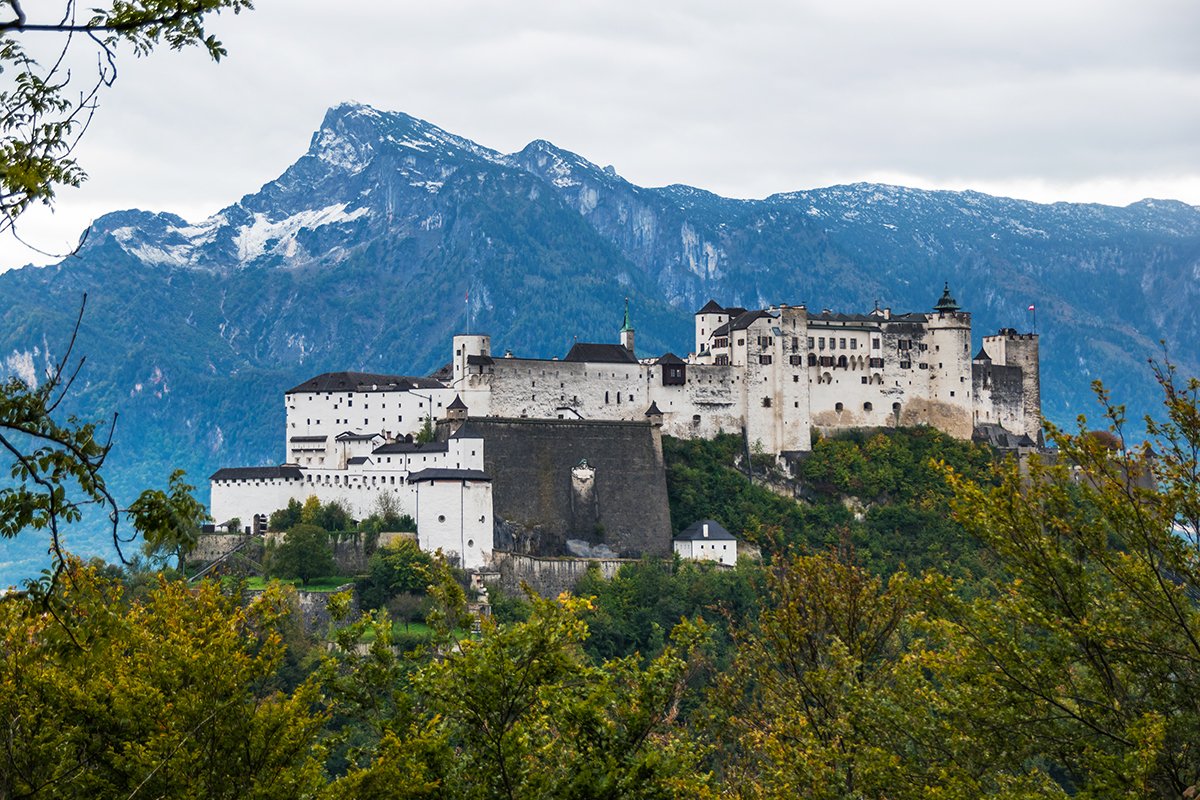
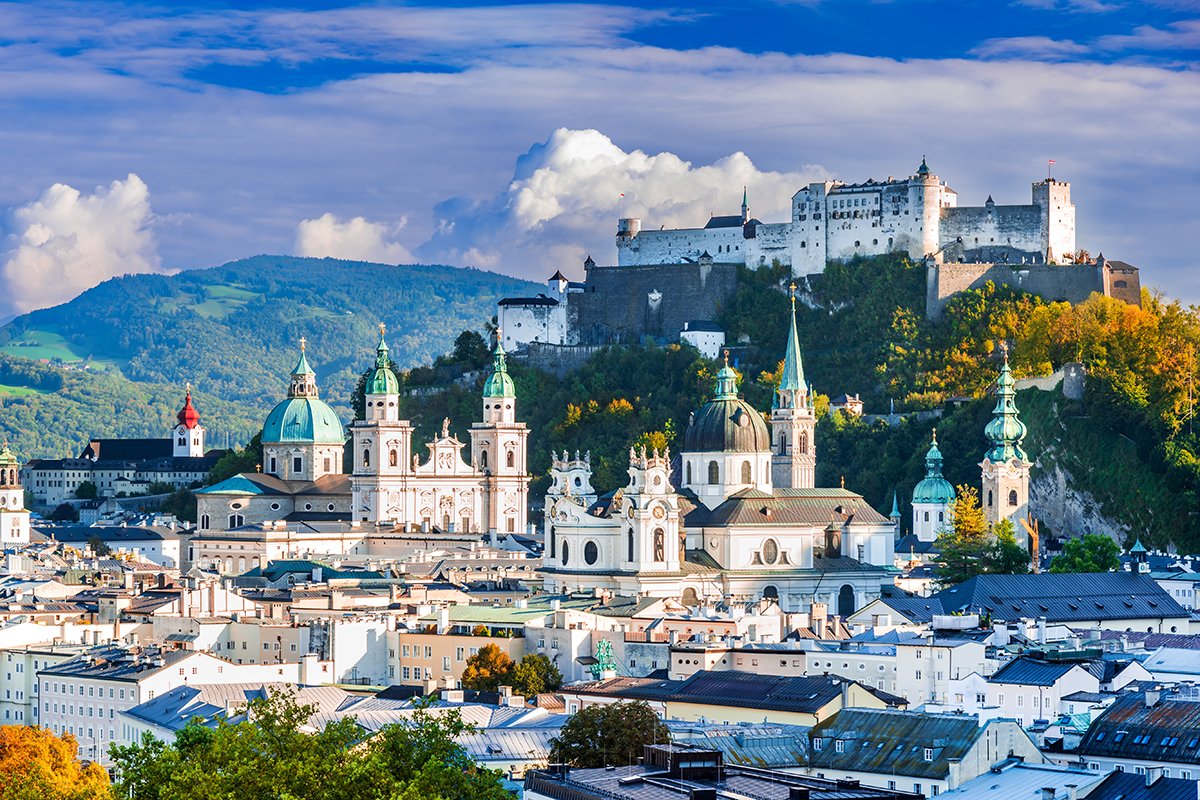
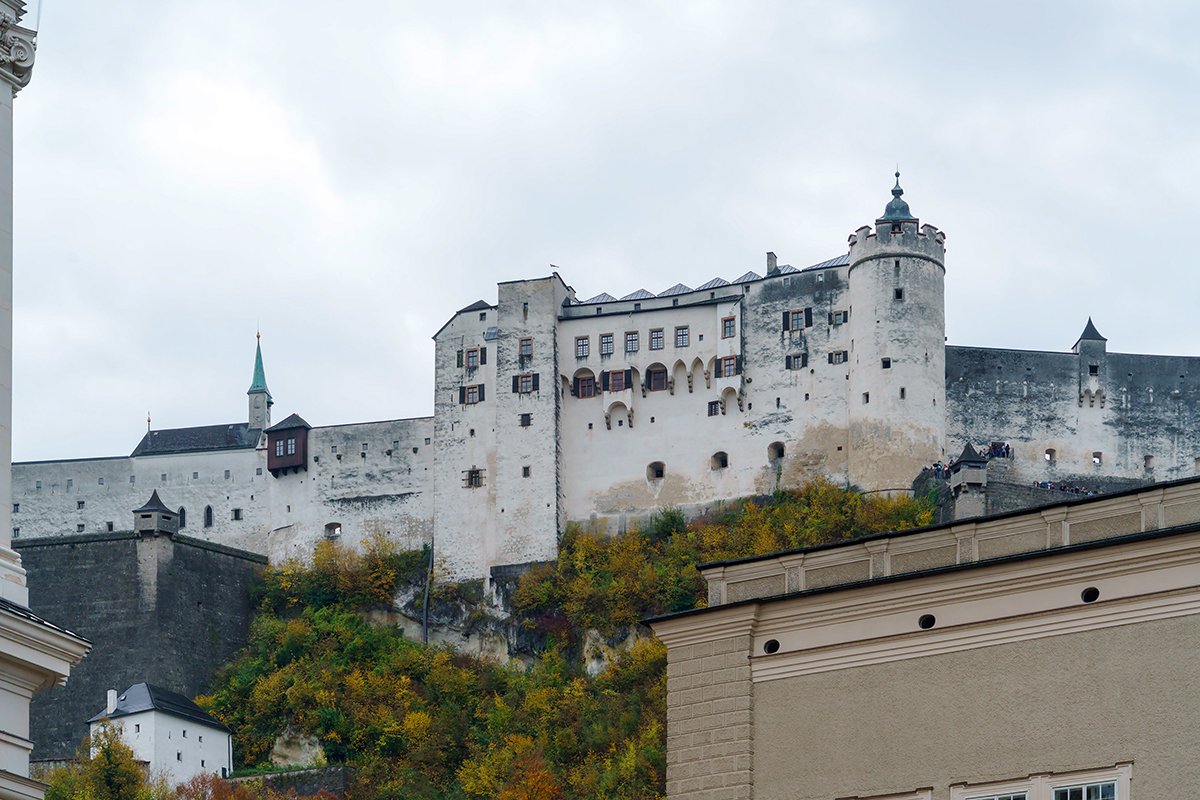
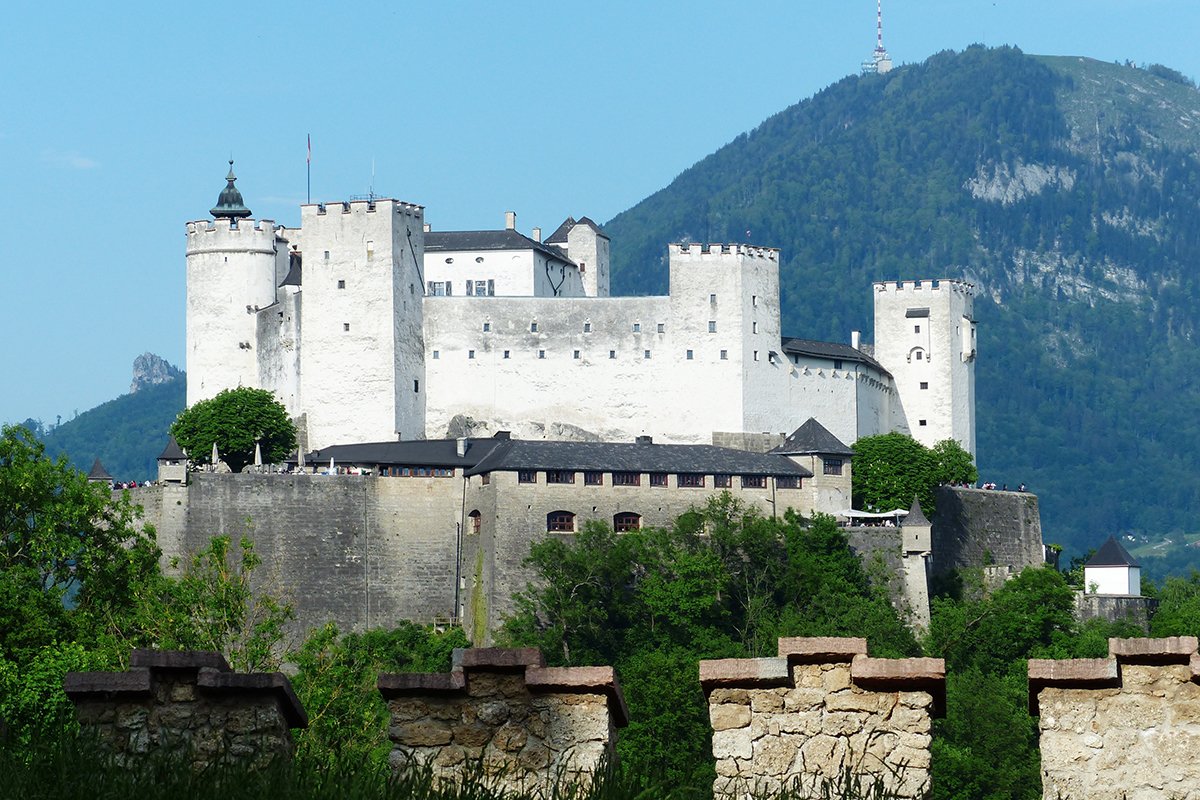
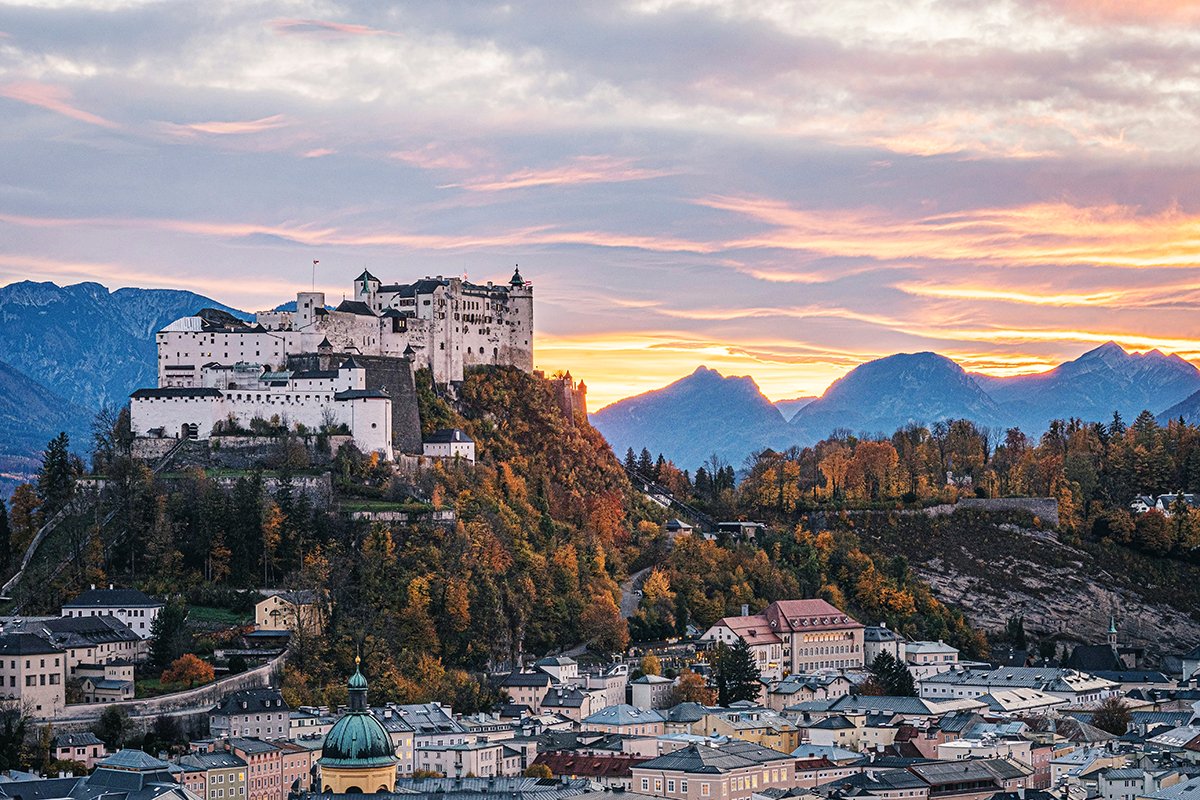
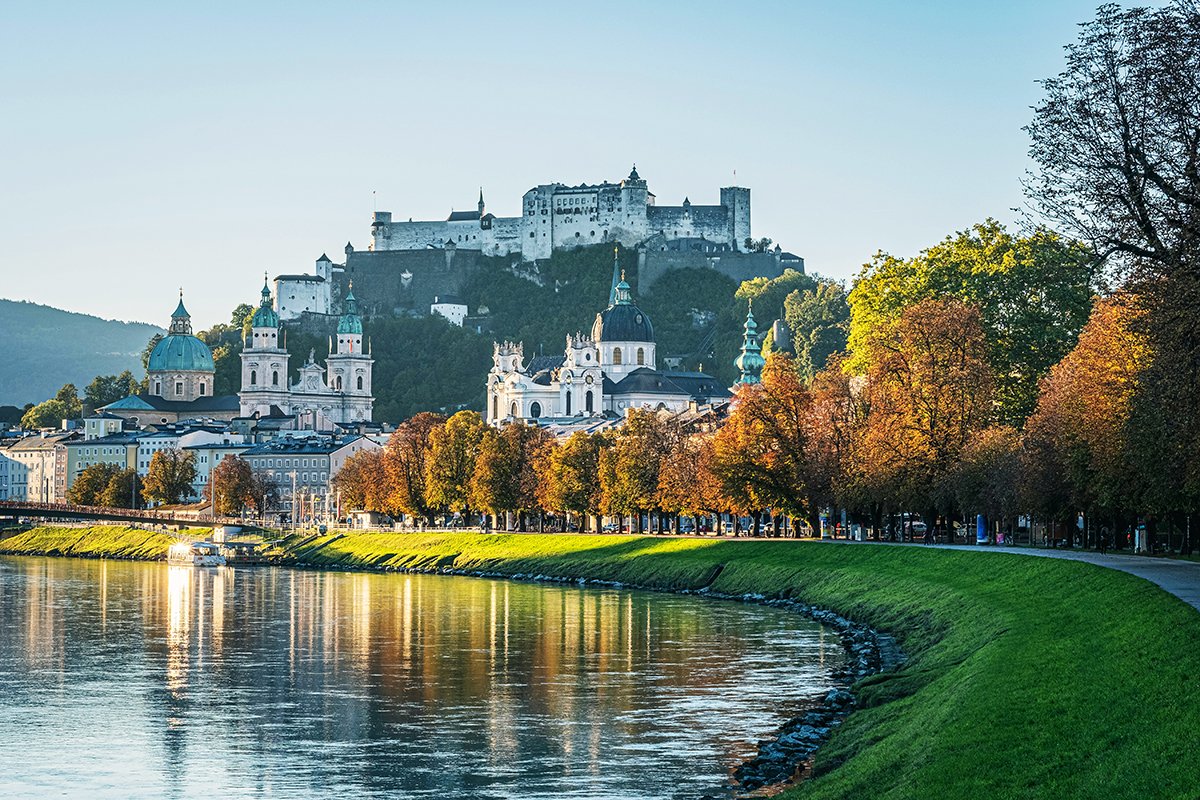
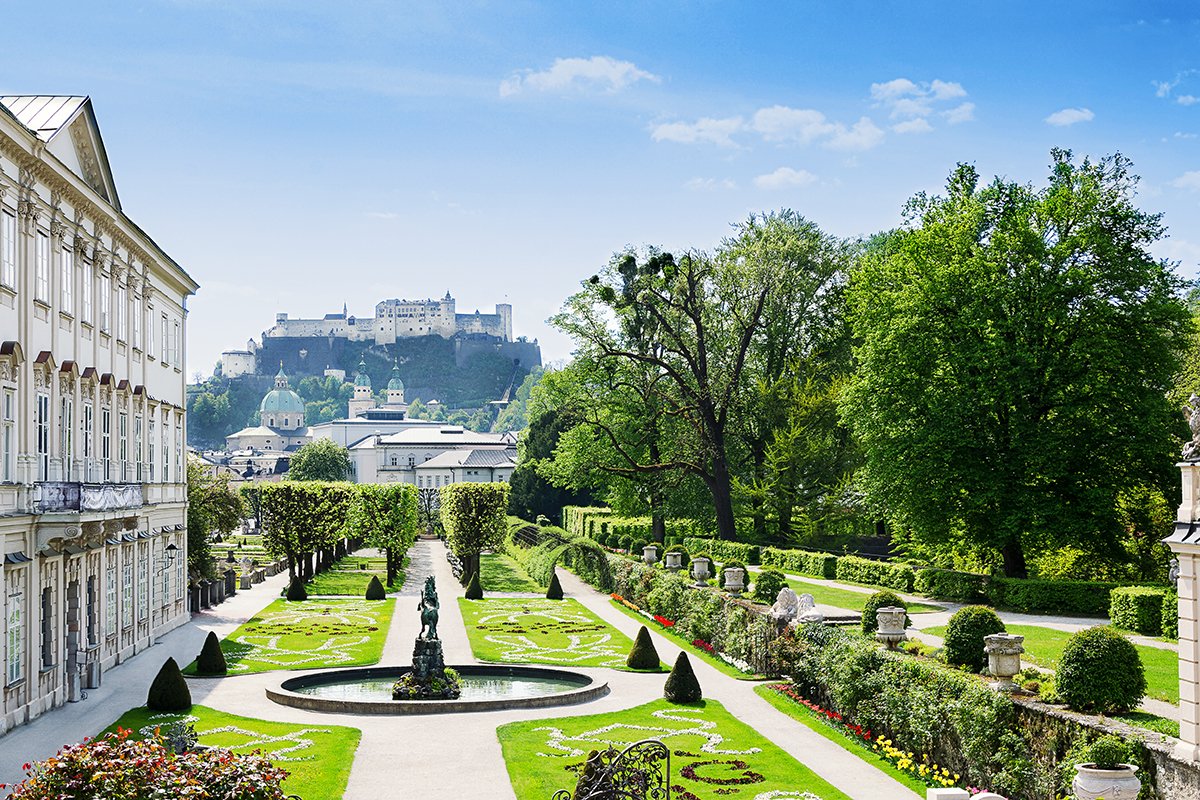
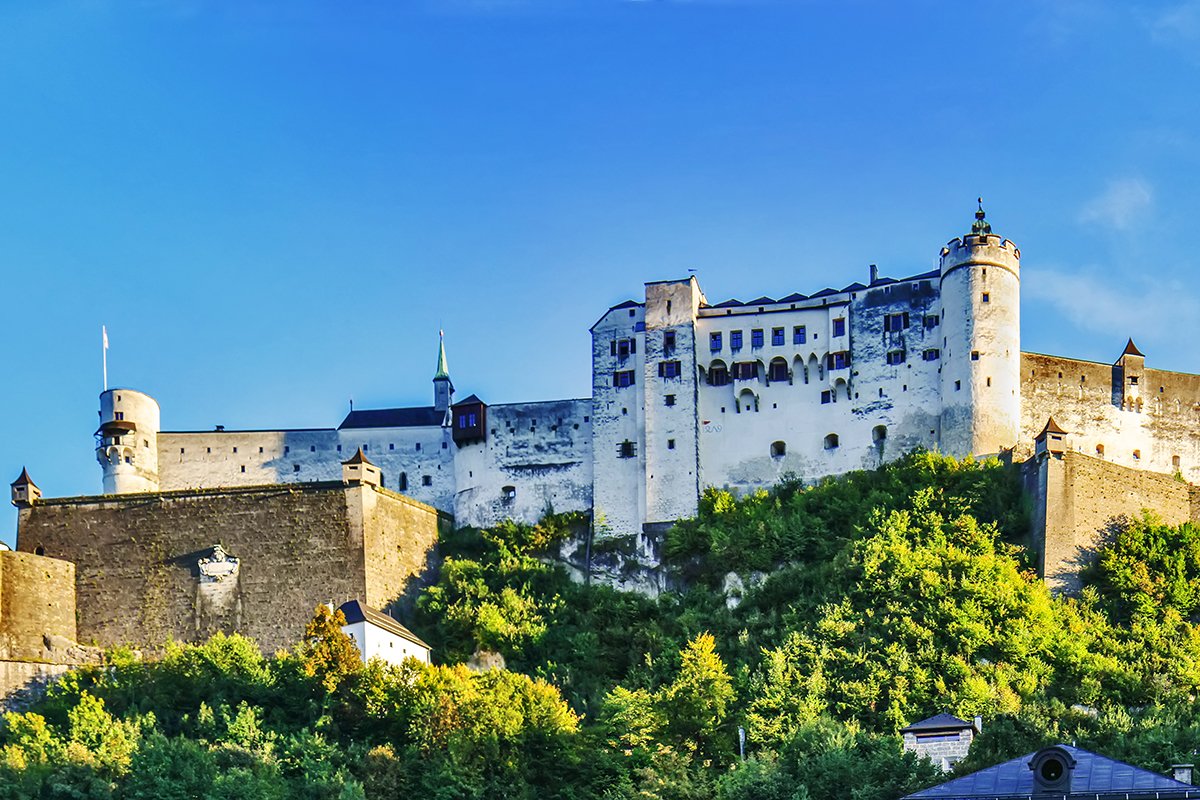
Perched high above Salzburg on the Festungsberg, Fortress Hohensalzburg feels like the city’s stone crown—stern, commanding, and surprisingly elegant once you step inside. Built to safeguard the prince-archbishops and their power, it grew over centuries into one of Europe’s great medieval strongholds. Today, you come for the ramparts and views, then stay for gilded Gothic rooms and atmospheric courtyards.
Quick Facts
📍 Location: Salzburg, Salzburg (State), Austria
🏗️ Construction Period: 1077–1519 (major phases), with later fortification upgrades through the 17th century
🏰 Architectural Style: Romanesque, Gothic, and Renaissance (with later artillery bastions)
🎭 Famous For: Never being taken by enemy assault; the 1525 siege; lavish Late Gothic State Apartments (Golden Hall & Golden Chamber); panoramic views over Salzburg and the Alps; the historic Reißzug goods funicular
👑 Notable Figures: Archbishop Gebhard von Helfenstein (founder); Prince-Archbishop Leonhard von Keutschach (major expansion); Archbishop Paris Lodron (Thirty Years’ War fortifications)
🏆 UNESCO Status: Yes (Part of the Historic Centre of the City of Salzburg UNESCO World Heritage Site)
🌐 Official Website: https://www.festung-hohensalzburg.at/en/
Map
Historical Context
Hohensalzburg began in 1077, raised by Archbishop Gebhard von Helfenstein at a tense moment in the Investiture Controversy—more than a fortress, it was a public statement of church authority and Salzburg’s autonomy. Over time it expanded into a vast complex, with Prince-Archbishop Leonhard von Keutschach (1495–1519) shaping much of what you see today and adding remarkable Late Gothic state rooms. The fortress earned its formidable reputation in 1525 during the German Peasants’ War, when rebels besieged it without taking it. Later, Archbishop Paris Lodron modernized defenses during the Thirty Years’ War with bastions and storage for gunpowder and arms. Its final major military chapter ended peacefully in 1800, when it surrendered to French troops during the Napoleonic era.
Visual Tour
Visiting Information
🗓️ Best Time to Visit: April, May, late September, and October
🗺️ Location Perks: You’re right above Salzburg’s Old Town, so it’s easy to pair the fortress with a stroll through baroque streets, cathedral squares, and riverside viewpoints. Don’t miss the city-and-Alps panorama from the battlements—especially as the light softens late in the day.
⏳ Estimated Visit Duration: Plan to spend 2–3 hours exploring the castle and its grounds.
💡 Visiting tips: Take the Festungsbahn funicular up to save your energy, then walk down for the scenery if you like steep paths. Go early or later in the afternoon to dodge peak crowds, and wear shoes with grip—stairs and uneven stone are part of the experience.
Search