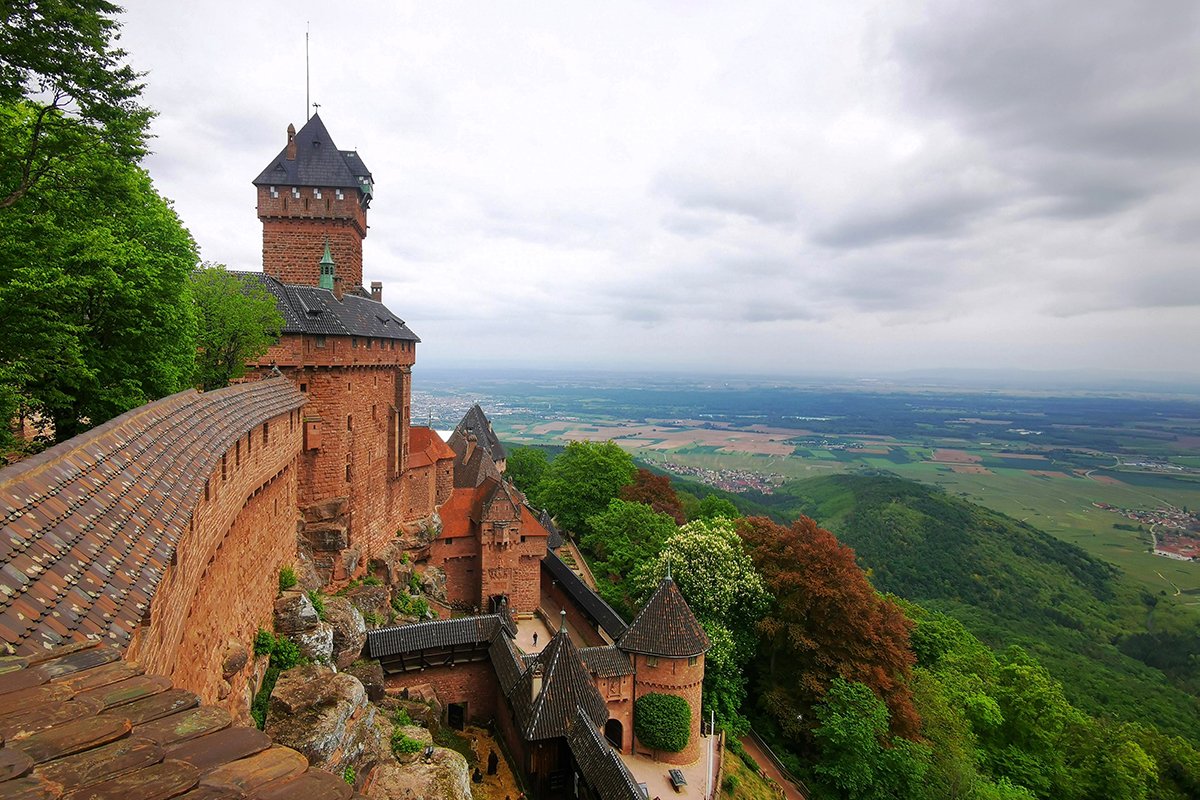
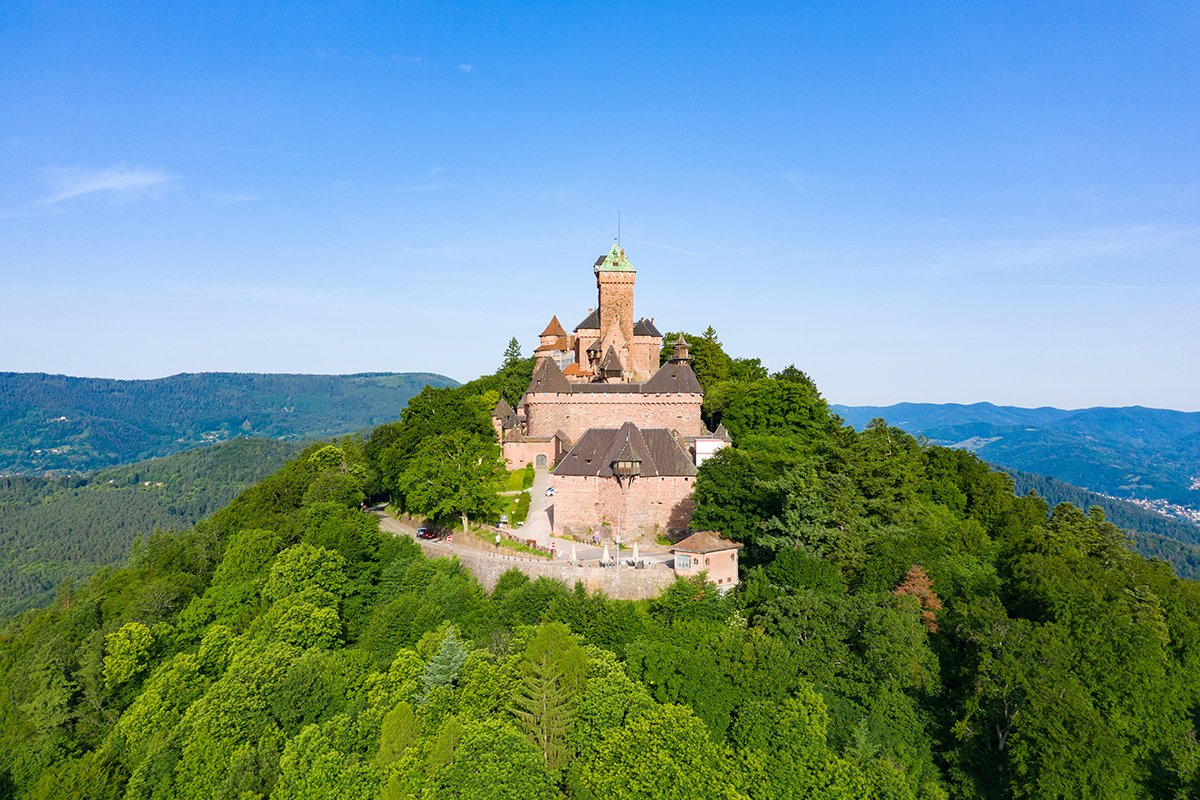
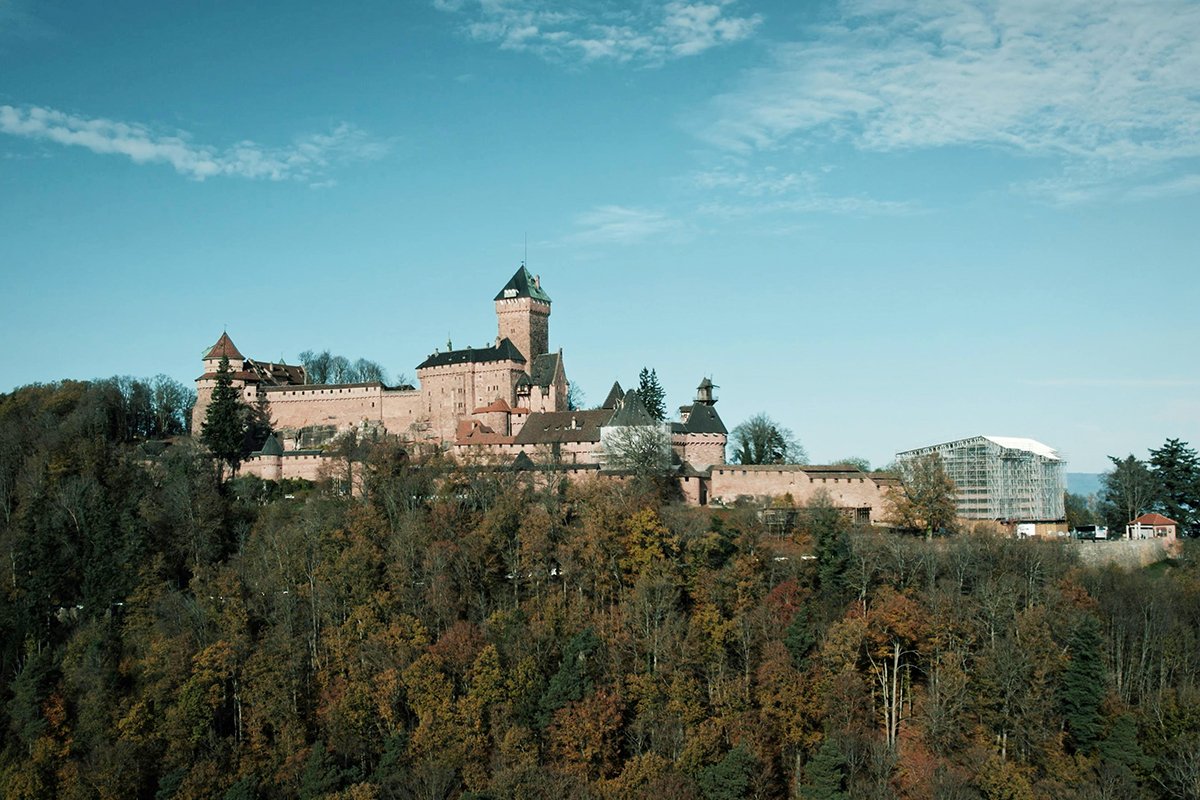
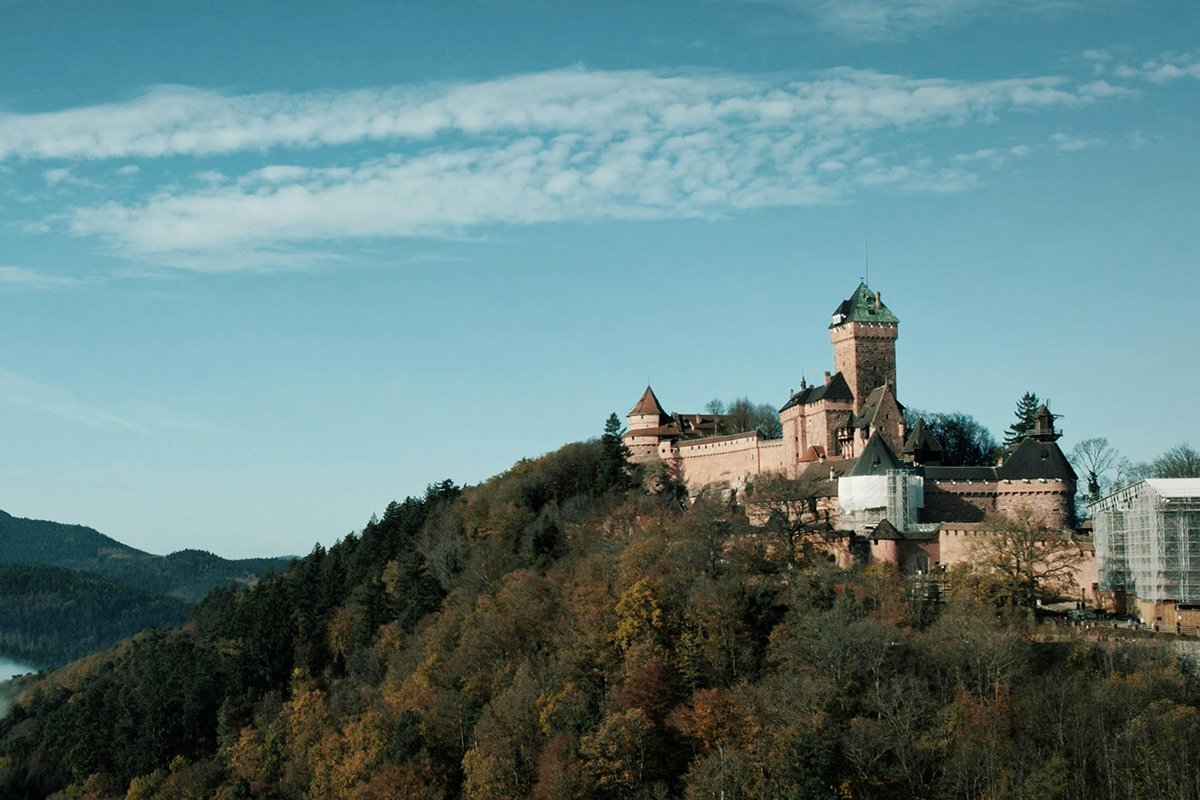
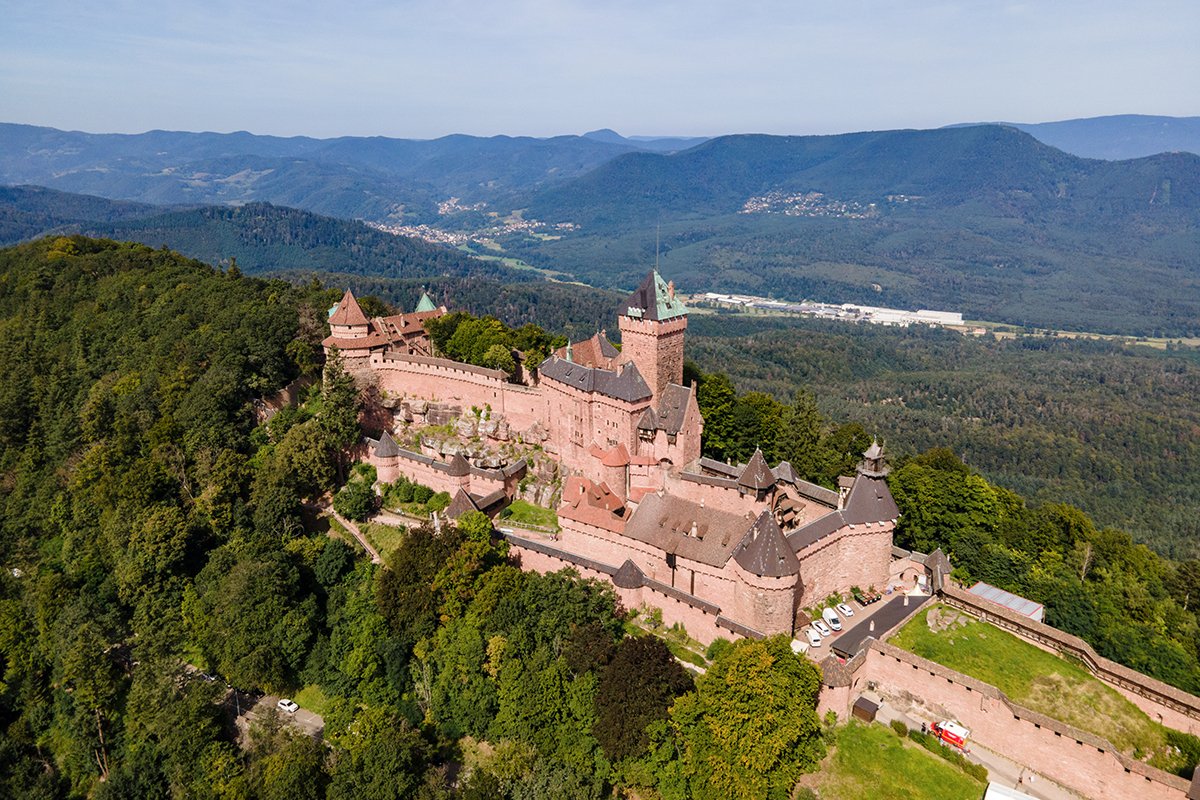
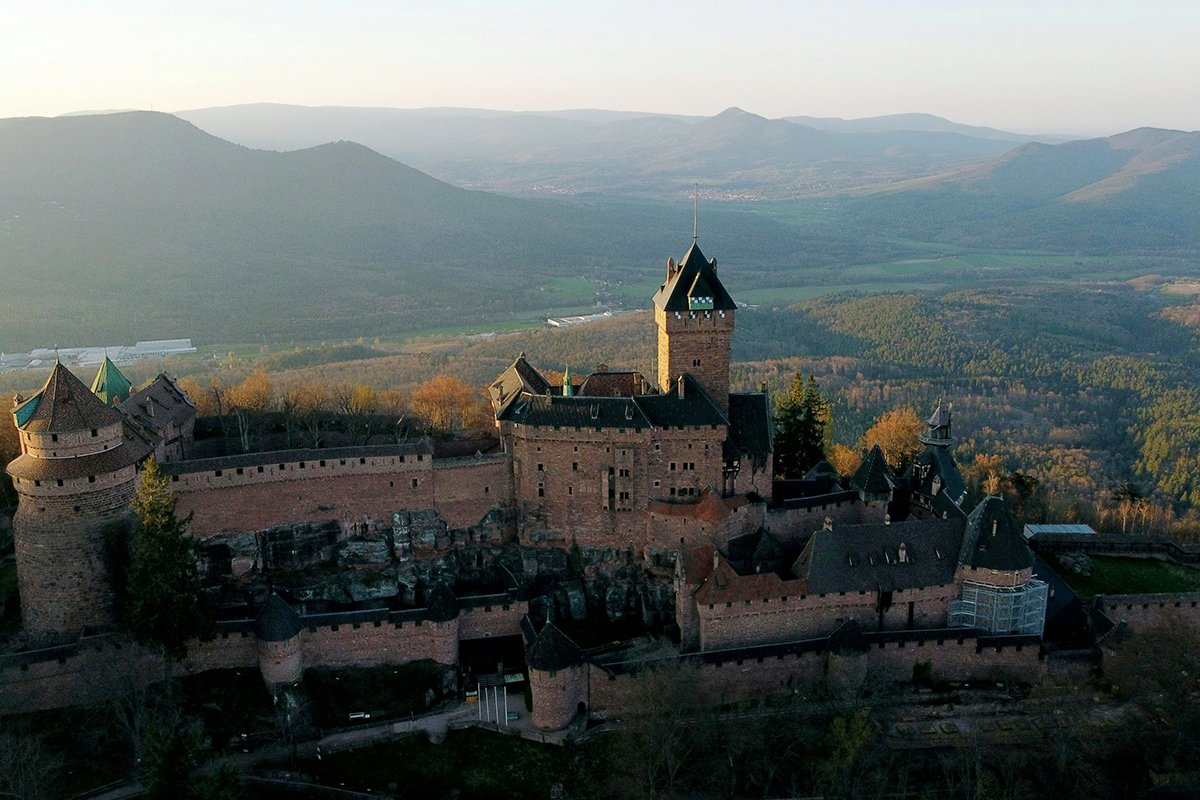
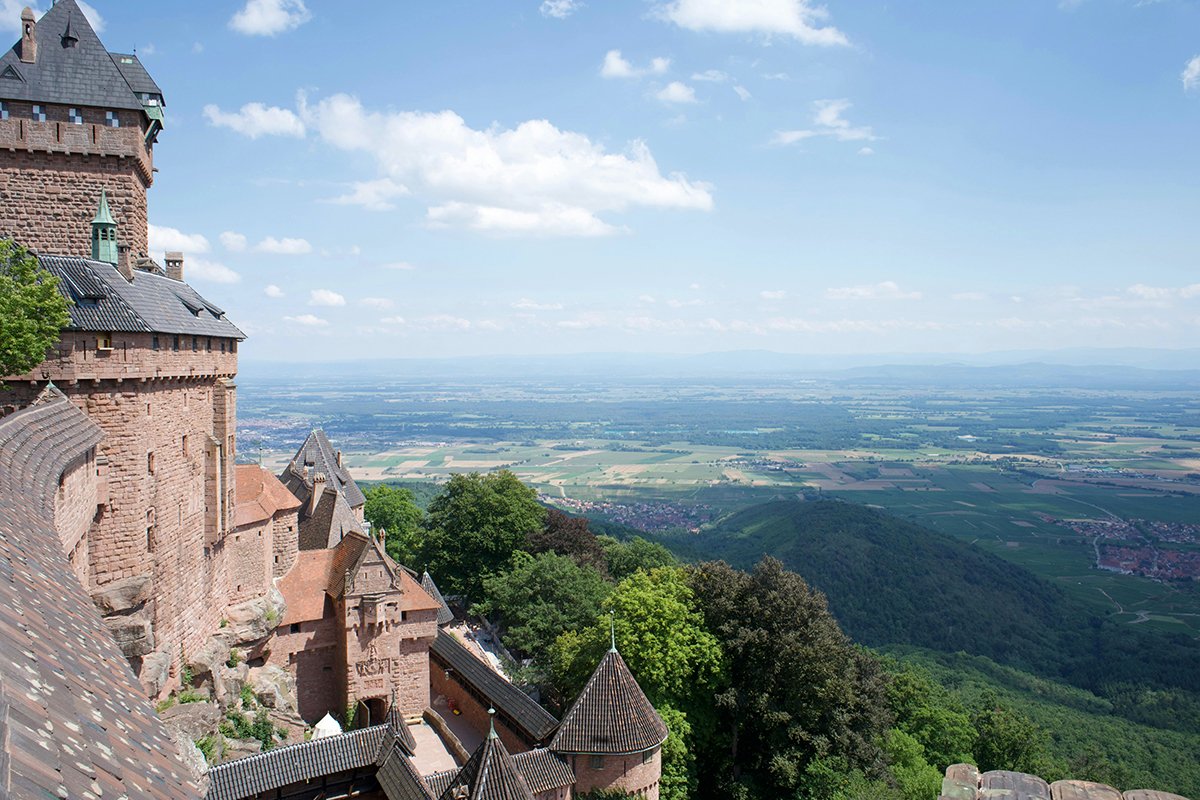
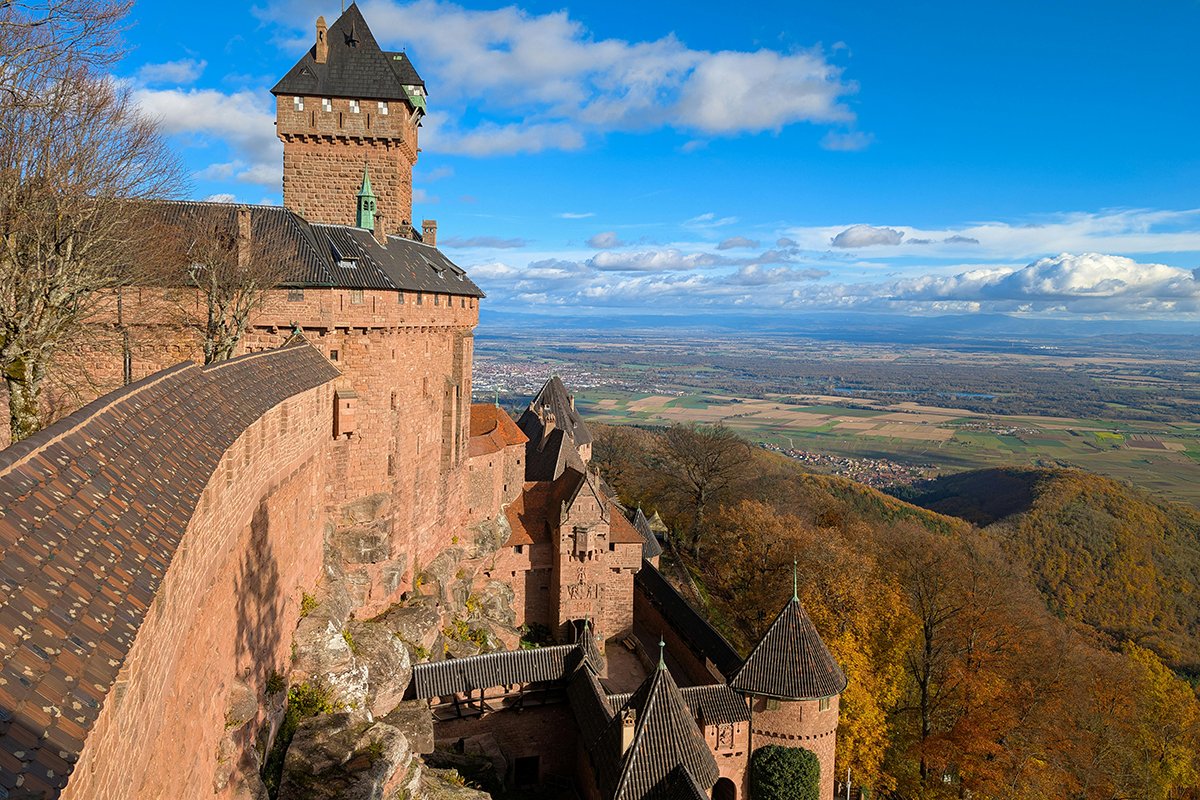
Clinging to a rocky spine high above the Alsace plain, Haut‑Koenigsbourg Castle feels like a storybook fortress with real bite. Drawbridges, ramparts, and cannon-lined bastions guide you through a place that once watched over trade routes—and later became a headline symbol of Franco‑German history. Come for the sweeping views, stay for the satisfying mix of medieval grit and imperial-era spectacle.
Quick Facts
📍 Location: Orschwiller (near Sélestat), Alsace, France
🏗️ Construction Period: 12th century (attested 1147); major rebuild 1479–early 16th century; full restoration 1900–1908
🏰 Architectural Style: Medieval mountain fortress (Romanesque/Gothic defensive architecture), with early modern artillery works; historicist restoration
🎭 Famous For: A dramatically restored mountaintop stronghold; 1633 Thirty Years’ War destruction; 1900–1908 Kaiser Wilhelm II restoration; layered drawbridges and bastions with artillery displays
👑 Notable Figures: Hohenstaufen dynasty (early builders); Lords of Tierstein (late-medieval rebuild); Kaiser Wilhelm II (patron of restoration); Bodo Ebhardt (restoration architect)
🏆 UNESCO Status: No
🌐 Official Website: https://www.haut-koenigsbourg.fr/en
Map
Historical Context
First recorded in 1147 as an imperial stronghold linked to the Hohenstaufen, Haut‑Koenigsbourg Castle guarded the Alsace plain and the merchant routes running below—perfect for surveillance, tolls, and control. Over the centuries it passed through powerful hands, from the Dukes of Lorraine to regional noble families and the Habsburg orbit, and it even gained a rough reputation when robber‑baron activity drew retaliation and fire in 1462. Rebuilt after 1479 by the Lords of Tierstein, the castle reached its late‑medieval peak with artillery-ready defenses. In 1633, Swedish forces besieged it for around fifty days during the Thirty Years’ War, then looted and burned it, leaving ruins for centuries. The site’s second life came when Wilhelm II commissioned a sweeping restoration (1900–1908), turning it into a political monument—and, after 1919, a French national landmark and major visitor draw.
Visual Tour
Visiting Information
🗓️ Best Time to Visit: April, May, late September, and October
🗺️ Location Perks: Its perch in the Vosges delivers big-sky panoramas over the Upper Rhine plain—on clear days you can pick out the Black Forest, and sometimes even the Alps. Pair it with Alsace wine villages and Sélestat for an easy, scenic day loop.
⏳ Estimated Visit Duration: Plan to spend 2–3 hours exploring the castle and its grounds.
💡 Visiting tips: Wear sturdy shoes—there are lots of stairs, ramps, and uneven stone surfaces. Bring a light layer even in summer (the ridge can be windy), and aim for early morning or late afternoon to enjoy the views with smaller crowds.
Related Articles
Search