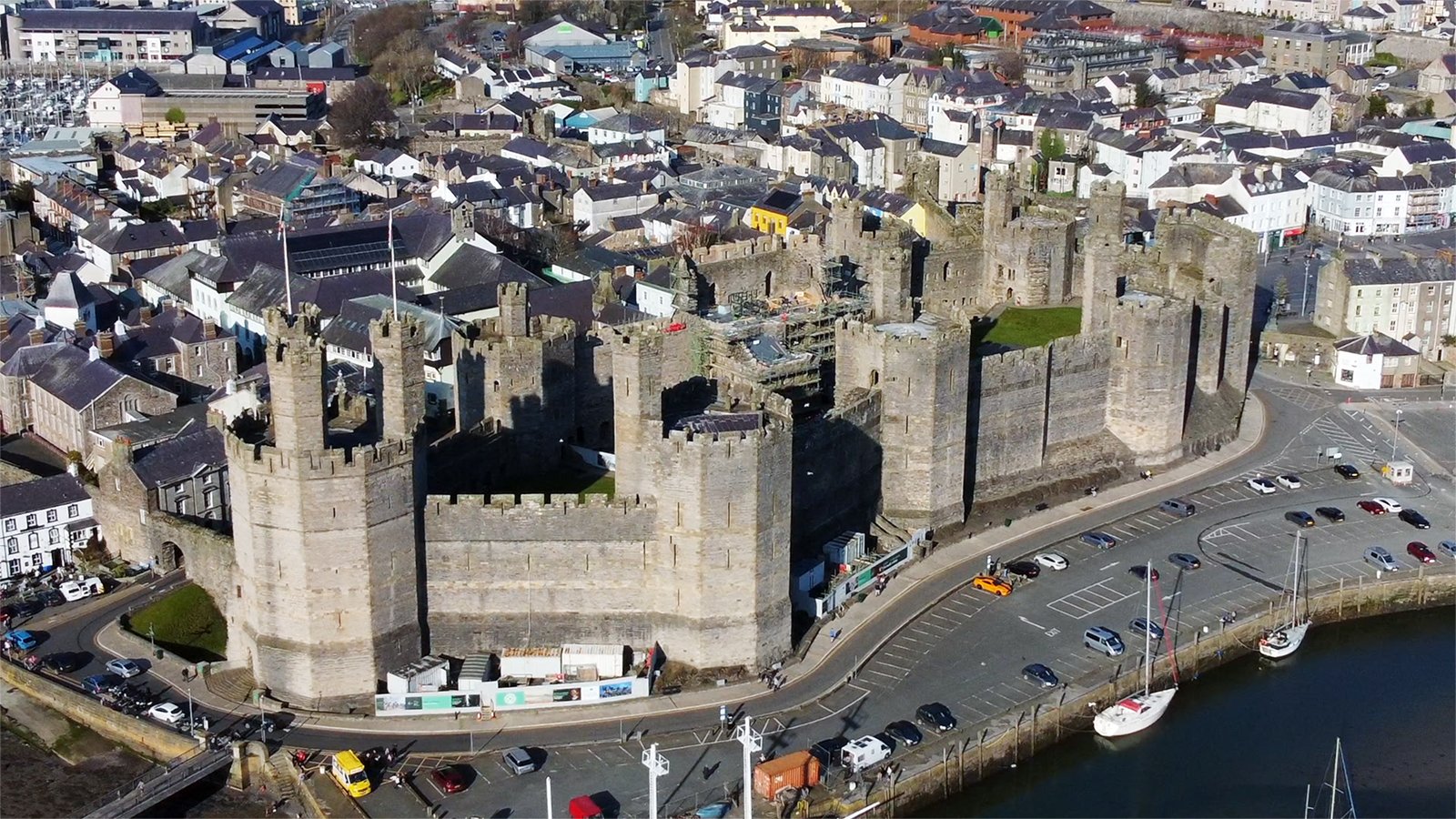
If you arrive in Caernarfon on a quiet morning, you’ll probably hear the castle before you truly see it. Gulls circle above the battlements, the River Seiont laps at the stone below, and the first footsteps echo across the drawbridge. Then the full shape of the fortress comes into view, and it hits you just how massive it really is. Caernarfon Castle isn’t just impressive. It feels intentional, like every tower was built to send a message that still carries weight centuries later.
I remember the first time I walked along the outer walls. The stones shift in color from pale cream to deep grey, banded in a way that almost looks artistic. Edward I didn’t choose this design by accident. He wanted a castle that would dominate North Wales, both physically and psychologically, and he made sure it looked the part. Standing beneath the Eagle Tower, you can picture how overwhelming this would’ve felt to anyone who tried to challenge it.
But Caernarfon isn’t all intimidation. It’s full of small moments that stay with you. The warm glow on the King’s Gate at sunset. The narrow stairs twist so tightly that your hand always reaches for the wall. The sudden quiet when you step into the open courtyard and realize how much life once moved through this place. Markets, soldiers, royal ceremonies, rebellions—every one of them left a mark here.
What strikes most visitors is how real the castle feels. It hasn’t been polished into a theme-park version of itself. Caernarfon is rugged, uneven, and deeply atmospheric. You can touch the stone and feel its age. You can look out over the town and imagine watchmen doing exactly the same thing 700 years ago.
This is a place that rewards curiosity. And if you’re ready to explore one of Wales’ most powerful symbols—stone by stone, tower by tower—you’re in the right spot.

Quick Facts
📍 Location: Caernarfon, Gwynedd, Wales
🏗️ Construction Period: 1283–1330
🏰 Architectural Style: Medieval fortress with polygonal towers
🎭 Famous For: Edward I’s “iron ring,” royal power symbolism, Prince of Wales investitures
👑 Notable Figures: Edward I, Llywelyn ap Gruffudd, Princes of Wales
🏆 UNESCO Status: Yes — part of the Castles and Town Walls of King Edward in Gwynedd
🌐 Official Website: Cadw – Caernarfon Castle

History & Legends
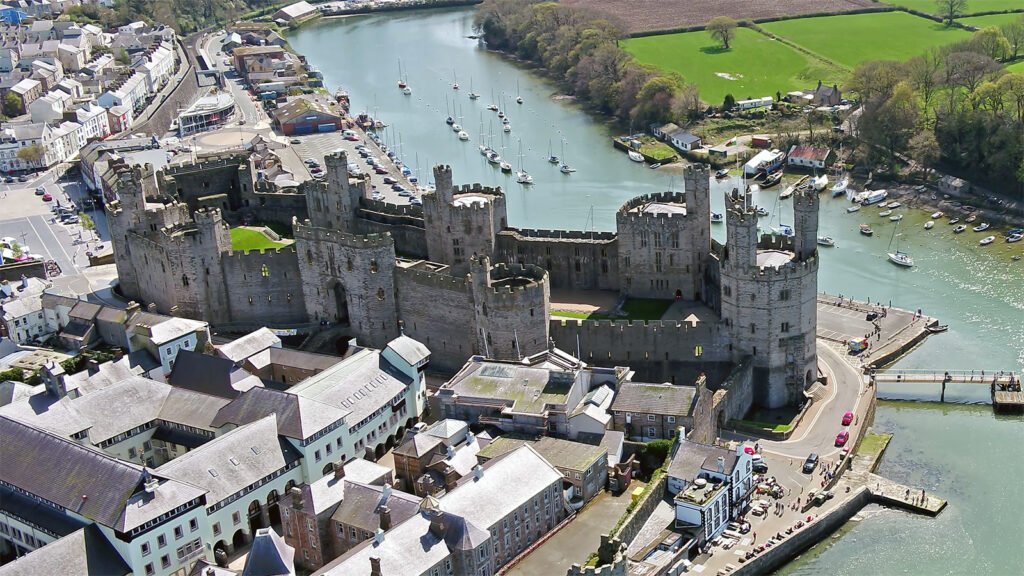
When you dig into Caernarfon Castle’s story, you quickly realize it was never meant to be just another stronghold on the Welsh frontier. Edward I wanted something that would anchor English power in a land that had resisted conquest for generations. He didn’t want modest walls or a standard fortress. He wanted a statement. And in 1283, as he tightened his grip on Gwynedd, he chose the site of a former Roman fort and a long-standing Welsh settlement to do it.
Edward I’s Vision: Power Cast in Stone
Edward had a habit of building big, but Caernarfon was different. It wasn’t simply about keeping control. It was about projecting power in a way that felt permanent. The shape of the towers alone tells you this wasn’t rushed work. Instead of the usual round design used across Britain, Caernarfon’s towers are sharp-edged and polygonal. They look carved rather than constructed, and that striking geometry was intentional. Some historians think Edward wanted the castle to resemble the walls of Constantinople, the seat of past empires. Whether true or not, the result makes a clear point: this was a capital in the making.
The choice of location added another layer of symbolism. Caernarfon stood on the Menai Strait, where ships could sail directly to the Irish Sea. It was also tied to Roman history—Segontium, the Roman fort just uphill, had been a center of power long before Edward arrived. Building here sent a message to the Welsh princes: a new ruler had stepped in, and his reach stretched across history.
The Welsh Resistance: A Kingdom That Refused to Bow Quietly
Nothing about this era was peaceful. The Welsh didn’t give in easily, and Edward’s new castle didn’t sit unchallenged. In 1294, only a decade after work began, a major rebellion led by Madog ap Llywelyn erupted across Wales. Caernarfon was attacked, sections were burnt, and the revolt pushed construction back. The English eventually regained control, but the uprising showed that even the mightiest walls didn’t guarantee obedience.
You can feel that tension when you walk through the King’s Gate or climb the staircases that spiral into the towers. These spaces weren’t built for comfort. Soldiers moved through them. Weapons were stored in them. Alarms rang through them when danger approached. Every inch of Caernarfon was designed for control—of movement, of sightlines, of people.
Llywelyn ap Gruffudd, the last native Prince of Wales, had died only a few years before work began, and his legacy hung in the air. Many Welsh families who lived in the shadow of the rising castle saw the building process not as progress but as occupation. The new English borough created around the fortress was meant to secure population loyalty, but tensions simmered for centuries.
The Investiture Tradition: A Mixed Legacy
Caernarfon’s story isn’t all war. It’s also a place where royal ceremonies took root. The tradition of giving the English monarch’s eldest son the title “Prince of Wales” became tied to this castle in 1301, when Edward I invested his son—also named Edward—with the title here. The story often repeated in guidebooks claims Edward promised the Welsh a prince “who spoke no word of English,” referring to his newborn son, but it’s likely a later myth. Still, it captures the complicated symbolism Caernarfon represents.
The castle would host another investiture more than 600 years later. In 1969, Prince Charles received the title here in a globally televised ceremony that turned Caernarfon into a stage. The event drew excitement and protest in equal measure, showing that the castle’s role as a political symbol never really faded.
A Fortress That Grew in Phases
Walking through the site today, it’s easy to assume Edward’s builders finished everything exactly as planned. They didn’t. The project stretched for decades, slowed by rebellion, cost, and shifting political needs. Parts of the gatehouses were never fully completed. Some features were modified partway through construction. What we see now is both ambitious and unfinished, which somehow makes it even more fascinating.
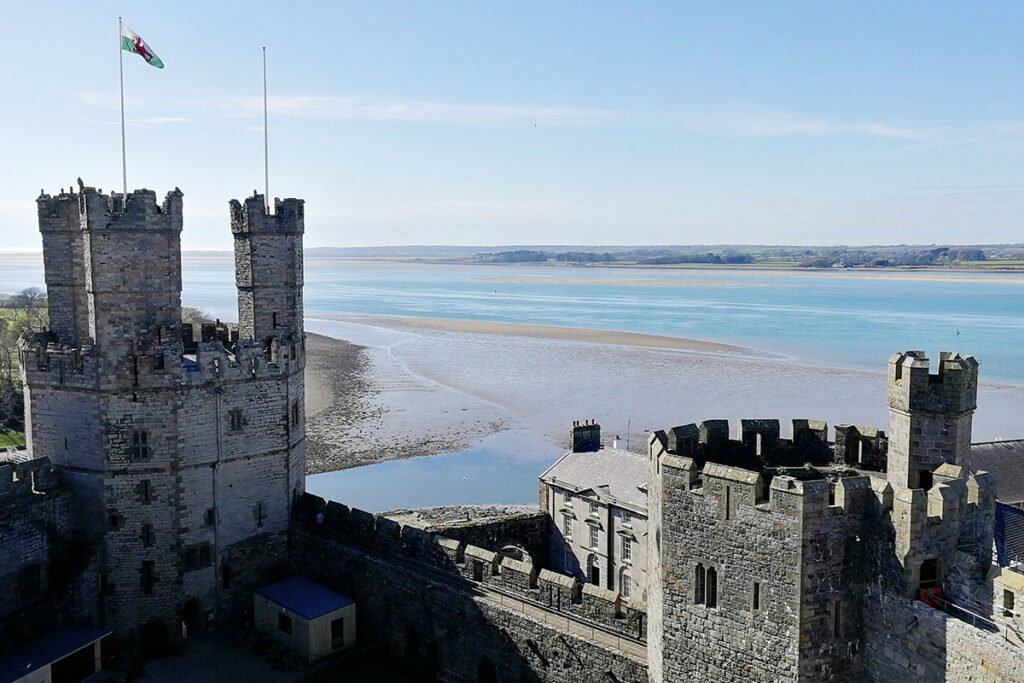
The Eagle Tower, the most imposing structure on the site, gives you a sense of what Edward wanted everywhere: thick layers of defense, massive halls, sweeping views of land and sea. Its three turrets rise with an almost sculpted quality. Inside, the stone passages feel tight and angled, leading you to small chambers, arrow loops, and viewpoints that could spot a threat long before it arrived.
Life Inside the Walls: Far More Than Soldiers and Stone
It’s easy to picture Caernarfon as a place filled only with armored knights, but a thriving community existed inside and around the walls. Craftsmen carved stone blocks. Merchants traded goods brought in by the river. Families set up homes in the town laid out beside the fortress. Markets, festivals, and feasts filled the town square. Even in times of tension, life continued, and the castle became the heart of a growing urban center.
Inside the fortress itself, you would’ve found royal apartments, administrative rooms, storage cellars, and bustling kitchens. Messages crossed the courtyard through rain and wind. Horses clattered across stone pathways. Fires burned in chambers that acted as both living spaces and offices for English officials. Soldiers trained on the battlements and guarded the gates day and night.
This was a living castle. Not polished. Not perfect. But full of movement and purpose.
The Symbolic Stonework: Messages You Can Still Read Today
One of the most striking things about Caernarfon is the striped stone—layers of different colors that run horizontally across the walls. Some stripes are subtle while others stand out sharply. This visual effect is unusual in British castles and adds to the sense that Caernarfon belonged to a larger story. The design echoes classical Byzantine fortifications, whether by intention or inspiration.
Then there are the carved eagles, especially on the Eagle Tower. They feel mythic. Almost Roman. Some scholars see them as symbols of imperial rule. Others believe they were meant to link Edward I to ancient power, reinforcing his authority over the newly conquered Welsh territories. Whatever the truth, these stones still catch the eye of anyone who looks closely. They remind you that Caernarfon wasn’t built only for war—it was built to communicate.
Legends That Linger in the Air
Like any great fortress, Caernarfon has its share of stories that slip between fact and myth. One of the oldest is the connection to Macsen Wledig, a Roman emperor who supposedly dreamt of a maiden in Caernarfon, traveled across the sea to find her, and built a great fort on this spot. The tale appears in medieval Welsh literature and adds a romantic layer to the site’s history. It’s likely a myth, but it shows how deeply this place sits in local imagination.
Another legend tells of the ghost of a soldier who walks the battlements late at night, still guarding the castle long after the world he knew disappeared. Visitors sometimes talk about footsteps or the feeling of someone passing behind them in the towers. Whether you believe in ghosts or not, it’s hard to deny that the stone chambers can feel strangely alive when you wander them alone.
A Fortress That Stands Strong Today
Time hasn’t been gentle on many medieval structures, but Caernarfon has endured with surprising strength. The walls remain thick and commanding, the towers lift high over the town, and the courtyards still hold echoes of footsteps. Restoration work in modern times preserved what centuries of weather might have worn away, but the castle’s character is original, rugged, and authentic.
And despite its weighty history, Caernarfon is not a relic. It’s still a place where people gather, explore, learn, and connect with a part of Wales that shaped both local culture and national identity. Families roam the towers. Kids race along the walls. Travelers pause at the viewpoints to breathe in the view across the Menai Strait. The castle plays its ancient role once more—bringing people together under its watchful towers.
Caernarfon’s story is long, layered, and full of human moments. It’s a fortress built to intimidate, a town shaped by resilience, and a symbol that carries meaning even now. And when you walk its walls, you’re not just looking at history. You’re stepping directly into it.

Architecture & Design
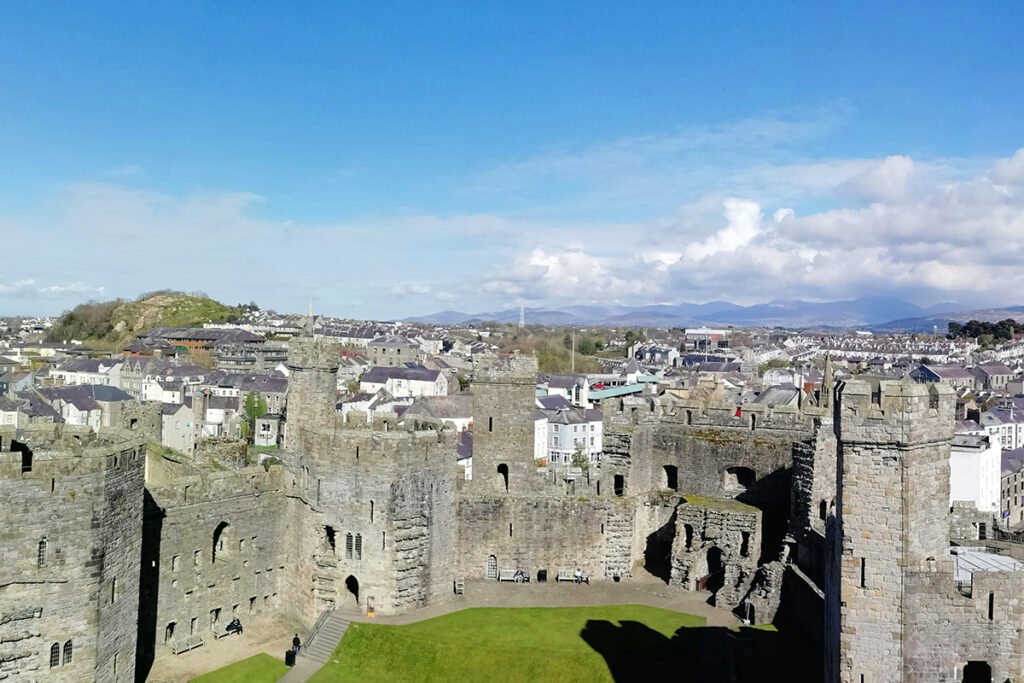
The first thing you notice about Caernarfon Castle is its shape. Most medieval castles rely on round towers and curved lines, but here everything feels sharper, more deliberate. The polygonal towers rise in clean angles, catching the light in a way that makes the castle look almost sculpted. Edward I didn’t want a standard fortress. He wanted something that would stand out across the landscape and signal authority long before anyone reached the gates.
The Famous Polygonal Towers
Caernarfon’s towers create its unmistakable silhouette. The Eagle Tower, the Queen’s Tower, and the Chamberlain Tower are the most recognizable, each built with edges rather than smooth curves. This unusual design gives the castle a sense of precision and weight, as if every block was placed with a ruler in hand. From a distance, the towers look taller and more imposing because of these straight lines.
The Eagle Tower deserves special attention. It’s the largest and most commanding structure on the site, and walking through its narrow passages feels like stepping through the ribs of a stone giant. Inside, you can find small rooms tucked into corners, tight windows designed for crossbows, and stairways so narrow you instinctively pull your elbows in. This tower held the royal apartments, and when you reach the top, the view across Caernarfon, the Menai Strait, and the mountains beyond shows exactly why this spot was chosen.
A Castle Built With Layers of Color
Most visitors are surprised by the stonework. Instead of a single color, the walls shift between lighter and darker shades in horizontal bands. It’s subtle at first. Then you begin to notice the stripes running across the outer walls and up the towers. This wasn’t an accident. The builders used limestone and sandstone intentionally to give the castle a distinct look, one that echoes ancient fortifications in distant empires.
These bands create texture, depth, and identity. Even on cloudy days, the castle has a warm, almost glowing presence. When sunlight hits the stone at an angle, the colors deepen, and the walls look almost painted.
Gatehouses That Controlled Everything
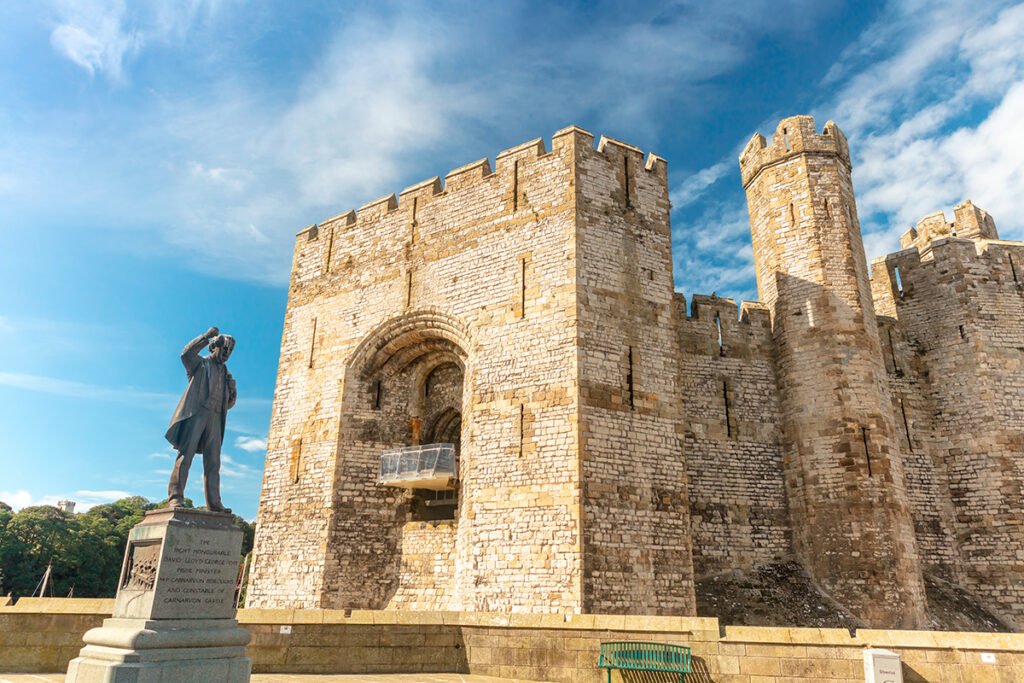
Caernarfon’s gatehouses weren’t just entry points. They were machines of control. The King’s Gate, planned as the main entrance, was designed to be one of the most impressive defensive gateways in medieval Europe. Although never fully completed, the size alone tells you what Edward I had in mind. Had it been finished, attackers would’ve faced multiple portcullises, arrow loops, murder holes, twisting passages, and a maze of defenders waiting above them.
The Queen’s Gate on the opposite side of the castle served as the main functional entrance. Its design is simpler but still powerful. You pass through layered walls that create a tunnel-like experience. The acoustics change as you walk, and you can almost imagine the clatter of hooves, carts, and soldiers’ boots that once filled this space.
A Courtyard Filled With Clues
Once you step into the central courtyard, the scale of the place becomes clear. The walls rise high around you, and the open space gives you a sense of how many people must have moved through the castle daily. This area once held the great hall, the kitchens, and other important rooms. Those buildings are mostly gone now, but their foundations remain, and you can trace the outlines with your feet.
Stand in the center and look up. You’ll see walkways weaving along the tops of the walls. From here, guards could watch the town, the harbor, and the hills. The design allowed for quick movement—defenders could shift positions without losing sight of any approach.
Walk the Walls for the Best Experience
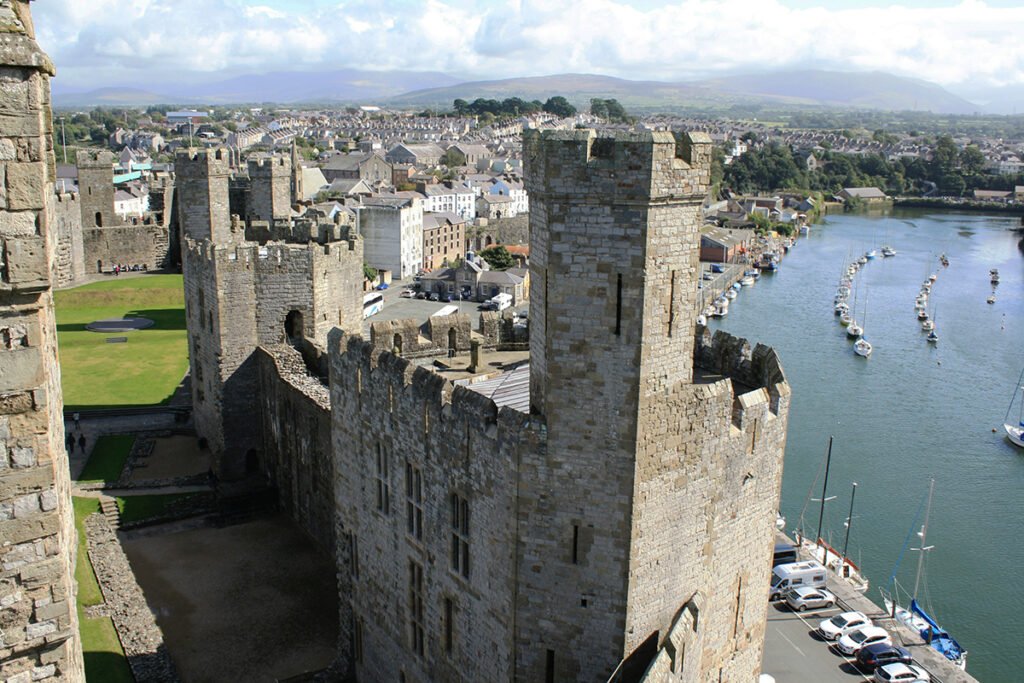
The walls might be Caernarfon’s greatest feature. Climbing the narrow spiral stairs brings you up to paths that run the full perimeter. The walk is uneven in places, but that’s part of its charm. You peek through arrow loops cut into the stone and see the same views that medieval soldiers once watched. On one side, the town stretches out with its grid of old streets. On the other, the Menai Strait glimmers, and the peaks of Eryri (Snowdonia) rise in the distance.
Each tower along the wall offers a slightly different angle. Some views look inland toward green hills. Others face the water, where ships once carried supplies, soldiers, and trade into the heart of the fortress.
Town Walls That Complete the Picture
Caernarfon Castle doesn’t stand alone. The town walls, still largely intact, wrap around the medieval borough. Together, castle and town created a fortified hub that served both military and administrative purposes. These walls had a practical use—defense—but they also reinforced the message that this was an English-controlled settlement, separate from the older Welsh population around it.
Walking through the town today, you can still pass through the old gates. The walls frame the streets and offer glimpses back to the era when the castle towered over a newly planted English community.
Caernarfon Castle’s architecture is bold, ambitious, and full of personality. Every tower angle, every color band, every defensive layer tells you this place wasn’t built to blend in. It was built to stand its ground, to impress, and to last. And it still does.
Visiting Caernarfon Castle
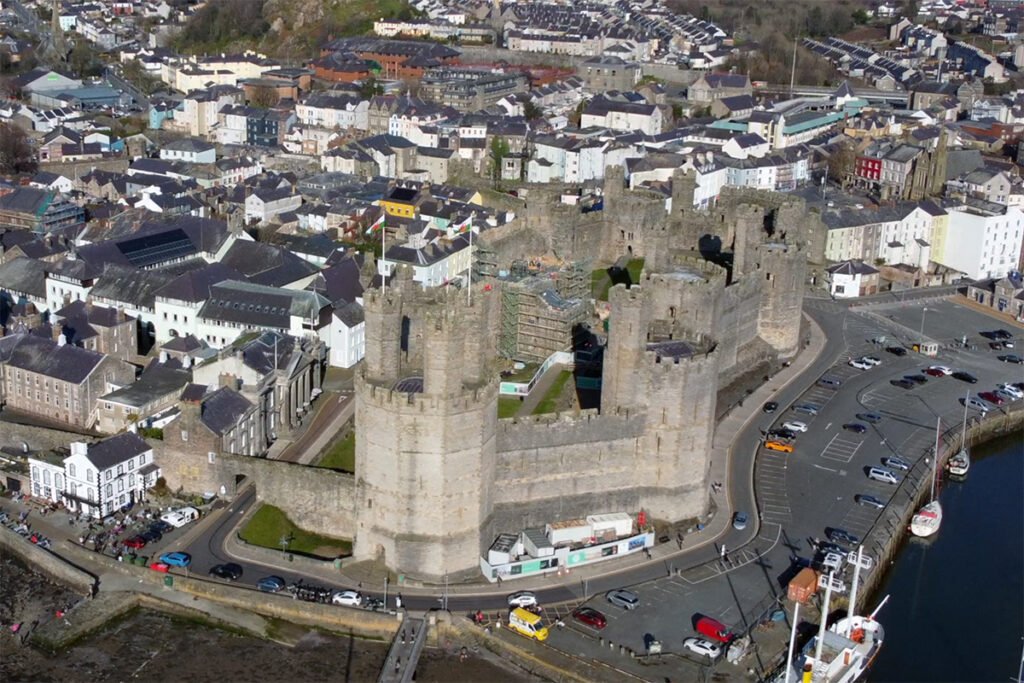
Visiting Caernarfon Castle feels a bit like stepping into two worlds at once. One moment you’re in a lively Welsh town with cafés, shops, and harbor views. The next, you’re passing under stone arches thick enough to swallow the sound around you. The castle may be centuries old, but it still has that ability to shape your senses—light changes, footsteps echo differently, and the air feels cooler as soon as you walk inside. Planning your visit well helps you make the most of these moments, especially since Caernarfon is the kind of place where every path, viewpoint, and side corner adds something new.
🛣️ How to Get There
Caernarfon is surprisingly easy to reach despite its medieval feel. The town sits on the edge of the Menai Strait in northwest Wales, close to Eryri (Snowdonia) National Park. If you’re driving, you’ll approach along winding roads that pass through small villages and rolling hills. As you get closer, the castle appears suddenly—huge and unmistakable, rising above the rooftops.
Parking is simple. Several public car parks circle the town, and from most of them it’s only a short walk to the main entrance. Arrive early if you want a quieter start to the day, especially in summer. By mid-morning, the streets around the castle get lively.
If you’re not driving, you can reach Caernarfon by bus from Bangor, which has the nearest railway station. The ride is scenic, and you’ll get a glimpse of the coastline before arriving near the town square. The bus stop sits just a few minutes’ walk from the castle walls.
Coming from Anglesey? The drive across the Menai Bridge or Britannia Bridge is a highlight on its own. You follow the strait down toward Caernarfon with the castle appearing at the bend—one of the best approaches in the region.
🎟️ Entry & Tours
Today, visitors typically enter Caernarfon Castle through the King’s Gate, which provides step-free access via a modern lift to some upper levels. This entrance serves as the main admission point, offering a ramped approach that aids mobility. Once you walk through the King’s Gate, you’re free to explore the castle at your own pace. Caernarfon works best this way. There’s no single route you “should” take. You can climb towers when you see a staircase, wander the courtyard, or simply start by following the wall walk. The site is big enough to keep you wandering for a couple of hours—and longer if you like taking your time with viewpoints.
Most visitors begin by heading into the Eagle Tower first, but I’d recommend saving it for later. Start instead with the smaller towers and outer walls. They give you a feel for the layout and rhythm of the place. That way, when you finally climb the Eagle Tower, the sheer height and scale hit harder.
Inside some of the towers and gatehouses, you’ll find exhibitions that tell the story of the castle’s construction, its role in Welsh and English history, and the famous investiture of 1969. These displays are short, clear, and easy to follow. They add context without pulling you out of the experience.
If you prefer guided insight, seasonal tours are sometimes offered. They’re not essential, but they can help you catch details you might miss—like the way certain windows align with river channels or why some staircases twist in a specific direction.
A simple tip: bring a bit of patience for the stairways. They’re narrow, steep, and uneven, but that’s part of the charm. They were built to slow down attackers, not to make casual sightseeing easy.
For the most up-to-date information on opening times, seasonal hours, and current ticket prices, check the official Cadw page for the castle at https://cadw.gov.wales/visit/places-to-visit/castell-caernarfon. It’s updated regularly and gives you a clear picture of what to expect before you arrive.
📅 Best Time to Visit
Caernarfon Castle has a different mood in every season, and each one has its perks.
Spring brings softer light and cooler air. The town smells of the sea, and the early morning sun makes the color-banded stone glow warmly. This is the best time for photography if you want crisp shadows and fewer crowds.
Summer is the busiest period. Expect more families, tour groups, and activity around the harbor. Still, the energy is great, and the long daylight hours let you explore without rushing. If you visit in July or August, come at opening time or late afternoon to avoid the peak flow.
Autumn is perhaps the most atmospheric season. The wind picks up, the clouds sit low over Eryri, and the castle feels even more dramatic. On windy days, the sound along the wall walk is unforgettable. You hear gusts moving through arrow loops in short whistles.
Winter brings fewer visitors and a sense of isolation that suits the castle well. The air gets sharp, and the rooms feel colder, but the quiet is worth it. Dress warmly and be prepared for short days. If you’re lucky enough to catch a clear winter sunset from the battlements, you’ll remember it for a long time.
Whatever the season, check the opening times before traveling. Hours change throughout the year, and gates close earlier in winter.
♿ Accessibility & Tips
Caernarfon Castle is a medieval structure, and much of it wasn’t designed with modern movement in mind. The stairways are steep, the floors uneven, and the wall walks involve many narrow passages. Still, the site has made thoughtful adjustments to help as many visitors as possible enjoy the experience.
The courtyard area is relatively flat, and you can explore a large portion of the lower grounds without climbing. Several towers also have ground-level rooms that are easy to reach.
If you use a mobility aid, aim to spend more time in the courtyard, near the exhibitions, and around the outer pathways where the stone is smoother. The staff are kind and can suggest the best routes based on your needs.
For all visitors, a few simple tips help:
- Wear good shoes. The stone can be slick after rain.
- Take your time on the stairs. They’re narrow and twist abruptly.
- Bring a jacket. Even in summer, the wind on the battlements can surprise you.
- Stay aware in the towers. Some ceilings are low, and the steps vary in depth.
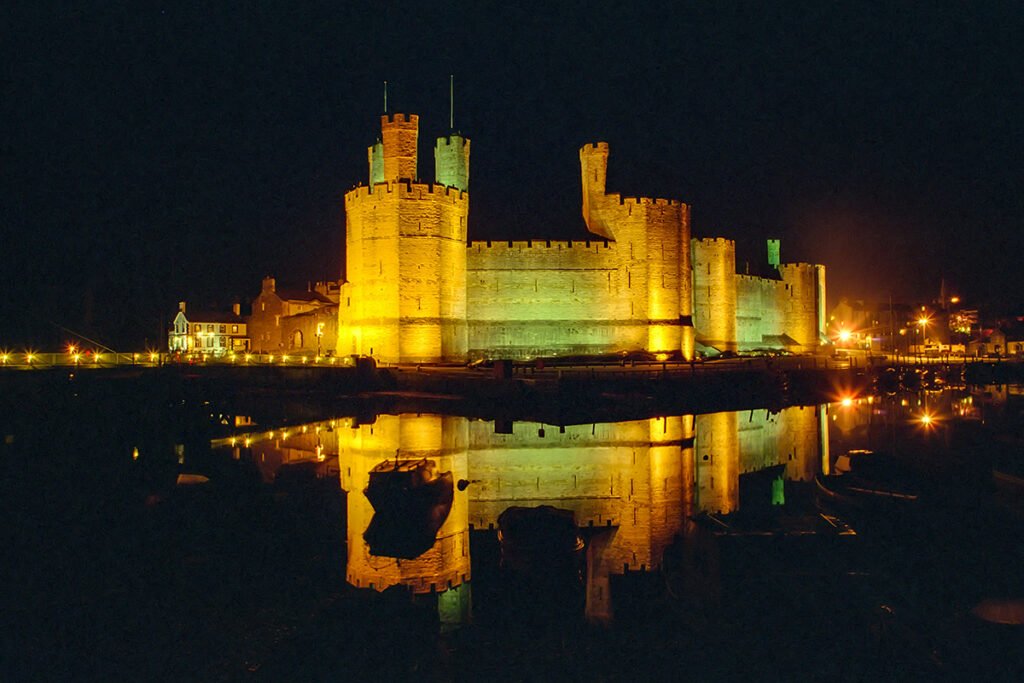
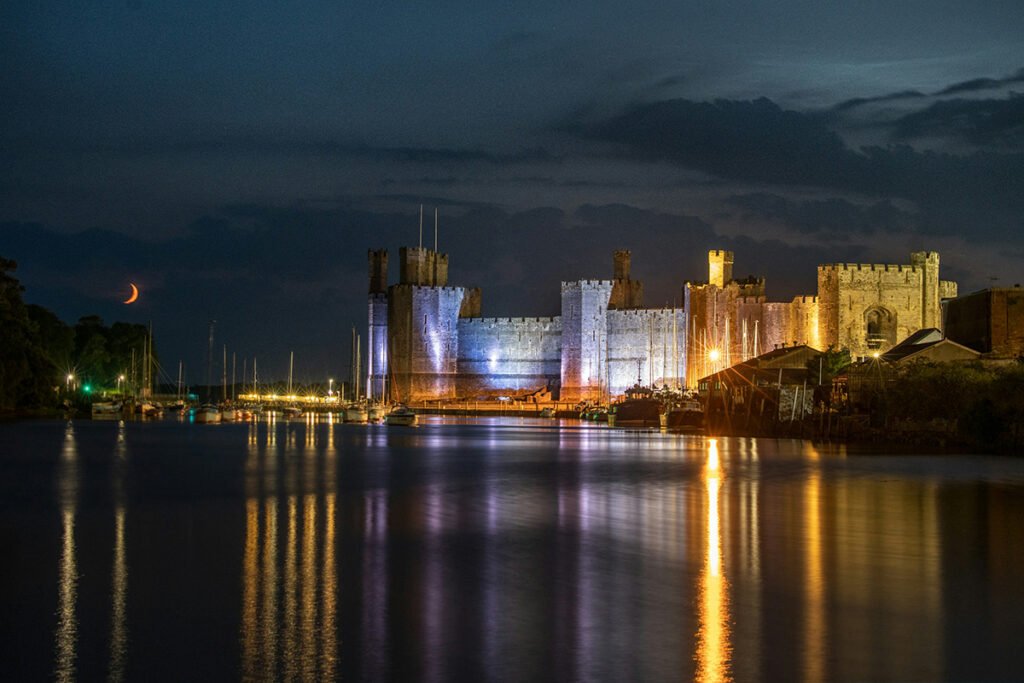
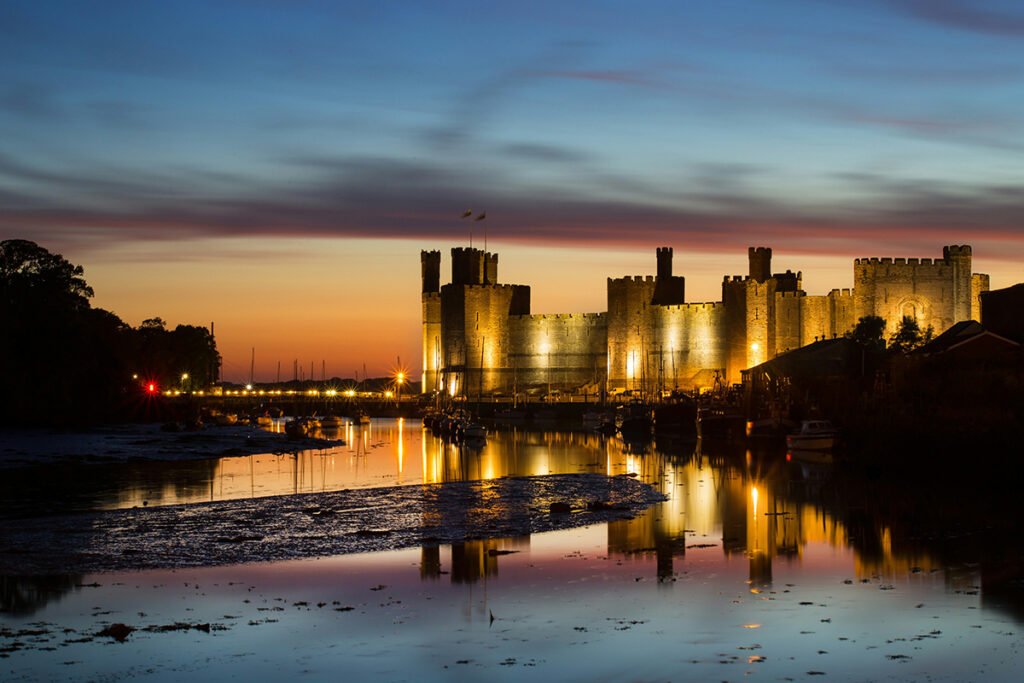
Photography lovers should linger on the western wall walk. The view toward Anglesey is stunning in the late afternoon. And if you want a shot of the whole castle from outside, head toward the opposite bank of the River Seiont. The reflection on a calm day is beautiful.
Small Personal Tips to Make Your Visit Better
Here are a few things most visitors don’t realize until after they leave:
1. The castle feels completely different depending on the direction you explore.
Climbing the towers clockwise gives you more gentle light in the morning, while going counterclockwise makes the afternoon views sharper and clearer.
2. The highest point isn’t always the best view.
Some of the mid-level platforms provide a better angle on the town and the surrounding hills.
3. Bring a small snack or drink.
There’s plenty of space in the courtyard to sit and soak in the atmosphere before climbing again.
4. Don’t miss the town walls.
Many people come for the castle and skip the walls entirely, but they’re an essential part of the experience. The narrow gateways and high stone arches give you a sense of how the medieval borough once lived and breathed.
5. Leave time for the harbor.
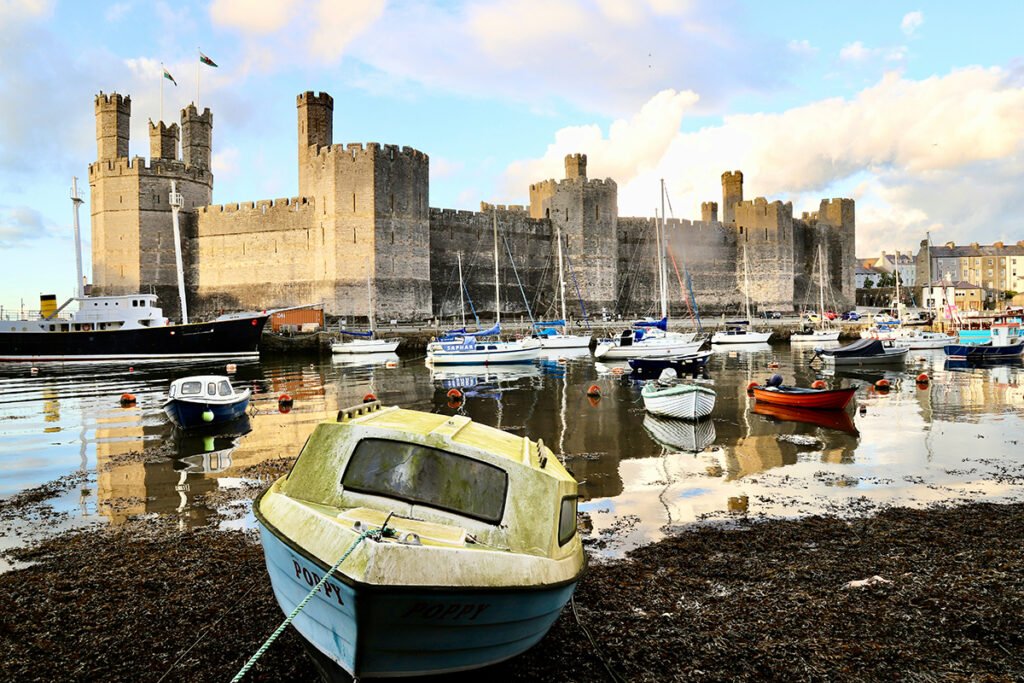
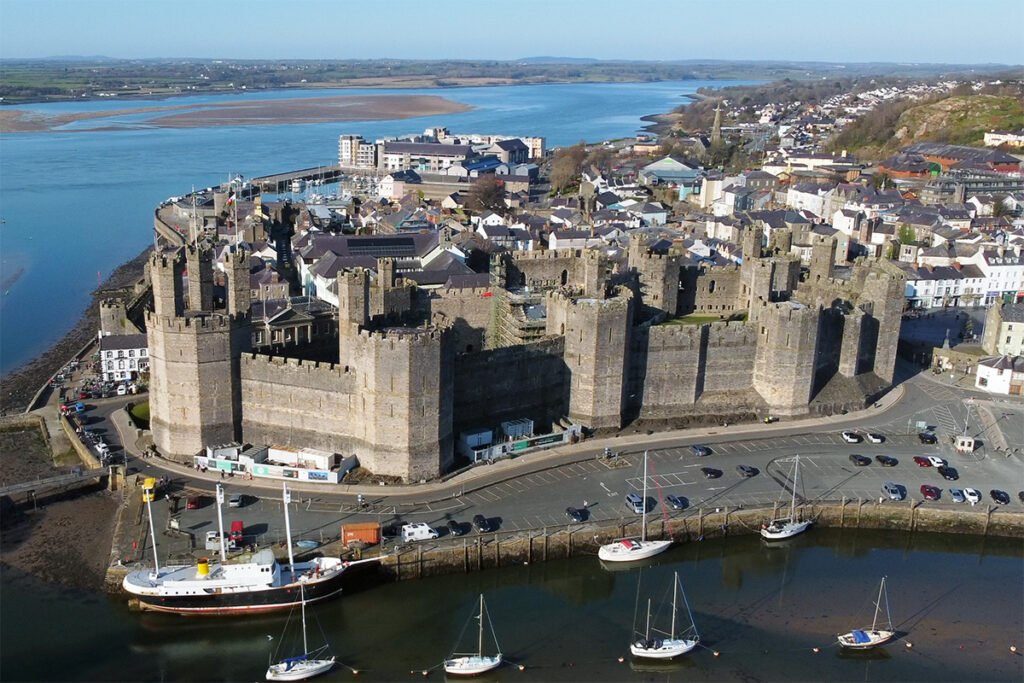
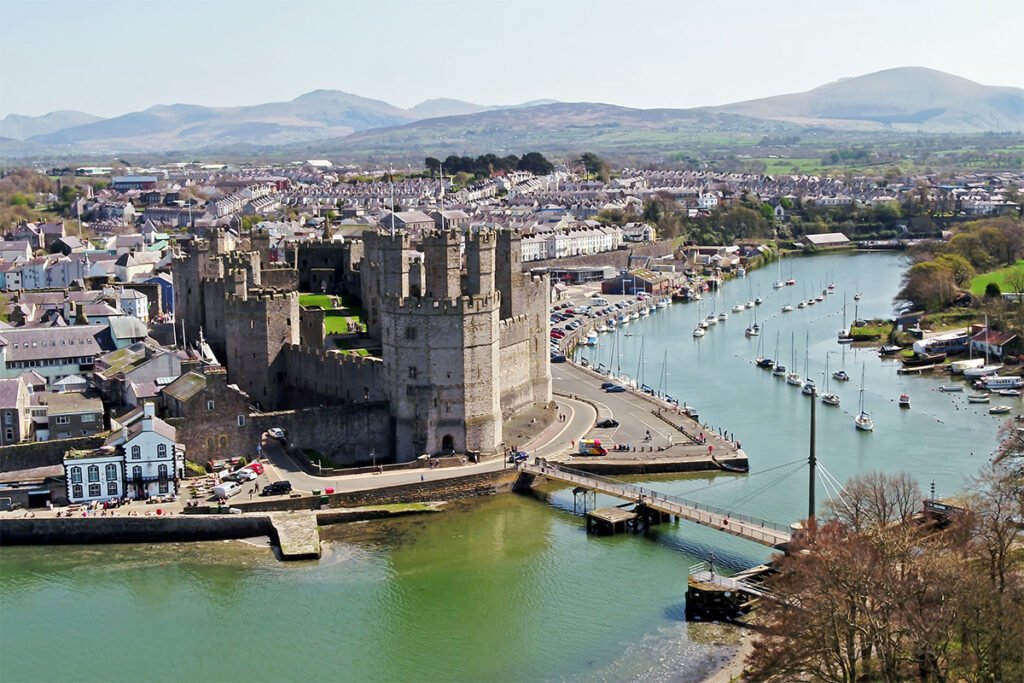
Once you step outside the castle, walk down to the water. The castle looks huge from this angle, with the towers rising straight from the river. It’s one of the best finishing points for your visit.
Caernarfon Castle is a place that rewards curiosity. You can come for an hour and enjoy the main sights, but if you allow yourself more time—wandering slowly, climbing every tower you find, letting the wind and the stone guide your steps—you’ll walk away with a deeper sense of the place and its long, complex story.
Nearby Attractions
Caernarfon sits in one of the most scenic corners of Wales, so it’s easy to turn a castle visit into a full day of exploring. The town blends history, coastal views, and local flavor, and the wider region offers everything from Roman ruins to mountain trails. Here are a few places worth adding to your list while you’re in the area.
Caernarfon Town Walls
You can’t visit the castle without spending a little time wandering the surrounding town walls. They wrap around the medieval borough like a protective shell, and walking through the old gates gives you a sense of how the English settlement once operated. The views from the wall-top sections (where accessible) are excellent, especially toward the harbor. Even sticking to street level, the narrow passages and stone arches make the old town feel alive with stories.
Snowdonia (Eryri) National Park
Only a short drive from the castle, Eryri feels like a different world entirely. Peaks rise dramatically in the distance, lakes reflect the clouds, and valleys stretch out in quiet folds. If you have the time, take a short hike to one of the lower viewpoints, or simply enjoy the drive. The scenery alone is worth it. Many travelers pair Caernarfon with a half-day in the national park, especially if they want a balance of history and nature.
Segontium Roman Fort
A few minutes uphill from the castle, Segontium offers a glimpse into the older layers of Caernarfon’s past. Built in AD 77, the fort once housed Roman soldiers who guarded the region. The ruins are simple—foundations and outlines, mostly—but they help connect Caernarfon’s medieval story to a much earlier chapter. It’s quiet, open, and easy to imagine the landscape as the Romans saw it.
Anglesey
Cross the Menai Strait and you’ll find Anglesey, an island full of beaches, coastal walks, and small towns with a relaxed feel. The drive across the bridge is beautiful, and it’s only about fifteen minutes from Caernarfon. If you like lighthouses, Newborough Beach and the walk to Llanddwyn Island are unforgettable on a clear day.
Welsh Highland Railway
For something different, hop on the narrow-gauge steam train that runs from Caernarfon into the mountains. It’s slow, scenic, and charming in a way modern travel rarely is. Watching the train snake through valleys and along ridges adds a little magic to the day.
All of these spots pair naturally with a visit to Caernarfon Castle. Whether you want more history, more scenery, or just a relaxing wander, you’ll find plenty to explore within a short walk or drive.
FAQ – Visiting Caernarfon Castle
How long do I need to visit Caernarfon Castle?
Plan for at least two hours. If you like climbing towers and exploring every corner, you may want closer to three.
Is Caernarfon Castle suitable for kids?
Yes. The towers and courtyard give kids plenty to explore, though you’ll want to keep an eye on them on the stairways and wall walks.
Can I walk the entire castle wall?
Most of it, yes. Some sections may be closed for safety or restoration, but the majority of the wall walk is open.
What’s the best time of day to visit?
Early morning or late afternoon. The light is softer, the crowds smaller, and the castle feels more atmospheric.
Do I need a guided tour?
Not necessarily. The castle is easy to explore on your own, but a guide can add extra detail if you enjoy deeper historical insight.
Is Caernarfon Castle open year-round?
Yes, but hours vary by season. Winter hours are shorter, so check the schedule before you arrive.
Are drones allowed?
No. Like most heritage sites in Wales, drone flights are restricted to protect the structure and visitor safety.
Is the castle dog-friendly?
Only assistance dogs are allowed inside the castle.
Can I visit the castle and the town walls on the same ticket?
The castle requires its own entry ticket. The town walls, however, are free to explore. The medieval town walls, which historically enclosed the English borough, are managed separately by Cadw and are currently closed to visitor access for safety reasons. Public access to the town walls may be restricted or limited, so check the latest Cadw information before planning to walk them.
What should I wear for a visit?
Comfortable shoes with a good grip. The stone can be uneven and slick in wet weather. A light jacket is helpful even in summer because the battlements can be windy.
Final Thoughts
Caernarfon Castle has a way of staying with you long after you leave. Maybe it’s the weight of the walls, the sharp angles of the towers, or the views that stretch across the Menai Strait. Maybe it’s the mix of power and quiet—the sense that this place once shaped the fate of a nation, yet today welcomes anyone who wants to explore it. What makes Caernarfon special is how real it feels. You don’t walk through a museum. You walk through a fortress that still breathes with stories, footsteps, and echoes.
If you love castles, Caernarfon deserves a spot near the top of your list. It’s bold, dramatic, and endlessly interesting, whether you’re climbing towers, tracing the lines of old foundations in the courtyard, or simply standing still and letting the wind move through the arrow loops beside you.
When you finish exploring, take a moment by the harbor. Look back at the walls rising above the water. The castle appears almost unreal from that angle—a giant carved from stone, holding centuries of history in its towers.
💬 If you’ve visited Caernarfon before, feel free to share your experience—every traveler notices something different in its towers and courtyards.
👉 And if you’re planning your first trip, take a moment to explore more of the United Kingdom’s incredible fortresses. Our guide to England’s top castles will take you from dramatic cliff-top ruins to grand royal palaces. If Scotland is calling you, our article on the best castles to visit in Scotland highlights some of the most atmospheric strongholds in the Highlands and beyond. Each one offers a story as rich and layered as Caernarfon—and together, they make the perfect next step in your castle-hunting journey.
🏰✨Thanks for reading. If you found this article interesting, be sure to follow us along. We are also on Instagram, Facebook, Pinterest, YouTube, TikTok, and X. You can also see all our castle stories here! More castles (and more stories) are on the way.